Shrub · Berberidaceae
Japanese Barberry
Berberis thunbergii
Tough, thorny, and richly colored, but check the rules before you plant it where it can spread.
Full sun
Every 7–14 days
USDA 4–8
3–6 ft · 0.9–1.8 m
Overview
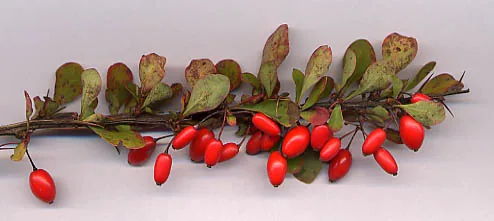
Japanese barberry is a dense, rounded deciduous shrub that delivers big color for almost no effort. It shoots up to 3 to 6 feet (91 to 183 cm) tall and spreads even wider, loading its branches with small leaves that turn red, purple, or gold depending on the cultivar. Pale yellow flowers open in late spring, then bright red berries follow in fall and cling on well into winter.
It wins gardeners over because next to nothing knocks it back. It powers through drought once settled, takes poor soil and city pollution in stride, and turns deer away with those sharp single spines at every node. Put that thorny armor to work and it doubles as a low hedge or a no-nonsense deterrent under a window.
There is a serious catch, though. Across much of the eastern and midwestern US this plant has bolted past the garden fence and gone badly invasive, and its thickets push deer-tick numbers up. Several states now list it as a regulated noxious weed, so the first move is to find out whether you can legally plant it at all.
Care
The short version: hand it full sun for the best color, drop it in any well-drained soil, water it while it settles and then mostly step back, and pull on thick gloves every time you prune.
Light
Hand it full sun for the boldest leaf color, especially on the purple and gold forms. It will still take partial sun and even partial shade, but the foliage slides toward green and the shrub grows looser once the light drops off.
Water
Water it regularly through the first season while the roots dig in, then back right off, since it turns drought tolerant once established. Let the top half of the soil dry between waterings, roughly every 7 to 14 days, and never let it sit in soggy ground.
Soil
It ranks among the least fussy shrubs out there, thriving in dry to medium soil of nearly any texture, from clay to loam to sand. The one deal-breaker is poor drainage, so a well-drained spot beats rich ground every time.
Temperature
It is a cold-hardy powerhouse, cruising from about -29°F to 100°F (-34°C to 38°C), which covers a huge stretch of the country. Hard winters and blazing summers barely faze it.
Humidity
Ordinary outdoor humidity suits it just fine, so there is nothing to manage on that front. What really counts is air movement, because a damp, crowded canopy is where the few leaf diseases get their start.
Feeding
It hardly ever needs feeding and usually charges ahead in average soil with nothing added. If growth stalls out, a light application of balanced granular fertilizer in spring gives it the nudge it needs.
Pruning
Keep pruning light unless you are shaping a formal hedge. Cut right after flowering or in late winter, and you can slash an overgrown plant back hard in late winter and it bounces right back. Always wear thick gloves, because the stems bristle with spines.
Repotting
A container plant rarely needs bumping up. Move it only when roots start circling the pot or poking out the drainage holes, water rushes straight through, or new growth grinds to a halt.
Size & spacing
A mature plant tops out at 3 to 6 feet (91 to 183 cm) tall and spreads wider still, around 4 to 7 feet (122 to 213 cm) across. Give each shrub that much room so the canopy stays open and air rips right through it.
When to plant
This is a spring-and-fall shrub, not a seasonal crop, so the calendar is refreshingly simple. Set new plants out in spring or fall where it is legal, watch for pale yellow flowers in late spring, and enjoy the red berries firing up in fall and hanging on through winter.
Northern hemisphere
Southern hemisphere
Typical months for a temperate climate: start earlier in warm zones, later where spring frosts linger.
- Plant: Spring or fall where legal to plant
- Harvest: Pale yellow flowers in late spring (April to May), followed by bright red berries in fall persisting into winter
Hardiness
USDA hardiness zones: 4–8
Temperature: down to -34°C
Troubleshooting
Japanese barberry rarely gives you trouble, and when it does, it almost always traces back to wet soil or a crowded, airless canopy. Match what you spot below and pounce early, before a small snag turns into a real one.
Branches wilting and dying back as the plant slides downhill
Soggy soil is the villain here, and it moves fast. Root rot grabs hold when the ground stays wet, and once the roots turn dark and mushy those stems drop out for good, no matter how you water. Sharpen the drainage, pull anything past saving, and steer this shrub well away from low, wet corners next time.
Fix:
- Improve soil drainage
- Remove severely affected plants
- Avoid planting in wet sites
Spotted leaves that drop before their time
Spot dark blotches and early leaf drop and you have caught anthracnose or a bacterial leaf spot, which take hold in wet weather inside a crowded shrub. Strip the marked leaves, clear the fallen litter, and open the plant up so air rushes through the middle. Aim your water at the base and you shut the door on the problem.
Fix:
- Remove and dispose of infected leaves and debris
- Thin the shrub to improve air circulation
- Avoid overhead watering
Warped shoots, sticky film, or bumps riding the stems
Two pests are behind this, and both come off easily. Aphids swarm the soft spring shoots and leave a sticky honeydew, while scale insects ride along as hard waxy bumps down the stems. Knock the aphids off with a blast of water or hit them with insecticidal soap, then prune out the worst scale or paint it with horticultural oil.
Fix:
- Spray aphids off with water or apply insecticidal soap
- Prune out heavily scale-infested branches
- Apply horticultural oil for scale
Toxicity
This shrub is only mildly toxic, but it is not one to shrug off. The leaves, bark, and roots carry berberine, a bitter compound that can upset the stomach if a pet, child, or animal eats much of it. The bigger day-to-day risk is mechanical, since the sharp spines at every node scratch and puncture skin, so wear gloves and keep small children well clear of the canopy.
Toxic to
Cats · Dogs · Horses · Rabbits · Livestock · People
Safe for
Birds
Cats Caution
A nibble or two barely registers, but the berberine packed into the leaves and roots can turn a cat's stomach if it eats a lot, kicking off drooling, vomiting, or loose stools. The thorns are the real thing to watch, since they scratch a mouth or paw in a heartbeat.
Dogs Caution
A quick taste rarely fazes a dog, but plow through a stack of leaves or roots and the berberine can bring on drooling, vomiting, or loose stools. Keep those sharp spines in mind whenever an eager nose dives in.
Horses Caution
Horses usually skip the thorny stems entirely, and even a nibble leaves the berberine acting as no more than a mild gut irritant. The spines are what to guard against if a horse shoves into the canopy.
Rabbits Caution
The dense spines usually shut rabbits out, which is handy, because the bitter berberine can hand a small animal an upset stomach. Never toss it in as forage.
Livestock Caution
Cattle, goats, and sheep steer around the thorny growth, and it does no more than mildly irritate the gut even when they browse. The thickets are far better known for stashing ticks than for poisoning stock.
People Caution
The berries and bark go way back in herbal medicine, yet eat much of any part and the berberine hands you stomach cramps, nausea, and diarrhea. Far more often it is the sharp single spines at every node that catch you out, so pull on gloves and keep kids clear.
Birds None
Birds tuck into the bright red berries without a hitch and fling the seed far and wide, which is a huge reason this shrub takes off and turns invasive.
Stems are densely covered with sharp single spines at each node that readily scratch or puncture skin; wear thick gloves and long sleeves when handling or pruning, and keep children and pets clear of the thorny canopy.
Helpline numbers

United States
ASPCA Animal Poison Control: (888) 426-4435 (fee applies)
Poison Control: (800) 222-1222



Canada
Poison Centres: 1-844-764-7669
Varieties
Most named forms are grown for their leaf color rather than flower or fruit, and each one brings its own punch. Here are the ones you will run into most.
'Atropurpurea'
The go-to purple-leaved barberry, it flaunts a reddish-purple to deep burgundy color that holds strong right through the season.
'Crimson Pygmy' (var. atropurpurea)
A dwarf, compact mound of deep crimson-purple leaves that packs a punch as low edging and along tidy borders.
'Aurea'
A golden-yellow form that fires up its brightest color the moment it gets full sun.
How to propagate
Japanese barberry multiplies all too easily, which is both the reason it roots in a flash and the reason it runs riot in the wild.
Stem cuttingsEasy
Softwood cuttings in early summer or hardwood cuttings in late fall/winter · 4 to 8 weeks to root
Cuttings root like a dream. Take softwood cuttings in early summer or hardwood ones in late fall and winter, and they strike roots in 4 to 8 weeks. Low branches even root themselves wherever they lean on the soil, a trick called layering that sends the shrub spreading on its own.
SeedEasy
Seed ripens in fall and is widely bird-dispersed · Germinates the following spring, often at very high rates
Seed ripens in fall, birds whisk it away, and it bursts up the next spring at very high rates. That runaway self-seeding is exactly what sends the plant wild, so do not raise it from seed where it is prohibited.
Myths
Japanese barberry is a harmless, well-behaved shrub you can plant anywhere.
Far from it, since this ranks among the worst invasive shrubs across the eastern and midwestern US, breaking out of gardens on bird-dropped seeds and on branches that root wherever they touch the ground. Several states now ban or restrict its sale as a noxious weed, and its dense thickets drive up black-legged tick numbers. Check your state and local rules before you plant it, and swing toward the sterile cultivars or a native alternative.