Ornamental · Fabaceae
Lupine
Lupinus polyphyllus
Give it full sun, cool roots, and lean soil, and lupine throws up tall spires of color from late spring into summer.
Full sun
Every 3–7 days
USDA 4–8
3–4 ft · 0.9–1.2 m
Overview
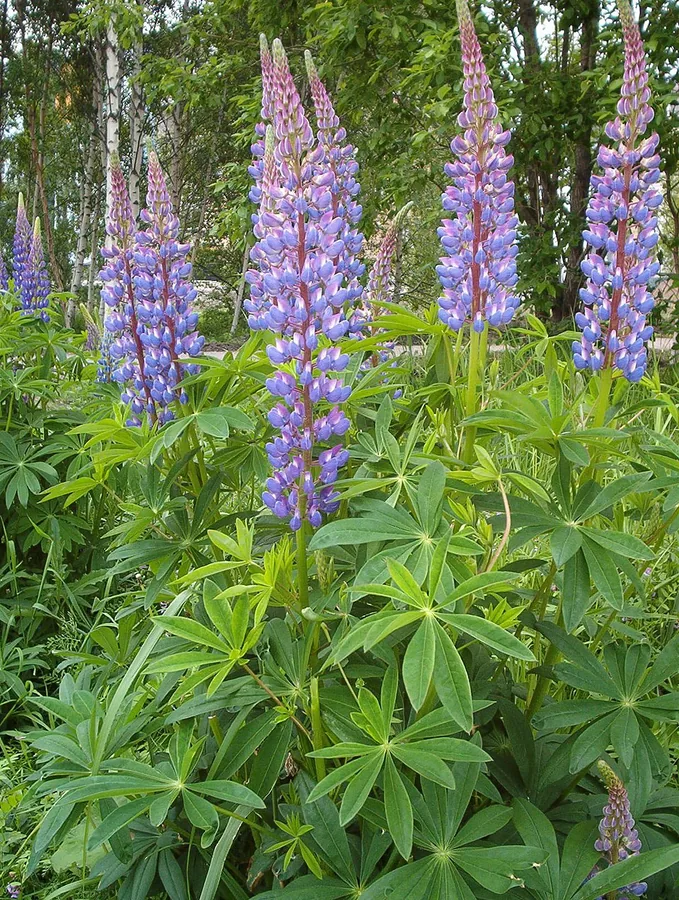
Lupine rockets up tall, densely stacked spires of pea-like flowers above a fan of deeply cut leaves, and hardly any border plant delivers a bigger early-summer punch. It runs with the legume family, pulling its own nitrogen right out of the air and leaning barely at all on the soil. The bigleaf type behind most garden strains hails from western North America and has spread happily through cool, temperate country.
Nearly every named garden plant traces back to the Russell hybrids, a strain bred for fat, tightly packed spikes in clear colors and knockout bicolors. They are perennials, short-lived ones, and they truly hit their stride where summers stay cool. Hand them a sunny spot with sharp drainage and they take off fast.
One catch is worth flagging right away. Every part of the plant is loaded with quinolizidine alkaloids, heaviest in the seeds and pods, which turns lupine into a serious poison for grazing animals and a hard no for people. Grow it to feast your eyes on, never to eat.
Care
The short version: plant lupine in full sun with cool roots, in moderately rich, well-drained, slightly acidic soil kept evenly moist. Feed it lightly, deadhead the spent spikes, and keep fresh plants coming every few years.
Light
Lupine craves full sun, and that is exactly where the spikes shoot up tallest and blaze with the most color. It will handle partial shade, the afternoon kind especially in hot regions, but pile on too much shade and you land fewer, floppier flowers.
Water
Keep the soil evenly moist without ever letting it turn soggy, since lupine wants medium water, not a swamp. In warm regions a layer of mulch locks the roots cool and the moisture steady. Sharp drainage pulls just as much weight here as the watering does.
Soil
Set lupine into moderately rich, well-drained loam stuffed with organic matter. It leans acidic and thrives at a pH of 5.5 to 6.5, so it drags its feet in chalky or heavy ground.
Temperature
This tough customer powers through winters down to -29°F (-34°C) but bristles at real heat much past 84°F (29°C). Cool summers keep it firing, while hot, muggy ones cut its life short.
Humidity
Average outdoor humidity keeps lupine perfectly happy, so skip chasing any figure. What really counts is airflow, because still, damp air around crowded plants throws the door wide open for powdery mildew.
Feeding
As a nitrogen-fixing legume, lupine cooks up plenty of its own and barely wants feeding, a light low-nitrogen feed at the very most. Dust the roots with legume inoculant at planting and you launch sturdier, harder-working plants.
Pruning
Deadhead the spent spikes as they fade to spark a second flush, keep the plant charging, and rein in self-seeding. Once flowering tapers off, cut the tired foliage back to sharpen up the clump.
Size & spacing
Lupine rockets to 3 to 4 feet (91 to 122 cm) tall in bloom and builds a clump around 12 to 18 inches (30 to 46 cm) wide. Give each plant that room so air rips through and mildew stays away.
When to plant
Lupine runs on a cool-season clock that is easy to ride. Sow seed in fall or fire it up indoors in late winter, plant it out in spring once frost clears, and the spikes burst open from May into July.
Northern hemisphere
Southern hemisphere
Typical months for a temperate climate: start earlier in warm zones, later where spring frosts linger.
- Sow: 6 to 8 weeks before last spring frost; nick/scarify and soak seed to aid germination
- Plant: Spring after last frost, or sow seed in fall
- Harvest: May to July
Hardiness
USDA hardiness zones: 4–8
Temperature: down to -34°C
Troubleshooting
Lupine mostly cruises along trouble-free, though a few familiar pests and problems crop up on the leaves and fresh shoots. Jump on them early and nearly all are quick to shut down. Match what you spot below, then move before it spreads.
A white dusty film creeping across leaves and stems
That film is powdery mildew, a fungus that pounces the moment air goes stagnant around plants packed too tight or stuck in shade. Get ahead of it fast: open the clump up so leaves dry quickly, aim your water at the base, and strip off any foliage that has gone heavily coated.
Fix:
- Improve air circulation by thinning and spacing plants
- Avoid overhead watering
- Remove and dispose of badly affected foliage
Tiny insects swarming the new shoots and curling the tips
Those clusters swarming the softest shoots and rising spikes are aphids, and they head straight for the freshest growth. Blast them off with a punchy jet of water, hit any holdouts with insecticidal soap, and let lady beetles roll in and clean up the rest. Ease off the nitrogen too, since a flush of soft growth rings the dinner bell for them.
Fix:
- Spray plants with a strong jet of water to dislodge aphids
- Apply insecticidal soap if needed
- Encourage natural predators such as lady beetles
A strong clump that fades out after a handful of years
No need to blame yourself here, because lupine is a short-lived perennial from the start, and hot, muggy summers trim its run even shorter. Vigor and bloom usually fade within 2 to 5 years, so keep the momentum going: line up fresh plants, chase cool-summer spots or grow it as an annual where it bakes, and let a few set seed to keep the patch charging ahead.
Fix:
- Replace plants every few years
- Grow in cool-summer sites or treat as annual in hot zones
- Allow some self-seeding or start new plants from seed
Ragged holes torn through seedlings by first light
Ragged holes plus glinting slime trails mean slugs and snails have moved in, working the night shift on your softest seedlings. Grab a torch and pick them off after dark, or bait them into traps, then rip out the damp debris and thick mulch they lurk in near the crowns. Ring the young plants with a barrier or iron-phosphate bait and take back the ground.
Fix:
- Hand-pick at night or set out traps
- Reduce damp hiding spots and mulch buildup near crowns
- Use barriers or iron-phosphate baits
Toxicity
Play it straight and treat lupine as a poisonous plant. Every part carries quinolizidine alkaloids, packed into the seeds and pods, and grazing animals take the hardest hit. Pregnant cattle face the worst of it, since the teratogen anagyrine causes crooked calf disease, and no part of the plant is safe for people to eat off the stem.
Toxic to
Cats · Dogs · Horses · Rabbits · Livestock · Birds · People
Cats Toxic
Let a cat chew lupine and the quinolizidine alkaloids will churn its stomach into vomiting and diarrhea. A bigger bite, seeds worst of all, can tip into drooling and tremors, so park the plant somewhere the cat simply cannot get at it.
Dogs Toxic
A dog that takes a chew usually kicks off with vomiting and diarrhea. The seeds pack the biggest alkaloid punch, so a larger dose can leave a dog agitated, trembling, and wobbling on its feet.
Horses Severe
Horses take a real hit from the alkaloids, sliding into muscle weakness, a lurching stagger, and other nervous signs. The seeds and pods pack the most punch, so keep them nowhere near feed or pasture.
Rabbits Severe
Never hand lupine to rabbits as forage. The same quinolizidine alkaloids that flatten bigger grazers tear through a rabbit's small body just as hard, so keep the leaves, seeds, and pods well out of reach.
Livestock Severe
Cattle, sheep, and goats slump into muscular weakness, ataxia, and nervous signs once the alkaloids hit. The real threat lands on pregnant cattle grazing lupine on gestation days 40 to 100, when the teratogen anagyrine drives crooked calf disease, with skeletal contracture deformities and the odd cleft palate.
Birds Severe
The alkaloid-loaded seeds and pods poison birds outright, and the rest of the plant offers no safe bite either. Keep poultry and pet birds clear of lupine, full stop.
People Caution
No part of garden lupine is a casual snack. The bitter seeds are stacked with alkaloids and only turn into food after a long soak-and-debitter routine, so leave the whole plant off the menu and keep kids from grabbing at the pods.
Keep grazing animals, especially pregnant cattle, away from lupines; seeds and seed pods are the most alkaloid-rich parts.
Helpline numbers

United States
ASPCA Animal Poison Control: (888) 426-4435 (fee applies)
Poison Control: (800) 222-1222



Canada
Poison Centres: 1-844-764-7669
Varieties
Most garden lupines spring from a few well-known strains and selections. These are the ones you will run into most.
Russell Hybrids
George Russell's classic strain throws up tall, densely packed spikes in bicolors and solid shades alike, though seed you save at home simply refuses to breed true.
The Governor
This bushy Russell-type selection grabs attention with its bold blue-and-white bicolor spikes.
Manhattan Lights
This compact hybrid fires up purple-and-yellow bicolor spikes on sturdy, upright stems.
How to propagate
Lupine grows almost entirely from seed, and once you crack that hard coat it takes off with real gusto.
SeedModerate
Sow in fall, or start indoors 6 to 8 weeks before last spring frost · Blooms the first or second year from seed depending on sowing time
Lupine leaps out of the ground from seed once you crack that stubborn coat. Nick or scarify each seed, soak it before sowing, and dust the roots with legume inoculant to launch the young plants strong. Sow in fall or start indoors 6 to 8 weeks before the last frost, and watch for bloom the first or second year depending on when you sow. Just know that hybrids will not come true from garden-saved seed, so buy fresh for a named strain.
Myths
Lupines are deadly to dogs and cats, so any contact is an emergency.
For a dog or cat, a quick nibble of lupine usually goes no further than vomiting or diarrhea, so ease off the panic. The grave danger charges straight at grazing livestock, above all pregnant cattle, where the alkaloids cause poisoning and the teratogen anagyrine triggers crooked calf disease.
You can save seed from Russell hybrid lupines and get identical plants.
Save seed from a hybrid and it bursts into a wild mix of unpredictable seedlings, never carbon copies of the parent. Only purchased seed or vegetative propagation brings a named strain back reliably.