Ornamental · Fabaceae
Red Clover
Trifolium pratense
Sow it once and red clover fixes its own nitrogen, powers your pasture, and leaves the ground richer for the next crop.
Full sun
Every 5–10 days
60–90 days
USDA 4–8
Overview
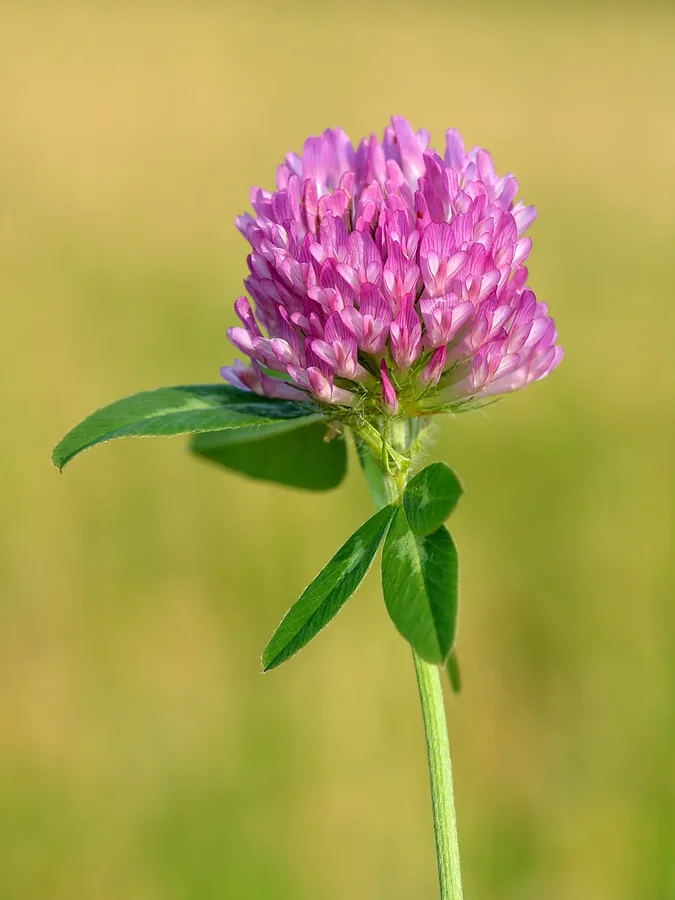
Red clover pulls its weight and then some. As a nitrogen-fixing legume it works two jobs at once, feeding grazing animals in the pasture and stocking the soil with free fertility for the next planting. It shoots up in an upright clump from a crown and a deep taproot to about 1 to 2 feet (30 to 61 cm), then crowns itself with rosy-pink flower heads that keep bumblebees working all summer.
Grow it knowing it lives fast: red clover is a short-lived perennial that gives two or three strong years before a stand thins, and the common medium types often run like biennials. Lean into that rhythm rather than fight it. The clover reseeds itself, and when you want more years out of a planting you can grab an improved cultivar or rotate the stand to keep things fresh.
Best of all, it launches with hardly any coaxing. Frost-seed it across a pasture during the late-winter freeze-thaw or drill it into a firm seedbed, and it takes hold faster than alfalfa. Feed it steadier moisture in return, since it handles drought a little less well, and it rewards you fast.
Care
The short version: full sun and fertile, well-drained loam, seed inoculated with the right Rhizobium and sown shallow, steady moisture while it takes hold, and a cut or graze 2 to 3 times a season to keep it charging.
Light
Red clover thrives in full sun and still soldiers on in partial sun or even partial shade. Pour on more light and it answers with a denser stand and a heavier bloom, so pick the brightest, most open spot you have.
Water
Keep young stands evenly moist to launch them fast, and never let the soil bake into a dry crust. Red clover roots in quicker than alfalfa but handles drought less, so it runs best on reliable water through the season. When rain lags, water every 5 to 10 days and keep it moving.
Soil
Set it into fertile, well-drained loam or clay loam and it takes off. Aim for a pH between 6.0 and 7.0, and count on it to shrug off slightly acidic ground better than most legumes.
Temperature
This plant is genuinely tough, hardy from about -29°F to 95°F (-34°C to 35°C). That cold-hardiness is the secret weapon behind frost seeding, letting it power through the freeze-thaw of a late-winter sowing.
Humidity
Forget chasing a humidity number, since ordinary outdoor air suits it fine. Put your attention on airflow and dry foliage instead, because warm, humid runs are when black patch and other leaf fungi try to muscle in.
Feeding
Since it fixes its own nitrogen, red clover asks for little to no added N, which frees you up. Inoculate the seed with Rhizobium at planting so the roots fire up that work, then add phosphorus and potassium if a soil test points that way.
Pruning
Mow or cut for hay 2 to 3 times a year to keep the stand cranking. Running it as a cover crop? Terminate it at mid-bloom by mowing or tilling, the peak moment when it has banked the most nitrogen.
Repotting
none
Size & spacing
12–24 in (30–61 cm) tall
When to plant
Red clover skips the indoor tray and dives straight into the ground. Sow it in spring or late summer, or frost-seed it in late winter and let the freeze-thaw drive the seed home, then watch the rosy heads roll in from late spring through summer.
Northern hemisphere
Southern hemisphere
Typical months for a temperate climate: start earlier in warm zones, later where spring frosts linger.
- Sow: Not typically started indoors; direct sown
- Plant: Spring or late summer; commonly frost-seeded or overseeded into small grains and pastures during freeze-thaw periods
- Harvest: Late spring through summer
Hardiness
USDA hardiness zones: 4–8
Temperature: down to -34°C
Troubleshooting
Most red clover setbacks come down to a thinning stand, a sluggish start, or the diseases and pests that surge in warm, humid weather. Spot the early signs and you can jump in to reseed, cut, or rotate before a patch goes bare. Match what you see below and move on it fast.
The stand thins and dies back after a couple of years
No cause for alarm, since red clover is a short-lived perennial that often runs like a biennial, so a stand fading in its second or third season is right on script. Root rots and foliar disease can retire the common medium types even quicker. Let it reseed, frost-seed fresh plants straight into the thin spots, or sow a hardier cultivar like Kenland or Freedom that keeps charging for 3 to 4 years.
Fix:
- Allow plants to reseed or interseed/frost-seed new clover into thinning stands
- Rotate or replant on a regular cycle
- Choose improved disease-resistant cultivars (e.g. Kenland, Freedom) that can persist 3-4 years
Patchy germination and a weak, thin start
Most stumbles trace back to seed that never got inoculated, which stops the roots from building the nodules that fix nitrogen, or to seed buried too deep in dry, crusted soil. Dig up a few young plants and scan the roots, since no pink nodules means the inoculant flopped. Coat the seed with fresh Rhizobium right before sowing, drive it no deeper than 1/4 inch into firm, moist soil, and time frost-seeding to the freeze-thaw so the seed muscles its own way into tight contact.
Fix:
- Inoculate seed with Rhizobium leguminosarum biovar trifolii (true clover inoculum) just before seeding
- Sow no deeper than 1/4 inch into firm, moist soil
- Frost-seed during freeze-thaw or seed into a prepared, firm seedbed for good seed-to-soil contact
Dark spots and ring patterns on leaves and stems
Those ringed, dark spots usually spell black patch disease, a fungus that erupts in warm, humid weather, with anthracnose and powdery mildew sometimes jumping in too. That same fungus cooks up the slaframine behind the harmless drooling in grazing animals, so pounce early. Cut or graze the affected forage early and haul off the clippings, drop any heavily infected hay, and plant anthracnose- and mildew-resistant cultivars.
Fix:
- Harvest or graze affected forage early and remove clippings
- Avoid feeding heavily infected, slaframine-tainted hay
- Plant anthracnose- and mildew-resistant cultivars
Stunted plants with chewed roots and notched, yellowing leaves
Down low, clover root curculio larvae gnaw the roots and nodules, while up top potato leafhoppers and clover weevils rip into the foliage and trigger the yellow scorch called hopperburn. Scout for notched leaves, leafhopper yellowing, and scarred crowns. A vigorous, well-fed stand powers through most of this feeding, and cutting early plus rotating fields snaps the pest cycles before they build.
Fix:
- Scout regularly and harvest early to reduce leafhopper damage
- Maintain vigorous, well-fertilized stands to tolerate feeding
- Rotate fields to break pest cycles
Toxicity
Here is the fun part: red clover is safe and non-toxic for people and pets, and the dried blossoms even land in herbal tea. Cats, dogs, rabbits, and birds can graze it freely. Only grazing horses and livestock call for a second glance, and both come down to forage management rather than any poison.
Safe for
People · Cats · Dogs · Horses · Rabbits · Livestock · Birds
Cats None
Red clover stays off the ASPCA toxic list, so a cat that grabs a leaf or flower has nothing to fear.
Dogs None
Dogs can chomp the foliage and blossoms freely, since the plant packs no toxin that reaches them.
Horses Mild
The clover itself is great forage and safe to graze. The one snag is mold, since hay or pasture carrying the black patch fungus can spark harmless drooling, the slobbers, which quits once you swap the feed.
Rabbits Safe
Leaves and flowers make a great treat for rabbits, served in sensible amounts alongside their usual hay.
Livestock Mild
Cattle, sheep, and goats power right through it. Just track two grazing quirks: slobbers from mold-infected forage, and frothy bloat when animals gorge on lush, pre-bloom clover, both of which good pasture management shuts down.
Birds Safe
Chickens and other birds can peck the leaves and seed heads at will, with no toxic parts to dodge.
People Safe
People have brewed the dried blossoms into herbal tea for generations. The flowers are edible, and the plant hides nothing harmful.
Safe around pets and people. Two livestock-specific issues exist: when infected by the black patch fungus (Rhizoctonia/Slafractonia leguminicola), red clover produces the alkaloid slaframine that causes harmless but profuse drooling (slobbers) in grazing horses and cattle; and lush clover can cause frothy bloat in ruminants. Neither affects cats or dogs.
Varieties
A handful of red clover types keep showing up, split mainly by how often you can cut them and how long a stand keeps charging. Get to know these by name and picking one gets easy.
Mammoth
A tall, vigorous late bloomer that slams most of its growth into one big first cutting, then takes its time bouncing back.
Medium (double-cut)
The go-to workhorse that regrows fast enough for two or more cuttings a year and keeps a stand going longer than mammoth.
Kenland
An improved medium red loaded with anthracnose and virus resistance, the edge that keeps it going for 3 to 4 years.
Freedom
A disease-resistant cultivar built for greater persistence and a longer stand life than the common types.
Companions
Red clover pairs best with grasses and grains that balance the pasture or shelter the young stand, and it works as a green manure ahead of a hungry crop like corn.
Plant near
Forage grasses (e.g. orchardgrass, timothy, perennial ryegrass): Grass mixtures dilute the legume in pasture to reduce bloat risk and improve forage balance.
Small grains (wheat, oats, barley): Red clover is commonly frost-seeded or overseeded into small grains, establishing under the nurse crop and fixing nitrogen for the following crop.
Corn: Used as a green manure ahead of corn, supplying fixed nitrogen when terminated.
How to propagate
Red clover grows from seed, full stop, which keeps propagation refreshingly simple. Put your energy where it pays off: inoculate the seed and drive it firmly into moist soil.
SeedEasy
Spring or late summer; often frost-seeded in late winter during freeze-thaw · Germinates in about 7 days; establishes within a few weeks to a season
Red clover comes from seed alone, sown in spring or late summer, or frost-seeded in late winter when the freeze-thaw drives it into the ground. Coat the seed with Rhizobium leguminosarum biovar trifolii first, then drive it no deeper than 1/4 inch into firm, moist soil. It bursts up in about 7 days and fills in over a few weeks to a full season. It reseeds itself but never creeps by stolons, so it stays right where you launched it.
Myths
Red clover and white clover are the same plant.
Not a chance, since these are two different clovers built for different jobs. Red clover stands tall and upright at about 1 to 2 feet (30 to 61 cm), springs from a crown and taproot in a clump, lasts only 2 to 3 years, and rides on bumblebees for pollination. White clover hugs the ground, creeps by stolons, lives longer, and pulls mostly honeybees. The quickest tell is dead simple: red clover never spreads by runners.