Tree · Meliaceae
Neem Tree
Azadirachta indica
Give it heat, sun, and free-draining soil, and the neem tree powers through drought and poor ground for decades.
Full sun
Every 7–21 days
USDA 10–12
50–75 ft · 15.2–22.9 m
Overview
Neem is a fast-growing evergreen of the mahogany family that races skyward from the start, native to south Asia and now growing across the warm stretches of Asia and Africa. Give it room and it climbs into a broad, shady tree in short order. People have put it to work for generations, chewing the twigs and pressing the seeds for oil.
The real draw for any gardener is neem's seed oil. The seeds brim with azadirachtin, a compound that puts insects off their food and throws their growth and breeding into disarray, which is exactly why gardeners turn neem into a natural pesticide. The leaves bring a long medicinal tradition of their own, staying far gentler than the concentrated oil.
Best of all, neem asks next to nothing once it settles in. It powers through heat at 113°F (45°C), laughs off drought, and takes hold in poor, rocky, even mildly salty ground. Its one true limit is cold, since frost cuts it back and a hard freeze can kill it, so it stays outdoors only in the warmest zones.
Care
The short version: full sun and warmth, deep well-drained soil, and a generous soak for young trees during dry spells while you let the surface dry between waterings. Once established it charges through drought and poor ground on its own, though it cannot take frost.
Light
Give neem full sun and it takes off in the open, though it gets by in partial sun or light shade. Pour on more direct light and the crown fills in denser and stronger.
Water
Soak young trees deeply through dry spells, then let the top half of the soil dry before the next round, roughly every 7 to 21 days. An established neem powers through real drought, and the one thing that stops it cold is waterlogged ground.
Soil
Set neem into deep, well-drained sandy or loamy soil and it takes off. It shrugs at poor, rocky, and mildly salty ground and works across a wide pH band of 6.0 to 8.0. Drainage rules the day, since the roots rot in soil that stays wet.
Temperature
This tropical to subtropical tree revels in heat right up to 113°F (45°C). The hard stop sits at the cold end, around 41°F (5°C), below which frost scorches the leaves and a freeze can kill a young tree.
Humidity
Average humidity in the 40% to 70% range keeps it humming, and it powers through the dry air of semiarid regions. Skip the misting and forget fussing over moisture in the air.
Feeding
Feed through spring and summer with a balanced slow-release fertilizer or compost, once a season and no more. Neem thrives on lean soil, so piling on feed only fuels pests by pushing out soft, sappy growth.
Pruning
Prune in late winter to early spring to shape the crown and clear out dead, damaged, or crossing branches. Neem bounces back from hard pruning and even pollarding, which makes it a champ for a clipped hedge.
Repotting
A container-grown neem wants repotting every 2 to 3 years while young, before the roots circle and choke the pot. In a frost-free climate, the smarter long game is to plant it straight into the ground.
Size & spacing
A mature neem is a giant, shooting to 50 to 75 feet (15 to 23 m) tall with a broad canopy that spreads 40 to 60 feet (12 to 18 m) across. Hand it plenty of open room and keep it well clear of buildings, paving, and smaller plantings.
When to plant
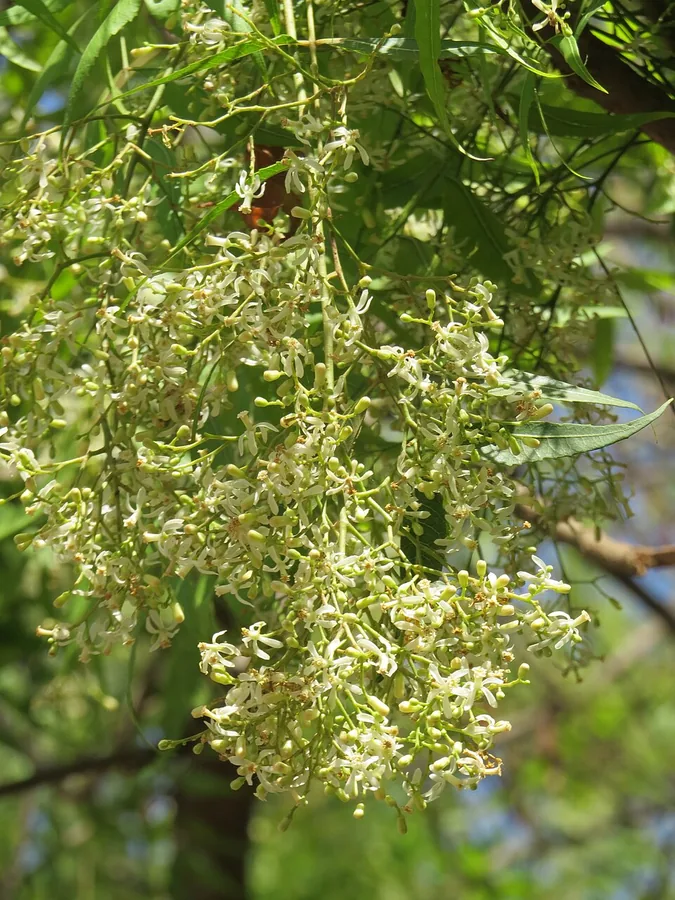
Neem runs on warmth and will not survive frost, so play the calendar right. Sow fresh seed under cover in late winter or early spring, set young trees out in spring once the soil warms and the cold has cleared, and watch for fragrant white flowers in spring followed by olive-like drupes from summer into early fall.
Northern hemisphere
Southern hemisphere
Typical months for a temperate climate: start earlier in warm zones, later where spring frosts linger.
- Sow: Late winter to early spring in frost-free warmth; sow fresh seed because viability is short
- Plant: Spring after all danger of frost, once soil is warm
- Harvest: White fragrant flowers in spring; olive-like drupes ripen summer to early fall
Hardiness
USDA hardiness zones: 10–12
Temperature: down to -1°C
Troubleshooting
Set a neem in the right climate and it gives you almost nothing to fix, so most trouble tracks back to cold, soggy soil, or sap-sucking pests. Learn to read the early signs on the leaves and roots and you can jump in before anything spreads. Match what you see below, then act while it still counts.
Wilting, yellowing growth over mushy dark roots
Catch a neem wilting and yellowing in soggy ground and root rot jumps to the top of the list. Dig down to check, and brown, mushy roots take the place of the firm pale ones you want. Nothing cures it once it grabs hold, so move fast: cut off the overwatering, rebuild the drainage, and replant into deep, sandy soil that dries at the surface between waterings.
Fix:
- Improve drainage and stop overwatering
- Remove affected plant material
- Replant in deep, sandy, well-drained soil
Crisped foliage and branch dieback when frost hits
Neem thrives on tropical warmth and simply meets its match in frost, so a cold snap browns the exposed outer foliage the instant temperatures drop below about 41°F (5°C). Plant it where it belongs, in zones 10 to 12, and it rewards you. When cold does strike, wait out the frost danger, prune away the dead wood, and shield young trees under cover or keep them potted so they ride out winter indoors.
Fix:
- Prune out dead wood after the danger of frost has passed
- Protect young trees with frost cloth or grow in containers that can be moved indoors
- Site in a warm, sheltered location
Sticky foliage under a blackish sooty crust
Spot a black film with a sticky feel and you have found sooty mold, thriving on the sugary honeydew that scale, whitefly, or aphids drip while they feed overhead. Good news travels fast here: the mold does no harm and wipes clean, so hunt down the real players on the shoot tips and leaf undersides. Rinse the foliage, tackle the pests with horticultural soap or oil, and put your garden's natural predators to work on the rest.
Fix:
- Rinse foliage and wipe off mold
- Control the sap-sucking insects with horticultural soap or oil
- Encourage natural predators
Toxicity
The leaves rate low in toxicity and carry a long history of medicinal use, so a curious nibble rarely calls for alarm. The real caution is the concentrated neem oil and the seeds, packed with azadirachtin and able to sicken pets and people if swallowed in quantity. Cats feel it most, so keep the oil and seed products stored well out of reach.
Toxic to
Cats · Dogs · People
Safe for
Horses · Rabbits · Livestock · Birds
Cats Mild
The leaves rate low in toxicity, but cats top the list of pets that react to concentrated neem oil. Swallowing the undiluted oil or wearing it as a treatment can bring on drooling, vomiting, and lethargy, and reported cases climb to tremors, twitching, and convulsions. Stash the seed oil and extracts somewhere a cat can never reach.
Dogs Mild
A nibbled leaf barely registers for a dog. The concentrated oil is what to guard against, since a swallow or a heavy application can spark vomiting, drooling, and a dull, sluggish dog. Dogs shrug off diluted topical neem more easily than cats do.
People Caution
Neem leaves carry a long medicinal history and rate low in toxicity, but the concentrated oil and the seeds play by different rules. Swallow them in quantity and vomiting or worse can follow, with small children most at risk, so keep neem oil and seed products stored safely.
Horses Safe
A grazing horse runs little risk from the foliage. Just lock away the concentrated neem oil and seed products where a horse cannot get to them.
Rabbits Safe
Browsed leaves stay low-toxicity for rabbits. The only real trouble hides in the concentrated oil or a pile of crushed seed, and a rabbit should never get near either.
Livestock Safe
Cattle, goats, and sheep browse neem foliage at little risk, and in parts of its range the leaves even pull duty as fodder. The seed oil is the exception and should stay out of the feed.
Birds Safe
Birds run no particular risk from the leaves or fruit. Just keep them clear of any concentrated oil or extract.
Keep concentrated neem oil and neem seed products away from pets; never apply undiluted neem oil to a cat or dog or allow them to ingest it.
Helpline numbers

United States
ASPCA Animal Poison Control: (888) 426-4435 (fee applies)
Poison Control: (800) 222-1222



Canada
Poison Centres: 1-844-764-7669
Varieties
Neem grows in two main forms, one bred for the kitchen and one for its potent seed oil. These are the two worth telling apart.
Azadirachta indica var. siamensis (Thai neem)
This Southeast Asian form serves up young leaves and flowers mild enough to eat as a vegetable, a treat the far more bitter common type never delivers.
Common neem (typical var. indica)
The widely grown South Asian type wins gardeners over with its azadirachtin-rich seed oil, which they press into a botanical biopesticide.
Companions
Neem earns its keep near vegetable and fruit crops, where its leaf and seed extracts deter many garden pests, but its dense shade, hungry roots, and allelopathic leaves make poor company for small plants growing right beneath it.
Plant near
Vegetable and fruit crops: Neem leaf and seed extracts are used as a botanical biopesticide that deters many garden pests.
Keep apart
Shallow-rooted understory plants: Its dense shade, vigorous roots and allelopathic leaf compounds suppress small plants growing directly beneath it.
How to propagate
Neem multiplies with ease, almost always from seed, with cuttings on standby for when fresh seed runs out or you want a copy of a particular tree.
SeedEasy
Sow fresh seed in spring in warm conditions · Germinates in 1 to 3 weeks; transplant after a few months
Raise neem from seed, the route nearly every grower takes, and let timing lead the way. The seed fades fast, so get it in soon after the fruit ripens while spring keeps things warm. It bursts up in 1 to 3 weeks and stands ready to transplant after a few months.
Stem cuttingsModerate
Warm season from semi-hardwood cuttings · Roots in several weeks under warmth and humidity
Out of fresh seed, or eager to copy a standout tree? Grab semi-hardwood cuttings during the warm season instead. Keep them warm and humid and they strike roots over several weeks.
Myths
Neem oil is botanical through and through, so no pet could ever be hurt by it.
Natural is not the same as harmless, because its active compound azadirachtin can trigger drooling, vomiting, and tremors, and concentrated neem oil has sickened and in some reported cases killed cats. Reach only for heavily diluted oil and keep the concentrate away from animals.
Neem drops any bug it touches on the spot.
Neem plays a longer game, mostly deterring feeding and throwing insect growth and breeding off track, so it works over days rather than seconds. It whittles a pest population down bit by bit instead of dropping everything on contact.