Vegetable · Aizoaceae
New Zealand Spinach
Tetragonia tetragonioides
Plant this heat-loving summer green and keep pulling tender leaves long after true spinach has bolted.
Full sun
Every 4–7 days
50–86°F · 10–30°C
50–70 days
Overview
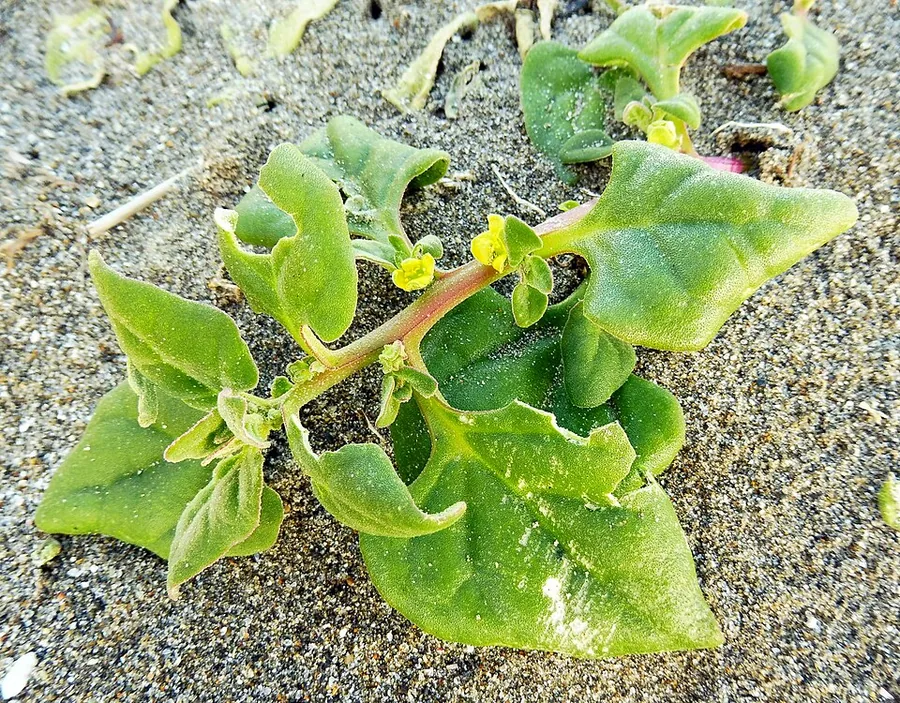
Just as the summer heat sends true spinach bolting to seed, New Zealand spinach kicks into gear. It isn't a spinach at all, but a fast, sprawling member of the fig-marigold family out of coastal New Zealand and Australia, where it romps across wild dunes and shingle. Cook the thick, soft leaves and they deliver that familiar spinach flavor you're after.
This plant runs low and wide, trailing across the ground into a dense mat a few feet across instead of climbing skyward. It revels in heat and dry spells and even powers through the salty, alkaline soil that stops most greens dead. Keep pinching the tender growing tips all season and it fires back fresh shoots, keeping the kitchen stocked right up to the first fall frost.
One thing to line up before you tuck in: the raw leaves pack oxalates and saponins, so this is a green you cook rather than heap into a salad. A quick blanch in boiling water and a pour-off of that water turns it into great eating, and that small bit of prep buys you a crop that keeps cranking out leaves when everything else has quit.
Care
The short version: hand it full sun and warm soil, with steady water through summer for the best leaves. Feed it monthly with a nitrogen-rich fertilizer, turn it loose with plenty of room to sprawl, and keep pinching the tips to drive new growth.
Light
Give it full sun for the heaviest, most flavorful leaves, though it'll take partial shade and keep cranking out growth. The more light it grabs, the more tips you'll get to pick.
Water
It shrugs off heat and drought once it's dug in, but the leaves taste best and stay tender with steady, even moisture through summer. Water every 4 to 7 days, and push toward the shorter end during a heat wave or in fast-draining sandy ground.
Soil
Plant it in well-drained sandy loam loaded with organic matter. A pH of 6.5 to 7.5 hits the mark, and unlike most greens it powers through alkaline and even salty coastal soil.
Temperature
This is a heat lover through and through, cruising from about 50°F to 86°F (10°C to 30°C) and peaking in the thick of high summer. Frost stops it cold, so wait for warm soil before planting out.
Humidity
Ordinary outdoor air suits it just fine, somewhere around 40% to 70%, and it isn't fussy either way. No number to chase here.
Feeding
Keep it fed to drive steady leafy growth, since a hungry plant pales and bolts early. Hit it with a nitrogen-rich fertilizer monthly through the season, roughly 1/4 cup of N per 10 feet of row, which also holds off premature flowering.
Pruning
Pruning and harvesting are one and the same job here, which is the fun part. Cut or pinch the top 4 inches of the growing tips often, and the plant fires out tender new shoots and stays productive instead of running to seed.
Size & spacing
Plants top out at just 12 to 24 inches (30 to 60 cm) tall but sprawl into a mat 3 to 4 feet (90 to 120 cm) across. Set them about a foot apart within the row and leave roughly 3 feet between rows so those trailing stems have room to run.
When to plant
New Zealand spinach is a warm-season crop that flat-out won't take frost. Start transplants indoors a few weeks ahead, launch them into the garden once the cold clears and the soil warms, then keep harvesting young leaves and tips right through the summer heat until the first fall frost.
Northern hemisphere
Southern hemisphere
Typical months for a temperate climate: start earlier in warm zones, later where spring frosts linger.
- Sow: Start transplants indoors 3-4 weeks before the last spring frost
- Plant: After the last frost when soil is warm; soak the hard seed in water ~24 hours before sowing and plant about 1 in deep
- Harvest: Harvest young leaves and growing tips continually through summer heat until the first fall frost
Hardiness
USDA hardiness zones: 9–11
Temperature: down to -7°C
Troubleshooting
This is a tough, easygoing plant, and most of what crops up is either cosmetic or a simple case of hunger. Nail the few signs below and you'll sort the real problems from the ones the plant just powers past.
Leaves losing their deep green while regrowth stalls
Washed-out leaves and pokey regrowth after a cutting are the plant crying out for nitrogen, and a hungry one races to bolt and flower early on top of that. Jump on it: side-dress with a nitrogen fertilizer, about 1/4 cup of N per 10 feet of row every month, and keep the soil evenly moist between feedings. Keep that monthly feed rolling and the leaves snap back to a deep green while the harvest keeps pouring in.
Fix:
- Side-dress with a nitrogen fertilizer
- Apply about 1/4 cup N per 10 ft of row monthly
- Keep soil evenly moist between feedings
Young leaves riddled with tiny round holes
Those tiny punched holes peppering the young leaves point straight to chewing beetles, usually flea beetles that hop onto the tender foliage. Good news though, it looks far worse than it is, and a strong, well-fed plant powers right through it. Throw a floating row cover over the seedlings early to head them off, and only reach for hand-picking or a treatment if the holes really start swamping the fresh growth.
Fix:
- Tolerate minor cosmetic damage; vigorous plants outgrow it
- Use floating row cover over young plants
- Hand-pick or treat only if damage becomes heavy
Stems sprawl and flop across the ground
That happy sprawl is the plant showing off exactly how it wants to grow. It runs on a naturally trailing, weak-stemmed habit, laying down a low carpet 2 to 3 feet wide instead of standing tall, and packing it in tight only cranks up the flop. Hand it 12 inches within the row and 3 feet between rows, turn the stems loose across open ground, and pinch the tips to drive bushier, fuller branching.
Fix:
- Allow 12 in within rows and 3 ft between rows
- Let stems trail into open ground or train through other vegetation
- Harvest tips to promote bushier branching
Toxicity
This is food, not poison, with one small catch to keep on your radar. The leaves pack natural oxalates and saponins, so people cook them rather than eat them raw in quantity, and those same compounds make the raw greens a mild caution for pets and livestock. Cook the leaves for the table and keep big raw helpings away from the animals, and everyone comes out ahead.
Toxic to
Cats · Dogs · Horses · Rabbits · Livestock · Birds
Safe for
People
Cats Mild
A quick nibble almost never amounts to anything. Push it to a big feed of the raw, oxalate-rich leaves, though, and a cat might drool or land a queasy stomach, and it isn't a listed ASPCA toxin.
Dogs Mild
Let a dog bolt down a big pile of raw leaves and the oxalic acid and saponins can hand it a mild stomach upset. Small tastes barely register and pass on their own.
Horses Mild
Those soluble oxalates make the raw greens a poor call in quantity for horses, since steady high-oxalate forage can throw off how they take up calcium. One stray mouthful, though, is unlikely to trouble a healthy animal.
Rabbits Mild
Keep the servings small and all is well. The oxalate load rules the raw leaves out as a rabbit-diet staple, though a little tucked in with other greens usually goes down fine.
Livestock Mild
Grazing animals can take some in stride, but the oxalic acid piles up when they feed on large amounts day after day. Serve it as one part of a varied diet rather than the main forage.
Birds Mild
Backyard hens and other birds pick at the foliage without much fuss, though the raw leaves are best doled out sparingly thanks to the oxalates.
People Edible when cooked
Here is the payoff: for people this is a genuine kitchen green, safe and tasty the moment it's cooked. Blanch the leaves for 1 to 3 minutes and tip out the water to cut the oxalates and saponins, and go easy on raw quantities if you are prone to kidney stones.
Blanch leaves in boiling water about 1-3 minutes and discard that water before eating to reduce oxalate and saponin levels; avoid eating large amounts raw, particularly for people prone to kidney stones.
Helpline numbers

United States
ASPCA Animal Poison Control: (888) 426-4435 (fee applies)
Poison Control: (800) 222-1222



Canada
Poison Centres: 1-844-764-7669
Varieties
There isn't much to pick from here, since New Zealand spinach almost always goes in as the plain species. Even so, a name or two turns up when you dig through the seed catalogs.
Maori
This named selection pops up in extension references, even though nearly all New Zealand spinach heads into the garden as the plain, unimproved species.
Common (species type)
The wild-type species is what most gardeners grow, since named cultivars of this plant are in seriously short supply.
How to propagate
Getting New Zealand spinach going is a breeze, and seed is the way to do it. The one trick worth having up your sleeve is coaxing that hard seed to sprout right on schedule.
SeedEasy
After the last frost when soil is warm, or start indoors 3-4 weeks before the last frost · About 1-3 weeks to germinate (faster if seed is pre-soaked); roughly 50-70 days to first harvest
Fire it up from seed, and give that hard, knobby fruit a running start by soaking it in water for about 24 hours before you sow. Drop it roughly an inch deep and thin the seedlings to a foot apart. Watch for germination in 1 to 3 weeks, quicker still if you pre-soaked, and your first harvest of leaves and tips in about 50 to 70 days.
Myths
This vigorous green is actually a genuine spinach variety.
The name plays a fun trick, because the plant actually belongs to the fig-marigold family (Aizoaceae) and shares no kinship with true spinach. It charges in as a heat-tolerant summer stand-in that keeps cropping long after the real spinach has bolted and called it quits.
Fresh-picked leaves can go straight into salads by the bowlful.
Those leaves carry oxalates and saponins, so they aren't the pile-it-high salad green they look like. Blanch them for 1 to 3 minutes and pour off the water before eating, and keep raw portions modest.
It powers through frost the way cool-season spinach does.
Not this one, because it's a tender warm-season crop and a frost will kill it outright. Hold your fire and sow or transplant only once the last frost has cleared out and the soil has warmed.