Tree · Ebenaceae
Persimmon
Diospyros kaki
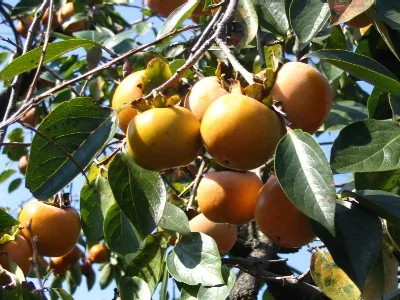
Set persimmon in blazing full sun, let it settle at its own pace, and bare autumn branches light up with fruit that hangs on deep into the cold.
Full sun
Every 7–14 days
USDA 7–10
20–30 ft · 6.1–9.1 m
Overview
The persimmon is a slow, easygoing fruit tree that pays out twice every year, and growing one is a real kick. It greens up all summer, then blazes through autumn and keeps its glowing orange fruit dangling from bare branches deep into winter. It belongs to the ebony family and stretches to a generous 20 to 30 feet (6 to 9 m) at maturity, so hand it real room instead of a cramped corner.
Most home growers grab the Asian persimmon, and it splits into two camps that shape the whole game. Astringent types like Hachiya stay fiercely tannic until they ripen to jelly soft, while non astringent types like Fuyu turn sweet and crisp and crunch just fine while firm. Pin down which kind you have and you nail exactly when to pick.
Once it settles in, the tree turns fairly drought tolerant and barely asks for feeding or pruning, so it practically runs itself. The patience all lands up front. A young tree takes its time digging in and coming into bearing, then rewards the wait with decades of fruit.
Care
The short version: hand it full sun and deep, well drained soil, keep the water steady while the tree is young and setting fruit, feed it lightly if at all, prune only to tidy the framework, and let astringent fruit ripen fully before you pick.
Light
Persimmon craves full sun, ideally most of the day. Pour more direct light on it and the fruit colors and sweetens harder, while the tree bulks up tighter and stronger.
Water
Water it regularly while it digs in and right through fruit development, letting the top half of the soil dry between drinks. Once established, the tree turns fairly drought tolerant and shrugs off dry spells, but it never wants its feet parked in waterlogged ground.
Soil
Set it into deep, moist, well drained loam. Persimmon rolls with clay, loam, or sand, so texture is no drama, but it hits its stride in slightly acidic ground at a pH of 6.0 to 6.5.
Temperature
Asian persimmon powers through a wide range, roughly 10°F to 95°F (-12°C to 35°C), which lines up with hardiness zones 7 to 10. It needs a real winter chill to fruit well, though a hard late frost can still nip the spring blooms.
Humidity
Plain outdoor air around 40% to 70% humidity is all it wants, so there is nothing to fuss over. Good airflow through the canopy counts for more, since it keeps leaf spot from ever grabbing hold.
Feeding
Go light on feeding. A balanced fertilizer in early spring earns its keep only when growth looks weak, because too much nitrogen drives fruit drop instead of a fatter crop.
Pruning
Pruning stays light. Cut out dead, hurt, or crossing branches in late winter, steer a young tree into a strong frame, and yank off root suckers the instant they push up.
Repotting
Persimmon is an orchard tree through and through, not a pot plant, so it gets rarely repotted. Plant it once in its forever spot with room to spread, then leave the roots to do their thing.
Size & spacing
Give it serious room. A mature tree shoots to 20 to 30 feet (6 to 9 m) tall and spreads 15 to 25 feet (4.5 to 7.5 m) wide, so plant it well clear of buildings, power lines, and other trees.
When to plant
Persimmon runs on a slow seasonal clock, so lean into the rhythm. Plant young trees in early spring once the hard frosts clear out, then watch for blooms in mid to late spring and fruit that colors up in fall and clings on into early winter.
Northern hemisphere
Southern hemisphere
Typical months for a temperate climate: start earlier in warm zones, later where spring frosts linger.
- Plant: Early spring after the last hard frost, as bare root or container trees.
- Harvest: Blooms mid to late spring; fruit ripens in fall and early winter.
Hardiness
USDA hardiness zones: 7–10
Temperature: down to -18°C
Troubleshooting
Persimmon is a tough, healthy tree that throws you very few real troubles. Most of what turns up is cosmetic or just a fruit quirk rather than a threat. Match the symptom below and the fix almost always comes out light.
Young fruit flushing yellow and quitting the branch before ripening finishes
A little fruit drop is just persimmon being persimmon, but a thirsty tree or one straining under too heavy a crop will fling off far more. Keep the soil evenly moist straight through fruit development and the tree holds its grip. Thin a heavy set nice and early, and the branches carry the survivors all the way to a rewarding harvest.
Fix:
- Keep soil evenly moist during fruit development and thin heavy crops.
Stationary bumps and cottony fluff crowding the twigs, sometimes topped with a black sooty coating
Spot little bumps or cottony fluff on the twigs and you have found sap feeding insects like scale or mealybugs, with sooty mold building that black film on the honeydew they drip. Light cases barely register, so there is no reason to sweat them. When a colony really takes off, hit it with horticultural oil and let the tree's natural predators charge in and finish the cleanup.
Fix:
- Usually minor; treat heavy infestations with horticultural oil and encourage natural predators.
Foliage peppered with dark, angular flecks
Catch dark, angular spots on the leaves and you are looking at fungal leaf spot, a purely cosmetic hiccup that hardly ever knocks a persimmon off stride. Rake up those fallen leaves and bin them so the spores get no cozy winter hideout, then open the canopy to send the air moving. A spray almost never enters the picture.
Fix:
- Rake and remove fallen leaves and provide good air circulation; rarely needs treatment.
Firm fruit hitting the tongue with a fierce, drying pucker
That dry, puckering grip fires off from soluble tannins in unripe astringent cultivars like Hachiya, and it says nothing about how the tree was grown. Let astringent types ripen all the way to jelly ripe and they reward you with pure sweetness. Non astringent types such as Fuyu skip the wait entirely and taste sweet even while firm.
Fix:
- Let astringent types soften fully before eating; non astringent types such as Fuyu can be eaten firm.
Toxicity
The ripe flesh is a safe, sweet treat for people, and the tree packs no chemical poison. The catch runs mechanical: those hard seeds and large amounts of fruit can knot up into indigestible masses, a real risk for horses and livestock grazing windfalls and for dogs that gorge on dropped fruit. Scoop up fallen persimmons and fence stock away from the tree once fruiting season lands.
Toxic to
Cats · Dogs · Horses · Rabbits · Livestock · Birds
Safe for
People
Cats Mild
No chemical toxin hides in the flesh, so a curious nibble goes nowhere fast. The catch is mechanical, since a swallowed seed or a belly packed with fruit can stir up mild stomach upset.
Dogs Mild
A dog that raids the windfalls can bounce back with vomiting or loose stool from the seeds and the sheer volume it wolfed down. Now and then a small dog that bolts several whole fruit, seeds and all, jams them into a blockage.
Horses Moderate
Horses top the watch list here. Grazing dropped persimmons across fall and winter can bind the seeds and pulp into a gastric phytobezoar, and that drives colic, impaction, lethargy, and weight loss.
Rabbits Mild
A little ripe flesh once in a while will not poison a rabbit, but the seeds and heavy sugar are no match for its gut. Keep persimmon to a rare treat and drop it altogether for young rabbits.
Livestock Mild
Cattle, sheep, and goats can browse a fallen fruit or two without chemical harm, yet a steady gorge on seedy persimmons courts the same impactions that hit horses. Fence them off the windfalls once fruiting season kicks in.
Birds Mild
Wild birds pile onto ripe persimmon and thrive on it, snapping up the soft flesh and passing the small seeds without a hitch. Pet birds should stick to seedless bites of ripe fruit and steer clear of the hard pits.
People Ripe fruit safe
Ripe persimmon is a delicious, safe fruit to devour fresh or dried. Wait for astringent types to soften, skip the seeds, and go easy on the count, since eating a great many on an empty stomach has been tied to bezoars.
Foliage and ripe flesh are not chemically toxic; the hazard comes from swallowed seeds and large amounts of fruit, especially unripe astringent fruit.
Helpline numbers

United States
ASPCA Animal Poison Control: (888) 426-4435 (fee applies)
Poison Control: (800) 222-1222



Canada
Poison Centres: 1-844-764-7669
Varieties
Persimmons break first into astringent and non astringent camps, and that single trait drives how you eat them. Here are the names you will run into most.
Fuyu
A non astringent Asian type that delivers sweet, crisp flesh you can crunch into while the fruit is still firm.
Hachiya
An astringent Asian type that ripens all the way to soft and jelly textured, and only then does the pucker melt into sweetness.
Jiro
A non astringent Asian type in the Fuyu mold, ready to eat firm and sweet straight off the tree.
American (Diospyros virginiana)
The native American persimmon powers through cold down to about minus 20°F to minus 25°F (-29°C to -32°C) and is often dioecious, so you will usually want both a male and a female tree to land fruit.
How to propagate
Persimmon gets propagated to lock in a known fruit, not for ease. Grafting keeps the cultivar true, while seed is a slower, wilder route used mostly to raise rootstock.
GraftingDemanding
Named cultivars almost always launch from grafting or budding onto seedling rootstock, and that is how a grower locks in the exact fruit of a Fuyu or Hachiya. It calls for a steady hand and sharp timing, which lands it at the demanding end of propagation, but nailing that union is a genuine thrill.
SeedModerate
Persimmon springs up readily from seed, but the seedlings arrive variable and slow to bear, so the fruit they end up giving is a roll of the dice. That is exactly why growers raise seed grown trees as rootstock for grafting rather than chasing a crop off them.
Myths
Puckering astringency comes standard with every persimmon.
Only the astringent cultivars like Hachiya need to soften before they sweeten up. Non astringent types such as Fuyu and Jiro are crisp and sweet eaten firm, with zero of the dry, puckering bite to slow you down.