Vegetable · Polygonaceae
Rhubarb
Rheum rhabarbarum
Plant one crown and rhubarb keeps rewarding you, sending up tart red stalks every spring while those big leaves happily fend for themselves.
Full sun
Every 5–10 days
365–730 days
USDA 3–8
Overview
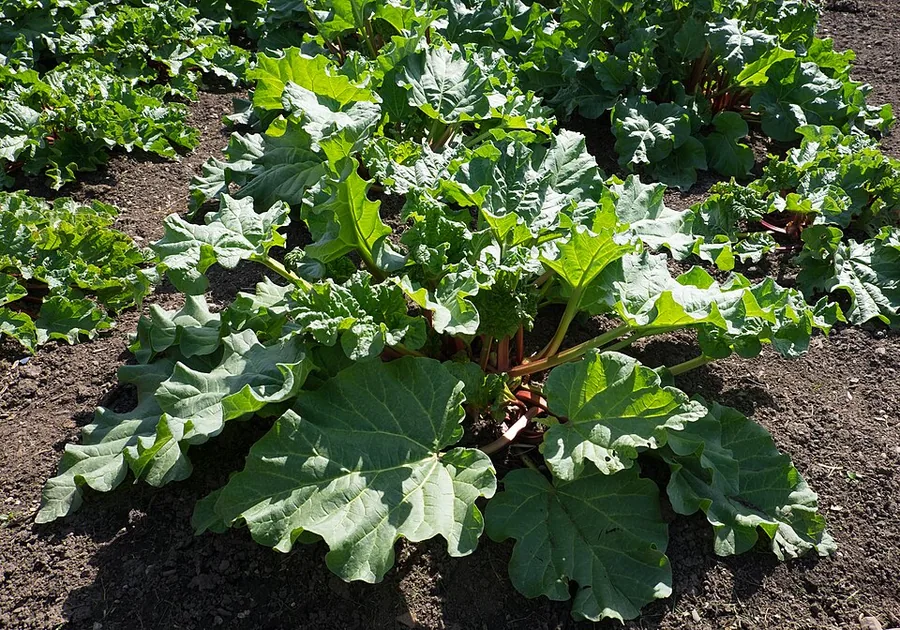
Rhubarb is the vegetable that heads straight for the dessert bowl, and that alone makes it fun to grow. Its tart red and green stalks cook down into pies, crumbles, and jam, which is how it landed the cheerful old name pie plant. It runs in the knotweed family and powers through cold that wipes out most crops, taking winters clear down to -40°F (-40°C).
Rhubarb rewards a gardener who plays the long game. Drop a crown in the ground and it takes hold as a long-lived perennial, firing up fresh stalks every spring for a decade or more before it wants dividing. Hold off the first year and go light the second, then from the third year on it delivers armloads of stalks.
Keep one rule front and center and the rest falls into place: eat the stalks, never the leaves. Those big leaf blades pack oxalic acid and turn toxic to people and animals, so off they come and into the bin they go. Nail that single habit and rhubarb becomes one of the most satisfying crops around.
Care
The short version: plant rhubarb in full sun and deep, fertile soil, and keep it watered at about an inch a week. Feed it in early spring as the crown fires up, mulch to keep the crown cool, and divide it every few years to keep those stalks coming thick and fast.
Light
Hand rhubarb full sun and it rewards you with the thickest stalks, though it copes with partial shade where summers run warm. Pile on the light and the crop comes in heavier and more productive every time.
Water
Keep the soil evenly moist but never waterlogged, which lands around an inch (2.5 cm) of water a week. Soak it deeper through hot, dry stretches, and pack on a thick organic mulch to trap moisture and keep the crown cool.
Soil
Set rhubarb into deep, fertile, well-drained loam loaded with organic matter and watch it take off. A pH of 6.0 to 6.8 hits the mark, and drainage is the deal-breaker, because a crown stuck in wet soil rots fast.
Temperature
Rhubarb eats cold for breakfast, thriving anywhere from -40°F to 86°F (-40°C to 30°C). It banks on a real winter chill to go dormant and come roaring back, so it drags where summers stay hot.
Humidity
Don't lose sleep over humidity; the everyday 40% to 60% outdoors does the job. Keep air ripping through those big leaves instead, since crowded, damp foliage rolls out the welcome mat for leaf spot.
Feeding
Hit rhubarb with one feeding in early spring as the crown fires up, using a balanced fertilizer or well-composted manure. It's a big eater, so rich soil plus that yearly spring boost keeps the stalks thick and pumping.
Pruning
The instant a central flower stalk shoots up, cut it off at the base, or the plant blows its energy on seed instead of stalks. Strip away any dead, yellowing, or frost-damaged leaves too, and always bin those toxic blades rather than feed them to animals.
Repotting
Rhubarb lives in the ground for good, but the crown craves dividing every 5 to 10 years to keep its fire. Thin, spindly stalks or a clump dying out in the middle is your green light to lift it, split it, and replant the powerhouses.
Size & spacing
A grown plant rockets to 2 to 4 feet (60 to 120 cm) tall and fans out just as wide, so hand each crown 3 to 4 feet (90 to 120 cm) of room. Those big leaves want the space for air to whip through and for the plant to bulk up.
When to plant
Rhubarb marches to the cold, so let the season set the pace. Get dormant crowns in the ground in early spring the moment you can work the soil, then let the plant charge up its roots that first year. Stalks roll in from spring into early summer, and by the third year you can harvest to your heart's content.
Northern hemisphere
Southern hemisphere
Typical months for a temperate climate: start earlier in warm zones, later where spring frosts linger.
- Sow: start seed indoors 8-10 weeks before the last spring frost (seed-grown plants are slow and variable)
- Plant: set out dormant crowns in early spring as soon as the soil can be worked (fall planting also works in mild areas)
- Harvest: harvest stalks in spring through early summer; do not harvest the first year, take only a few stalks the second year, and harvest fully from the third year onward
Hardiness
USDA hardiness zones: 3–8
Temperature: down to -40°C
Troubleshooting
Rhubarb shrugs off most trouble, and what does crop up almost always ties back to a crowded crown, wet soil, or a blast of summer heat. Get quick at reading the stalks and leaves and you'll pounce on a problem while it's still small. Match your symptom below and jump on it before the plant loses steam.
A soft brown crown and a plant crashing down
When the crown goes soft, brown, and mushy and the plant caves, that's crown rot, usually wet feet in slow-draining soil and sometimes a fungus like Phytophthora crashing the party. A rotted crown is a lost cause, so dig it out and destroy it. Replant healthy divisions on a raised, well-drained spot, and keep mulch clear of the crown.
Fix:
- Remove and destroy affected crowns
- Improve drainage and replant healthy divisions on a raised, well-drained site
A tall flower stalk blasting up from the center
That tall stalk crowned with creamy blooms is bolting, the plant scrambling to set seed when the heat climbs or the crown gets old and crowded. It siphons off the energy the stalks want, so cut it at the base the instant it shows. Keep the plant watered and mulched, and divide those tired crowns to shut it down next year.
Fix:
- Cut the flower stalk off at its base as soon as it is seen
- Keep plants consistently watered and mulched
Stalks pushing up thin, short, and weak
Skinny stalks nearly always shout overcrowded crown, one that's run clean out of room, with poor soil and over-harvesting piling on. Lift and split the crown in early spring, replant the strongest pieces, and load it up with compost or a nitrogen-rich fertilizer. Then back off the harvest for a season and let the plant rebuild its muscle.
Fix:
- Divide the crown in early spring and replant vigorous pieces
- Top-dress with compost or a nitrogen-rich fertilizer
- Reduce or stop harvesting for a season to let the plant recover
Spots or chewed holes tearing up the big leaves
Round tan-to-purple spots flag a fungal leaf spot like Ascochyta or Ramularia, while ragged holes mean slugs or the rhubarb curculio are on the move. Rip off the worst leaves and destroy them, open the planting up so air rips through, and water at the base. Hand-pick the beetles and chase down the slugs to knock it back.
Fix:
- Remove and destroy badly affected leaves
- Improve air circulation and avoid overhead watering
- Hand-pick beetles and manage slugs
Toxicity
Rhubarb draws a sharp line between what you can eat and what you can't, so learn it and grow with confidence. The cooked stalks are great eating, but the big leaf blades load up on oxalic acid and anthraquinone glycosides that are toxic to people, cats, dogs, horses, and livestock. Snip the leaves off, stash them where no animal can reach, and never hand trimmings to a pet or grazing stock.
Toxic to
Cats · Dogs · Horses · Rabbits · Livestock · Birds
Safe for
People
Cats Moderate
A cat that nibbles a leaf blade quickly starts drooling and pawing at its mouth, then vomits and slows right down. A bigger mouthful hits harder, since the oxalates can spark tremors and strain the kidneys.
Dogs Moderate
A dog that chews the foliage tends to drool, get an upset stomach, drop its appetite, and slump into a nap. Enough of it and those same crystals can trigger tremors and kidney damage.
Horses Moderate
The blades sting a horse's mouth and kick off heavy drooling, colic-like cramping, and weakness. A big feed threatens lasting kidney harm, so fence horses well clear of the foliage.
Rabbits Toxic
For rabbits the oxalic acid in the leaves is flat-out dangerous, with no safe amount at all. Keep every blade and trimming way out of reach.
Livestock Toxic
Cattle, sheep, and goats that graze the leaves can crash into severe oxalate poisoning, with drooling, gut pain, staggering, and kidney failure. Never fling leaf trimmings into a pasture or pen.
Birds Toxic
The same oxalic acid and anthraquinone compounds make the leaves off-limits for poultry and pet birds alike. Don't let the backyard hens scratch through blades you've tossed.
People Stalks safe
Cooked rhubarb stalks are a kitchen classic and totally safe to eat, but the leaf blades are a hard no. They carry oxalic acid that brings a burning mouth, nausea, and vomiting, so trim the leaves off and throw them out.
The red or green leaf STALKS (petioles) are safe to eat when cooked, but the large LEAF BLADES are toxic to pets and people and must never be eaten or fed to animals. Cut blades off and dispose of them; do not leave trimmed leaves where pets or livestock can reach them.
Helpline numbers

United States
ASPCA Animal Poison Control: (888) 426-4435 (fee applies)

United Kingdom
Animal PoisonLine: 01202 509000 (fee applies)

Australia
Animal Poisons Helpline: 1300 869 738
Varieties
Just a handful of rhubarb cultivars dominate most gardens, and they set themselves apart by color, sweetness, and staying power. These are the names to chase down before you plant.
Victoria
Victoria is a vigorous heirloom flaunting green stalks that blush pink at the base, and it's the one cultivar most growers start from seed.
Canada Red
Canada Red holds a deep red color the whole way up the stalk and delivers a sweeter, less stringy bite than most.
MacDonald
MacDonald brings tender, bright red stalks plus real resistance to root rot, making it the go-to for heavier soils.
Glaskins Perpetual
Glaskins Perpetual runs on less oxalic acid, which stretches your harvest later into the season than the rest.
How to propagate
The fastest, surest way to build up your rhubarb is to split an established crown. Feeling adventurous? Fire up some seed instead, as long as you're good with a longer wait and a bit of a wildcard.
DivisionEasy
Early spring while the crown is dormant (fall is also possible) · 1-2 years before light harvest, with full harvest by the third year
Division is the surest, most rewarding way to crank out more rhubarb. Lift a dormant crown in early spring, chop it into pieces that each carry one or two strong buds and a solid chunk of root, and replant them with the buds sitting just at or below the soil line. Give each one a year or two before a light pick, then a full harvest by the third year. Best of all, every division comes up true to its parent.
SeedModerate
Start indoors 8-10 weeks before the last spring frost, then transplant out · 2-3 years to a full harvest
Growing rhubarb from seed is doable, but it's slow and a bit of a gamble. Sow indoors 8 to 10 weeks before your last spring frost, transplant out, and count on 2 to 3 years before a full harvest. Seedlings vary and won't come true to a named cultivar, so chase seed for the thrill and lean on division for varieties you can count on.
Myths
The entire rhubarb plant is poisonous and none of it is safe to eat.
Not so, only the leaf blades are toxic, thanks to oxalic acid and soluble calcium oxalates. The cooked stalks are safe, everyday food that's powered pies and crumbles for generations. Lop the blades off, bin them, and dig into the stalks.
Rhubarb stalks go poisonous once the plant flowers or after a hot summer.
Flowering and heat leave the stalks totally safe. The poison stays locked in the leaf blades, never the stalks, so a bolting plant is still yours to harvest. Just snap off the flower stalk and keep the crop rolling.