Shrub · Polygonaceae
Silver Lace Vine
Fallopia baldschuanica
Plant it, stand back, and watch a bare fence vanish under froth of white bloom in a single season.
Full sun
Every 7–14 days
USDA 4–9
20–35 ft · 6.1–10.7 m
Overview
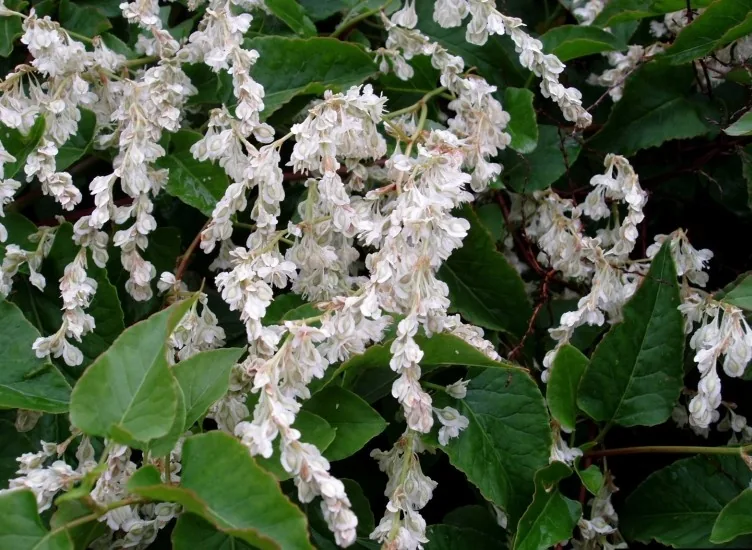
Silver lace vine grows like almost nothing else in the garden. Its twining stems race up an arbor or fence and, by late summer, break into froth of tiny creamy-white flowers that cover the whole structure. Hardy across zone 4 to 9, it powers through cold, heat, drought, and lean soil without slowing down, which makes it one of the most rewarding fast climbers to grow.
That speed is the thrill and the challenge in equal measure. One season can pile on 10 to 15 feet of new growth, and the vine keeps right on going past its support, sending up suckers and dropping seed into the ground around it. The nickname says it all, mile-a-minute vine, and parts of the midwestern and northeastern US flag it as weedy or invasive.
Set it up right and it pays back every bit of effort. Hand it a big, strong support well clear of trees, gutters, and prized beds, then get into the swing of cutting it back hard once a year. Do that and the cover and the bloom are yours to enjoy. Let it slide, and the vine charges ahead on its own terms.
Care
The short version: plant it in full sun and any well-drained soil, water it only while it is young, skip the feeding, and cut it back hard every late winter to keep all that eager growth pointed where you want it.
Light
Aim for full sun and this vine flowers its hardest. It still grows in partial sun or partial shade, no trouble, but every step away from full sun trims back the number of lacy sprays it throws.
Water
Keep young plants watered while they dig in, then back right off, because a settled vine turns very drought tolerant and powers through dry weather on its own. After the first season, only a long dry spell calls for a drink, every 7 to 14 days at the most.
Soil
This climber takes almost any well-drained soil in stride, loam, silt, or sand, right across a pH of 5.5 to 8.0. Lean, hungry ground is actually the smart pick, since it reins in the vine's urge to run.
Temperature
Toughness is where this vine shines. It powers through everything from -29°F to 100°F (-34°C to 38°C), so blazing heat and hard cold barely break its stride.
Humidity
Humidity is a non-issue outdoors, so there is nothing to track. Whatever moisture the season brings, the vine takes it in stride and keeps growing.
Feeding
Go light on feeding, or skip it outright. This vine already grows flat out, so fertilizer rarely earns its place, and one spring dose of a balanced or low-nitrogen feed only makes sense if growth genuinely lags. Extra nitrogen just throws fuel on the rampant growth you are trying to steer.
Pruning
Pruning is where the real action is with this plant. Since it flowers on new wood, cut it back hard in late winter or early spring to hold its size and drive fresh growth, dropping it to 1 to 3 feet for a full reset. Keep the shears busy through the season and it stays right where you want it.
Repotting
It rarely lives in a pot, and when it does, it almost never needs moving up. Keep an eye out for roots circling or breaking out of the container, soil that dries in a flash, or top growth that stalls, all signals it wants more root room.
Size & spacing
Give this vine room to run and something rock-solid to climb. It rockets 20 to 35 feet (6 to 10.5 m) up and spreads 2 to 25 feet (61 cm to 7.5 m) wide, so set it well clear of anything it could bury.
When to plant
Get silver lace vine in the ground in spring once frost has cleared, or in early fall while the soil still holds its warmth. It flowers on the season's fresh growth from midsummer into fall, which is exactly why the big cutback lands in late winter, ahead of the shoots that will carry the show. Time it right and not a single bloom goes to waste.
Northern hemisphere
Southern hemisphere
Typical months for a temperate climate: start earlier in warm zones, later where spring frosts linger.
- Sow: Late winter to early spring, 6-8 weeks before last frost (seed propagation is uncommon; cuttings and layering are easier).
- Plant: Spring after last frost, or early fall.
- Harvest: Mid/late summer into fall (roughly July to frost).
Hardiness
USDA hardiness zones: 4–9
Temperature: down to -34°C
Troubleshooting
Pests barely register on this vine; its one real quirk is growing too well for its own good. Nearly everything on the list below is about steering that energy, not rescuing a struggling plant. Spot what is happening and jump on it early, while you still have the upper hand.
Vine racing over its support and charging into the garden
This is the flat-out vigor that makes silver lace vine what it is, the plant simply running at full tilt. Fresh shoots can rocket 10 to 15 feet in one season while the crown throws suckers and self-seeds into nearby ground. Hit it with a hard cut each late winter, keep the shears going all summer, and pull seedlings and suckers the moment they appear to stay firmly ahead of it.
Fix:
- Prune hard in late winter and again through the growing season to keep it in bounds
- Cut back to 1-3 ft for full renovation when overgrown
- Remove suckers and pull or mow seedlings as they appear
- Install a sturdy, oversized support and keep it clear of trees, shrubs, and gutters
Summer leaves chewed into ragged holes
Most of this is Japanese beetles going to work, metallic green-and-bronze insects that chew the foliage into lace. Pale, winding trails inside a leaf flag leaf miners instead. Flick the beetles into soapy water at first light, pull any mined leaves, and shrug off the rest, because a vine growing this fast blasts right past the damage.
Fix:
- Hand-pick Japanese beetles into soapy water in early morning
- Tolerate minor damage, as the vine outgrows it
- Remove and dispose of mined leaves
Toxicity
Here is a win for busy households: silver lace vine carries no toxic listing and rates safe for cats, dogs, and people alike. Poisoning never enters the picture with this one. The only thing to stay on top of is the heavy pruning, which is a matter of gloves and loppers, not anything in the leaves.
Safe for
People · Cats · Dogs · Horses · Rabbits · Livestock · Birds
Cats Safe
A cat can snack on a leaf with zero worry, since silver lace vine never turns up on the ASPCA's toxic list.
Dogs Safe
Dogs can chomp the foliage without any poisoning risk, though a giant mouthful of any plant might leave a touchy stomach grumbling for a bit.
Horses Safe
Horses are in the clear here and can graze the leaves and shoots to their heart's content.
Rabbits Safe
Rabbits get on fine with this vine, and the soft new growth is safe for them to nibble.
Livestock Safe
Cattle, goats, and sheep can range right up to silver lace vine with no poisoning risk at all.
Birds Safe
Birds take no harm from it, and plenty of them dive into its dense, fast-growing tangle for cover.
People Safe
People face no poisoning risk whatsoever. The one thing to mind is the heavy pruning, so glove up and grab the loppers.
No special handling for toxicity; wear gloves and use loppers for the heavy seasonal pruning this vine requires.
Varieties
Only a couple of named forms of silver lace vine are out there to track down, and the pick between them comes down to leaf color and just how big each one gets.
Lemon Lace
A steadier, deer-resistant pick that tops out near 20 to 30 feet, throwing the usual white flowers over chartreuse-to-gold leaves on red stems.
Species (Fallopia baldschuanica)
The straight species and the most vigorous form going, driving bright green heart-shaped leaves and frothy, lacy sprays of tiny fragrant flowers in creamy-white to greenish tones.
How to propagate
Multiplying silver lace vine is almost too easy, and that eagerness to root is the very trait that fuels its spread. Cuttings, layering, and division all take with next to no effort, and the plant will happily sow its own seed on top of that.
Stem cuttingsEasy
Late spring to summer (softwood/semi-hardwood) · A few weeks to root; established in one season
Start here, it could not be easier. Snip softwood or semi-hardwood cuttings from new growth between late spring and summer, and they root in a few weeks and bulk right up over the first season.
LayeringEasy
Spring to summer · One season
Pin a trailing stem against the soil anytime from spring to summer and it roots right where it lands, handing you a brand new plant inside a single season.
DivisionEasy
Late winter to early spring · One season
Come late winter or early spring, split the crown or lift one of the rooted suckers this vine throws so freely, and each piece charges into growth over the season.
SeedModerate
Start indoors late winter to early spring · A season or more
Less common, and slower, but it works. Sow seed indoors in late winter or early spring and give it a season or more to take hold, though the vine also seeds itself into nearby ground without any help.
Myths
Silver lace vine is just Japanese or giant knotweed by another name.
They share a family, true, but they are far from the same plant. Silver lace vine is the climbing, white-flowered ornamental, while Japanese and giant knotweed shoot straight up like bamboo and stand among the most destructive invasives going. Silver lace vine can still run weedy, but it is easily the tamer cousin.