Houseplant · Moraceae
Rubber Plant
Ficus elastica
Hand it bright indirect light and a settled corner, and the rubber plant climbs into a glossy, easygoing indoor tree.
Bright indirect
60–80°F · 16–27°C
USDA 9–12
2–10 ft · 0.6–3 m
Overview
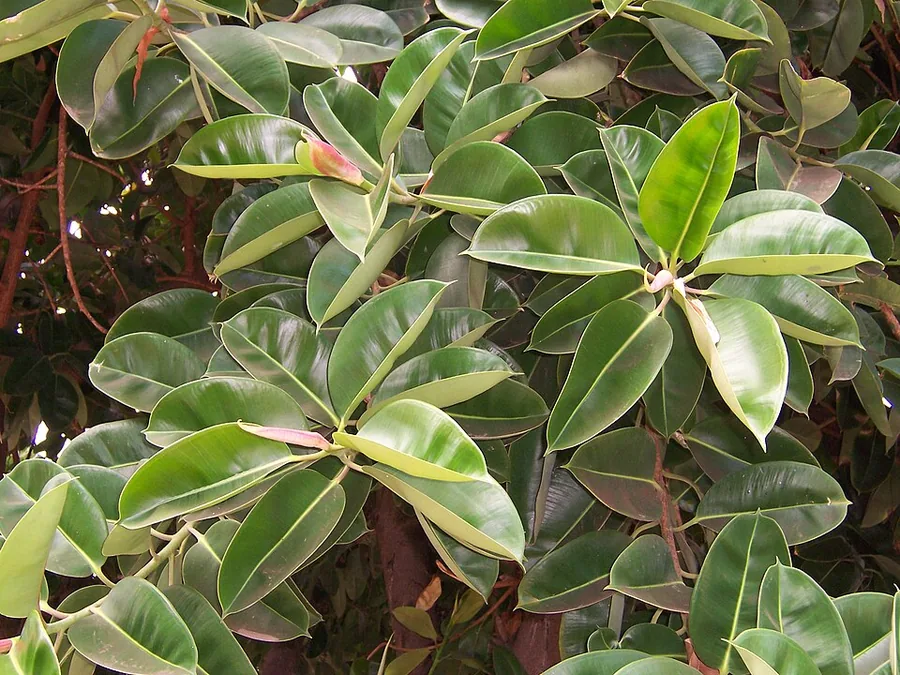
Few large houseplants reward you as readily as the rubber plant. A member of the fig clan, it hails from the forests running from Nepal across into southern China and on into western Malesia, where it shoots up into a giant of a tree. Tamed indoors it holds at a workable 2 to 10 feet (60 cm to 3 m), hoisting thick, lacquer-shiny leaves that command attention in any room.
Its easy nature comes down to sheer tolerance. Bright indirect light brings out its best, yet it copes with dimmer corners better than nearly any other big leafy plant, and it laughs off the occasional skipped watering. What it truly resents is upheaval, so a steady spot clear of drafts keeps every leaf firmly attached.
Slice into any part and out flows a milky latex sap. That ooze is exactly what earned the rubber plant its name, and it is also your cue to grab gloves before pruning. The sap can sting skin and runs mildly toxic to cats and dogs, so set the plant down with both your pets and your people in mind.
Care
The short version: bright indirect light, a warm and settled corner, and one deep soak only after the soil surface has dried a touch. Feed across spring and summer, and pull on gloves any time you cut into it.
Light
Set the rubber plant in bright indirect light beside a window that dodges the harsh afternoon glare. It will soldier on in partial shade or low light, though growth eases off and variegated forms fade a little of their color in the gloom.
Water
Soak it deeply, then hold off until the soil surface has dried slightly before the next round. Confirm the pot drains and tip away whatever gathers in the saucer, since standing water rots roots faster than anything else. Dial the watering back from fall through late winter as growth idles.
Soil
Pot it up in a well drained, soil-based potting mix. It stays relaxed about pH and takes anything across 6.0 to 8.0, so aim for a blend that drains freely rather than one that clings heavy and damp.
Temperature
Hold it in the 60°F to 80°F (16°C to 27°C) band it favors, pairing warm days with cooler nights. Keep it above 55°F (13°C) and clear of cold drafts, since a sudden chill ranks among the top reasons leaves let go.
Humidity
Everyday household humidity sits just right, with no figure to fuss over. It tips toward humid air yet rides out the dry indoor heat of winter without complaint.
Feeding
Feed every two weeks across spring and summer with a water-soluble houseplant fertilizer while growth is in full swing. Pull back in dimmer light and through the cool stretch, when its appetite drops sharply.
Pruning
Trim in spring to rein in the height, refresh tall leggy stems, or steer the plant toward a fuller shape. Leave it be and it rises into a tall, tree-like form, so pruning is your call, not a duty. Always wear gloves, since the cuts weep irritating latex.
Repotting
Shift it to a bigger pot in late winter or early spring once it has outgrown its home. Bump it up only a size or two at a stretch into fresh, well drained mix, and keep those gloves on for this job as well.
Size & spacing
Indoors a rubber plant climbs to 2 to 10 feet (60 cm to 3 m), racing upward in good light. Hand it floor room and headroom to match, since unchecked it keeps reaching for that tree-like form.
Troubleshooting
Nearly every rubber plant hiccup circles back to watering or an abrupt change in its surroundings. Catch the cues in the leaves and roots early and the cures are quick. Spot your symptom below, then act before a small slip snowballs.
Drooping while the soil sits soaked
A rubber plant that flops in waterlogged soil is flagging root rot. The roots go soft and dark and stop pulling up water, so the whole plant sags even with moisture all around it. Slash your watering hard, snip out the dead roots, and move it into fresh, fast draining mix in a pot that truly lets water through.
Fix:
- Reduce watering
- Repot into a well-drained mix and a pot with drainage holes
- Remove affected roots
Yellowing creeping up from the bottom leaves
When a rubber plant yellows, point the finger first at soil that never gets to dry out. One or two yellow leaves right at the base can just mark old growth bowing out, but once the color marches higher, back off the watering, confirm the pot actually drains, and pour out anything pooling in the saucer.
Fix:
- Reduce watering frequency
- Ensure the pot has drainage holes and empty the saucer
- Use a well-drained, soil-based mix
Foliage falling after a relocation or a cold snap
A rubber plant sheds leaves whenever its world shifts. Thin light, a chilly draft, parched air, or waterlogged roots can all trigger the drop, and so can ferrying the plant around the house. Park it in one bright, dependable corner clear of drafts and heat vents, hold it above 55°F (13°C), and take a fresh look at your watering rhythm.
Fix:
- Move to a brighter, stable location with bright indirect light
- Keep away from cold drafts and heat sources; keep above 55°F
- Avoid frequently relocating the plant
- Check and correct watering
Sticky film, fine webbing, or tiny bumps along the stems
A whole crew of sap-sucking pests targets rubber plants, and every one drops a telltale clue. Hunt for the cottony white fuzz of mealybugs, the firm little bumps of scale, the fine webbing and speckling of spider mites, and a tacky sheen spreading over the foliage. Sponge the leaves clean, hit them with insecticidal soap or horticultural oil, and quarantine the plant away from the rest until it bounces back.
Fix:
- Wipe or wash insects off the foliage
- Treat with insecticidal soap or horticultural oil
- Isolate the plant until the infestation clears
Toxicity
Treat the rubber plant as strictly no-chew. Its milky latex sap carries ficin and a psoralen that can sting the mouth and stomach of cats and dogs and leave human skin red and raw on contact. Not one part is edible, so set it beyond the reach of pets and small children and handle it with gloves on.
Toxic to
Cats · Dogs · Horses · Rabbits · Livestock · Birds · People
Cats Mild
Bite into a leaf and a cat will usually drool and paw at its mouth as the latex stings, with queasiness and a bit of vomiting trailing behind. That same sap can redden and sting the skin wherever it lands.
Dogs Mild
After a chew, dogs often drool and act sore around the mouth, then bring up a meal or turn off their food shortly after. The reaction stays mild, yet the gummy sap can still leave skin sore where it touches.
Horses Caution
NC State flags this plant as toxic to horses. That latex would sting the mouth and gut just the same, and while a horse seldom crosses paths with an indoor fig, stash cuttings and dropped leaves well away.
Rabbits Caution
The milky sap packs the very irritants that trouble cats and dogs, so a grazing rabbit courts a stinging mouth and a roiling belly. Keep it from browsing the leaves at all.
Livestock Caution
Any grazing animal that reaches the foliage can pick up mouth and gut irritation from the latex. It belongs nowhere near a pasture, so the genuine danger is tossed trimmings or a potted plant left within range.
Birds Caution
A pet bird can react to the stinging sap should it chew the leaves, so rule it off-limits and keep perches and cages well clear of the foliage.
People Caution
That milky latex irritates skin and eyes and can spark contact dermatitis, hitting hardest in anyone carrying a natural-rubber latex allergy. Nothing on the plant is edible, so pull on gloves before you prune or repot and keep the sap off bare hands.
The milky latex sap can irritate skin and eyes and cause contact dermatitis in sensitive people (Ficus latex also cross-reacts with natural-rubber latex allergy); wear gloves when pruning or repotting
Helpline numbers

United States
ASPCA Animal Poison Control: (888) 426-4435 (fee applies)
Poison Control: (800) 222-1222



Canada
Poison Centres: 1-844-764-7669
Varieties
Almost every rubber plant on a shelf belongs to one of a few named forms, running from plain glossy green through dark maroon to bold variegation. Here are the ones worth knowing.
Robusta
Far and away the most widely grown pick, beloved for its big, leathery, deep green leaves.
Decora
A wide-leaved form that has held its place as a houseplant staple for decades.
Rubra
Wears reddish to deep maroon leaves that hand it a darker, broodier presence.
Tricolor
A variegated pick streaked with green, cream, and a wash of pink.
Doescheri
One more variegated form ranked among the ornamental rubber plants.
How to propagate
Multiplying rubber plants asks for a dose of patience, yet both go-to methods deliver once you plan around the unhurried rooting and the messy sap.
Stem cuttingsModerate
Spring to summer during active growth · Several weeks to a couple of months to root
Snip stem or tip cuttings through spring or summer while growth is charging along. The cut ends weep milky latex, so rinse or dab it away before you pot the cutting. Rooting drags here, stretching anywhere from several weeks to a couple of months.
Air layeringModerate
Spring to summer · Several weeks to root before separating from the parent
Air layering is the standout move for tall or leggy rubber plants. Roots form on a stem that stays joined to the parent over several weeks, and once they take hold you cut the fresh plant loose.
Myths
The rubber plant is a safe, pet-friendly houseplant.
The ASPCA tags it as toxic to cats and dogs, and that milky latex can sting skin or upset the stomach. The culprits are ficin, a proteolytic enzyme, plus a psoralen in the sap, so keep it well clear of pets and children.
Like many irritating houseplants, the rubber plant's bite comes from calcium oxalate crystals.
Those crystals are the reason philodendron and dieffenbachia sap burns, but a rubber plant runs on a different mechanism. Its sting traces to the milky latex itself, the enzyme ficin and the psoralen ficusin, with no oxalate crystals in play.
Rubber plants need bright direct sunlight.
Direct rays, above all the fierce afternoon kind, will scorch the leaves. They thrive in bright indirect light or part shade, and they shrug off dimmer corners better than most.