Shrub · Aquifoliaceae
Sky Pencil Holly
Ilex crenata
A skinny green rocket of a shrub for tight corners, happy on acidic soil and a little winter care.
Full sun
Every 5–10 days
USDA 5–8
4–10 ft · 1.2–3 m
Overview
Sky Pencil Holly turns a Japanese holly into a tall, skinny green column, and it packs a lot of impact into hardly any ground. It shoots up to 4 to 10 feet (1.2 to 3 m) yet stays a trim 1 to 3 feet (30 to 90 cm) wide, so it slides into spaces that stump most shrubs. Plant it to frame a doorway, march a row of them down a path, or pop a pair up as bold green uprights.
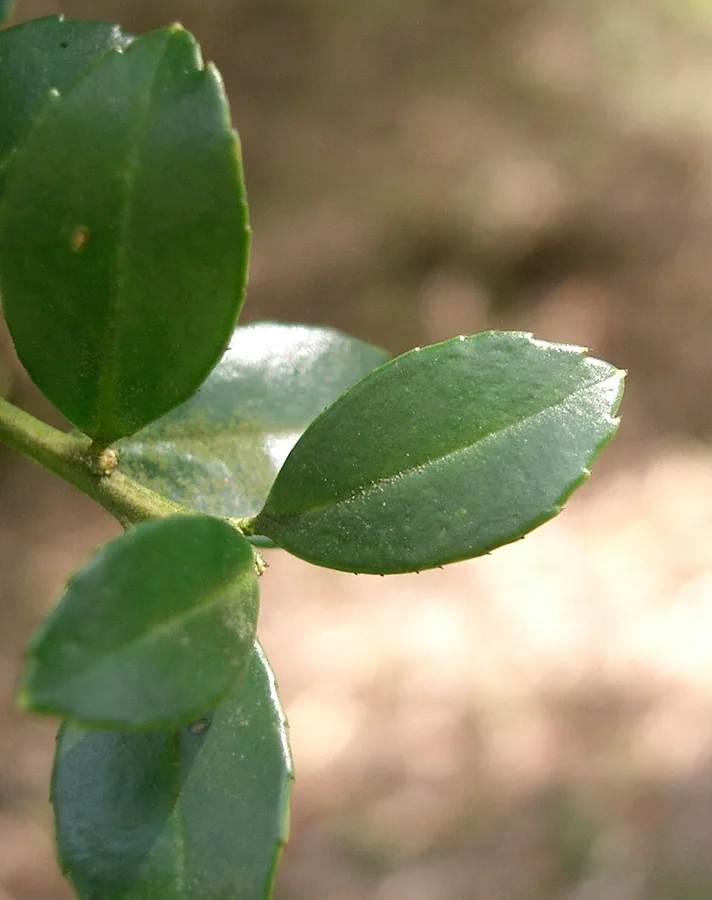
The small, glossy leaves keep their green all year long, and since it grows slow, it holds that sharp shape without demanding much back. Here's the neat twist: it's an all-female cultivar, so those small black berries only show up when a male holly moves in nearby. Skip the male and you get a crisp, unbroken green column, which looks fantastic on its own.
It really shines in cold gardens, powering through winters near -9°F (-23°C) across zones 5 to 8. That slim build is the one thing to keep an eye on, since a big snow load or a punishing wind can splay the column open. Set it in acidic, free-draining soil somewhere sheltered, and it'll reward you with years of easy, upright structure.
Care
The short version: plant it in full sun to part shade, give it acidic, free-draining soil kept nicely moist, feed once in early spring, and cinch the stems together before winter so the skinny column holds its line.
Light
Hand Sky Pencil Holly full sun and it packs the column tight and drives it straight up. It'll still grow in partial shade, but stint on light and it loosens up and thins out.
Water
Keep the soil evenly moist and water it about every 5 to 10 days, dialing it up in heat and back after rain. It bounces back from a short dry stretch, but real drought drags it down, and waterlogged soil is a fast lane to root rot, so never let it sit wet.
Soil
Give it light, acidic, well-drained soil hovering around a pH of 5.0 to 6.5 and it takes right off. Clay or sand? It copes. But let the soil drift alkaline and the leaves yellow while the whole plant loses steam.
Temperature
This holly laughs off the cold, cruising from about -9°F to 95°F (-23°C to 35°C). That toughness powers it through zone 5 to 8 winters, though a dry, cutting wind in winter can still burn the leaves, so tuck it somewhere sheltered.
Humidity
Plain outdoor air keeps it happy, so forget chasing a humidity number. What counts is good airflow through the plant, especially when summer turns hot and sticky.
Feeding
In early spring, feed it just once, using a balanced, acid-forming shrub fertilizer. This slow grower runs the whole year on that single feeding, so there's no reason to keep going back.
Pruning
The best bit? It builds and holds that tight column all on its own, so you can skip the heavy pruning. Trim it lightly in spring to sharpen the shape, then lash the stems together before winter so a heavy snow or ice load can't wrench the column open.
Repotting
Growing it in a pot? Bump it up every 2 to 3 years, or sooner the moment roots start circling inside or nosing out the drainage holes. Slide it into the next pot size with fresh, acidic potting mix as soon as growth stalls or water blasts straight through.
Size & spacing
Grown out, it stands a striking 4 to 10 feet (1.2 to 3 m) tall on just 1 to 3 feet (30 to 90 cm) of width. That skinny base means you can pack several in tight and build a narrow living wall or a slim hedge in no time.
When to plant
No harvest to chase with this evergreen, just the perfect moment to get it in the ground and growing. Aim for spring or fall, when the weather stays mild and the roots dig in before summer bakes or winter bites. It throws out quiet flowers in May and June, and berries only follow when a male holly stands close enough to help out.
Northern hemisphere
Southern hemisphere
Typical months for a temperate climate: start earlier in warm zones, later where spring frosts linger.
- Plant: spring or fall
- Harvest: May to June
Hardiness
USDA hardiness zones: 5–8
Temperature: down to -29°C
Troubleshooting
Give this holly a good home and it barely puts a foot wrong, but a wet site or a savage winter can expose its handful of weak spots. Trouble almost always turns up on the foliage or those tall stems, so keep an eye there and you'll catch it fast. Match your symptom below and jump on it early.
Yellowing leaves and dieback rising from the roots
When the yellowing and dieback start down in wet soil, Phytophthora or black root rot is usually behind it. Dig in and the roots come up dark brown to black and rotten, and it all worsens the wetter the ground stays. Get the drainage sorted, back off the watering, and on soggy sites raise the whole plant onto a bed that drains. Anything rotted through is best yanked before it drags down the rest.
Fix:
- Improve drainage and stop overwatering
- Avoid planting too deeply or over-mulching
- Use raised beds in heavy or wet soils
- Remove severely affected plants
Speckled, bronzed leaves strung with fine webbing
Pale stippling, a bronze wash, and fine webbing usually mean spider mites have moved in, most often the southern red mite, and they multiply fast in hot, dry heat. Tap a branch over a white sheet of paper and watch for tiny movers to nail it down. Blast them off with a hard water spray, then work insecticidal soap or horticultural oil into the leaf undersides and repeat about a week later while any cling on.
Fix:
- Apply strong water sprays to dislodge mites
- Treat with insecticidal soap or horticultural oil, covering lower leaf surfaces
- Repeat treatment in 7 to 10 days while mites are present
Brown leaves and a column blown open by winter
A cold, drying wind can torch the foliage into winter burn, and a pile of snow and ice can wedge the skinny column wide open. Knock the snow off the stems right after a storm so the load can't bend them. The move that really works is to bundle the stems before winter and back it up with a windbreak plus a solid mulch layer.
Fix:
- Gently brush snow off stems after storms
- Tie stems loosely together for winter support
- Provide a windbreak and winter mulch
The whole plant flaring up pale and yellow
If the entire shrub washes out to yellow, the soil's tipped too alkaline for it. That's chlorosis, and it strikes because a high pH locks the iron the plant needs away from the roots. Test the soil, push the pH back toward acidic, and hit it with chelated iron to snap the green back while things rebalance.
Fix:
- Test soil pH
- Amend soil to lower pH toward acidic range
- Apply chelated iron if needed
Toxicity
Here's the reassuring part: this is a mildly toxic plant, not a dangerous one. Its leaves and berries pack some saponins, and since the shiny berries are what a pet will grab first, they're the piece to stay on top of. A quick nibble usually just means a sour stomach, so sweep up dropped berries and keep them away from pets and small kids and you're set.
Toxic to
Cats · Dogs · Horses · Rabbits · Livestock · Birds · People
Cats Mild
A cat that chomps a leaf or snags a berry usually ends up queasy, drooling a little, and bringing up its stomach or passing loose stools. It shakes it off on its own most times, though a cat that's downed several berries is worth a quick vet call.
Dogs Mild
Dogs love to snatch those bright berries, and the saponins can have them drooling and skipping meals for a day. Look for a bit of vomiting or a loose stool, but nothing dramatic.
Horses Mild
A horse won't usually touch holly, but if it grabs a mouthful of leaves or berries, it can land a colicky, upset stomach and a flat, dull mood.
Rabbits Mild
Rabbits run on delicate guts, and the saponins throw them off, so keep any trimmings and fallen fruit well clear of where it lives.
Livestock Mild
Most grazers give the bitter leaves a wide berth, but a goat or sheep that tears into a branch can pick up a mild case of digestive upset.
Birds Caution
Wild birds happily strip holly berries all winter without a problem, yet that same fruit can trouble pet birds, so keep any caged birds clear of it.
People Caution
Nobody should be eating any part of this holly. One or two swallowed berries will probably just spark a stomachache, but several can trigger vomiting and diarrhea, so keep the fruit way out of reach of little kids.
Keep fallen berries away from pets and children; the spiny evergreen foliage is otherwise low risk.
Helpline numbers

United States
ASPCA Animal Poison Control: (888) 426-4435 (fee applies)
Poison Control: (800) 222-1222



Canada
Poison Centres: 1-844-764-7669
Varieties
Sky Pencil runs with a small pack of skinny, upright Japanese hollies. These are the ones you'll cross paths with most.
Sky Pencil
The skinniest of the bunch, a female cultivar that rockets 4 to 10 feet up while holding a trim 1 to 3 feet across, perfect as a sharp vertical accent.
Sky Pointer
Another go-getting upright Ilex crenata pick, built to nearly the same slim column.
Glow Stick
An Ilex crenata cultivar that lights up the garden with bright golden-yellow foliage.
How to propagate
Sky Pencil comes from cuttings, not seed, because cuttings are what lock in that ultra-slim shape. It takes a bit of waiting, but almost no know-how.
Stem cuttingsModerate
Summer, using semi-hardwood cuttings · 6 to 10 weeks to root
Fire up new plants from semi-hardwood cuttings in summer, the go-to trick for keeping that narrow, upright habit locked in. Push them into a moist, free-draining mix and they'll strike roots across 6 to 10 weeks. Seed drops the slim shape entirely, and that's exactly why nurseries clone this one rather than sow it.
Myths
Holly can't hurt pets since it's just a standard yard shrub.
How ordinary a shrub looks in the yard says zero about whether it's safe to eat. Holly is loaded with saponins, and the berries hit cats and dogs with drooling, vomiting, and diarrhea. The toxicity runs low, sure, but it's real, so those berries stay off the menu.
Sky Pencil Holly is guaranteed to pump out berries.
Since it's an all-female cultivar, it can't fruit solo. Those small black berries only appear when a male holly sets up close by and pollinates the flowers.