Tree · Rutaceae
Yuzu
Citrus junos
The hardiest true citrus there is, yuzu swaps quick fruit for patience and a sheltered, sunny spot.
Full sun
Every 7–14 days
USDA 8–11
6–18 ft · 1.8–5.5 m
Overview
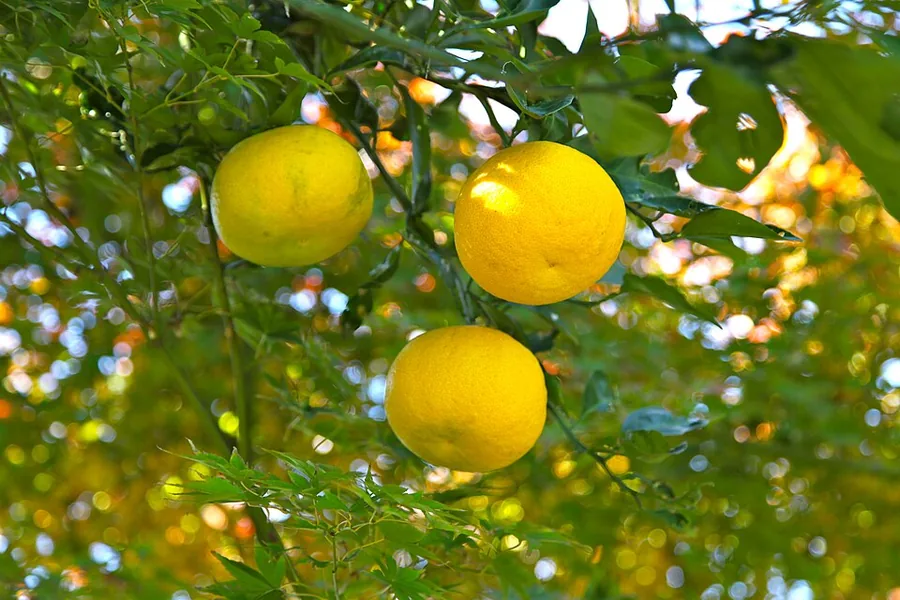
Yuzu throws the doors open for anyone who thought their garden was too cold for citrus. Straight out of East Asia, its knobbly yellow fruit powers ponzu sauce and even scents winter baths, and the aromatic peel and tart juice are what make it such a catch. Better yet, this thorny evergreen holds its leaves all year round.
Patience is the price of admission, and it pays off. Yuzu climbs at a moderate pace, so a grafted tree fruits within a year or two while a seedling takes several. The real thrill is its toughness, shrugging off temperatures down toward 14°F (-10°C) once settled, far colder than nearly any other citrus dares.
Plant it in the ground in zone 8 and warmer, or grow it in a big pot you can whisk under cover when a hard freeze rolls in. Feed it full sun, free-draining soil, and shelter from the sharpest cold, mind those long thorns at pruning time, and it hands back fragrant fruit every autumn.
Care
The short version: load yuzu up with full sun, slightly acidic well-drained soil, and water once the top of the soil dries. Feed monthly through the growing season, shield young trees from hard frost, and pull on thick gloves before you go near the thorns.
Light
Yuzu chases full sun, six or more hours a day, and rewards it with a proper crop. It will get by in partial shade, but expect it to stretch and fruit lighter wherever the light thins out.
Water
Let the top inch or so (3 cm) of soil dry, then soak it deeply, roughly every 7 to 14 days. Potted trees burn through moisture faster and want it more often, while winter is the time to back off and let the tree coast.
Soil
Set yuzu into well-drained, slightly acidic sandy loam loaded with organic matter. Hold the pH at 6.0 to 7.0 and the roots keep pulling up the iron and other micronutrients citrus runs on.
Temperature
Yuzu powers through a huge span, roughly 14°F to 95°F (-10°C to 35°C), the boldest cold tolerance any true citrus can claim. Even so, young trees still need frost cover, since that hardiness only ramps up as the tree matures.
Humidity
Average humidity of 40% to 60% keeps yuzu happy, so there is no number to chase outdoors. Bring a tree inside for dry winter air and it will welcome a little extra moisture around the leaves.
Feeding
Feed monthly through spring and summer with a citrus fertilizer higher in nitrogen and stacked with iron, zinc, and manganese. Cut the feeding late in the season, since a late nitrogen surge pushes tender shoots that frost will scorch.
Pruning
Prune in late winter to early spring to shape the tree and strip out dead, crossing, or frost-damaged wood. Gear up with thick gloves first, because the branches bristle with long, sharp thorns that grab skin and clothing.
Repotting
Bump container trees into a bigger pot every 2 to 3 years, before the roots start circling inside or shooting out the drainage holes. Water racing straight through without soaking in is another shout that the tree has outgrown its home.
Size & spacing
Yuzu tops out around 6 to 18 feet (1.8 to 5.5 m) tall and fans out 5 to 13 feet (1.5 to 4 m) wide, so hand it plenty of room. The final size rides on the rootstock and on whether it runs free in the ground or stays reined in inside a pot.
When to plant
Yuzu runs the citrus calendar with a cold-hardy twist. It bursts into flower in spring, ripens fragrant fruit through late autumn as the skin turns yellow, and drops into the ground once the last frost clears in zone 8 and warmer. Grafting kicks off almost every new tree.
Northern hemisphere
Southern hemisphere
Typical months for a temperate climate: start earlier in warm zones, later where spring frosts linger.
- Sow: Seed late winter to early spring; yuzu is usually propagated by grafting rather than seed
- Plant: After the last frost in spring in zone 8 and warmer
- Harvest: Flowers in spring; aromatic fruit harvested in late autumn as it turns yellow
Hardiness
USDA hardiness zones: 8–11
Temperature: down to -12°C
Troubleshooting
Nearly every yuzu hiccup traces back to cold or to soil that misses the mark for citrus. Read the early tells on the twigs and new leaves and you can jump in before the tree stalls. Spot your match below and move while it counts.
Twig tips dying back and leaves dropping once winter clears
Chalk this up to cold or frost damage, and it strikes young trees hardest when they get pushed past their limit. Settle it fast with a scratch test: a brown, dry tip sitting above green wood confirms the cold hit. Let the spring flush fire up, cut back to that live wood, and wrap young trees in frost cloth through the hardest freezes.
Fix:
- Wait until new growth resumes in spring, then prune back to live wood
- Protect with frost cloth or move containers under cover during hard freezes
New leaves flushing yellow while the veins hold green
This is interveinal chlorosis, a shortfall of iron, zinc, or manganese that usually springs from alkaline or waterlogged soil. Watch the newest leaves go yellow between green veins while the older ones keep their color. Hit it with a citrus fertilizer carrying chelated micronutrients and fix the drainage so the roots can grab iron again.
Fix:
- Apply a citrus fertilizer containing chelated micronutrients
- Correct drainage and avoid overwatering
Toxicity
The fruit is the payoff and completely safe for people to dig into, but the rest of the plant plays by different rules for animals. Its peel, leaves, and stems pack essential oils and psoralens that hand cats, dogs, horses, and others an upset stomach. Sweep clippings and windfall peel well clear of pets and livestock.
Toxic to
Cats · Dogs · Horses · Rabbits · Livestock · Birds
Safe for
People
Cats Mild
The essential oils and psoralens loaded into the peel, leaves, and stems can set a cat drooling, vomiting, or turning from its food, often with loose stools. Brushing against the peel can leave the skin irritated too.
Dogs Mild
A dog that chews the leaves or peel usually lands an upset stomach, bringing vomiting, diarrhea, and a low, sluggish mood. The same oils can redden the skin on contact.
Horses Mild
The peel, leaves, and stems carry the same citrus oils, so a horse that nibbles them may drool and hit diarrhea or a general gut upset. The strong scent keeps most horses from eating much.
Rabbits Caution
The oily peel and foliage clash with a rabbit's sensitive gut and can trigger soft stools or a dropped appetite. Keep trimmings out of the hutch instead of tossing them in as a treat.
Livestock Caution
Goats, sheep, and cattle may pick at fallen leaves or prunings, and a big oily mouthful can loosen the stomach. The bitter taste usually reins in how much they take.
Birds Caution
The essential oils in the peel and leaves can upset a bird's digestion, so keep pet birds clear of clippings. A small taste of the flesh is far less of a worry than the peel.
People Fruit safe
The fruit, juice, and zest are stars in the kitchen and safe to eat, which is the whole reason to grow the tree. Handling loads of peel in the sun can make sensitive skin react, so rinse your hands after juicing.
The branches also bear long, sharp thorns that can scratch curious pets and people.
Helpline numbers

United States
ASPCA Animal Poison Control: (888) 426-4435 (fee applies)
Poison Control: (800) 222-1222



Canada
Poison Centres: 1-844-764-7669
Varieties
Just a handful of named yuzu ever break out of Japan, and they split neatly into fruit for the kitchen and fruit for show. Here are the two to chase down.
Yuzu Ichandrin
A widely grown seedling-type yuzu that growers reach for thanks to its extra cold hardiness and dependable cropping in cooler climates.
Shishi Yuzu
Grown as an ornamental showpiece more than a juice source, it turns out unusually large, bumpy fruit.
How to propagate
Yuzu is grafted almost every time, which fast-tracks fruiting and locks in cold hardiness, though seed is on the table if you can outlast a long wait.
GraftingModerate
Late spring through summer when bark slips easily · 1 to 2 years before reliable fruiting
Grafting is the go-to commercial move, run from late spring through summer while the bark slips easily. Joined to trifoliate rootstock, the tree picks up cold hardiness and vigor and charges into reliable fruiting within 1 to 2 years.
SeedEasy
Late winter to early spring, sown fresh · Several years to fruit
Sowing fresh seed in late winter or early spring is the easy entry point, as long as patience is in play. Seedlings creep along and take several years to fruit, so seed is the simplest route rather than the quickest to a harvest.
Myths
Since yuzu is toxic to pets, its fruit must be poisonous to people.
Not so, and it is worth clearing up. The pet warning rides on essential oils and psoralens that upset cats and dogs, not on the flesh headed for your plate. Yuzu zest, peel, and juice are safe, everyday ingredients for people, powering everything from ponzu sauce to marmalade.
Yuzu is fully winter-proof and laughs off any freeze.
Yuzu really does rank among the most cold-hardy true citrus, taking about 10°F to 15°F (-12°C to -9°C) once it settles in. Young trees are the catch, though; they still want frost protection and can still drop twig tips after a hard freeze.