Ornamental · Lamiaceae
Hummingbird Mint
Agastache foeniculum
Hand it full sun and soil that drains, and anise hyssop erupts with bees and hummingbirds all summer.
Full sun
Every 7–14 days
USDA 4–8
2–5 ft · 0.6–1.5 m
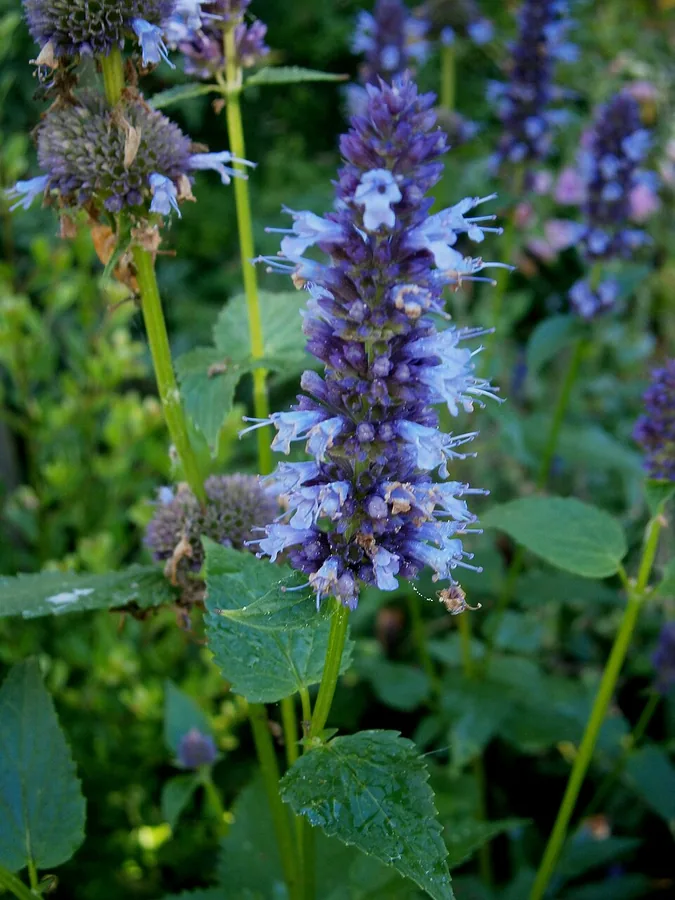
Overview
Anise hyssop nails the hummingbird mint name, reeling in bees, butterflies, and hummingbirds from June straight through September. It rides in the mint family but skips the bad behavior, rocketing up tall spikes of soft blue-lavender bloom over leaves that fire off anise and licorice the second you brush against them.
This is a knockout easy perennial for any sun-soaked spot, hardy from zone 4 to zone 8 and laughing off cold down to -29°F (-34°C). Once it settles in it barely asks for a thing, powering through dry spells and standing tough against the deer and rabbits that graze the softer plants nearby.
Give it elbow room and free-draining soil, and a single clump rockets into a 2 to 5 foot (60 to 150 cm) column of bloom. The flowers fuel pollinators all summer and the standing seed heads keep finches fed into winter, so the plant keeps delivering long after the headline show wraps.
Care
The short version: full sun and free-draining soil are pretty much the whole game, since this plant dreads soggy roots way more than a dry patch. Soak it deep but let the top half of the soil dry out between drinks, go light on the feeding or skip it, and deadhead through summer to keep the flowers firing.
Light
Drop anise hyssop into full sun and watch it crank out the strongest stems and the biggest bloom. It will take a little afternoon shade, but starve it of light and it flops and skimps on flowers, plus shade rolls out the welcome mat for the mildew it usually shrugs off.
Water
Hit it with a deep drink, then lay off. Hold the next watering until the upper half of the soil goes dry, which usually lands every 7 to 14 days. An established plant shrugs off a drought with ease, but leave the ground sitting wet and that is the one thing that will finish it.
Soil
It shrugs at fertility and thrives in loam, sand, or even rocky ground, just so long as that ground drains fast. Shoot for a pH of 6.0 to 7.5, and steer clear of any spot where water pools up after rain.
Temperature
Hardy from zone 4 to zone 8, anise hyssop powers through cold down to -29°F (-34°C) and heat up to about 95°F (35°C). That huge range is exactly why it pulls through where loads of other perennials throw in the towel.
Humidity
Plain outdoor humidity suits it just fine, so there is no number to chase. What really moves the needle is airflow, since packed, stagnant, muggy plantings are right where powdery mildew digs in.
Feeding
This one runs lean and loves it. Feed it hardly ever, with no more than a light scatter of balanced fertilizer or compost in the growing season. Pile it on and all you grow is soft, floppy stems instead of flowers.
Pruning
Snip off the faded spikes all through August and the bloom keeps right on rolling. Stand the dried stalks up over winter to feed the birds, then shear back once new shoots break in spring; whacking the clump down to roughly 12 inches at that point fires up thicker, bushier side growth.
Size & spacing
Count on a clump that hits 2 to 5 feet (60 to 150 cm) tall and 1.5 to 3 feet (45 to 90 cm) wide. Give it the full spread so air rips through the planting and mildew never gets a chance.
When to plant
Once it hits the ground, anise hyssop locks into a perennial groove. Kick off seed indoors in late winter, plant out after the last frost once the soil warms up, and the show roars from June through September. Let the spent stalks ride out winter, then cut back to fresh growth come spring.
Northern hemisphere
Southern hemisphere
Typical months for a temperate climate: start earlier in warm zones, later where spring frosts linger.
- Sow: 8 to 10 weeks before the last spring frost
- Plant: after the last spring frost once soil has warmed
- Harvest: Blooms June to September
Hardiness
USDA hardiness zones: 4–8
Temperature: down to -34°C
Troubleshooting
Almost every snag with anise hyssop circles back to one culprit: soil that holds too much water. Nail the drainage and the airflow and the plant pretty much runs itself. Spot the symptom that matches yours below, then move on it while it still counts.
A sagging plant with a black, mushy base
This is crown or root rot taking hold, and it springs from soil that stays drenched, not from any bug a spray can chase off. The crown turns soft and dingy, the base soaks up water, and the whole plant can topple. Jump on it fast: sharpen the drainage, dial the watering way back, yank anything past saving, and tuck fresh divisions into ground that drains like a dream.
Fix:
- Improve drainage and reduce watering
- Remove and discard severely affected plants
- Replant healthy divisions in well-drained soil
A chalky white dusting on leaves and stems
That dusty coat is powdery mildew moving in, and it pounces wherever the air goes flat and the planting packs in tight or muggy. Here is the upside: it dings the looks far more than it dents the plant's health. Open things up by thinning and spacing for airflow, snap off the worst-hit leaves, and keep the water off the foliage.
Fix:
- Improve air circulation by spacing and thinning
- Remove affected foliage
- Avoid overhead watering
Orange and brown specks peppering the leaves
Bumpy rust-colored pustules or dark blotches flag rust and fungal leaf spots on the move, and they ride along on wet foliage. Good news: the damage stays skin-deep in most seasons. Pluck the marked leaves and torch them, throw the planting wide open for airflow, and aim the water at the base so the leaves dry off quick.
Fix:
- Remove and destroy infected leaves
- Improve air circulation
- Avoid wetting foliage
Toxicity
Great news right here. Anise hyssop carries zero toxins, so it is safe to grow around cats, dogs, horses, livestock, and kids alike. The leaves even pull double duty as a kitchen herb, jumping into teas and baked goods for that anise flavor, and the bold scent does the work of keeping most browsing animals at bay all on its own.
Safe for
People · Cats · Dogs · Horses · Rabbits · Livestock · Birds
Cats None
Let a nosy cat investigate all it likes, because the plant packs no toxic compounds and a chewed leaf does zero harm. A big mouthful of nearly any plant might spark a bit of drool or a quick stomach gripe, sure, but anise hyssop puts a cat in no real trouble.
Dogs None
Dogs are squarely in the clear. The worst a leaf-chomping pup runs into is a brief stomach grumble, the same as with any safe plant, and that punchy anise smell usually sends most dogs packing after a single taste.
Horses Safe
Horses can graze right beside it without a worry, since nothing in the plant is poisonous to them. They tend to walk on by anyway, because the aromatic foliage just does not win over a horse.
Rabbits Safe
Rabbits face zero danger here. The plant has real rabbit-resistant cred, so they usually bound past it toward tastier greens instead of bothering with the scented leaves.
Livestock Safe
Cattle, goats, and sheep can hang around it safely, with no toxin to flag. That minty, licorice scent sends most stock off to graze elsewhere and leaves the stand standing tall.
Birds Safe
Anise hyssop does birds nothing but good, and the patch pays its way with them in spades. Finches go after the standing seed heads deep into winter, and the summer blooms keep hummingbirds and pollinators zipping in and out.
People Safe
The leaves go way past safe into useful, doubling as a kitchen herb with an anise or licorice kick that livens up teas, salads, and baked goods. Kids are in no danger near the plant either.
Varieties
Anise hyssop comes in a lineup of standout cultivars worth learning by name. These are the ones you will run into most at the nursery.
Blue Fortune
A go-to hybrid that wins fans with packed, marathon-blooming spikes of blue-lavender flowers.
Golden Jubilee
Worth growing for its zingy golden-yellow leaves as much as for the lavender spikes shooting up above them.
Blue Blazes
A tall standout that grabs attention with bold spikes of violet-blue bloom.
How to propagate
Bulking up your anise hyssop is almost too easy, whether you carve up an old clump or just turn it loose to sow its own seedlings across the garden.
DivisionEasy
Spring or fall · One growing season
Division is a breeze and pays off fast. Heave an established clump out of the ground in spring or fall, break it into sturdy chunks, and drop the divisions back into well-drained soil. Hand each piece a full growing season to dig in and bulk up, and it comes roaring back.
SeedEasy
Spring; self-seeds readily in the garden · First season from transplanted seedlings
Here is the fun part: anise hyssop self-seeds freely, so the slickest move is to scoop up volunteer seedlings and shift them wherever you want them in spring. To crank out those volunteers, quit deadheading in late summer and let the spikes set seed, and the transplants shoot up to a decent size in their first season.
Myths
Anise hyssop is a true mint that will take over the garden.
Sure, it lands in the mint family, but it never runs amok the way the true mints do. It edges outward at a tame pace through rhizomes and self-seeding, and plenty often it shakes out as a short-lived perennial instead of some unstoppable garden takeover.
Anise hyssop is related to true hyssop and tastes like it.
Shared name aside, it sits in the genus Agastache, not the true Hyssopus. Crush a leaf and a bright anise or licorice scent jumps right out, which is exactly why it lands in teas, salads, and baked goods.