Ornamental · Lamiaceae
Russian Sage
Perovskia atriplicifolia
Plant it in full sun and dry, sharp-draining soil and Russian sage throws up a blue haze from midsummer clear into fall.
Full sun
Every 10–21 days
USDA 4–9
2–4 ft · 0.6–1.2 m
Overview
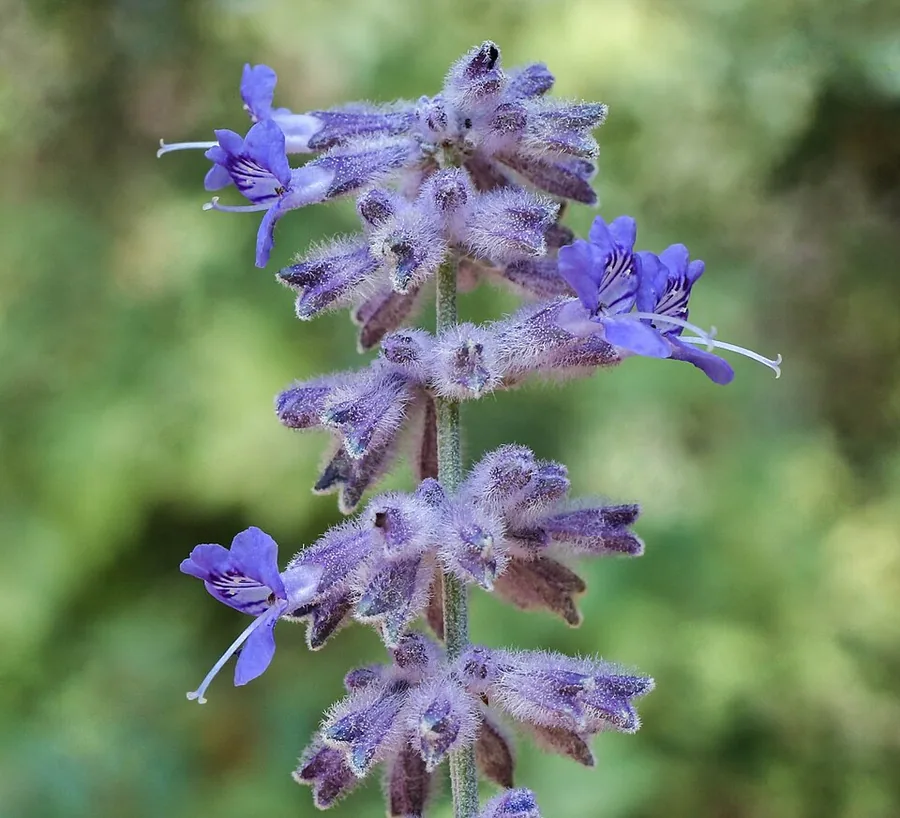
Russian sage packs a lot of reward into very little effort. It sends up silvery stems topped with clouds of small blue flowers, and the plant blooms on and on once summer takes hold. The name plays a trick on everyone, since it grows wild in central Asia and has no kinship with the sage on the spice shelf. What it delivers instead is months of bloom and a real knack for shrugging off drought, heat, and poor soil.
This is the plant to reach for when a bed bakes dry and nothing else will settle in. Give it a hot, sunny spot on lean ground and it takes off, sailing through conditions that stop fussier perennials cold. The aromatic leaves keep deer and rabbits moving right past it, which makes it a favorite anchor for xeric, low-care gardens.
The trick to a great-looking plant is to keep it a little hungry. Pile on rich soil, shade, or water and it turns weak and leggy, splitting open by midsummer, but dodge those and the payoff is huge. Keep it lean and sunny, cut it down hard each spring, and it powers back upright and dripping with blue for months.
Care
The short version: aim for full sun and sharp drainage first, since those two win the day. Keep the soil lean and dry once the plant settles in, hold the fertilizer, and cut every stem down almost to the ground in late winter to fire up a fresh flush of growth.
Light
Pour on as much sun as you can find, since that is what makes this plant sing. Drop it into part shade and the stems stretch, soften, and flop while the flowering thins out. Full sun keeps it standing tall and covered in bloom.
Water
After it settles in, this is one of the most drought-tolerant perennials you can grow, which takes all the worry out of watering. Water it well through that first season to drive down deep roots, then back right off and let the soil dry between drinks. Soggy ground trips it up far faster than dry ground ever could.
Soil
Sharp drainage is the one thing it insists on, and the rest it takes in stride. Poor, dry, clay, even alkaline ground all suit it just fine across a wide pH of 6.0 to 8.0. Steer clear of wet, heavy soil though, since that is what rots the roots and takes the plant down.
Temperature
This plant is built tough, powering through winter cold down to -29°F (-34°C) and summer heat up to 100°F (38°C) without missing a beat. That wide range is exactly what lets it thrive across zones 4 to 9.
Humidity
Dry air is right up its alley, matching its love of hot, sun-soaked spots. Damp, stagnant air trips it up more than dry air ever will, so open up some room and keep air moving around it.
Feeding
Go light and the plant repays you. Russian sage wants lean soil and little to no fertilizer, a quick spring feed at the very most. Overfeed it and you get a tall, floppy plant on weak stems, so err on the stingy side.
Pruning
Grab the shears with confidence, because cutting every stem back almost to the ground in late winter or early spring is the move that transforms it. Wait for new growth to break, then cut hard. That is what launches strong, upright flowering shoots and keeps the plant from splaying open later on.
Repotting
This one barely ever needs repotting and would much rather stay put, so you can leave it be. If you do run it in a container, keep an eye out for roots circling the pot or water blasting straight through, both signs it is ready for more room.
Size & spacing
Give it space to spread its wings, since a mature plant shoots up to 2 to 4 feet (60 to 120 cm) tall and spreads about as wide at 2 to 4 feet (60 to 120 cm). Leave that gap so air moves freely and the stems have room to stand tall and proud.
When to plant
Russian sage grows happily through zones 4 to 9 and takes its time waking up in spring, so hang tight while it stirs. Get young plants in the ground after the last frost, cut the old growth back hard as new shoots push through, and it rewards you with flowers from July right through October.
Northern hemisphere
Southern hemisphere
Typical months for a temperate climate: start earlier in warm zones, later where spring frosts linger.
- Sow: late winter to early spring; seed germinates in 1-4 months at 60-65 degrees F
- Plant: spring after last frost
- Harvest: July to October
Hardiness
USDA hardiness zones: 4–9
Temperature: down to -34°C
Troubleshooting
Russian sage almost never gives you grief, and the two hiccups that do crop up both trace back to one slip: too much water or soil that runs too rich. Catch the early signs, dry it out, throw open the sun, and it bounces right back.
Wilting stems over roots drowning in wet soil
When Russian sage droops even though the soil is still wet, blame root rot from soggy, poorly drained ground. That constant wet lets pythium and phytophthora move in and turn the roots brown and mushy. Act fast: shift it to a raised, sharply drained spot, cut way back on water, and pull any plant that has rotted past the point of saving.
Fix:
- Improve drainage or move to a raised, sharply drained site
- Reduce irrigation and let soil dry between waterings
- Remove and discard severely rotted plants
Stems sprawl and burst open at the center
This is the classic flop, and it almost always points to too much shade or soil that runs too rich and damp, both of which push out weak, leggy stems. Leave a plant standing all winter and it splits open the same way after bloom. Good news is it is a quick fix: move it into full sun on lean, dry ground, ease off the water and feed, and cut it hard every spring.
Fix:
- Cut stems back almost to the ground in late winter to early spring
- Move or site in full sun with lean, well-drained soil
- Reduce watering and fertilizer
Toxicity
Here is a plant you can grow with total peace of mind around pets and kids. The ASPCA rates Russian sage as non-toxic, so a cat, a dog, or a curious toddler can brush it or grab a taste and walk away with nothing worse than a strong flavor. Just keep it out of the kitchen, since it is no cooking herb.
Safe for
People · Cats · Dogs · Horses · Rabbits · Livestock · Birds
Cats None
Great news for cat households. The ASPCA lists it as non-toxic, so a curious nibble of the aromatic leaves is nothing to sweat.
Dogs None
Dogs are in the clear too, with no toxicity on record. A dog that chomps a stem may back off from the strong scent, but it comes away unharmed.
Horses Safe
Horses can graze right alongside it without a hitch. Nothing here is poisonous, and the bitter, aromatic foliage usually sends them hunting tastier bites anyway.
Rabbits Safe
Rabbits tend to march right past it, and that is a bonus for the garden, not a risk. The pungent leaves are perfectly safe, just not their thing.
Livestock Safe
Cattle, goats, and sheep have nothing to fear from it. The plant carries no known toxins, and its sharp scent usually keeps grazers on the move.
Birds Safe
Birds are totally safe around it, and they win too, since the summer flowers pull in pollinators by the crowd with no danger to any visitor.
People Safe
Safe to handle and grow around kids all day long. It is no cooking sage despite the name, so drink in that scent but keep it out of the kitchen.
Aromatic foliage; despite the common name it is not a true culinary sage and should not be eaten.
Varieties
Most of the named Russian sages were bred to stand up taller and flop far less than the wild plant, which makes them a joy to grow. These are the ones you will run across most.
Little Spire
Little Spire is the compact powerhouse, staying around 18 to 24 inches (2 feet) and holding itself upright, so it flops far less than the wild species.
Blue Spire
Blue Spire shoots upright to near 3 feet tall, loaded with deeply cut leaves and big panicles of violet-blue flowers.
Longin
Longin stands tall and narrow, reaching about 4 feet in both height and width with a bold, stiffly upright habit.
Filigran
Filigran hits 2 to 3 feet tall and brings finely dissected, lacy foliage on a crisp upright frame.
How to propagate
Making more Russian sage is genuinely fun, and cuttings or seed both do the job. The method only counts if you want a specific cultivar to come back exactly like its parent.
Stem cuttingsModerate
Summer · Several weeks to a few months
Cuttings are hands-down the best way to copy a named cultivar, since seedlings will not come true. Snip 3 to 4 inch softwood cuttings in summer and watch them root over several weeks to a few months into plants that match the parent exactly.
SeedModerate
Any time of year, just covering the seed · Germinates in 1-4 months at 60-65 degrees F
Sow seed whenever you like, barely covering it, but pack your patience, because germination takes 1 to 4 months at 60°F to 65°F (16°C to 18°C). A cold spell first can boost the odds, and since species seedlings vary, you will get a fun mix from plant to plant.
DivisionDemanding
Spring · Slow
Division is the toughest route and rarely worth chasing. This woody-based subshrub hates getting split, drags in spring to recover, and hardly ever needs it, so grab cuttings or seed and skip the struggle.
Myths
Russian sage is a cooking sage you can throw in the pan just like garden sage.
Not so fast, because this is Perovskia, now reclassified as Salvia yangii, and it is grown strictly for looks. Crush the leaves and they smell like sage, sure, but that scent has zero business in your cooking. It is neither Russian nor a true sage, just a spirited native of central Asia.