Ornamental · Lamiaceae
Salvia (Annual)
Salvia splendens
Give scarlet sage full sun and steady water, and watch it fire up flower spikes from summer right to frost.
Full sun
Every 3–7 days
50–90°F · 10–32°C
USDA 10–11
Overview
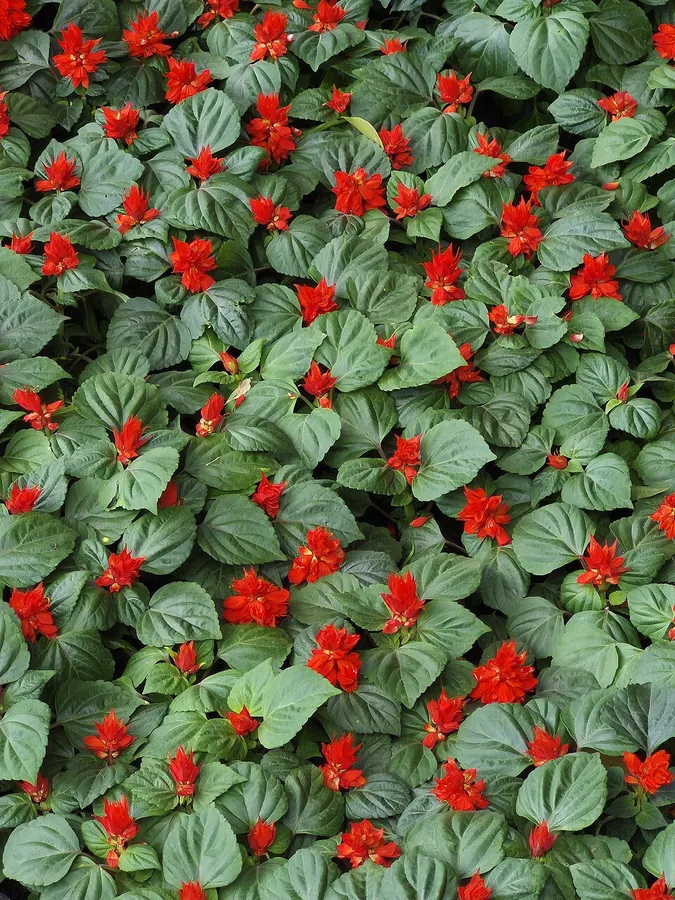
Annual salvia, the plant most gardeners call scarlet sage, packs a summer border with upright, fire-red spikes that stand up and get noticed. It hails from the mint family as a tender perennial, and since it only overwinters in zones 10 and 11, most growers run it as a warm-season annual and plant a fresh set every spring. Few bedding plants give back so much for so little.
Momentum is the whole appeal here. Spikes break open in early summer and keep firing until frost, and those bright tubular flowers turn the bed into a landing strip for hummingbirds and bees. Plants stay trim, from 8 to 36 inches (20 to 91 cm) tall depending on the pick, so there is a salvia to charge up a bed, an edge, or a cluster of pots.
Best of all, it delivers without demanding much. Hand it sun, warmth, and soil that never bakes dry, and it flowers with real gusto. Keep snipping the spent spikes and the plant answers with wave after wave of color, right through the season.
Care
The short version: full sun with a touch of afternoon shade if summers sizzle, soil kept evenly moist and never dry, a slow-release feed dug in at planting, and steady deadheading to keep those spikes firing.
Light
Salvia truly cranks up the bloom in full sun, though it will take a little afternoon shade where summers roast. Starve it of light and it shoots up leggy and floppy with far fewer spikes, so a bright, open spot is where it earns its keep.
Water
Keep the soil evenly moist, because this plant has no interest in going thirsty. Water the moment the top inch starts to dry, and step it up for pots and hot spells. Let it run dry and the flowers are the first to quit on you.
Soil
Dig it into well-drained loam loaded with organic matter, though it will happily make do with average ground. It shrugs off pH concerns, thriving anywhere across 6.0 to 8.0.
Temperature
Warmth is where this plant hits its stride, roughly 50°F to 90°F (10°C to 32°C), and frost drops it cold. Hold your plants back until both soil and air have warmed, then let them rip.
Humidity
Everyday outdoor air suits it, so skip the humidity math entirely. Airflow is the real game, since crammed, stagnant plantings are the ones that hand powdery mildew an opening, so give each plant space to breathe.
Feeding
Work a slow-release fertilizer for annuals into the bed at planting, then keep it going with a light feed through the season. That steady drip of nutrition fuels spike after spike without pushing the soft, floppy growth a heavy feed invites.
Pruning
Deadhead the spent spikes all summer and the plant charges right back with fresh bloom. If it stretches leggy after a big flush, shear it hard and it rebounds bushier and tighter than before.
Size & spacing
Depending on the variety, plants shoot up 8 to 36 inches (20 to 91 cm) tall and fill out 8 to 18 inch (20 to 46 cm) wide. Give each one breathing room so air rips through the planting and mildew never gets a grip.
When to plant
Salvia runs on warmth and folds fast at frost, so timing is half the fun. Fire up the seeds indoors in late winter to early spring, get the young plants outside the moment the last frost clears and the soil warms, and then stand back: the spikes push from early summer straight through until cold shuts things down. Warm soil is the green light.
Northern hemisphere
Southern hemisphere
Typical months for a temperate climate: start earlier in warm zones, later where spring frosts linger.
- Sow: 6 to 8 weeks before the last spring frost; do not cover seed as light aids germination
- Plant: After the last frost when soil and air have warmed
- Harvest: Summer to frost (roughly June until first fall frost)
Hardiness
USDA hardiness zones: 10–11
Temperature: down to -1°C
Troubleshooting
Salvia is a strong grower, but a couple of hiccups can crop up early, among crowded seedlings or in dead, packed air. Spot them fast and each one bows to a quick, decisive fix. Match your symptom below and jump on it while it still counts.
Seedlings topple over and rot at the soil
That fast collapse is damping-off, a soilborne fungus that pounces on cold, soggy starting mix and nips young stems clean through at the surface. Pull the fallen seedlings, give the mix a chance to dry off between soakings, and get air ripping over the tray. Sow again in sterile mix and clean pots, keep it warm, and the next round takes right off.
Fix:
- Discard affected seedlings
- Improve air circulation and let the surface dry between waterings
- Use sterile mix and clean containers for resowing
A fast wilt and rotting base in hot, soggy soil
A plant that wilts while its soil stays wet, with the base going to rot, has likely been hit by southern blight or southern bacterial wilt, both thriving in hot, waterlogged ground. There is no rescuing it, so yank the plant and destroy it before it spreads. Sharpen up the drainage and hand that spot to a different annual next year.
Fix:
- Remove and destroy affected plants
- Improve drainage
- Avoid replanting susceptible annuals in the same spot
A white powdery coat racing over the leaves
A dusty white film means powdery mildew has moved in, and it loves crowded plants and stale, motionless air. Spread the plants out, strip off the worst leaves, and quit wetting the foliage late in the day. Drop them in full sun with room to breathe and it loses its grip fast.
Fix:
- Increase spacing and airflow
- Remove badly affected foliage
- Avoid overhead watering late in the day
Curled shoots, sticky film, and a swarm of tiny bugs
Warped new growth with a sticky coat is the calling card of aphids, whiteflies, or spider mites working the tender tips. Hit them with a hard blast of water, then follow up on the holdouts with insecticidal soap. Keep the watering steady, turn a few beneficial insects loose, and you shut the next wave down.
Fix:
- Rinse plants with a strong spray of water
- Apply insecticidal soap to affected areas
- Encourage beneficial insects
Toxicity
Here is a big win for pet owners: scarlet sage is non-toxic, full stop. The ASPCA marks it safe for cats and dogs, and nothing in the plant threatens other animals, livestock, or kids. Plant it with abandon wherever the family and the four-legged crowd roam.
Safe for
People · Cats · Dogs · Horses · Rabbits · Livestock · Birds
Cats None
Cats are in the clear with scarlet sage, which lands on the ASPCA's non-toxic list. Wolf down enough of any plant and a cat might bring it back up, but there is zero poison at play here.
Dogs None
Dogs get the green light too, since the ASPCA calls this salvia non-toxic to them. A dog that plows through a pile of leaves may score a quick stomach ache, the usual story with any greenery.
Horses Safe
Horses have nothing to dodge here, the plant packs no toxin and poses no grazing hazard out in a pasture or border.
Rabbits Safe
Rabbits can chew the leaves and flowers with no downside. Ease any new green in slowly so their gut keeps pace.
Livestock Safe
Cattle, goats, and sheep run no toxic risk if they graze on this salvia, so let them at it.
Birds Safe
Birds face nothing harmful here, and the flowers keep pollinators buzzing all season. Backyard fowl can peck away with zero trouble.
People Safe
Scarlet sage is not poisonous to people either, grown for its flowers rather than the dinner plate. No panic needed if a kid grabs a handful or takes a taste.
Varieties
The named salvias run deep, but a handful keep showing up on garden center benches for good reason. Get to know these standouts first.
Bonfire
Bonfire fires up uniform scarlet spikes on upright plants that top out near 26 inches.
Salsa Series
The Salsa Series packs a punch at a compact 12 to 14 inches across scarlet and mixed colors, and it powers right through Southeast heat.
Vista Group
The Vista Group jumps into bloom early on dwarf bedding plants and comes loaded with color options.
Salvia farinacea (mealycup sage)
Salvia farinacea, the mealycup sage, throws up blue-to-violet or white spikes on 1 to 2 foot clumps and often runs as an annual too.
How to propagate
Making more salvia is half the fun. Kick off a fresh batch from seed, or snip a few cuttings to carry a favorite plant clear through winter.
SeedModerate
Start indoors 6 to 8 weeks before the last frost; surface sow because light aids germination · Several weeks to germinate and grow on before transplanting after frost
Seed is where most growers kick things off, sown indoors around 6 to 8 weeks before the last frost. Press the seed right onto the surface and leave it bare, because light is what sparks it to life. Keep the tray warm and bright, and give it a few weeks: the seedlings need that runway to sprout and bulk up before they launch outdoors once frost clears.
Stem cuttingsModerate
Take softwood cuttings in late summer to overwinter plants indoors · A few weeks to root
Cuttings are your ticket to carrying a favorite plant clear through winter. Take softwood cuttings in late summer, let them root over a few weeks, and keep the young plants going in a bright, cool spot until spring.
Myths
The scarlet sage in the bed is really just the psychoactive Salvia divinorum in disguise.
Not a chance, they only share a genus. The garden annuals, Salvia splendens and Salvia farinacea, are all flower power and nothing more, carrying none of the effects tied to Salvia divinorum.
Once salvia takes hold, you can let it dry out because it powers through drought.
Do not bet on it, since annual scarlet sage is flat-out not drought tolerant. It blooms hardest in warm, well-drained soil kept evenly moist, and the second it dries out those spikes fade in a hurry.