Ornamental · Lamiaceae
Woodland Sage
Salvia nemorosa
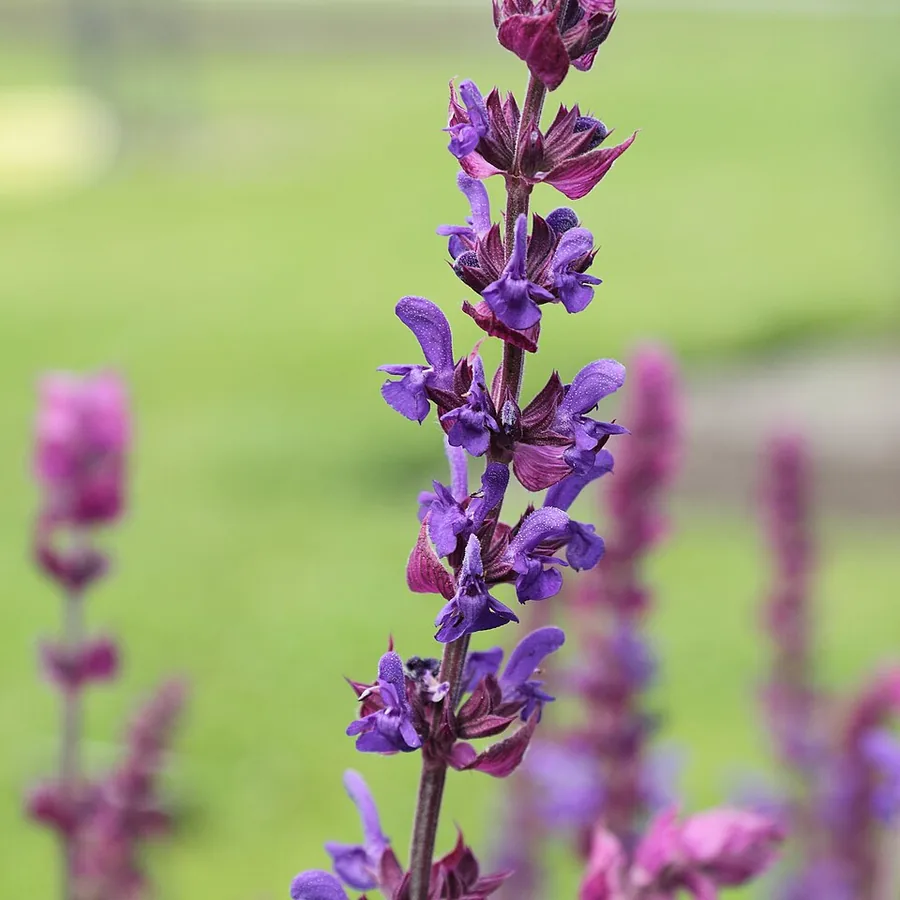
Give it full sun and dry, lean soil, and woodland sage rockets up violet flower spikes from early summer straight through fall.
Full sun
Every 7–14 days
USDA 4–8
2–3 ft · 0.5–0.9 m
Overview
Woodland sage is a joy to grow, an easygoing mint-family perennial that hits its stride fast. From early summer it launches dense spikes of violet-blue flowers, and bees and hummingbirds swarm them for weeks on end. Shear the fading spikes and the plant fires right back with a second flush.
Better still, this one practically grows itself. Once the roots dig in it powers through drought, laughs off heat, and bounces back from winters as cold as zone 4. Deer and rabbits steer clear too, put off by the aromatic, pungent leaves, so there is nothing to fence.
Worth setting straight for the record: this garden salvia has no link to the psychoactive Salvia divinorum that pops up in the news. They share a genus and a common name and nothing else. Salvia nemorosa is a harmless ornamental, ready to plant wherever kids and pets roam.
Care
The short version: plant it in full sun and lean, well-drained soil, water sparingly once it takes hold, and shear it after the first bloom to trigger a whole new round of flowers. Easy wins, all season.
Light
Aim woodland sage at full sun, six hours a day and up, and it powers into bloom. It puts up with a little afternoon shade, but push it into deeper shade and the stems stretch, the flowers fade out, and the clump splits open.
Water
Water a new planting hard until it roots, then dial way back. Once established it turns properly drought-tolerant and likes drying out between drinks, about every 7 to 14 days, since waterlogged soil kicks off root rot and fungal disease fast.
Soil
Set it into lean, well-drained soil and let it run. A slightly acidic to neutral pH of 6.0 to 7.0 hits the mark, and sandy or gravelly ground beats rich, heavy soil that traps water around the crown every time.
Temperature
This plant shrugs off both extremes, powering through cold to about -29°F (-34°C) and heat up to 90°F (32°C). That range is exactly why it storms back reliably across zones 4 through 8.
Humidity
Skip the humidity readings, since regular outdoor air suits it fine. Airflow is the real lever, because still, muggy air trapped around packed clumps is what kicks powdery mildew into gear.
Feeding
Keep this one lean and it thrives. Planted in decent soil with a little compost, it wants almost no fertilizer at all, and a heavy feed only forces soft, floppy growth and more disease.
Pruning
Shear the spent spikes back to the basal leaves through summer and the reblooms keep firing. Leave the stems up over winter to guard the crown, then cut the old growth down in early spring the moment new shoots break.
Repotting
Salvia rarely needs splitting, but weaker bloom, a clump dying out in the center, or crowded stems are the green light. Lift and divide it in early spring and it comes roaring back.
Size & spacing
Expect plants to shoot to 1.5 to 3 feet (46 to 91 cm) tall with a spread of 6 to 24 inches (15 to 61 cm). Space the clumps so air rushes between them, which shuts mildew down before it starts.
When to plant
Woodland sage is a hardy perennial that storms back on its own every spring. Sow seed indoors in late winter, get young plants out into the garden in spring once frost clears, and the spikes erupt from June to September, pushing into fall every time you shear them.
Northern hemisphere
Southern hemisphere
Typical months for a temperate climate: start earlier in warm zones, later where spring frosts linger.
- Sow: About 12 weeks before planting time
- Plant: Spring after last frost
- Harvest: June to September, repeating into fall with deadheading
Hardiness
USDA hardiness zones: 4–8
Temperature: down to -34°C
Troubleshooting
Salvia keeps trouble to a minimum, and the few issues it does throw usually track back to too much water, weak sun, or crowded clumps. Match your symptom below and tackle the conditions head-on, and a spray almost never enters the picture.
The whole plant wilting and crashing despite watering
A fast crash in hot, humid weather usually spells Southern bacterial wilt or Southern blight, or a root or stem rot from soggy ground. Nothing brings it back, so yank the plant and destroy it rather than composting. Sharp drainage, full sun, and a light hand with water are what shut the problem down.
Fix:
- Remove and destroy affected plants
- Improve soil drainage
- Avoid overwatering and overhead irrigation
A white powdery film racing across the leaves
That is powdery mildew, and it jumps in when air stalls around crowded, damp clumps. Thin and divide to get air rushing through, water down at the base instead of overhead, and pull the worst-hit leaves fast. Keep it in full sun with sharp drainage and it stays gone.
Fix:
- Improve air circulation by thinning and dividing clumps
- Avoid overhead watering
- Remove and discard affected foliage
The clump bursting open and flopping by midsummer
Flopping flags a plant living too easy, with rich soil, too much shade, or heavy feeding pumping out soft, weak stems. Cut the spent stems back to the basal leaves and it snaps back shorter, tighter, and blooming again. Grow it in full sun and lean, well-drained soil and it stands tall on its own.
Fix:
- Cut back spent stems to basal leaves to promote compact rebloom
- Grow in full sun and lean, well-drained soil
- Avoid over-fertilizing
Toxicity
Great news for pet owners and parents: garden salvia is non-toxic clear across the board. The ASPCA rates sage safe for cats, dogs, and horses, and the bitter, aromatic leaves keep most animals from bothering with it. This is the garden plant, not the unrelated psychoactive species, so plant away.
Safe for
People · Cats · Dogs · Horses · Rabbits · Livestock · Birds
Cats None
Cats are in the clear. The strong, minty punch of the leaves usually keeps a curious cat from going anywhere near them.
Dogs None
Dogs are fine here. A dog that grabs a leaf might get a quick, mild stomach upset from the bulk, but there is no toxin at work.
Horses None
Rated non-toxic to horses, so a salvia border along a paddock or grazing area is no trouble at all.
Rabbits Safe
Rabbits come to no harm, and they usually skip it anyway. That aromatic foliage is exactly why salvia sells as a rabbit-resistant pick.
Livestock Safe
Cattle, goats, and sheep are safe around it. The pungent leaves taste rough, so grazing animals rarely take a bite even when it stands within reach.
Birds Safe
Birds are safe, and better yet, those tubular flowers pull hummingbirds and other pollinators straight in for the nectar.
People Safe
Safe to handle and to grow around children. This is the ornamental garden salvia, not the psychoactive Salvia divinorum, a completely separate species.
Aromatic foliage is generally unpalatable; not a known toxicity hazard. Distinct from the psychoactive Salvia divinorum.
Varieties
Nearly every named salvia on the bench is a selection or hybrid of Salvia nemorosa, pushed for deeper color and a tighter shape. A standout few keep turning up at garden centers, and these are the ones to grab first.
Caradonna
Caradonna grabs attention with dark purple-black stems driving bright violet-blue spikes up to about 30 inches.
May Night (Mainacht)
This compact powerhouse took Perennial Plant of the Year in 1997 and packs deep violet-blue flowers.
Ostfriesland (East Friesland)
Ostfriesland stays tight and compact around 18 inches, loaded with deep purple flowers.
Companions
Woodland sage pairs best with other sun-loving, drought-tolerant perennials that want the same lean, well-drained soil, filling out a pollinator or cottage border alongside them.
Plant near
Coreopsis: Shares full-sun, well-drained, drought-tolerant conditions in perennial and pollinator borders
Echinacea (coneflower): Similar sun and soil needs; complements salvia in butterfly and cottage gardens
How to propagate
Salvia multiplies with real ease, and the method to reach for depends on whether the plant is the plain species or a named cultivar.
DivisionEasy
Early spring when new growth begins · One growing season
Division is the quickest way to multiply salvia. Lift the clump in early spring as new growth surges up, split it into pieces, and every one roots in and fills out over a single growing season.
Stem cuttingsModerate
Late spring to summer · Several weeks to root
Softwood cuttings work well too, snipped from non-flowering shoots in late spring or summer. Strip a healthy shoot, plunge it into moist mix, and it throws roots over the next several weeks.
SeedModerate
Sow indoors about 12 weeks before planting time · One growing season to flowering
The species takes off from seed sown indoors about 12 weeks before planting time and flowers in its very first season. Named cultivars like Caradonna will not come true from seed, so divide them or take cuttings to keep them exact.
Myths
Garden salvia is the same as the hallucinogenic salvia on the controlled-substance list.
Salvia nemorosa is a plain, non-psychoactive garden perennial through and through. The plant in the headlines is a separate species, Salvia divinorum out of Oaxaca, Mexico, and its compound salvinorin A hits the brain's kappa-opioid receptors. They share a genus name and not one thing more.