Ornamental · Asteraceae
Coreopsis
Coreopsis grandiflora
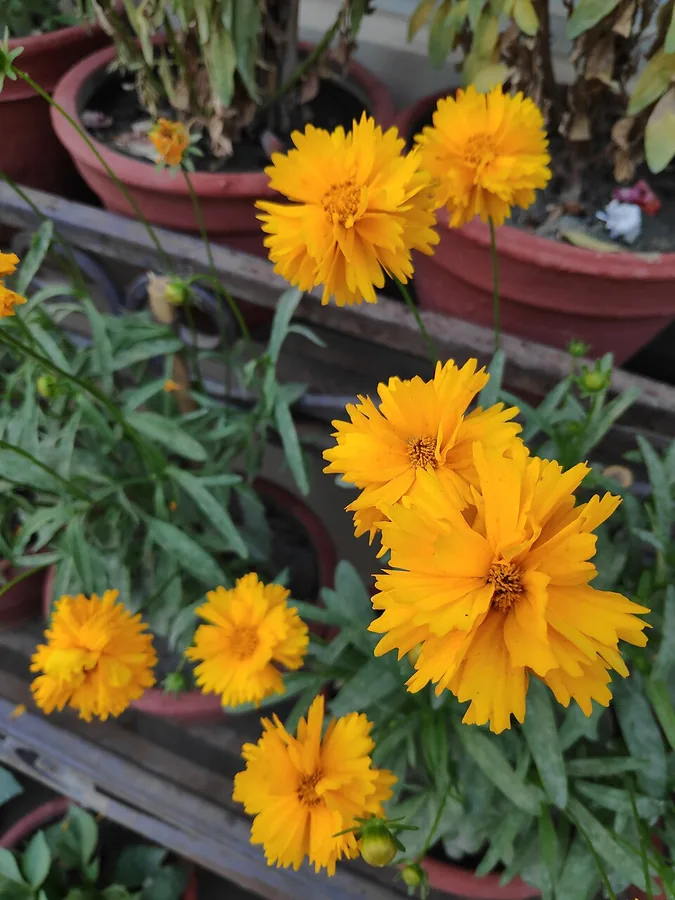
Hand tickseed a sun-soaked spot and lean, dry ground, and it fires off golden daisies from late spring until frost.
Full sun
Every 7–14 days
USDA 4–9
1–3 ft · 0.3–0.9 m
Overview
Coreopsis, the plant most people call tickseed, is a powerhouse perennial for any sunny patch. It belongs to the daisy family and takes a poor, dry, rocky corner and runs with it, throwing out golden-yellow flowers that pollinators and butterflies chase all season long. Forget the alarming name; it has nothing to do with the bug and everything to do with the small dry seeds, which look like ticks up close.
The real thrill is how much this plant gives for how little it takes. It powers through drought once established, digs into lean, infertile ground without missing a beat, and keeps the flowers firing from late spring deep into summer, often right to the first frost. Rich soil and heavy watering only slow it down, so the urge to pamper a plant works dead against this one.
Two groups are worth chasing down. The large-flowered tickseeds fling out big, bold daisies and rocket into bloom from seed, while the threadleaf types like Moonbeam and Zagreb swap size for a cloud of fine foliage and smaller flowers that hang on longer. Both crave the same trio: sun, sharp drainage, and a light hand.
Care
The short version: full sun and lean, well-drained soil, with water only once the top half dries out. Hold back on feeding, deadhead through the season, and shear the clump back in midsummer to fire off a second flush.
Light
Coreopsis craves full sun and flowers hardest with it. It will shrug off a little afternoon shade, but pile on much more and you trade strong stems for floppy, leggy growth and far fewer blooms.
Water
Once it digs in, this plant powers through drought, so let the top half of the soil dry out between drinks, roughly every 7 to 14 days. Sharp drainage beats any rigid schedule, hands down. Keep it wet and you will lose it fast.
Soil
Lean is the name of the game. It thrives in well-drained sandy, rocky, or clay ground and even charges ahead in poor, infertile spots, holding a slightly acidic to neutral pH of 5.5 to 7.0. Rich soil just makes it flop.
Humidity
Plain outdoor air does the job, so skip chasing a number. What really moves the needle is drainage and airflow, since damp, crowded conditions throw the door open to rot.
Feeding
Feed it rarely, if you feed it at all. A light touch through the growing season is plenty, because rich soil drives soft, floppy growth and steals from the flowers.
Pruning
Deadhead spent blooms through the season to keep them firing. Then shear the whole clump back in mid to late summer to trigger a fresh fall flush and clear out any sprawling foliage.
Size & spacing
Plants shoot up 1 to 3 feet (30 to 91 cm) tall and spread about as wide. Give each one 1 to 3 feet (30 to 91 cm) of room so air rips freely through the clump.
When to plant
Coreopsis is a tough perennial that thrives across zones 4 through 9, so the growing season is yours to plan. Start seed indoors a few weeks before the last frost or sow it straight in the ground, set plants out once spring takes hold, and the flowers come charging from late spring into summer.
Northern hemisphere
Southern hemisphere
Typical months for a temperate climate: start earlier in warm zones, later where spring frosts linger.
- Sow: 6 to 8 weeks before last spring frost
- Plant: After last spring frost in spring
- Harvest: Late spring to late summer, sometimes to first frost
Hardiness
USDA hardiness zones: 4–9
Temperature: down to -34°C
Troubleshooting
Track nearly every coreopsis problem back to one culprit: too much water. Nail the drainage and most of the trouble below never even gets going. When something does crop up, match what you see and jump on it before it spreads.
Stem bases turning to mush as the whole plant keels over
Soft, slumping stems at the base spell crown rot, and it springs from waterlogged soil rather than any pest. Once the base darkens and goes soft the plant rarely bounces back, so pull it and bin it without hesitation. Then turn things around fast: dial back the watering, sharpen the drainage, and plant healthy divisions into ground that drains in a hurry.
Fix:
- Remove and destroy affected plants
- Improve drainage and reduce watering
- Replant healthy divisions in well-drained soil
Sudden collapse with cottony white strands ringing the stem base
Southern blight charges in during warm, humid spells and can fell a plant in days. Spot it by the white fungal mat creeping along the soil line, studded with tan, mustard-seed-sized sclerotia. Move quickly: dig out the plant along with the soil around it, sweep mulch away from the stems, and open the planting up so air can rush through.
Fix:
- Remove and destroy infected plants and surrounding soil
- Avoid mulching directly against stems
- Improve air circulation and drainage
Leaves riddled with chewed-out gaps and glistening trails nearby
Ragged holes punched through the leaves mark the night raids of slugs and snails, which work the damp ground after dark. Those silvery trails near the damage point straight to the culprits. Grab a flashlight, head out after dark, and pluck them off, then dry the bed by cutting back on water and mulch, and rope off the plants they love with traps or barriers.
Fix:
- Hand-pick at night
- Reduce excess moisture and mulch
- Use traps or barriers
Few flowers on floppy, sprawling stems
Loads of leafy growth but barely a flower in sight usually traces to soil that is too rich or too wet, and it only worsens when old blooms hang on. Flip the script: shift it into full sun and lean, well-drained ground, hold back on the feeding, snap off faded flowers as they fade, and shear the whole clump back in mid to late summer to spark a brand new wave of bloom.
Fix:
- Deadhead regularly
- Shear back in mid to late summer
- Reduce fertilizer and grow in full sun and leaner soil
Toxicity
Great news for any animal-loving home. Coreopsis lands on the ASPCA's non-toxic list for cats, dogs, and horses, and it poses no known threat to other animals or people. A nibbled leaf or flower is nothing to worry about.
Safe for
People · Cats · Dogs · Horses · Rabbits · Livestock · Birds
Cats None
Cats are totally in the clear. The ASPCA stamps coreopsis non-toxic, so a curious bite from a cat calls for zero panic.
Dogs None
Dogs get the all-clear too. It packs no known toxins, though a dog that wolfs down a big mouthful of any plant might run into a quick, harmless bout of stomach upset.
Horses None
Horses are good to go as well. Coreopsis lands on the non-toxic list, so it brings no poisoning risk to grazing ground.
Rabbits Safe
Rabbits have nothing to fear. Let one nibble the leaves or flowers and it finds nothing harmful in there.
Livestock Safe
Cattle, goats, and sheep can graze right alongside it with no toxicity worries at all.
Birds Safe
Birds are perfectly safe, and plenty of them flock to the dried seed heads for a feed.
People Safe
People face no toxicity either. It earns its spot as a garden flower, not a food crop, so there is no edible part to harvest.
Varieties
Coreopsis comes in dozens of named selections, but a handful keep stealing the show for good reason. These are the ones worth chasing down by name.
Coreopsis verticillata 'Moonbeam'
A threadleaf star that pairs feathery, finely cut foliage with soft pale yellow flowers that just keep coming across a long season.
Coreopsis verticillata 'Zagreb'
A compact threadleaf pick that holds a crisp, mounding shape and pumps out golden-yellow flowers.
Coreopsis verticillata 'Grandiflora'
A more compact threadleaf form that climbs to about 2.5 feet and crowns itself in bright golden-yellow daisies.
Coreopsis grandiflora 'Early Sunrise'
A large-flowered tickseed that races into bloom, throwing semi-double golden flowers from seed in its very first year.
How to propagate
Multiplying coreopsis is a joy, whether you split an existing clump or grow it from seed, and the plant often beats you to it by reseeding all on its own.
DivisionEasy
Early spring; divide clumps every 2 to 3 years to maintain vigor · One growing season
Division is the surefire way to keep coreopsis charging along. Lift an established clump in early spring, split it into healthy chunks, and replant them to revive flagging plants and keep the spread reined in. Give the divisions a single growing season and they take hold.
SeedEasy
Start indoors 6 to 8 weeks before last frost or direct sow; self-seeds readily · Blooms first year for many large-flowered types
Coreopsis takes off from seed with ease, whether you start it indoors 6 to 8 weeks before the last frost or scatter it straight into the bed. Many large-flowered types burst into flower in their first year. Large-flowered tickseed can be short-lived, but it reseeds so freely that the patch keeps powering on by itself.
Myths
The tickseed name comes from the plant's knack for drawing ticks into the garden.
Not a chance, the name is all about the seeds and not the bugs. Each tiny dry seed simply mirrors the shape of a tick, and that likeness is the whole tale. What this plant really pulls in is pollinators and butterflies, never ticks.
Coreopsis packs a poison that makes it unsafe to grow around dogs and cats.
Good news on this one: the ASPCA lists coreopsis as non-toxic to dogs, cats, and horses. A pet that grabs a leaf or flower is in no danger at all.