Tree · Sapindaceae
Bloodgood Japanese Maple
Acer palmatum
A stunning red-leaf maple that rewards steady care with deep burgundy summers and fiery fall color.
Partial shade
Every 5–10 days
USDA 5–8
15–20 ft · 4.6–6.1 m
Overview
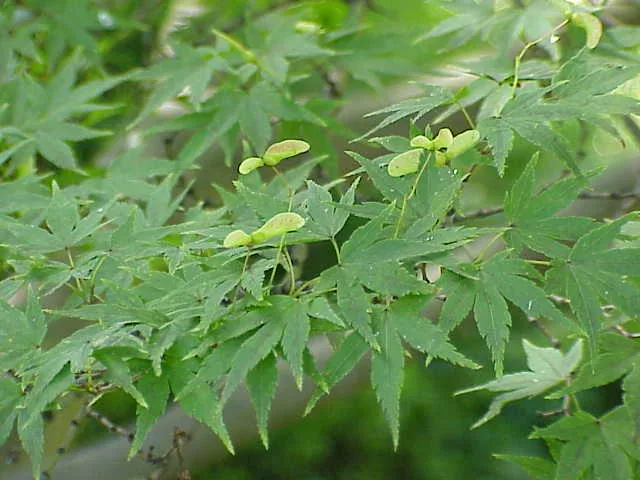
The Bloodgood Japanese Maple (Acer palmatum) earns its spot as a standout in any yard, unfurling deep burgundy to blackish-red leaves that hold their color through summer better than most red cultivars. Come fall, the whole canopy ignites into brilliant scarlet, and small red samaras ripen to cap off the show. It is the kind of tree that pulls every eye toward it.
This upright maple grows to a mature height of 15 to 20 feet (180 to 240 inches) with a spread of 12 to 20 feet (144 to 240 inches), so it fits a courtyard, a focal bed, or a patio corner with room to breathe. Growth runs slow, which means the tree keeps its tidy shape for years and asks very little in the way of heavy pruning. Patience pays off here.
Hardy across USDA zones 5 to 8 and tolerant of temperatures from -20°F to 95°F (-29°C to 35°C), this maple thrives in part shade with moist, slightly acidic soil. Get the siting right and it settles in for the long haul as a low-maintenance perennial that returns more striking each season.
Care
The short version: Plant this maple in part shade with moist, organically rich, slightly acidic, well-drained soil, and water every 5 to 10 days to keep the root zone evenly moist. Mulch to lock in moisture and cool the roots, feed lightly in spring, and prune only lightly in late fall to mid winter. Give it afternoon shade in hot climates and shelter from drying wind, and this slow-growing beauty rewards you season after season.
Light
Give this maple part shade for the happiest, healthiest growth, though it handles full sun and partial sun too. A few hours of sun keep the red leaf color rich and deep, but in hot climates it really wants afternoon shade to dodge scorch. Strike that balance and the canopy glows.
Water
Keep the soil consistently moist but never waterlogged, since this maple is not drought tolerant. Water every 5 to 10 days, reaching for the hose more often during dry spells, and water deeply to head off leaf scorch. Mulch over the root zone holds moisture in and keeps roots cool.
Soil
Plant in moist, organically rich, slightly acidic, well-drained loam and this maple digs right in. Aim for a soil pH of 5.5 to 6.5 for the best growth. Good drainage matters as much as fertility, so amend heavy ground with compost to keep roots happy.
Temperature
Built tough for USDA zones 5 to 8, this maple shrugs off temperatures from -20°F to 95°F (-29°C to 35°C). It takes cold winters in stride and pushes through summer heat, though searing afternoons call for a little shade to protect the leaves.
Humidity
Average humidity suits this maple just fine, so there is no need to fuss over moisture in the air. Outdoor conditions across its hardiness range keep it perfectly content with no special steps.
Feeding
Feed lightly in spring with a balanced slow-release fertilizer or a generous layer of compost, once per season. Go easy and avoid excess nitrogen, which pushes soft growth that pests love. A modest meal is all this maple asks to keep its color strong.
Pruning
Keep pruning to a minimum and this maple rewards you with a naturally graceful shape. Remove dead, damaged, or crossing branches in late fall to mid winter while the tree sleeps. Pruning during dormancy keeps the cuts clean and the tree settled.
Repotting
Container specimens want a fresh pot every 2 to 3 years, while landscape trees never need repotting at all. Watch for roots circling the pot or poking through drainage holes, water running straight through, and slowed growth between waterings as your cue to move up a size.
Size & spacing
Plan for a mature height of 15 to 20 feet (180 to 240 inches) and a spread of 12 to 20 feet (144 to 240 inches). Give this upright maple room to stretch into its full form, and its slow growth keeps it well-mannered as a focal point for years.
When to plant
Timing sets this tree up to flourish. Plant in spring or fall once the danger of hard frost has passed, and watch for reddish-purple flowers in April followed by red samaras that ripen September to October.
Northern hemisphere
Southern hemisphere
Typical months for a temperate climate: start earlier in warm zones, later where spring frosts linger.
- Plant: Spring or fall, after danger of hard frost has passed
- Harvest: Reddish-purple flowers in April; red samaras ripen September-October
Hardiness
USDA hardiness zones: 5–8
Temperature: down to -29°C
Troubleshooting
Even an easygoing maple hits the occasional snag, and the good news is that the common problems are easy to spot and quick to fix. Stay alert to leaf scorch, verticillium wilt, and sap-feeding pests, and a few timely moves keep your tree thriving.
Verticillium Wilt, a Soil-Borne Threat
One side of the tree wilts, branches die back, and leaves yellow out of nowhere. This soil fungus clogs the vascular system, so act fast: prune out infected wood, keep the tree vigorous, and fix drainage to slow its march.
Fix:
- Prune out and destroy affected branches
- Keep the tree vigorous with proper watering and avoid overfertilizing
- Improve drainage; there is no chemical cure for verticillium
Aphids and Scale Move In
Sticky leaves and twisted new shoots signal sap feeders at work, with tiny aphids on fresh growth and hard scale bumps clinging to bark. Blast them off, treat with oil or soap, and rally the lady beetles to win the battle.
Fix:
- Dislodge aphids with a strong spray of water
- Treat with horticultural oil or insecticidal soap
- Encourage natural predators such as lady beetles
Leaf Scorch From Sun, Heat, and Dry Soil
When summer turns harsh and the soil runs dry, leaf edges crisp up and brown along the margins. Steady moisture, a cool root zone, and afternoon shade turn this around fast and keep the canopy looking sharp.
Fix:
- Water deeply and consistently to keep soil evenly moist
- Apply mulch over the root zone to retain moisture and cool roots
- Provide afternoon shade in hot climates
- Shelter the tree from strong drying winds
Toxicity
Pet owners can plant this maple and relax. Acer palmatum is not listed on ASPCA toxic-plant lists, and maples across the genus Acer rate as non-toxic to cats and dogs, so the foliage poses no poisoning risk.
Safe for
People · Cats · Dogs · Horses · Rabbits · Livestock · Birds
Cats Safe
Cats stay safe around this maple; the leaves carry no listed toxins, though a gnawed twig could splinter and irritate the gut.
Dogs Safe
Dogs face no poisoning risk from the foliage; just keep chewers off the branches since splintered wood can cause choking.
Horses Safe
Horses can graze near this tree without worry, as the leaves are not flagged toxic on the lists.
Rabbits Safe
Rabbits encounter no toxic threat from the leaves, so they remain in the clear around the tree.
Livestock Safe
Livestock are safe near this maple, with no toxic listing tied to its foliage.
Birds Safe
Birds rest and perch here without hazard; the foliage poses no listed toxic threat.
People Safe
People handle this tree freely; the leaves are non-toxic and carry no listed danger.
Although foliage is non-toxic, chewed twigs can splinter and cause choking or digestive upset, so discourage pets from chewing branches.
Varieties
Red-leaf Japanese maples come in a few distinct forms, and knowing them helps you pick the right one for your space. Here is how Bloodgood stacks up against its close cousins.
Bloodgood
An upright tree that holds deep burgundy to blackish-red leaves straight through summer better than most red cultivars, then flips to brilliant scarlet in fall and sets red samaras.
Atropurpureum
A seed-grown red-leaf form that swings more in color and shape from plant to plant than the grafted, true-to-type 'Bloodgood'.
var. dissectum (Tamukeyama)
A weeping laceleaf form with finely cut foliage that stays low and mounding instead of climbing upward.
How to propagate
Multiplying this cultivar takes commitment, since the showy red form does not come true from just any method. Here is what works and what to expect when you try.
GraftingDemanding
Late winter to early spring (bench grafting) onto seedling rootstock · Several months for the graft union to take; one or more seasons to establish
Grafting is the only way to keep 'Bloodgood' true to type, joining it onto Acer palmatum seedling rootstock, which is exactly why every tree you buy started its life this way. Bench grafting runs from late winter into early spring, the union takes several months to knit, and the young tree then spends a season or more settling in. This is demanding work better left to nurseries than attempted at home.
Stem cuttingsDemanding
Early summer from softwood growth · Several weeks to months to root, with low success rates
You can take softwood cuttings in early summer and give it a go, but expect disappointment. Cuttings need several weeks to months to root and most of them fail, which is why grafting stays the reliable choice for this cultivar.
Myths
Japanese maples must be planted in deep shade or the leaves will fry.
This tree handles full sun to part shade with ease, and a few hours of sun keep the red color rich and glowing. In hot climates it really does want afternoon shade to spare the leaves from scorch, but deep shade is not the rule.
Japanese maple leaves are poisonous to cats and dogs.
Acer palmatum lands on no ASPCA toxic-plant list, and maples across the genus Acer are treated as non-toxic to cats and dogs. The only real hazard is a chewed twig that splinters, not the leaves themselves.