Tree · Sapindaceae
Lychee
Litchi chinensis
Give it heat, acidic soil, and a cool winter rest, and this tropical tree pays back every bit of the patience it asks.
Full sun
Every 3–7 days
USDA 10–11
20–40 ft · 6.1–12.2 m
Overview
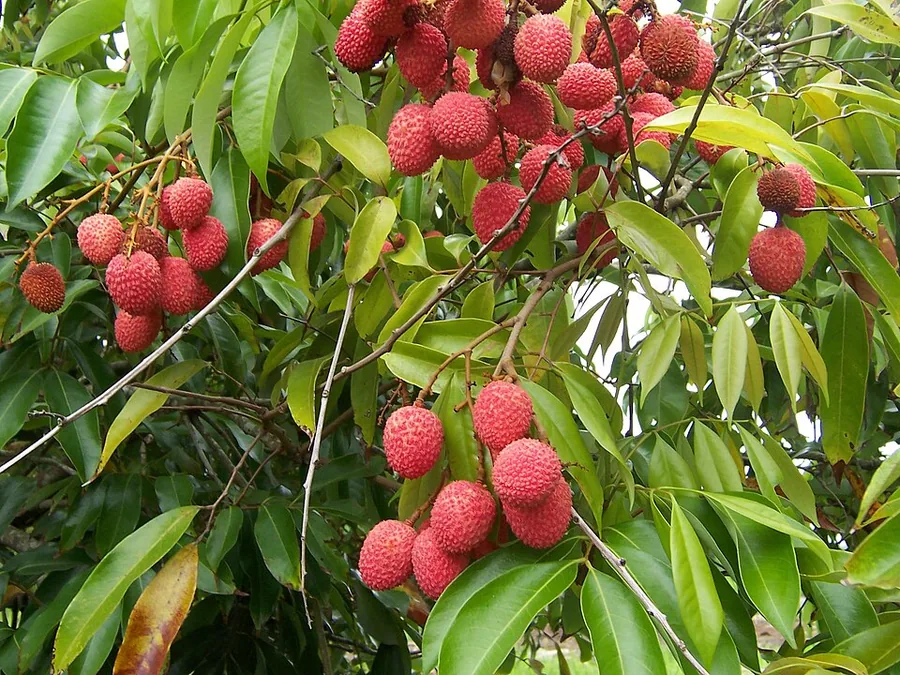
Lychee is an evergreen tropical tree from southern China, grown for the sweet, perfumed flesh packed inside its rough red shell. It builds slowly into a wide, rounded canopy and holds on for decades, so planting one kicks off a project that runs for the long haul rather than a single season. Turned loose in the ground, it climbs to 20 to 40 feet (6 to 12 m) tall and spreads nearly as wide.
Make no mistake, this tree demands a lot, and almost all of it comes down to climate. It craves real warmth and frost-free winters, which pins it to USDA zones 10 and 11 or a sheltered pocket that mimics them. The twist that catches growers off guard is flowering: a lychee needs a short cool, dry spell in winter to fire off flower panicles, so a mild winter often serves up a rush of leaves and zero fruit.
Where it thrives, though, the payoff hits hard. Trees fruit from May to July, peaking in June, and a settled tree can haul a heavy crop. Just plan around alternate bearing, where a blockbuster year usually hands off to a lighter one.
Care
The short version: full sun, fertile well-drained acidic soil, and steady moisture through the growing season, then a cooler, drier winter rest to fire up flowers, plus solid shelter from frost and wind.
Light
Plant lychee in full sun and it grows and crops at full tilt, though it shrugs off a bit of partial sun. A wind-sheltered spot counts every bit as much as the light, since the brittle wood snaps in storms.
Water
Keep the soil consistently moist through active growth, and lean into it while the tree is young or carrying fruit. Then back off in late fall and winter to deliver the cool, dry rest that fires up flowering. It flat out refuses standing water or salty water.
Soil
Drop it into fertile, well-drained acidic sandy loam loaded with organic matter, ideally sitting at a pH of 5.0 to 5.5. Salt is the enemy, so salty ground or water knocks it right back.
Temperature
Lychee works across a span of about 32°F to 95°F (0°C to 35°C) but stays genuinely frost tender, and a freeze browns the leaves and kills branches. Flip side, a short cool winter spell is exactly what kicks it into flower.
Humidity
This tree drinks in humid air, ideally around 50% to 80%. Dry air drags it down, which is a big reason it powers ahead in warm, humid regions.
Feeding
Feed it seasonally through the growing season, roughly March to November, with a complete fertilizer stocked with micronutrients. Lychee burns through manganese, zinc, and iron, so micronutrient foliar sprays during growth head off yellowing leaves.
Pruning
Prune lightly after harvest to shape the tree and rein in its size, clearing out dead, crossing, or weak branches. Once established, lychee asks for barely anything more.
Repotting
Bump a young container tree up every 2 to 3 years until it is set for the ground. Once it establishes, plant it out, since this tree wants open soil for the long haul.
Size & spacing
Gear up for a mature tree of 20 to 40 feet (6 to 12 m) tall with a spread of 20 to 30 feet (6 to 9 m). Hand it that much open room, well clear of buildings, so the wide canopy stretches out and wind has somewhere to run.
When to plant
Lychee runs on the warm season and flat out rejects frost. Plant in spring once the cold clears and the soil warms, let the tree flower from late winter into spring, and pull fruit from May through July, with the crop peaking in June.
Northern hemisphere
Southern hemisphere
Typical months for a temperate climate: start earlier in warm zones, later where spring frosts linger.
- Plant: Spring, after all danger of frost has passed and the soil has warmed
- Harvest: Flowers late winter to spring; fruit ripens May to July, peaking in June
Hardiness
USDA hardiness zones: 10–11
Temperature: down to -1°C
Troubleshooting
Nearly every lychee headache traces back to climate and soil, not pests, which keeps the fix list short. Poor flowering, yellowing leaves, and cold or wind damage cover almost the whole thing. Match what you spot below and jump on it before a season's crop slips away.
Browning leaves and dying branches after cold or wind
Lychee runs frost tender, so leaves that brown or blacken after a cold snap point straight to freeze damage, and it can chase whole branches into dieback. Strong wind lands the same punch on this brittle-wooded tree. Wrap and warm young trees when frost threatens, and plant them in a wind-sheltered spot from day one so they power ahead.
Fix:
- Protect young trees during frost with covers or added heat
- Relocate or shelter trees from strong wind
Loads of leaves but hardly any flowers or fruit
A tree that keeps piling on leaves but skips the flowers almost always got cheated of its cool, dry winter rest, the short chill that flips the switch toward flower panicles instead of another leaf flush. Lychee also swings into alternate bearing, so a bumper crop one year can trade for a thin one the next. Pull back on water and nitrogen through late fall and winter, then hang in there through the quiet years and the tree bounces back.
Fix:
- Provide a cool, dry winter rest by withholding water and nitrogen in late fall and winter
- Avoid heavy nitrogen that drives vegetative growth at the expense of flowers
- Be patient through alternate-bearing cycles
Fresh leaves going yellow between the veins
Spot new leaves paling between green veins or browning at the edges, and the tree is coming up short on iron, zinc, and manganese from the soil. Alkaline or salty ground locks those micronutrients away, and salty water piles the problem higher. Hit it with a chelated iron and micronutrient spray, drive the soil back toward a pH of 5.0 to 5.5, and cut off the saline water for good.
Fix:
- Apply chelated iron and micronutrient foliar sprays
- Acidify the soil and mulch with organic matter
- Stop using saline irrigation water
Toxicity
Ripe lychee flesh is a safe, well-loved fruit, so the tree itself brings no household hazard. The real caution rides on the unripe fruit and the seeds, which carry hypoglycin linked to dangerous drops in blood sugar, and the hard seed is a choking risk. Eat only ripe fruit, ditch the seeds, and keep green fruit and pits well away from children and pets.
Toxic to
Cats · Dogs · Horses · Rabbits · Livestock · Birds
Safe for
People
Cats Caution
A bite of ripe flesh will not bother a cat, so relax on that front. The seed and any unripe fruit are the real watch points, since their hypoglycin can drag blood sugar down and leave a cat wobbly or drowsy, and that hard pit can choke one fast.
Dogs Caution
Dogs pounce on a dropped fruit and gulp it whole, pit and all. A little ripe flesh sits fine, but a swallowed seed can jam up the gut, and the toxins in seeds and unripe fruit can knock a dog into weakness or shakiness from low blood sugar.
Horses Caution
A horse barely ever runs into a lychee, and the flesh raises no known trouble in moderation. Even so, sweep up fallen seeds and green fruit, because the hypoglycin behind the fruit's hypoglycemia has not been cleared as safe for horses.
Rabbits Caution
Hold lychee to the barest taste of ripe flesh for rabbits, since the sugar load hits them hard. The seed and unripe fruit also pack the same hypoglycin that can crash blood sugar.
Livestock Caution
Windfall fruit under the tree is where grazing animals stumble into trouble. The ripe pulp stays mild, but seeds and unripe fruit carry hypoglycin, so rake up the drops wherever stock can reach them.
Birds Caution
Birds dive on ripe lychee flesh, and a little does them no harm at all. The seed is the catch, working both as a choking hazard and as a store of the same hypoglycin found in unripe fruit.
People Ripe fruit safe
Ripe lychee flesh is a favorite fruit and safe to eat in moderation, so dig in. The danger hides in the unripe fruit and seeds, which pack hypoglycin linked to dangerous low blood sugar, most of all in undernourished children eating many green fruit on an empty stomach. Stick to ripe fruit, ditch the seeds, and keep the pit away from small children as a choking hazard.
Caution: UNRIPE lychee fruit and the SEEDS contain hypoglycin A and MCPG, toxins linked to dangerous low blood sugar (hypoglycemia), most notably in undernourished children who eat many unripe fruit on an empty stomach; the hard seed is also a choking hazard. Ripe fruit eaten in moderation is safe.
Helpline numbers

United States
ASPCA Animal Poison Control: (888) 426-4435 (fee applies)
Poison Control: (800) 222-1222



Canada
Poison Centres: 1-844-764-7669
Varieties
A handful of named cultivars carry most home and commercial groves, picked for reliable cropping and knockout fruit. These are the ones to get to know first.
Brewster
A vigorous early import from China loaded with large red fruit, it charged ahead to become a leading commercial cultivar in Florida.
Mauritius
A dependable heavy cropper that growers plant for market across warm, humid regions.
Sweetheart
Its big heart-shaped fruit usually packs a small shriveled chicken-tongue seed, which hands you even more flesh to eat.
How to propagate
Lychee multiplies mostly by air-layering, since cuttings root poorly and seedlings crawl along unpredictably. The route you grab decides how true the tree runs and how long you wait for that first fruit.
Air layeringModerate
Warm growing season, spring into summer · Roots in about 8-12 weeks; trees typically fruit in 3-5 years
Air-layering, also called marcotting, drives the main commercial way to multiply lychee, because plain cuttings root poorly. Work it in the warm season from spring into summer, and the layer fires out roots in about 8 to 12 weeks. Best of all, you land a true-to-type tree that fruits in roughly 3 to 5 years, blowing past a seedling's timeline.
SeedModerate
Sow fresh seed immediately, as viability lasts only a few days · Germinates in 1-2 weeks; seedlings may take 7-10+ years to fruit
Lychee seed dies off within a few days, so sow it fresh the second you scoop it out and watch it sprout in 1 to 2 weeks. Then comes the catch. A seedling can drag out 7 to 10 years or more before it fruits, and what it delivers is a gamble, so skip this one when you want quality.
GraftingDemanding
Growing season · Union forms in weeks; fruiting in 3-5 years
Graft during the growing season and the union locks up within weeks, handing you a tree that fruits in about 3 to 5 years. It keeps a chosen cultivar rolling, but for lychee most growers grab air-layering instead.
Myths
Every part of the lychee, ripe fruit included, is dangerously poisonous.
The ripe flesh is a safe, everyday fruit that people devour the world over. The real catch is the hypoglycin A and MCPG in the unripe fruit and seeds, and even then trouble shows up mainly when undernourished children eat many green fruit on an empty stomach. Tuck into the ripe fruit and ditch the seeds.
You can easily grow a productive lychee from a seed.
Seedlings drag their feet, often taking many years to bear, and they vary so wildly that the fruit rarely matches the parent. Air-layering is the winning route, delivering true-to-type trees that crop far sooner.