Tree · Sapindaceae
Japanese Maple
Acer palmatum
Give it dappled shade, steady moisture, and shelter from wind, and the Japanese maple pays you back with color from spring through fall.
Partial shade
Every 3–7 days
USDA 5–8
10–25 ft · 3–7.6 m
Overview
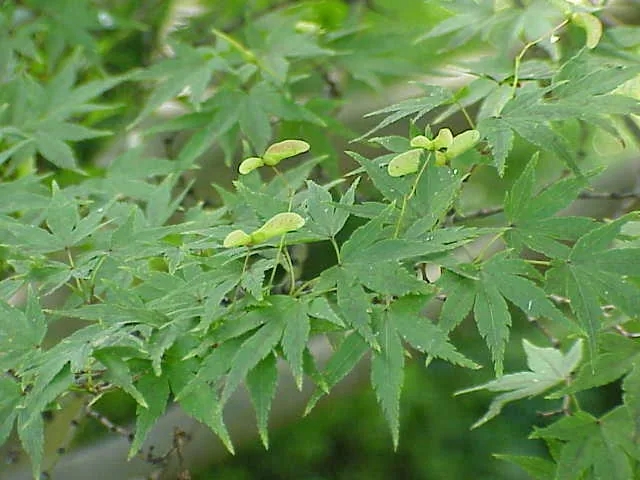
The Japanese maple is a small, slow-growing tree that thrives in the understory, where filtered light and cool roots let it hit its stride. It splits into two broad shapes that steer how it lands in a garden. Upright forms climb into rounded little trees, while laceleaf forms mound and weep with leaves cut so fine they read like lace.
Color is the payoff, and it runs all season long. The palmate leaves shift through red, green, bronze, and purple, then blaze into red, yellow, and gold once fall arrives. The April flowers are reddish and easy to miss, so the leaves do all the heavy lifting here.
It rewards patience and a sheltered spot, and getting that right feels great. Hot afternoon sun, drying wind, and dry soil all scorch the leaves, so the winning formula is dappled shade, even moisture, and a thick collar of mulch. Nail the site and it hangs around for decades with barely any fuss.
Care
The short version: drop it into dappled or afternoon shade out of drying wind, keep the soil evenly moist and well drained, mulch the root zone, and prune only in late fall to winter.
Light
Hand it dappled or afternoon shade and it takes off, since that filtered light matches what it would grab under taller trees in the wild. It handles full sun in cooler climates, but hot, dry, windy spots scorch the leaves fast. Too much shade backfires the other way, draining the color and loosening the form.
Water
Keep the soil consistently moist and stay sharp through hot weather, since this tree has zero patience for drought. Pile 3 to 4 inches (8 to 10 cm) of mulch under the canopy to lock in moisture and keep the roots cool. Let the moisture swing in full sun and the leaf edges scorch on you.
Soil
Set it in moist, rich, well drained loam that leans slightly acidic and holds plenty of organic matter. High-pH ground tends to spark chlorosis, that yellowing between the veins, so acidic soil keeps the foliage clean and green.
Temperature
The tree powers through a wide range, roughly -20°F to 95°F (-29°C to 35°C). Late frost can nip the tender spring growth, so that is one more reason to tuck it out of the open and away from the wind.
Humidity
Ordinary outdoor humidity has it covered, so skip chasing a number. What really counts is even soil moisture and shelter from wind, since dry wind is the thing that crisps the leaf edges.
Feeding
Feed once in spring before the leaves break, using a slow-release or balanced fertilizer, and keep a light touch. Overdo it and you push weak, fast growth and can spike the salt level enough to brown the leaf margins.
Pruning
Keep pruning light and save it for late fall to mid winter, when the tree sits dormant and you are only clearing dead or crossing branches. Cut in spring or summer and it bleeds sap hard, so the timing matters more here than with most trees.
Repotting
For a potted or bonsai tree, repot every 2 to 3 years, refreshing the mix and trimming the roots as you go. Keep an eye out for roots circling the pot, water running straight through, or foliage that scorches and stalls, all signs it has outgrown its container.
Size & spacing
Let it run and it reaches 10 to 25 feet (3 to 7.5 m) tall and about as wide, so hand it that much room to spread. It grows slowly, which makes it easy to place and forgiving if you misjudge the scale at first.
When to plant
This tree wakes up slowly and bleeds sap if you cut it at the wrong moment, so timing pays off big. Plant it in spring or fall while the weather stays mild, catch the reddish flowers coming and going in April, and hold every pruning cut for the dormant run from late fall into winter.
Northern hemisphere
Southern hemisphere
Typical months for a temperate climate: start earlier in warm zones, later where spring frosts linger.
- Plant: Spring or fall, in dappled shade sheltered from drying wind and late frost.
- Harvest: Inconspicuous reddish flowers in April; brilliant fall foliage color (red, yellow, bronze, purple).
Hardiness
USDA hardiness zones: 5–8
Temperature: down to -29°C
Troubleshooting
Most Japanese maple trouble breaks out in the leaves first, whether a baking site or a hidden root problem drives it. Read the early signs and you can knock out the easy ones before they spread. Match what you spot below, then jump on it while it still counts.
Whole branches fading and dying back on one side
This is the tough one, and it usually spells verticillium wilt, a soil fungus that jams the tree's water pipes and shuts down whole limbs. Dark streaking may show under the bark, but it copies fusarium closely, so send a sample to a lab to nail the diagnosis. No cure exists, so get to work: cut out the dead wood, keep the tree watered and fed to drive fresh growth, and never drop another susceptible tree into that soil.
Fix:
- No cure exists; prune out dead branches and have a certified arborist assess hazardous dieback
- Support the tree with appropriate irrigation and slow-release fertilizer to encourage new growth
- Remove severely affected trees; plant only resistant species in infested soil
Sticky shoots with soft insects or waxy bumps on the bark
Two sap feeders drive this, and both come off with a bit of hustle. Aphids swarm the soft new shoots, while scale grip the bark as hard or waxy bumps, and both drip a sticky honeydew that draws sooty mold. Knock the aphids off with a hard water blast or insecticidal soap, hit the scale with dormant oil, and keep scouting through the season so the next wave never gains ground.
Fix:
- Hose off aphids with a strong stream of water or treat with insecticidal soap/horticultural oil
- Apply dormant horticultural oil for scale and prune out heavily infested branches
- Conserve natural predators and monitor through the growing season
Brown, crispy edges that start to curl
Those crisped edges point straight to leaf scorch, which fires up when sun, heat, and wind gang up while the soil keeps drying out. It jumps to the most exposed leaves first and ramps up through hot, dry stretches, though the roots below carry on just fine. Turn it around fast: water deeply and evenly, pile on 3 to 4 inches of mulch, and hand the tree some afternoon shade or a windbreak.
Fix:
- Water deeply and consistently to keep soil evenly moist
- Apply 3-4 inches of mulch beneath the canopy to cool roots and retain moisture
- Provide afternoon shade or relocate to a site protected from sun and wind
Toxicity
Good news for pet owners: the Japanese maple is not toxic to cats, dogs, horses, or other animals. It skips the wilted-leaf danger tied to red maple in horses, so pet households can plant it and relax. A pet that chews the leaves might get a mild stomachache from the sheer bulk, so it is still worth steering them off chewing on it.
Safe for
People · Cats · Dogs · Horses · Rabbits · Livestock · Birds
Cats None
Great news for cat households, because this maple packs no poison for them, so a curious nibble does zero harm. Gorge on a heap of leaves and a cat might cough them up or feel briefly off, and that is the whole story.
Dogs None
Dogs get the all-clear here, with no toxin lurking in the leaves, bark, or seeds. The one thing a big greedy mouthful might trigger is a grumbly stomach for a day, exactly like most greenery does.
Horses None
Horses can graze right up to this tree without a worry. It skips the wilted-leaf danger that makes red maple so risky for equine red blood cells, which lands it as a solid, safe pick near a paddock.
Rabbits Safe
Nothing on this plant will poison a rabbit. Even so, roll any new green in slowly and in small amounts to keep their gut running smoothly.
Livestock Safe
Cattle, goats, and sheep can browse the foliage and walk away just fine. Unlike red maple, it skips the blood-damage risk that keeps owners of grazing animals on edge.
Birds Safe
Birds have zero to fear here, and plenty of them work the winged seeds and roost in the branches without a hitch.
People Safe
People are fully in the clear too, since the tree is not poisonous. The leaves and sap even turn up in cooking and tea now and then, though the real draw is the show it puts on, not the kitchen.
Generally non-toxic, but any plant material can cause mild stomach upset if eaten in quantity; discourage pets from chewing foliage.
Varieties
Hundreds of Japanese maple cultivars are out there, sorted mainly by leaf shape and growth habit, and half the fun is choosing. These are the ones you will run into most at the nursery.
Bloodgood
An upright cultivar that pushes deep reddish-purple palmate leaves and keeps that color charging well into summer, long after many reds fade.
Crimson Queen
A weeping, mounded laceleaf form that sends finely cut red leaves spilling over themselves like a fountain.
Sango-Kaku (Coral Bark)
An upright tree that glows soft yellow in fall, then drops its leaves to reveal coral-red young bark at its brightest through winter.
Seiryu
A rare upright laceleaf that holds green through summer, then ignites to gold and red in fall, a real standout among the weeping threadleaf types.
var. dissectum / subsp. matsumurae
The whole threadleaf and laceleaf crew, driving deeply and finely cut leaves out over a low, weeping mound.
How to propagate
Japanese maples move slowly and take some finesse to multiply, and the named cultivars will not come true from seed at all. Which route you grab comes down to whether you want the exact plant or just the species.
GraftingDemanding
Late winter to early spring (bench grafting onto seedling rootstock). · Several months to a year for the graft union to take and grow on.
Named cultivars refuse to come true from seed, so the nursery trade cranks them out by grafting, the go-to move for an exact copy. Growers bench graft onto Acer palmatum seedling rootstock in late winter to early spring, then let the union take several months to a year to knit and grow on. It is demanding work that rewards a steady hand, and it stays the top pick for any cultivar you want to nail exactly.
SeedModerate
Sow stratified seed in fall or early spring. · Seedlings establish over one to several seasons.
Seed opens up the straight species, though every seedling comes out its own way and skips the named parent's look. Sow stratified seed in fall or early spring and let the young trees dig in over one to several seasons. Watch out, though, because it self-seeds freely, enough to be listed as invasive in Virginia and DC, so collect or corral the seed where that matters.
Stem cuttingsDemanding
Early summer (softwood cuttings). · Weeks to months to root, with low success rates.
Softwood cuttings taken in early summer can root, but they fight you and the success rate stays low. Even the winners can drag anywhere from weeks to months to strike, which makes this a shaky play for most cultivars. When a faithful copy is the goal, grafting is the surer route.
Myths
Japanese maple leaves are dangerously poisonous to dogs and cats.
Not so, since Acer palmatum never lands on the ASPCA toxic-plant lists, and like the other maples they evaluate, it counts as non-toxic to cats and dogs. That wilted-leaf scare everyone repeats belongs to red maple in horses, not to this tree in pets. Plant it wherever the pets roam and enjoy it.
Japanese maples must be grown in deep, full shade.
They grew up as understory trees, so they thrive in dappled light or afternoon shade, but bury them in shade and the color drains while the form goes soft. The genuine risk in sun is not the light, it is scorch on hot, dry, windy sites where the soil dries out. Filtered light with steady moisture beats deep shade every time.