Houseplant · Apocynaceae
Desert Rose
Adenium obesum
Hand it full sun and a long dry spell between waterings, and the desert rose pays you back with a fat caudex and trumpet blooms.
Full sun
Every 7–14 days
50–86°F · 10–30°C
USDA 11–12
Overview
The desert rose is a succulent out of the dry country of Africa and Arabia, prized as much for its swollen, sculptural base as for the flowers it throws. That fat trunk goes by the name caudex, and it banks water the way a camel banks fat, carrying the plant through long droughts. Grown indoors, it stays slow and compact, thriving on a hot, sunny windowsill.
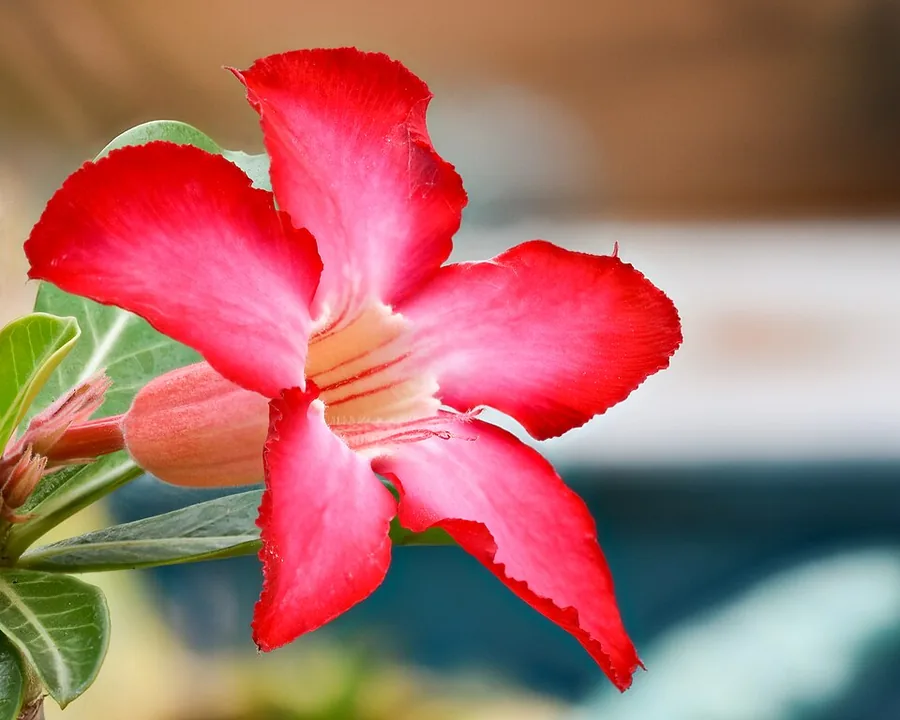
Once it flowers, it makes good on its name. Trumpet-shaped blooms in pink, red, and near-black play off gray-green leaves all through the warm months. Come winter the plant eases back, slowing its pace and often shedding leaves, which is normal behavior rather than a warning sign.
It demands little, yet it holds one firm rule. Too much water is the fast way to kill it, since soggy soil rots the caudex and roots. Treat it like the desert dweller it is, hand it grit and sun and a little patience, and it will outlast nearly everything else on the windowsill.
Care
The short version: full sun, a gritty mix that drains fast, and water only after the soil has gone bone dry, then pull back hard once winter sets in.
Light
Hand the desert rose as much direct sun as you can find, ideally several hours a day at the brightest window in the house. It hangs on under bright indirect light, but it stretches out and quits flowering. A pane of south-facing glass suits it best.
Water
Wait until the soil runs fully dry before the next watering, then drench it through. That tends to fall somewhere between every 7 and 14 days in active growth, though the soil calls the shots, not the calendar. Winter slows the plant right down, so pull back hard, because a cold, wet caudex rots in a hurry.
Soil
Pot it up in a gritty cactus or succulent mix that drains fast and never turns soggy. A slightly acidic to neutral pH of 6.0 to 7.0 hits the mark. Sharp drainage outranks everything else here, so work in extra grit or pumice if your mix clings to moisture.
Temperature
Hold it in the warm band between 50°F and 86°F (10°C to 30°C), and keep frost off it entirely. At heart it is a tropical plant, so a cold draft or a chilly winter sill does it genuine harm.
Humidity
Ordinary household air does the job, since this is a low-humidity plant from dry country. Skip the misting and forget about chasing a number, because damp, stagnant air works against it.
Feeding
Feed once a month across the spring and summer growing season with a balanced or low-nitrogen liquid fertilizer at half strength. Heavy nitrogen drives leaf growth at the cost of flowers, so reach for a feed richer in phosphorus when blooms are the goal.
Pruning
Prune in early spring to shape the plant, clear away dead or leggy stems, and spur fresh branching and more flowers. Cut stems leak toxic milky sap, so wear gloves and clean your tools right after.
Repotting
Repot every 2 to 3 years in spring as the caudex fattens and crowds the pot. Watch for roots curling out the drainage holes or the caudex pushing at the walls, and step up just one pot size so the soil never stays wet around the roots.
Size & spacing
Grown indoors it keeps to a slow, manageable 2 to 5 feet (60 to 150 cm) tall, spreading roughly 12 to 35 inches (30 to 90 cm) across. Thanks to that slow pace, one plant holds its form and footprint for years.
Troubleshooting
Nearly every desert rose hiccup comes down to water or light. Read the caudex and the leaves together and you can separate a winter rest from a genuine emergency. Pin down what you are seeing below before that watering can comes out.
A caudex turning soft, dark, or squishy at the base
What you are looking at is root and caudex rot, and it claims more desert roses than every other problem put together. It takes hold once that gritty soil holds moisture or the plant lingers somewhere cold and damp. Halt watering right away, slice back to firm tissue with a clean blade, give the wounds time to callus, and settle the plant into a dry mix that drains fast.
Fix:
- Stop watering immediately and move to a warm, bright spot
- Cut away all soft rotted tissue with a clean blade until firm tissue remains
- Allow cuts to callus, then repot in dry, gritty, fast-draining mix
Leaves turning yellow and falling away
Leaves dropping as autumn arrives or a cold snap rolls through usually means natural dormancy, so there is no cause for alarm. The plant is simply powering down for the season and will flush new growth once the warmth comes back. Still, give the soil a quick check, because that same yellowing can flag overwatering. Confirm the caudex feels firm and the mix sheds water freely.
Fix:
- Reduce watering and accept natural winter leaf drop
- Ensure adequate warmth and light
- Verify caudex remains firm and soil drains freely
Lush green foliage, yet barely a bloom in sight
Healthy leaves with no flowers points almost every time to a plant that is short on light or overfed with nitrogen. Shift it to the sunniest window you own, the kind that delivers several hours of direct sun, and swap in a low-nitrogen, higher-phosphorus feed. Pair that with a cool, dry winter rest and the plant gears up to flower come spring.
Fix:
- Move to the brightest possible location with several hours of direct sun
- Switch to a low-nitrogen, higher-phosphorus fertilizer
- Allow a cooler, drier rest period in winter to encourage spring bloom
Toxicity
Give this plant the respect it earns. Every part carries a milky sap loaded with cardiac glycosides, the very compound used long ago as an arrow poison, and it can bring on vomiting, drooling, and dangerous heart-rhythm effects. Keep it far from pets, livestock, and children, and pull on gloves whenever you prune.
Toxic to
Cats · Dogs · Horses · Rabbits · Livestock · Birds · People
Cats Severe
Chew on any piece of this plant and a cat will soon drool, vomit, and go limp, while the cardiac glycosides in the sap can send the heartbeat dangerously out of rhythm. Any ingestion counts as an emergency.
Dogs Severe
A dog that bites into the stems or sap will start vomiting, scour, and grow weak within a short time, and the irregular heartbeat poses the gravest threat. Head straight for a vet instead of waiting it out.
Horses Toxic
Those same cardiac glycosides land heavily on horses, triggering colic, drooling, and a stumbling heart rhythm. Keep this plant a long way from any paddock or barn.
Rabbits Toxic
One small nibble is enough to harm a rabbit, since the toxins can throw the gut and the heart into disorder. Never set out any part of this plant as forage.
Livestock Toxic
Cattle, goats, and sheep that browse the leaves or sap can be poisoned, and heart and digestive trouble follow. Fence the plant off from grazing animals completely.
Birds Toxic
Even tiny amounts of the cardiac glycosides put birds in danger, so a curious parrot or chicken faces real risk from a single peck. Keep cages and free-flying birds clear of it.
People Caution
Nothing on this plant is food, and swallowing it can bring on vomiting and heart-rhythm effects. The milky sap stings skin and eyes too, so pull on gloves before you prune and store it beyond a child's reach.
Wear gloves when pruning or handling cut stems, avoid contact with the toxic milky sap, and wash hands and tools thoroughly after contact. All parts, especially the sap, are toxic; keep away from children and pets.
Helpline numbers

United States
ASPCA Animal Poison Control: (888) 426-4435 (fee applies)
Poison Control: (800) 222-1222



Canada
Poison Centres: 1-844-764-7669
Varieties
Most desert roses on the shelf are the straight species, though a handful of named forms reward the hunt with standout flower color and habit.
Adenium obesum 'Black Knight'
Look for trumpet flowers in a deep red so dark it reads as black, glowing against the gray-green caudex.
Adenium obesum var. swazicum
Slimmer in build with soft pink blooms, and it shrugs off summer rainfall better than the typical species.
How to propagate
Start a desert rose from seed or from cuttings, and that single choice settles whether you end up with the coveted fat base. Glove up for both routes, since cut stems weep toxic sap.
SeedModerate
Spring to early summer when temperatures are warm · Several weeks to germinate; one or more years to develop a notable caudex
Sow seed in spring or early summer once warmth is steady. Sprouts push up within a few weeks, and a noticeable caudex takes a year or more to build, but the payoff is real: seed-grown plants form that fat, swollen base the species is prized for.
Stem cuttingsModerate
Warm growing season after letting cuttings callus · Several weeks to root
Snip cuttings through the warm growing season and let the cut ends callus over before they go into a pot. Roots form within a few weeks, faster than seed, though the catch is that cutting-grown plants tend to miss the swollen basal caudex.
Myths
The desert rose needs frequent watering because it grows in deserts.
Flip that idea around. The swollen caudex acts as a built-in water tank, so the plant craves long dry gaps between drinks and turns to mush fast in wet soil. Underwatering is far safer than overwatering with this one.