Houseplant · Apocynaceae
Sweetheart Hoya
Hoya kerrii
Water it like a succulent, give it bright light, and the sweetheart hoya rewards you for barely lifting a finger.
Bright indirect
45–80°F · 7–27°C
USDA 10–12
Overview
The sweetheart hoya wins its name from thick, waxy leaves that grow as plump green hearts, and growing one is genuinely fun. This slow-moving climber hails from the forests of Indo-China and Malesia, where it clambers up trees as an epiphyte. Bring it indoors and it settles into a compact, easygoing plant, which explains why it keeps landing on windowsills everywhere.
You will usually spot it first as a single rooted heart in a small pot, wheeled out around Valentine's Day. Here is the twist worth knowing: that cute version is just one leaf, and it tends to stay one leaf. Want a plant that actually vines? Track down a cutting with a stem and a node, and given time it takes off into long strands of overlapping hearts.
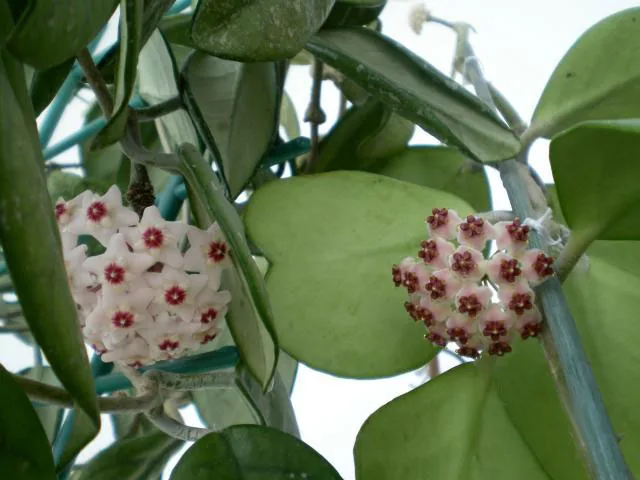
The real trick with this one is doing less, not more. Those fleshy leaves store their own water, so overloading the watering can is the fastest way to lose it. Give it light, let it dry out, and keep it a little crowded in its pot, and it pays you back with clusters of star-shaped flowers.
Care
The short version: bright indirect light, water like a succulent only once the soil dries out, a fast-draining mix, and a pot it can stay a little crowded in.
Light
Park it in bright indirect light near a south, east, or west window and it holds its color and blooms so much better. It scrapes by in medium light or partial shade, but growth crawls and flowers rarely show. Keep it clear of harsh direct sun, which scorches those waxy leaves.
Water
Water it like a succulent and you are set. The thick leaves stash plenty, so let the soil dry out completely between drinks, holding off until the top third to half is dry or the leaves just start to pucker. Back way off through winter, because overwatering drives root rot and shuts down flowering faster than anything.
Soil
Reach for a fast-draining, loose mix that never stays soggy. Blend one part potting soil, one part orchid bark, and one part perlite for something that dries in a flash and suits it perfectly. It shrugs off pH and stays happy anywhere from 6.0 to 8.0.
Temperature
Regular room warmth hits the mark, roughly 45°F to 80°F (7°C to 27°C). Hold it above 45°F (7°C) and away from cold drafts, since it has zero tolerance for a chill.
Humidity
Everyday household humidity works great, so there is no number to chase. The waxy leaves lock in their own moisture, which makes this plant way tougher against dry indoor air than most tropicals.
Feeding
Feed monthly with a dilute liquid houseplant fertilizer through active growth from spring into fall. A formula with an NPK ratio around 2:1:2 or 3:1:2 does the job. Cut off feeding in winter while the plant rests.
Pruning
This slow grower barely asks for pruning. Nail the one rule that counts: never cut off the bare flower spurs after the blooms fade, because the plant reloads flowers from those same spurs, and lopping them off robs you of next year's show.
Repotting
Repot only every few years, since hoyas bloom better when they run a little potbound. Bump it up a size when roots shove through the drainage holes, water blasts straight through, or the plant dries out almost the moment you water it.
Troubleshooting
Just about every snag with this plant tracks back to water, light, or expecting a single leaf to pull off more than a leaf can. Zero in on what matches below, then tweak it fast before a small slip snowballs into rot.
Dark, squishy tissue at the base and a sudden collapse
A soft, blackened base spells root rot, and it nearly always follows too much water or a pot that traps it. Those thick leaves already carry a full water tank, so a soggy mix drowns the roots fast. Jump on it: stop watering, cut away every rotted bit, and repot into a fast-draining mix in a pot with drainage holes. Lost the whole base? Snag a healthy cutting with a node and relaunch the plant from scratch.
Fix:
- Stop watering and let the soil dry out
- Remove rotted tissue and repot into a fast-draining mix in a pot with drainage holes
- Take a healthy cutting (with a node) to start over if the base is lost
Hearts going crinkled and flat after losing their fullness
Puckered leaves send two opposite signals, so read the soil before you make a move. Dry mix with firm roots means the plant ran its tank down, and a solid drink plumps those hearts right back up. Wet mix with mushy roots flips the story: overwatering has knocked out the roots so they cannot pull up water, and the fix there is better drainage and a real dry-out.
Fix:
- If too dry, water thoroughly and resume a regular let-it-dry cycle
- If overwatered, correct drainage and let the soil dry before watering again
Tacky residue, twisted new shoots, or pests hitching a ride
Sap-sucking pests like mealybugs, aphids, spider mites, and scale love to crash a hoya. Hunt for white cottony masses, small soft insects, fine webbing with stippling, or tiny bumps riding along the stems. Wipe them off, hit the plant with insecticidal soap or horticultural oil, then pull it away from the others and keep treating until it comes back clean.
Fix:
- Wipe off pests and treat with insecticidal soap or horticultural oil
- Isolate the plant and repeat treatment until clear
A single heart that stalls out and never climbs
Here is the catch behind that adorable potted heart: it is almost always a single leaf with no node, and a lone leaf carries no growth point to launch a stem. It can stay plump and green for years, sure, but it will never take off and vine. Grab a stem cutting with at least one node and you unlock a real trailing plant that keeps growing.
Fix:
- Accept that the leaf will likely remain a single leaf (it can stay green and alive for years but will not vine)
- If you want a vining plant, obtain a stem/tip cutting that includes at least one node
Vigorous growth but not a single bloom in sight
A leafy plant that skips the flowers is usually begging for more light, so slide it right up to a south, east, or west window where the light pours in bright but indirect. Dial back the water while you are at it, since soggy roots stall the blooms. Single leaves and young plants have not hit flowering age yet, so give them time to catch up. And whatever happens, leave those old flower spurs alone, because the plant fires off fresh blooms from the very same spurs.
Fix:
- Move to a brighter spot with bright indirect light near a south/east/west window
- Reduce watering and let the soil dry between waterings
- Be patient and do not cut off the flower spurs
Toxicity
Great news for animal lovers: the sweetheart hoya is non-toxic and pet-safe. Both the ASPCA and NC State Extension list it as safe for cats, dogs, and horses, and the rest of the household is covered too. A pet that goes overboard on any plant might catch a quick stomach ache, but there are no real toxins in the mix.
Safe for
People · Cats · Dogs · Horses · Rabbits · Livestock · Birds
Cats None
Cats get the all-clear here, since the ASPCA and NC State Extension both tag this hoya non-toxic to cats. If a cat really tucks into any houseplant, expect maybe a little drool or a quick upset stomach that clears up on its own.
Dogs None
Dogs land in the same safe zone, backed by that non-toxic listing from the ASPCA and NC State Extension. A determined chewer might wind up with a bit of mild, short-lived tummy trouble, and that is the whole story.
Horses None
Horses can hang around this one with zero worry, since both the ASPCA and NC State Extension mark it non-toxic to them.
Rabbits Safe
A rabbit faces no toxins from this plant at all. Still, roll out any new greenery in small portions so a sudden big bite does not upset a sensitive gut.
Livestock Safe
This one lives indoors, so grazing animals almost never bump into it, and it packs nothing that would harm them anyway.
Birds Safe
A pet bird can perch and peck at the waxy leaves in total safety, since the plant holds no compounds known to bother them.
People Safe
Nothing in this hoya poisons people, so a kid's surprise taste is no big deal. It is not a plant grown for eating, though, so there is no reason to dig in.
Considered pet-safe; no special handling for toxicity is required, though pets eating any plant may have mild, transient GI upset
Varieties
The plain green form shows up most, but one named variety pops up in plant shops and it is worth chasing down.
'Variegata'
This one shows off a green heart at the center of each leaf ringed by a soft creamy-white border, which pops far brighter than the plain green type.
How to propagate
One reliable move multiplies this plant, and the whole win comes down to making sure your cutting carries a node.
Stem cuttingsEasy
Spring to summer · Roots in a few weeks
Snip a stem or tip cutting that packs at least one node in spring or summer, right when the plant is charging into growth. Stand it in a fast-draining mix and it roots in a few weeks. Skip the bare single leaf, since it roots and lives but carries no node and never launches into a vine.
Myths
Root just one heart leaf and watch it take off into a proper climbing vine.
A bare leaf roots happily, but with no node it has no growth point, so it locks in as one leaf and never budges. Penn State Extension calls it straight on the cute potted heart: it is simply a single leaf of H. kerrii that stays just as it is and never becomes a vine. Chase a trailing plant with a cutting that includes a node and a bit of stem.