Herb · Lamiaceae
Lemon Balm
Melissa officinalis
Sweep a hand through it and the whole garden wakes up: lemon balm throws off a bright, lemony scent and asks for almost nothing.
Full sun
Every 5–7 days
50–86°F · 10–30°C
70–90 days
Overview
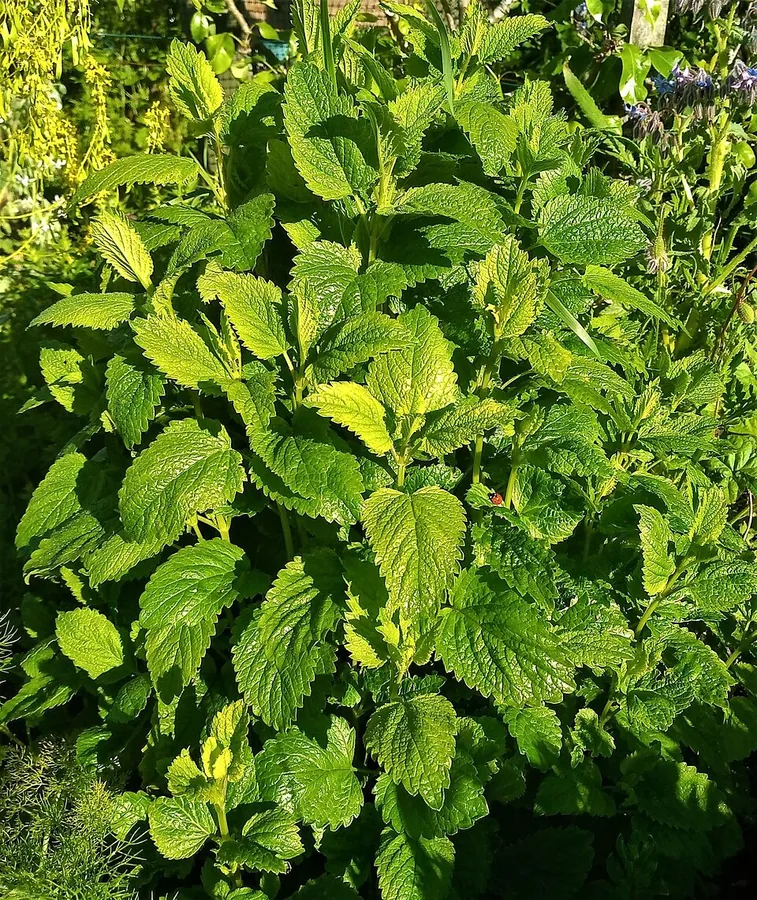
Lemon balm is a joy to grow, a hardy perennial in the mint family that pumps out soft, crinkled leaves smelling of fresh lemon the instant you crush one. It sprang from the eastern Mediterranean and western Asia and has powered through the centuries as a cottage garden staple, drawing bees and cooks in equal measure. The little summer flowers barely register, and that is fine, because the foliage steals the show.
Few herbs pay you back this fast for so little effort. It storms through poor, sandy, or rocky ground, thrives in full sun or part shade, and rockets back after a sharp cut. The one trait to stay on top of is its drive to spread, by seed and by creeping roots, which is exactly why so many growers hand it a pot or a walled-off bed to romp in.
Pick the leaves before the plant flowers and you unlock the cleanest, sweetest lemon flavor for tea, salads, and cooking. Let it bloom and the foliage roughens up, so a hard shearing after bloom fires out tender new growth and snaps the clump back into shape.
Care
The short version: full sun to part shade in average, well-drained soil, with steady water while young and far less once it takes off. Feed it sparingly, harvest before it blooms, and cut it back hard after flowering to keep it lush and firmly in bounds.
Light
Lemon balm roars along in full sun, which packs the foliage tight and pumps up the scent. It handles partial shade too, a real lifesaver in hot climates, though skimp on light and it turns thin and floppy.
Water
Keep young plants evenly moist as they dig in, then back right off, because established lemon balm powers through drought and wants a drink only about every 5 to 7 days in dry spells. The one thing it flat-out refuses is soggy ground, above all over winter, so let that soil drain hard.
Soil
It takes off in almost anything, from poor sand to clay to shallow rocky ground, so long as the water clears out. Average, well-drained loam at a pH of 6.0 to 7.5 suits it best. Rich soil actually backfires, cranking out lush leaves with a weaker scent.
Temperature
Lemon balm cruises along between 50°F and 86°F (10°C to 30°C) through the growing season. As a perennial hardy to USDA zone 3, the roots blast through hard winters and shove out fresh growth every spring.
Humidity
Everyday outdoor humidity in the 40% to 60% range is all it wants. Airflow beats moisture every time here, since crowded, stagnant air is what waves powdery mildew onto the leaves.
Feeding
This is a herb that runs great on next to no feeding. One light balanced feed in spring is the whole deal, and dumping on fertilizer only grows soft, leafy plants with a fainter lemon scent.
Pruning
Once it flowers, shear it back and clear the spent stalks to unleash fresh, fragrant growth while reining in the self-seeding. Harvest the leaves often before bloom and that alone doubles as pruning, handing you the punchiest flavor.
Repotting
In a pot, repot or divide every 1 to 2 years, ideally in spring. Keep watch for roots circling the pot or bursting out the drainage holes, plus slowed growth and quick drying, all shouting that it has outgrown its home.
Size & spacing
A mature plant shoots up to 18 to 35 inches (45 to 90 cm) tall and spreads about as wide. Give each one 18 to 35 inches (45 to 90 cm) of room so air rips through freely and mildew stays away.
When to plant
Lemon balm makes timing a breeze, so dive right in. Fire up seeds indoors in late winter, plant out in spring the moment frost clears, and keep picking leaves all summer long, wrapping the biggest harvest before it flowers around June to August.
Northern hemisphere
Southern hemisphere
Typical months for a temperate climate: start earlier in warm zones, later where spring frosts linger.
- Sow: 6-8 weeks before the last spring frost
- Plant: Spring, after the last frost
- Harvest: Small white to pale-yellow flowers in summer (about June-August); harvest leaves before flowering for best flavor
Hardiness
USDA hardiness zones: 3–9
Temperature: down to -40°C
Troubleshooting
Lemon balm barely ever hands you a real headache. When something slips, it almost always tracks back to crowding, still air, or the plant's raw urge to spread. Match what you see below and a quick move usually snaps it right back.
Seedlings springing up right across the bed
Give it the chance and lemon balm hurls seed in every direction, then pushes outward on rhizomes, so one tidy clump charges into a full colony inside a season or two. Chop it back before the flowers set seed, and whip out the little strays while they are still small. Drop it into a pot and it stays exactly where you plant it.
Fix:
- Deadhead and cut back before seed set
- Pull volunteer seedlings
- Grow in a container to contain spread
A chalky white bloom creeping over the leaves
Spot a dusty coating and you have caught powdery mildew, a fungus that pounces on crowded plants where the air sits dead still. Snap off the worst leaves, open the clump up so a breeze can rush through, and steer water away from the foliage. Slide the plant into full sun and it usually shakes the whole thing off fast.
Fix:
- Remove and discard affected leaves
- Improve air circulation by thinning and spacing plants
- Avoid overhead watering
Stems splaying wide open once the blooms fade
As soon as flowering wraps up, lemon balm tends to sprawl open and go woody at the base, so the leaves up top thin right out. Cut the whole plant back hard and it charges out fresh, compact growth in just a few weeks. Land that firm cut every year after bloom and the clump powers back dense and leafy.
Fix:
- Cut plants back hard after flowering to force fresh compact growth
Toxicity
Here is the great news: lemon balm is safe across the board. The ASPCA marks it non-toxic to cats, dogs, and horses, and as a culinary herb people eat it every single day. The only thing it ever wears down is the patience of a gardener chasing its spread.
Safe for
People · Cats · Dogs · Horses · Rabbits · Livestock · Birds
Cats None
Cats can prowl right past it, no problem. If one grabs a mouthful, the punchy oils might spark a quick, mild stomach grumble, and that is the whole story.
Dogs None
Dogs are totally in the clear here. A chomp on the lemony leaves does no harm at all.
Horses None
Horses can graze it happily and come away none the worse.
Rabbits None
Rabbits crunch the leaves with zero trouble, and plenty of them pounce on the fragrant foliage like a treat.
Livestock None
Cattle, goats, and sheep can browse it to their hearts' content with no ill effect.
Birds None
Backyard birds and poultry can peck around it freely, since the leaves pose no danger.
People None
This is a kitchen herb through and through, brewed into tea and stirred into food. Adults and kids alike can eat the leaves safely.
Non-toxic culinary herb; leaves are edible and commonly consumed.
Varieties
The plain green species carries most gardens just fine, but a few standout selections crank up the leaf color or the scent. These are the ones to hunt down by name.
Aurea
Its leaves burst with gold and green marbling that flares brightest when the weather turns cool and the plant sits in partial shade.
All Gold
The foliage lights up a solid golden yellow, keeping that color at its peak in a spot with some shade to fend off scorching.
Lime
Bred for a zingy, lime-like scent that swaps out the usual lemon fragrance.
How to propagate
Multiplying lemon balm is a total breeze, one of the easiest herbs you will ever bulk up. Split a clump, root a cutting, or sow seed, and it will seed itself all over the garden whether you set it loose or not.
DivisionEasy
Spring or early fall · 4-6 weeks
Division is your ticket to keeping a named cultivar spot-on true to type. Heave a mature plant up in spring or early fall, tear the crown into pieces, and pop each one straight back in. Every division digs in and roots within about 4 to 6 weeks.
Stem cuttingsEasy
Late spring to summer · 3-4 weeks
Soft stem cuttings root almost effortlessly. Snip a handful from late spring through summer, plunge them into moist mix or a glass of water, and watch roots burst out in roughly 3 to 4 weeks.
SeedModerate
Spring; surface-sow as seed needs light · 2-3 weeks to germinate, several weeks more to establish
Seed is the slower path and it will not hold a cultivar true, since the plant already flings seed everywhere on its own. Scatter it right across the surface in spring instead of burying it, because it fires up only with light and warmth. Germination rolls in over 2 to 3 weeks, with several more before the seedlings take hold.
Myths
Lemon balm is really just a type of true mint.
Sure, it runs with the true mints in the family Lamiaceae, but it claims its own genus, Melissa, and is no Mentha whatsoever. Catch that lemon scent and feel those softer leaves, and the difference jumps right out at you.
Lemon balm stays put and never runs like mint.
Not a chance, because it spreads every bit as hard, just by a different move. Let it flower and it self-seeds like wildfire while creeping on rhizomes, breaking out of the bed unless you deadhead it or corral it into a container.