Vegetable · Brassicaceae
Mustard
Brassica juncea
Sow it in cool weather and it rockets up, working overtime as a kitchen green and a soil-cleaning cover crop.
Full sun
Every 3–7 days
45–84°F · 7–29°C
40–90 days
Overview
Mustard is a fast, easy brassica that pulls double duty like few crops can. In the kitchen garden it delivers a peppery leaf crop plus the seed for homemade condiment, ready to harvest within weeks of sowing. Out on a plot it steps up as one of the hardest-working biofumigant cover crops going, dug in green to scrub the soil before the next planting lands.
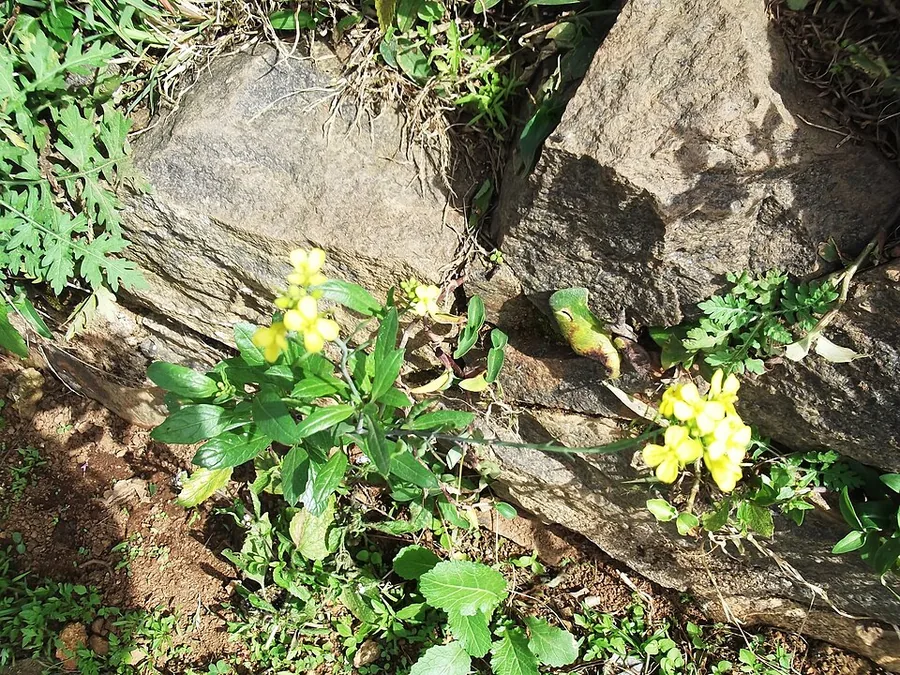
It bursts from seed in cool weather and races to flower, throwing up bright yellow four-petaled blooms by spring or fall. Two species carry the load. Brown mustard, Brassica juncea, packs the biggest hit of the compounds behind biofumigation, while white mustard, Sinapis alba, drives much of the condiment seed and smothers weeds with real force on its own.
Its one true catch is how eagerly it wants to spread. Let it flower and pod and it scatters seed and storms back as a weedy volunteer, so the move that keeps it in line is cutting it down at early flowering, before it grabs the chance to sow itself.
Care
The short version: full sun and cool weather, direct-sown into well-drained soil rich in organic matter. Keep it moist to power fast growth, expect barely any fuss, and cut the stand down at early flowering before it sets seed.
Light
Mustard craves full sun and grows fastest with it, though it puts up with a touch of partial shade. Pour on more light and you get more leaf to pick and more biomass banked for the soil.
Water
Keep the soil evenly moist to fuel the quick, leafy growth mustard is grown for. Watering counts double at termination: chop a biofumigant stand, dig it in, and water it in right away to drive the glucosinolate reaction and trap the gases in the ground.
Soil
Plant it into well-drained loam loaded with organic matter. Mustard shrugs off a wide pH swing from 5.5 to 8.5, and it often earns its keep by mopping up leftover nitrogen and sulfur rather than getting fed.
Temperature
This cool-season plant runs happy from about 45°F to 84°F (7°C to 29°C). Sow into soil in that band and it germinates fast, but a long stretch of summer heat shoves it to bolt and flower early.
Humidity
Regular outdoor humidity is all mustard wants, so there is no number to chase. Airflow matters more, since crowded, damp stands roll out the welcome mat for the cabbage-family diseases mustard already carries.
Feeding
Most of the time mustard needs no feeding at all, and it is grown precisely to scavenge the nutrients earlier crops left behind. Just work in a little nitrogen at planting if the soil is genuinely poor.
Pruning
There is no ornamental pruning in play here. What you do instead is mow or chop the whole stand at early flowering to end it and unleash the biofumigant compounds before it sets seed.
Repotting
This one drops right off the list. Mustard is a field and garden annual, direct-sown where it grows and never potted up.
Size & spacing
Plants shoot up 1 to 6 feet (30 to 180 cm) tall depending on type and season, spreading 6 to 18 inches (15 to 45 cm). Grown as a cover crop it is drilled or broadcast into a thick stand rather than spaced out one by one.
When to plant
Mustard thrives in cool weather and hates summer heat, so time it right. Direct-sow in early spring the second the soil works, or again in late summer to early fall about four weeks before the first hard freeze. It grows fast and flowers within weeks, so plan to cut it before it pods and keep the momentum going.
Northern hemisphere
Southern hemisphere
Typical months for a temperate climate: start earlier in warm zones, later where spring frosts linger.
- Sow: Not typically started indoors; direct-sow in the field/garden.
- Plant: Direct-sow in cool weather - early spring as soil works, or late summer/early fall about 4 weeks before the first hard freeze, into soil 45-85 degrees F.
- Harvest: Bright yellow four-petaled flowers in spring or fall; for biofumigation terminate at early flowering before seed set.
Hardiness
USDA hardiness zones: 3–11
Temperature: down to -40°C
Troubleshooting
Nearly every mustard snag traces to two things: letting it run to seed, or rushing the cover-crop steps that make biofumigation fire. Spot what matches below, then jump on it early while it still pays off.
Volunteer mustard springing up across the bed next season
Chalk this up to self-sowing, which kicks in the moment a few plants flower and fill their pods before they get cut. Feral mustard ranks as a weed, so that dropped seed sprouts far and wide the next year. Stay ahead of it: bring the stand down at early flowering, mow or chop it in, and whip out any stray seedlings while they are still tiny.
Fix:
- Mow, chop, or till in volunteers before they flower
- Cultivate or hand-pull seedlings while small
- Avoid letting any plants reach mature pods
Cabbage-family pests and diseases riding over to your cole crops
Mustard runs with the brassica crowd, sharing pests and soil diseases with cabbage, broccoli, kale, and radish. Plant it right before or after those crops and the trouble stacks up fast, from flea beetles and aphids to clubroot, which lurks in the soil and hits every brassica it can reach. Rip out and destroy anything affected, then give the ground a solid multi-year break before another cabbage-family crop goes back in.
Fix:
- Remove and destroy affected plants
- Do not follow mustard immediately with cabbage, broccoli, kale, radish, or other brassicas
- Rotate to a non-brassica crop
Underwhelming biofumigation from a mustard cover crop
When a mustard cover crop underdelivers on the soil, the trail leads straight to how it got terminated. Those isothiocyanate gases doing the heavy lifting are volatile, so coarse residue or a pokey till lets them bolt before they react. Nail the routine instead: chop the green growth fine, drive it into warm, moist soil within about 20 minutes, water it in to lock the gases down, and hit early flowering when the glucosinolates peak.
Fix:
- Chop the green biomass finely with a flail mower
- Incorporate (till in) immediately, within about 20 minutes
- Irrigate/water in right after to seal in the gases
- Time termination to early flowering
Toxicity
Great news to lead with: mustard is a safe edible crop, eaten as greens and ground into the condiment everyone knows. It poisons no people, pets, or animals. The one thing to keep tabs on is quantity, since the same heat that gives it that punch can mildly irritate the gut if any animal really tears into the raw leaves or seed.
Safe for
People · Cats · Dogs · Horses · Rabbits · Livestock · Birds
Cats Safe
Cats get a clean bill here, because mustard poses no poisoning risk and most cats snub the sharp leaves anyway. Chew through a pile of the pungent foliage and a cat might drool a bit or run a mild upset stomach, but it clears up fast on its own.
Dogs Safe
Nothing here threatens a dog, so no worries there. That peppery bite usually shuts down the taste test after one go, and a big mouthful of leaves tends to bring nothing worse than a little gas or a soft stool.
Horses Safe
Horses share space with mustard just fine, though it is no feed to load them up on. Graze a big helping of the seed or foliage and a horse can pick up a mildly irritated gut, so keep it a small slice of the daily ration.
Rabbits Safe
Rabbits can tuck into mustard greens as an occasional leafy treat, no problem. Roll them in slowly and in small amounts, the way any new green goes, and skip making them a daily staple.
Livestock Safe
Livestock graze mustard and other brassica forage safely as long as they do not gorge on it. Pile in too much foliage and seed and the gut gets mildly irritated, so ramp it up gradually and hold brassica to no more than about three quarters of the diet.
Birds Safe
Birds face zero poisoning risk from mustard, and chickens dive right into the leaves and seed. The greens toss a fun bit of variety into the run.
People Safe
People eat mustard greens and seed every day, raw, cooked, or ground into the condiment. The one catch is the heat, since a big serving of the raw pungent leaf or seed can sting the mouth and gut, which is just the same lively chemistry that gives mustard its kick.
Treat normal mustard greens and seed as ordinary food for people. The concern is large-quantity exposure: dogs or cats nibbling a lot of the pungent leaves or seed may get GI/mouth irritation, and livestock grazing large amounts of mustard or other brassica forage can develop bloat, digestive upset, hemolytic anemia, goiter/hypothyroidism, or brassica poisoning. Wear gloves and avoid breathing dust when chopping large amounts of biofumigant mustard, as the isothiocyanate vapors are pungent and irritating.
Helpline numbers

United States
ASPCA Animal Poison Control: (888) 426-4435 (fee applies)

United Kingdom
Animal PoisonLine: 01202 509000 (fee applies)

Australia
Animal Poisons Helpline: 1300 869 738
Varieties
The mustard you can grow for the garden and field boils down to a few species and a handful of named cover-crop blends. These are the ones worth locking into memory.
Brassica juncea (brown / Indian / oriental mustard)
This is the high-glucosinolate biofumigant powerhouse, and cultivars like Caliente, Pacific Gold, and Kodiak are bred to cram their tissue with the compounds that hammer soil pests and weeds the moment you chop the plant and dig it in.
Sinapis alba (white / yellow mustard)
This is the white mustard that pulls double duty for condiment seed and for cover, and cultivars such as IdaGold pump out the glucosinolate sinalbin that earns it a reputation for smothering weeds and stacking up biomass.
'Caliente'
A high-glucosinolate Brassica juncea blend sold as a dedicated biofumigant cover crop, and it launches into heavy biomass for the chop-and-incorporate green manure that scrubs the soil.
How to propagate
There is just one way to grow mustard, straight from seed, and it could hardly be quicker or more rewarding.
SeedEasy
Direct-sow in cool weather: early spring or late summer/early fall, into soil about 45-85 degrees F. · Germinates in a few days and grows fast, reaching flowering and peak biomass in roughly 6-12 weeks depending on season.
Mustard runs from seed and nothing else, and it takes off fast. Direct-sow in cool weather, whether in early spring or in late summer to early fall, into soil around 45°F to 85°F (7°C to 29°C). Drill it about 5 to 12 pounds an acre at a quarter to three quarters of an inch deep, or broadcast 10 to 15 pounds an acre. Seedlings break ground in a few days and charge to flowering and peak biomass in roughly 6 to 12 weeks depending on the season, so cut the stand at early flowering before it sets its own seed and leaves you a crop of volunteers.
Myths
Mustard cover crops fight weeds and soil pests just by shading and crowding them out like any thick cover crop.
Mustard swings way above simple shade, because it is a true biofumigant. Its tissues are packed with glucosinolates, and once the chopped plant hits water the enzyme myrosinase fires them into isothiocyanate gases close to the active ingredient in synthetic soil fumigants like metam sodium. Those gases go after soilborne pathogens, nematodes, and weed seeds, but only if you chop the residue fine, dig it in fast, and keep the warm soil moist, since skip that and the volatile compounds bolt straight off.