Vegetable · Malvaceae
Okra
Abelmoschus esculentus
Give it heat, full sun, and steady moisture, and okra keeps the pods coming until frost.
Full sun
Every 5–7 days
68–95°F · 20–35°C
50–65 days
Overview
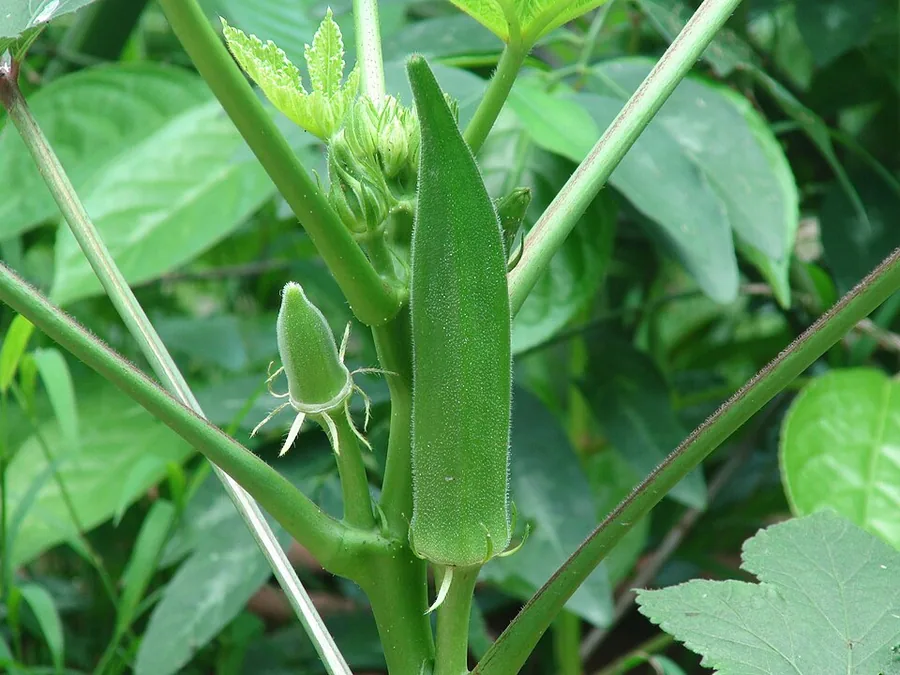
Okra is a warm-season vegetable in the mallow family, a spirited cousin of hibiscus and cotton, grown for its tender young seed pods. It traces back to Africa and drives the flavor in Southern, Caribbean, and South Asian kitchens, powering gumbo, curries, and pickles. The plant shoots up tall and upright and looks genuinely striking, waving broad lobed leaves and pale hibiscus-like flowers that open just ahead of each new pod.
What makes okra a joy to grow is its flat-out love of heat. It powers through the kind of summer that flattens other crops, and it keeps cranking out pods for as long as the picking keeps up. A coat of fine bristly hairs runs over most of the plant, from stems to pods, and it can prickle bare skin, which is exactly why the spineless varieties fly off the seed rack.
This easy crop rewards one habit above all: harvest often. Pods rocket from tender to tough and woody in just a day or two, so a plant left unpicked stalls out on new ones. Keep charging through the harvest, though, and even a short row will feed a household straight through the hottest weeks of the year.
Care
The short version: full sun and real warmth, soil that drains well, and about an inch of water a week, kept steady once the flowers and pods kick in.
Light
Okra craves full sun, and the more it soaks up the better. Hand it the brightest, hottest spot you have, because shade stretches the plants thin and slashes pod production hard.
Water
Aim for about 1 inch of water a week and keep it steady once flowers and pods kick in. Established plants ride out a dry spell fine, but even moisture through pod set drives the biggest crop, while soggy, waterlogged soil does real damage.
Soil
Plant it in deep, well-drained, fertile loam loaded with organic matter. A slightly acidic pH of 6.0 to 6.8 hits the mark for okra, and loose ground lets that taproot punch straight down.
Temperature
This heat lover thrives between 68°F and 95°F (20°C to 35°C). Cold soil and chilly nights stop it cold, so there is no gain in rushing okra into the ground early.
Humidity
Okra shrugs off ordinary outdoor humidity, cruising anywhere from 40% to 70%. No number to sweat here, because warmth and sun carry the crop far more.
Feeding
Work a balanced fertilizer in at planting, then side-dress with a little nitrogen once the pods start rolling. Go easy on the nitrogen, though, since too much throws all the energy into leaves and leaves you short on pods.
Pruning
Okra skips structural pruning entirely and just wants frequent harvesting every day or two to keep it firing. Where plants shoot up sky-high, top them or cut them back mid-season to spark lateral branching and a fresh flush of pods.
Repotting
Not applicable; grown as a direct-sown annual in the garden
Size & spacing
Plants tower to 3 to 6 feet (90 to 180 cm), so give them room to stretch. Space each one about 18 to 35 inches (45 to 90 cm) apart to keep air moving and light reaching the lower pods.
When to plant
Okra runs on heat and flat-out refuses cold soil. In cooler regions you can start seeds indoors a few weeks before the last frost, but everywhere the call is the same: wait for frost to clear and the ground to warm to 65°F to 70°F (18°C to 21°C) before planting out. From there, you are picking pods in about two months.
Northern hemisphere
Southern hemisphere
Typical months for a temperate climate: start earlier in warm zones, later where spring frosts linger.
- Sow: 3-4 weeks before the last spring frost in cool regions to gain a head start
- Plant: After all danger of frost has passed and soil has warmed to 65-70°F (18-21°C)
- Harvest: Harvest pods young at 2-4 inches long, every 1-2 days, beginning about 2 months after sowing
Hardiness
USDA hardiness zones: 5–11
Temperature: down to -29°C
Troubleshooting
Most okra problems flag themselves right out in the open on the pods, the flowers, or the leaves. Spot the early signs and a small setback rarely snowballs into a lost crop. Match what you are seeing below, then jump on it while it still counts.
Stunted, yellowing plants with knotted roots
Yank up a struggling plant and spot swollen galls dotting the roots, and you have caught root-knot nematodes feeding down below. No spray touches these, so dig out and destroy the worst plants fast before the population takes off. Then rest the bed with non-host cover crops, pack in loads of organic matter, and bring in resistant varieties and soil solarization wherever the problem keeps coming back.
Fix:
- Remove and destroy heavily infested plants
- Rotate with non-host cover crops and add organic matter
Whole plant yellowing, wilting, and collapsing
When a plant keeps wilting no matter how much you water, and a split stem reveals brown streaks inside, fusarium wilt has clogged its plumbing from within. This soil-borne fungus offers no cure, so pull the affected plants and bin them instead of composting. Come next season, long crop rotations, sharp-draining soil, and resistant cultivars put you back on the front foot.
Fix:
- Remove and destroy affected plants; do not compost
Sticky leaves, curling foliage, and clustered tiny insects
Those soft little specks the ants keep fussing over are aphids, and their sticky film quickly grows black sooty mold if it sticks around. Blast them off with a hard jet of water, hit the worst leaves with insecticidal soap, and turn loose the lady beetles and lacewings to finish the job. Then dial back the nitrogen, since less soft new growth means far less to tempt them back.
Fix:
- Spray plants with a strong jet of water to dislodge aphids
- Apply insecticidal soap to affected foliage
- Encourage natural predators such as lady beetles and lacewings
Flowers dropping before pods form
Blossom drop almost always means the weather leaned on the plant too hard, whether a scorching heat wave, a night that turned oddly cool, or a dry stretch that hit during flowering. Here is the good part: the plant snaps right back once conditions settle, so the play is to smooth out the stress in the meantime. Keep the soil evenly moist and pile on some mulch to steady the temperature and lock in water through the dry days.
Fix:
- Maintain consistent soil moisture during flowering
- Mulch to moderate soil temperature and conserve water
Pods turning tough, woody, and stringy
Breathe easy, because this is just over-mature fruit and not a disease at all. Push a pod past about 4 inches and it drops its tenderness and packs on fiber, so the answer is all about timing. Grab them young at 2 to 4 inches every day or two, snap off any that ran oversized, and the plant charges right back into making more.
Fix:
- Harvest pods young at 2-4 inches, every 1-2 days
- Remove and discard over-mature pods to redirect energy to new pod production
Toxicity
Great news for homes with pets and kids: okra is a non-toxic edible vegetable, safe for people and animals alike. The one thing to watch is the fine bristly hairs on the raw stems and pods, which can prickle sensitive skin at harvest, so gloves and long sleeves keep it comfortable.
Safe for
People · Cats · Dogs · Horses · Rabbits · Livestock · Birds
Cats None
Let a curious cat explore the okra, since it is safe and a nibbled pod or leaf will not poison one. The fine leaf hairs might get a cat licking or pawing at its mouth, and that is truly where it ends.
Dogs None
Dogs can dig into okra with zero poisoning risk, and the cooked pods land as a harmless treat. Wolf down a big pile of raw pods and a dog might turn a little gassy or loose, but that is just the fiber doing its thing.
Horses None
Okra carries nothing toxic for horses, so a stray plant near the pasture is no worry at all. Most horses breeze right past the bristly stems anyway.
Rabbits None
Rabbits can safely nibble okra leaves and pods, and plenty of them dive straight for the tender young growth. Serve it up in small amounts alongside their usual hay rather than all at once.
Livestock None
Cattle, goats, and sheep can graze okra and its foliage with no poisoning danger. Some regions even grow it on purpose as a forage and seed crop.
Birds None
Okra poses no toxic threat to birds, and backyard chickens race to peck at chopped pods and the seeds inside. It makes a wholesome, vitamin-rich snack.
People None
Okra is a kitchen champion eaten raw, fried, stewed, or pickled, with no poisoning risk at all. The only catch is the fine bristly hairs on raw stems and pods, which can prickle sensitive skin during harvest.
The stems, leaves, and pods of most okra varieties are covered in fine bristly hairs (spicules) that can cause mild, transient skin itch or irritation in sensitive handlers; wearing long sleeves and gloves when harvesting helps. Spineless varieties such as 'Clemson Spineless' reduce this effect.
Varieties
Okra comes in a whole crowd of varieties, but a handful keep charging back into gardens and seed catalogs every year. These are the ones worth knowing by name.
Clemson Spineless
This award-winning classic pumps out nearly spineless pods that spare your skin the usual harvest itch.
Annie Oakley II
A compact hybrid that races to maturity early, making it a smart grab for anyone with a shorter season.
Burgundy
An ornamental-edible that shows off deep red stems and pods before they shift to green in the pot.
Emerald
A heirloom prized for smooth, round, dark-green pods that hold their tenderness even as they size up.
Cajun Delight
An early, heavy-bearing hybrid bred to pump out pods across both short and long growing seasons.
How to propagate
Okra takes off from seed and almost nothing else, sown right where it is meant to grow. Prepping that hard seed coat is the one trick that gets things moving fast.
SeedEasy
Direct-sow after the last frost once soil has warmed to 65-70°F (18-21°C) · 7-14 days to germinate; harvestable pods in about 50-65 days
Okra bursts straight from seed, sown right where it will grow once frost clears and the soil warms to 65°F to 70°F (18°C to 21°C). That seed coat runs hard, so soak the seeds overnight or nick them first to fire up germination, then drop them half an inch to an inch deep. Sprouts punch through in 7 to 14 days, and you are picking pods in roughly 50 to 65 days.
Myths
Okra is toxic because its leaves and pods are covered in irritating hairs.
Those bristly spicules do nothing worse than raise a mechanical itch on some skin, and a quick rinse or a pair of gloves shuts it down. Okra is a non-toxic edible vegetable, and its pods land on plates the world over.
Okra only grows well in hot southern climates.
Okra truly loves heat, but it refuses to stay penned in the South. Wait for the soil to reach 65-70°F, grab an early-maturing variety, and you can raise a cracking crop as a warm-season annual well into cooler regions.