Houseplant · Malvaceae
Money Tree
Pachira aquatica
Fast-growing, pet-safe, and endlessly rewarding, the money tree turns a bright corner into a win.
Bright indirect
64–75°F · 18–24°C
USDA 10–12
6–8 ft · 1.8–2.4 m
Overview
The money tree, Pachira aquatica, roars up into a full tree out in the wetlands of Mexico and Central and South America. Bring it indoors and it settles into a manageable 6 to 8 feet (183 to 244 cm) tall, throwing out glossy hand-shaped leaves from the crown of a slim trunk. Most show up with several trunks braided together, a look growers weave by hand rather than one the plant pulls off on its own.
Growing this one pays off, because it stays so easy to keep alive. It powers through lower light than most houseplants can handle, races upward once it settles in, and shrugs off a skipped watering far better than a drowning. Best of all, it lands on the short list of houseplants that are truly safe around cats, dogs, and small children.
Nail two things and it thrives: bright, filtered light and a watering routine that never leaves it standing in water. Get those dialed in and the rest falls right into place. Shove it into harsh sun or a forever wet pot, though, and it fires back fast with dropped leaves or rotted roots.
Care
The short version: park it in bright filtered light, soak the mix after the upper layer dries, crank up warmth and humidity, and tip out any saucer water so the roots never sit wet.
Light
Money trees thrive in bright, indirect light, the sweet spot near a window but clear of the direct beam. They power through medium light and even a bit of shade, which is how they survive dim rooms, but the brightest spot short of harsh sun really gets them growing.
Water
Let the top of the soil dry between waterings, then soak it through. This plant loathes wet feet way more than dry ones, and standing water rots the roots in a hurry. Let it bake bone dry, though, and it hits back by dropping leaves.
Soil
Pot it up in a moist but well drained mix, something with peat, perlite, and a little loam or sand so water blasts right through. It stays relaxed about pH, cruising along anywhere from 6.0 to 8.0.
Temperature
Hold it at everyday room warmth, between 64°F and 75°F (18°C to 24°C). It is tropical to the core with zero tolerance for cold, so steer it clear of chilly drafts and frosty windows once winter rolls in.
Humidity
As a tropical grower it laps up high humidity. Average indoor air keeps it going, but crank the moisture higher and it takes off, so cluster it with other plants or set it near a humidifier in a dry, heated room.
Feeding
Feed it monthly with a balanced houseplant fertilizer through spring and summer while it is charging along. Then dial it right back in fall and winter, when growth idles and it barely needs a thing.
Pruning
Prune it to lock in the size and shape you want, because it bounces back from a cut with ease. Those flexible young stems are the same ones growers braid together while they stay pliable, so any braiding has to happen while the trunks are young and bendy.
Repotting
Repot it every 1 to 2 years, or jump on it sooner if roots start circling the pot or shooting out the drainage holes. Water rushing straight through and growth that stalls are the other tells that it wants a bigger home.
Size & spacing
Indoors, a money tree climbs to around 6 to 8 feet (183 to 244 cm) tall, though a modest pot keeps it way more compact. Give it some headroom and spin it a quarter turn now and then so it grows evenly toward the light.
Troubleshooting
Money trees are tough as nails, and nearly every problem points straight back to water or light. Dropped leaves, soft roots, and scorched patches each flag something specific. Match what you spot below and jump on it before a small slip snowballs.
Wilting plant with soft, brown roots
Root rot strikes when soil stays soaked and the roots run out of air. Tip the plant out and the signs jump right at you: brown, mushy roots, a sour smell, and a top that wilts even in drenched soil. Move fast, snip away every rotted root, and get it into fresh, well drained mix in a pot that truly drains, and a money tree often bounces right back.
Fix:
- Remove from wet soil and cut away rotted roots
- Repot into fresh well-drained mix in a pot with drainage
- Water only after the top of the soil dries
Leaves turning yellow and dropping
Yellowing leaves that let go almost always trace straight back to watering, so start there. A pot pushed bone dry triggers it, and soggy, waterlogged roots trigger the exact same slump, while a fresh move to a darker or draftier corner piles on the stress. Park it in one reliable spot, water the moment the top of the soil dries, and hand it a light feed right through the growing season.
Fix:
- Adjust watering so the top of the soil dries between waterings but the rootball is never bone-dry or waterlogged
- Stabilize the plant's location and light exposure
- Raise ambient humidity and feed during the growing season if nutrient-deficient
Shiny sticky spots, cottony blobs, or gnats buzzing over the dirt
Indoor money trees pull in the usual sap suckers, so stay sharp. Hunt for the cottony tufts of mealybugs, the tiny bumps of scale, packed aphids, or fungus gnats swirling over damp soil. Wipe or wash them straight off, follow up with insecticidal soap or horticultural oil if they dig in, and dry out the soil surface to shut the gnats down.
Fix:
- Wipe off or wash off pests
- Treat with insecticidal soap or horticultural oil as needed
- Let soil surface dry to discourage fungus gnats
Crispy pale burn spots spreading across sun-blasted leaves
Harsh direct sun scorches a money tree, burning bleached or browned patches into the leaves aimed at the window. This one craves bright light but wants it filtered, never the raw midday blast. Pull it back from the glass or drop a sheer curtain between them, then trim off the leaves that took the hit.
Fix:
- Move to a spot with bright indirect light or filtered sun
- Remove badly scorched leaves
Toxicity
Here is a win for pet owners and parents alike: the money tree is safe across the board. The ASPCA lists it as non-toxic to cats, dogs, and horses, and no toxic principle turns up in the plant. Set it right on the floor next to a curious dog or a toddler and carry on.
Safe for
People · Cats · Dogs · Horses · Rabbits · Livestock · Birds
Cats None
Cat people can grow this one freely. The ASPCA lists the money tree as non-toxic to cats with no toxic principle identified, so a leaf sampled by a curious cat does zero harm.
Dogs None
Dogs run no risk near it either. The ASPCA names it non-toxic to dogs, so a swiped leaf or a chewed stem won't poison them, though a big mouthful of any greenery can still rattle a sensitive stomach.
Horses None
Horses get the green light from the ASPCA too. No toxic compound hides in this plant, so a stray bite means nothing.
Rabbits Safe
A money tree poses no threat to rabbits at all. It carries no toxic principle, so a stray nibble brings nothing worse than a little digestive grumbling from the unfamiliar leaf.
Livestock Safe
Grazers like goats and sheep can browse near it with no risk of poisoning, since the plant holds no identified toxin.
Birds Safe
A pet bird can share the room with a money tree and come to no harm, because none of its parts are toxic to them.
People Safe
Keep it around kids with total confidence, since no toxic compound turns up in it. People even eat its large seeds in parts of its native range, so a leaf in a small hand raises no alarm.
How to propagate
Turning one money tree into several is a blast, and cuttings, fresh seed, or air layering all work, though cuttings win out for most growers since the plant rarely sets seed indoors.
Stem cuttingsModerate
Spring to summer · Several weeks to root
Grab softwood or stem cuttings in spring or summer, right when the plant is charging ahead in active growth. Stand them somewhere warm and humid, and roots push out over several weeks. Keep the warmth and moisture steady, because that is exactly what turns a cutting that takes from one that sulks.
SeedModerate
When fresh seed is available · Germinates readily from fresh seed
The big saba nuts sprout with real enthusiasm when the seed is fresh, so get them planted the moment you have them. The one snag is that houseplants barely flower, and a plant that never flowers won't set seed, which is why most growers reach straight for cuttings.
Air layeringModerate
Spring to summer · Several weeks
Air layering makes a fun third route, best tackled in spring or summer. Wound a section of stem, wrap it to lock in moisture, and watch roots form right on the living plant over several weeks before you cut the new plant free.
Myths
The plant weaves its own trunks into that signature braid over time.
That braid is all human handiwork, not the plant's own move. Growers plait the young stems together by hand while they stay soft and pliable, and the trunks fuse into one as they thicken up. The braid is a nursery trick, plain and simple, not a natural growth form.
With enough care an indoor money tree bursts into flower.
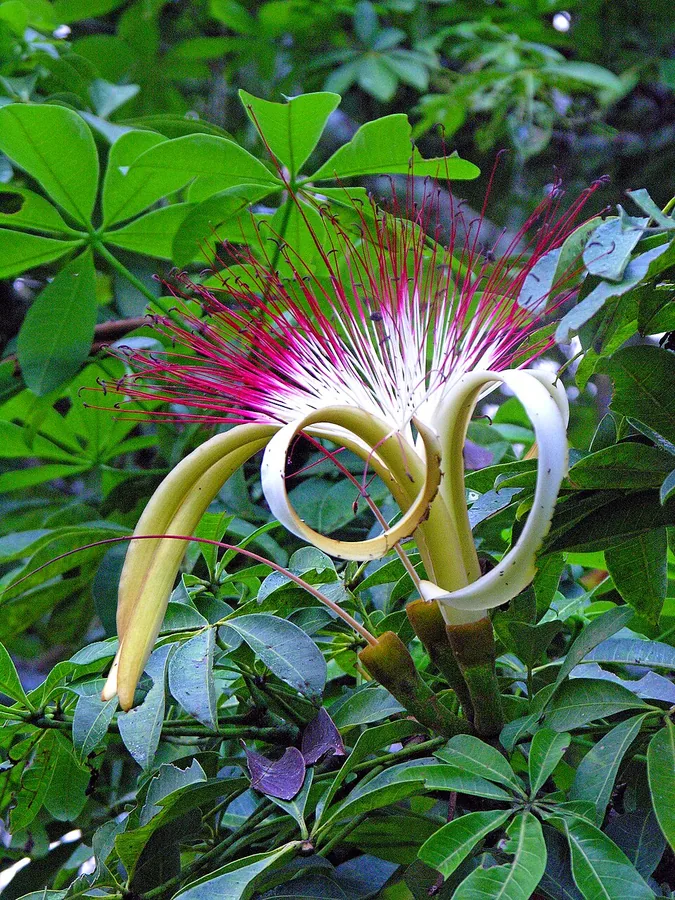
Chasing indoor blooms will only leave you waiting. Pachira aquatica hardly ever flowers as a houseplant, and a braided one flowers even less, saving its showy display for plants grown outdoors over several years. Indoors, the payoff is the glossy foliage, not the flowers.