Houseplant · Asparagaceae
African Spear
Dracaena angolensis
Hand it bright light and a dry pot between waterings, and this snake plant just keeps powering along.
Bright indirect
Every 14–30 days
USDA 10–11
2–7 ft · 0.6–2.1 m
Overview
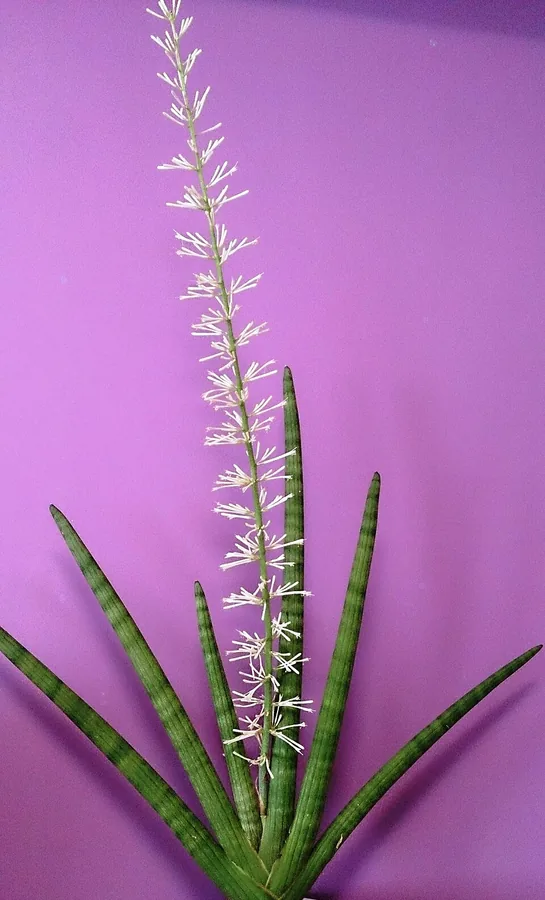
The African spear brings real presence to a plant shelf, a snake plant that trades flat blades for stiff, rounded spears shooting straight up. It grew up in the dry country of southern tropical Africa, which is exactly why it thrives on being left alone. Botanists now file it as Dracaena angolensis, though growers happily still call it Sansevieria cylindrica, and it answers to both.
That upright shape is the whole draw. Each leaf rolls into a smooth cylinder that tapers to a point, and the spears burst from the base in a tidy, sculptural clump. Hunt around and you will turn up braided columns or the stout little 'Boncel' form, but every one is the same tough, slow-building plant underneath. Pick a favorite and run with it.
Here is what makes it so satisfying to grow: it thrives on restraint. Park it in bright light, let the soil dry out hard between waterings, and it will keep its sharp form for years. Pour on too much in a heavy, wet mix, though, and the base will rot from the inside out. Stay light on the water and it rewards you every time.
Care
The short version: set it in bright indirect light, plant it in a gritty mix that drains in a flash, and water only after the soil dries out fully, landing near every two weeks through summer and once a month through winter.
Light
Aim for bright indirect light and it really hits its stride, though it shrugs off everything from full sun to a shadowy corner. Low light just dials its pace down further. Walk it toward strong afternoon sun step by step, or those spears will scorch.
Water
Wait for the soil to dry out completely, then drench it and let it drain. That works out to roughly every two weeks in summer and once a month in winter. Torn on whether to water? Hold off, since this plant powers through drought but sulks in a soggy pot.
Soil
Plant it in a gritty cactus or succulent mix that runs water straight through. That fast drainage keeps the roots and base from sitting wet, the one thing that will bring this otherwise tough plant down.
Humidity
Skip the humidity gadgets entirely. Plain room air keeps it going, and dry air does not bother it in the least. No misting, no pebble tray, which is half the fun of growing it.
Feeding
It runs on almost nothing. A monthly hit of all-purpose fertilizer at half strength across spring and summer fuels all the growth it wants, and it takes nothing at all through winter.
Pruning
Barely any pruning to do here, and that suits it. Keep it minimal, snipping off only the leaves that are damaged or rotting at the base, and let the clump charge on.
Repotting
This slow builder likes tight quarters, so repot it only every 3 to 5 years, or the moment roots and rhizomes start crowding the pot or straining its sides. Bump it up a single pot size and it carries right on.
Size & spacing
Give it years and it climbs to 2 to 7 feet (60 to 210 cm) tall indoors, with the clump fanning out 6 to 24 inches (15 to 60 cm) wide. Set it in a heavy pot, since those tall spears can tip a big plant.
Troubleshooting
Nearly every hiccup with this plant tracks back to water, light, or cold, so those three are the first places to look. Scan the spears and the base often, since trouble shows up there first. Spot your symptom below and jump on it early, before a quick fix turns into a real one.
A mushy base and a sour smell rolling off the pot
Jump on this fast: it is root rot, almost always from too much water in a mix that clings to it. Tip the plant out, slice every black or mushy root back to firm tissue, and set it into fresh, gritty mix. Then hold off watering until it bounces back.
Fix:
- Unpot and cut away rotted roots
- Repot in dry well-draining mix
- Withhold water until recovered
Spears going yellow, soft, and floppy
Yellow, limp spears are drinking more than they can burn through, which spells overwatering or soil that stays soggy. Cut off the water and let the mix dry out fully before the next round. Keeps happening? Move to a grittier mix or a pot that drains better.
Fix:
- Stop watering
- Let soil dry fully
- Improve drainage
Soft, discolored spears after a cold snap
This is cold damage, striking once the plant drops below 55°F (13°C) or catches a frost, since this tender tropical only toughs out the cold in zones 10 and 11. Rush it somewhere warm and trim off the ruined tissue. Bring it indoors any time the temperature looks set to plunge that low.
Fix:
- Move indoors
- Remove damaged tissue
Sticky film, white fluff, or fine speckling on the leaves
Sticky residue and cottony fluff flag mealybugs or scale, while fine speckling and webbing mean thrips or spider mites have moved in. Wipe the spears down with a damp cloth, follow with insecticidal soap, and pull the plant away from its neighbors until it clears. A quick scan of the leaves now and then stops them before they spread.
Fix:
- Wipe leaves with damp cloth
- Treat with insecticidal soap
- Isolate affected plant
Pale or brown scorch on the sunny side
Chalk this up to sunburn, driven by fierce afternoon sun or a sudden leap from shade into full glare. Shift it to morning sun only, then ramp up the light over a week or two instead of all at once. The scorched marks are there to stay, but fresh growth pushes up clean.
Fix:
- Move to morning sun only
- Acclimate gradually to brighter light
Toxicity
One thing to flag before you get growing: the leaves pack saponins, which lands this plant firmly out of a pet's reach. Chew on it and a cat or dog will drool, vomit, and feel rough for a while. People come to little harm beside it, but nothing here is food, so keep it clear of small children too.
Toxic to
Cats · Dogs · Horses · Rabbits · Livestock · Birds · People
Cats Mild
Those leaves are loaded with saponins, so a cat that chews them will drool and vomit. A bigger bite can blow the pupils wide and leave it wobbly, so park the plant well out of reach.
Dogs Mild
A dog that gnaws a spear can look forward to drooling, vomiting, and diarrhea. It usually stays mild and clears fast once the plant moves out of range.
Horses Caution
The same saponins churn up a horse's stomach, so keep the plant well clear of any that might grab a bite.
Rabbits Caution
Rabbits handle the saponins no better than cats or dogs, so block them from the spears and set the plant beyond hopping range.
Livestock Caution
Grazing stock hit the saponins and react with drooling and a rough gut, so fence the plant off where they roam.
Birds Caution
A bird that pecks the leaves swallows the same irritating saponins, so keep the plant out of its reach.
People Caution
People stay essentially safe around it, but nothing here is food. A child who chews a leaf may drool or turn queasy, so keep it out of small hands.
Helpline numbers

United States
ASPCA Animal Poison Control: (888) 426-4435 (fee applies)
Poison Control: (800) 222-1222



Canada
Poison Centres: 1-844-764-7669
Varieties
No sprawling lineup to wade through here, just two forms worth spotting at the garden center.
'Boncel' (starfish sansevieria)
A dwarf cultivar that throws out short, chunky spears low from the base, splaying into the shape of a starfish.
Braided form
A grower plaits several young leaf cuttings together while they bend easily, and they surge on as one braided column.
How to propagate
Turning one plant into several is a genuine thrill with this one, and division races ahead of seed or cuttings every time.
DivisionEasy
Spring or summer, during repotting · Several weeks
The fastest way to multiply it is to split a clump right as you repot in spring or summer. Snap the offsets apart at the rhizome, keep roots on each piece, and pot them up solo. They take hold in a few weeks and come on true to the parent.
Leaf cuttingsModerate
Spring or summer · Several weeks to months
You can also root leaf sections taken in spring or summer, though this one tests your patience. Stand the cuttings upright in gritty mix and wait anywhere from a few weeks to a few months for roots to break. This is the trick growers use to raise the cuttings they braid together.
SeedDemanding
Spring or summer · Months
Seed is the long haul and rarely pays off indoors, where the plant almost never flowers. Sow fresh seed in spring or summer and brace for months before anything stirs. Most growers blow past it and reach for division or cuttings.
Myths
The starfish 'Boncel' ranks as its own species.
It does not. 'Boncel' is a cultivar of Dracaena angolensis, the very same plant in a stubbier build. It is no separate species, no matter how different that low burst of short spears looks.
Braided plants twist into that shape on their own.
Not a chance. A grower weaves young leaf cuttings together by hand while they still bend, and from there the plant holds the braid as it powers up.
Snake plants never call for water.
They stretch a long way between drinks, but never is a stretch too far. Water it about every two weeks in summer and once a month in winter, and always wait until the soil is dry before you pour.