Houseplant · Asparagaceae
Ponytail Palm
Beaucarnea recurvata
Bright light and a good dry stretch between waterings, and this easygoing succulent just keeps on going.
Full sun
50–86°F · 10–30°C
USDA 10–11
6–8 ft · 1.8–2.4 m
Overview
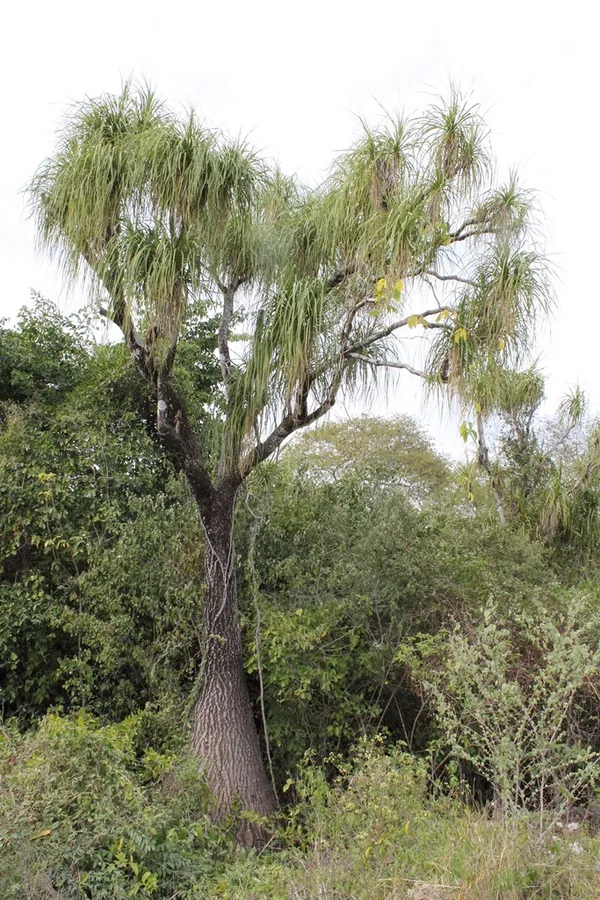
Here is a plant worth getting excited about, and the twist is that the ponytail palm isn't a palm. It's a slow-growing succulent out of the dry backcountry of eastern Mexico, sporting a plump, flask-shaped base that banks water and a lively spray of long, curling leaves up top. Growers call that swollen base a caudex, and it hands the plant its fun nicknames, elephant foot and bottle palm.
What makes it such a joy to grow is that it practically runs itself. That fat caudex holds its own water, so it shrugs off a skipped watering while a soaking sets it back. Kept indoors it stays a friendly size for years, growing slowly and rarely clamoring for a bigger pot. Set it in a sunny window, let it dry out, and it will keep rewarding you for decades.
The one habit to break is overwatering. Let the roots stew in wet soil and the base turns soft and rots, which trips up most ponytail palms that fail. Grow it like the desert plant it is, keep things on the dry side, and that pitfall all but disappears, leaving you a plant that just keeps thriving.
Care
The short version: load it up with the brightest light you can, plant it in a gritty fast-draining mix, and water deeply only once the soil has dried right out, then back way off in winter.
Light
Pour on as much bright light as you can, ideally full sun at a window. It will soldier on in bright indirect light, but the sunnier the spot, the fuller and more vigorous that crown of leaves grows.
Water
This is where the magic happens, so water deeply and then hold off until the soil has dried out completely before the next round. That swollen base is already stocked with water, so it thrives on the dry side and sulks when soggy. Come winter, cut the watering right back.
Soil
Set it up in a gritty, fast-draining cactus or succulent mix, or charge a sandy blend with extra grit. You want water racing straight through, keeping that base from ever sitting damp.
Temperature
Everyday room warmth keeps it humming along, anywhere from 50°F to 86°F (10°C to 30°C). Just keep it above that low mark and away from cold drafts, since frost is a dealbreaker.
Humidity
Dry air? Bring it on, because low humidity is exactly where this plant shines. There's no number to hit and no misting to bother with.
Feeding
Feed with a light hand, and only through spring and summer when it's actively growing. A diluted balanced or cactus feed once or twice a season is all it wants, and going heavier just scorches the leaf tips.
Pruning
Barely any work here, which frees you up to just enjoy it. Snip off dried or browned tips and pull the dead lower leaves to smarten it up, then step back and let it grow.
Repotting
This one loves being snug in its pot and coasts for years between repottings. Keep it in a smallish container with sharp drainage, and only size up once the roots and base have clearly packed the space.
Size & spacing
Indoors it climbs to around 6 to 8 feet (183 to 244 cm) over the years, fanning out to 3 to 5 feet (91 to 152 cm) across the crown. Its slow, steady pace keeps it a perfect room-sized companion for ages.
Troubleshooting
A thriving ponytail palm gives you almost nothing to fix, and when it does grumble, watering is nearly always the reason. Zero in on two things: how firm that base feels and whether the leaf tips are browning. Catch a soft base early and you can absolutely bring it back.
A rock-firm base gone soft and spongy
A soft, mushy base means root and stem rot, almost always from too much water. Spring into action: stop watering, let the soil dry out, then cut away every soft, rotted bit and repot into dry, gritty soil. Move it somewhere warm and bright, water sparingly, and give it time to bounce right back.
Fix:
- Stop watering and allow the soil to dry out completely
- Cut away soft, rotted tissue and repot into dry, gritty fast-draining mix
- Move to a warm spot with bright light and water only sparingly once recovered
Crispy brown tips on bright green leaves
Brown, dry tips usually point to watering swings, overfeeding, or salt buildup in the pot. Lock into deep but occasional watering, dial back the fertilizer, and flush the soil now and then to sweep the salts out. Those crisp tips won't green up again, so just trim them and carry on.
Fix:
- Adjust to deep but infrequent watering, letting soil dry between waterings
- Flush the soil periodically to leach out accumulated salts
- Reduce fertilizer frequency and strength
- Trim browned tips for appearance
Toxicity
Great news for anyone with pets or kids underfoot: the ponytail palm is safe across the board. The ASPCA lists it non-toxic to cats, dogs, and horses, and it carries nothing that would harm other animals or people. Put it wherever you like and let curiosity run its course, because a nibble does no harm.
Safe for
People · Cats · Dogs · Horses · Rabbits · Livestock · Birds
Cats None
Cats get the all-clear here, since the ASPCA lists the ponytail palm as non-toxic to them, so a nibble on the strappy leaves won't poison a cat.
Dogs None
Dogs are welcome to investigate too. The ASPCA rates it non-toxic to dogs, though a big mouthful of fibrous leaves might still leave any pet a touch queasy.
Horses None
Horses can graze around it freely, as the ASPCA lands it on the non-toxic list for them as well.
Rabbits None
Rabbits have nothing to fear from it either, since the plant packs no toxin that troubles them. The tough, stringy leaves aren't natural rabbit food, but a chewed one carries zero poisoning risk.
Livestock None
Goats, sheep, and cattle stay safe around it, because the ponytail palm holds none of the compounds that make other ornamentals risky for grazing animals.
Birds None
A pet bird can peck away happily, since the plant contains nothing that would harm it.
People None
It's a breeze to keep around kids, with no toxic parts to worry over. Nobody grows it to eat, so there's no edible bit to chase down, and a stray touch or nibble does no harm at all.
Varieties
No agonizing over choices here. One species carries the whole houseplant show, and it's the one to get to know.
Beaucarnea recurvata
This is the go-to houseplant species, easy to spot by its single swollen, flask-shaped base crowned with a fountain of strappy, curling leaves, and it's one of about seven species in the genus.
How to propagate
Eager to grow more? It's all about patience, and you get two fun routes to try: rooting the pups at the base, or raising one from seed.
Offsets & pupsModerate
Spring · Several months to a year or more to root and grow on
When spring rolls around, pop off the offsets, or pups, that crowd the base and pot them up to root on their own. Patience pays here, since they take several months to a year or more to settle in, and heads up, some of these basal pups just refuse to root.
SeedModerate
Spring · Germinates readily at about 18-21°C (64-70°F); seedlings grow slowly over years
Sow seed in spring, keep it toasty at about 64°F to 70°F (18°C to 21°C), and it sprouts on its own with no special prep. The only catch is the wait, because the seedlings crawl along and take years to grow into a plant you'd recognize.
Myths
The ponytail palm is a true palm.
Fun fact: it isn't a palm at all. Beaucarnea recurvata is a caudex-forming succulent in the family Asparagaceae, a close cousin of Dracaena and Agave, and it only pulls off the palm look from across the room.