Houseplant · Asparagaceae
Foxtail Fern
Asparagus densiflorus 'Myers'
Hand it bright indirect light and a pot that drains, and the foxtail fern rockets up plumes like green bottle brushes.
Bright indirect
Every 7–10 days
50–77°F · 10–25°C
USDA 9–11
Overview
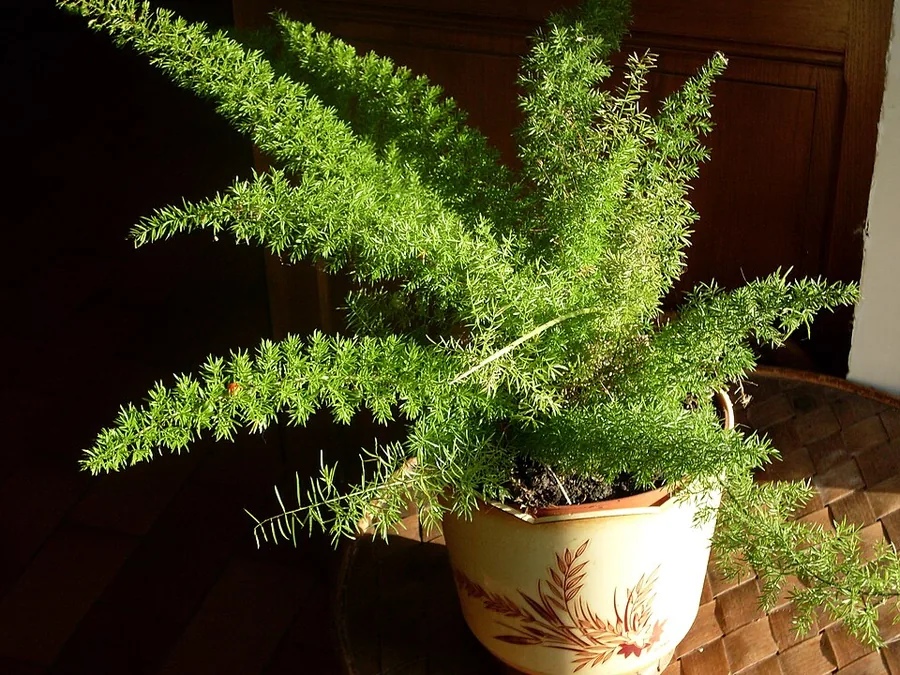
The foxtail fern trips up nearly everyone the moment it hears its name. Soft and feathery as it looks, it's no fern in the slightest. This one belongs to the asparagus family, and rather than spores it flowers, sets small red berries, and grows from seed. The 'Myers' form pushes up stiff upright plumes that narrow to a point, every stem a plump green bottle brush.
The root is what makes it such a rewarding houseplant to grow. Down in the soil sit fleshy tuberous roots that bank water, so the plant brushes off a skipped watering better than most. It asks for bright indirect light, a pot that drains freely, and little beyond that. Given room, the clump fills out wide and dense, which is why it pays its way in a hanging basket or on a stand where the plumes can arch clear.
A couple of catches ride along with it. The whole plant runs mildly toxic to cats and dogs, the bright berries most of all, and the sap can leave bare skin itchy. In frost-free regions it also slips out of gardens and naturalizes, so keep it potted and out of reach rather than turned loose in a warm-climate bed.
Care
The short version: bright indirect light, a free-draining pot, and a drink only once the top few centimeters of soil have dried. Feed it monthly through spring and summer, keep it warm, and split it whenever the tuberous roots start lifting it out of the pot.
Light
Set it in bright indirect light, the sort you find beside a window that catches sun without the fierce midday beam. It handles partial sun and a touch of shade, though skimp on light and the plumes turn thin and pale while new growth stalls.
Water
Only reach for the can once the top few centimeters of soil have dried, roughly every 7 to 10 days. The tuberous roots keep their own reserve, so a little drying between drinks suits it well, while soil that stays wet rots the roots. Pull back through winter as growth slows.
Soil
Get it into a well-draining loamy potting mix that lets water pass through instead of pooling. A pH between 6.0 and 7.0, close to neutral, keeps it thriving. Sharp drainage counts above all else, since waterlogged roots are the quickest route to losing the plant.
Temperature
Everyday room warmth of 50°F to 77°F (10°C to 25°C) hits the mark. It won't take frost, so keep it well back from cold windowsills and chilly winter drafts.
Humidity
It grows best in moderate humidity, around 40% to 60%, yet it's easygoing and gets on fine with average indoor air. Should the plume tips brown in a dry, heated room, bump up the humidity right beside it.
Feeding
Feed it monthly from spring through summer with a balanced water-soluble fertilizer while it's putting on growth. Hold off through the colder months when growth idles, and rinse the pot occasionally so feeding salts don't stack up.
Pruning
Snip spent or yellowed plumes right at the base to keep the clump crisp and drive out fresh upright growth. Worn or damaged stems take a hard cutback in spring to bring the plant roaring back. Wear gloves, since the sap can irritate skin.
Repotting
Move it up every 2 to 3 years, or sooner once the swollen tuberous roots start heaving the plant up out of its pot. Other tells are roots winding around the container and water running straight through without soaking in. Spring is your window, often paired with dividing the clump.
Size & spacing
Indoors it climbs to 24 to 35 inches (60 to 90 cm) tall and reaches wider yet, 3 to 4 feet (90 to 120 cm) across. Leave the clump space for the plumes to arch out, which is why it earns a spot on a stand or in a hanging basket.
Troubleshooting
A foxtail fern flags trouble through its plumes long before the whole plant slips. Yellowing, shedding, and brown tips each steer you to a different fix. Match what you're seeing below and act before it spreads.
Plumes turning yellow across the whole plant
Reach for the watering habits first, because overwatering sits behind most yellowing: soggy soil strains the tuberous roots and the color drains out of the plumes. Weak light or a plant running low on nutrients can trigger it too. Let the top few centimeters of soil dry before the next drink, shift it to a brighter spot, and get back into monthly feeding through the growing season.
Fix:
- Allow the top few centimeters of soil to dry before watering
- Move to a brighter spot with bright indirect light
- Resume monthly feeding during the growing season
Needle-like leaves shedding all over the floor
When a foxtail fern dries out too far, it throws off its fine cladodes to save itself, and a fresh move or a cold draft will spark the same shed. Give it a proper soak and lock in a regular watering beat. Park it clear of drafts and heat vents in bright indirect light, and the drop tapers away fast.
Fix:
- Water thoroughly and maintain a consistent moisture cycle
- Keep the plant away from cold drafts and heat sources
- Provide steady bright indirect light
Brown, crispy tips on the plumes
Point the finger at dry air for most browning tips, though a pot that runs bone dry or a load of fertilizer salts will singe them just as fast. Lift the humidity around the plant and hold the soil evenly moist while it grows. Now and then, run plain water through the pot to rinse out the salts that pile up from feeding.
Fix:
- Raise humidity around the plant
- Keep soil evenly moist during active growth
- Flush the soil periodically to leach excess salts
Toxicity
Skip growing this one within reach of pets. The sap and the eye-catching red berries are where the trouble sits, filed by the ASPCA under Asparagus Fern as toxic to cats and dogs, and the same sapogenins mark it out to keep from horses, rabbits, and grazing stock. People shouldn't eat any of it either, the berries turn mildly poisonous, and the sap can raise a rash, so pull on gloves when you prune.
Toxic to
Cats · Dogs · Horses · Rabbits · Livestock · Birds · People
Cats Moderate
The ASPCA flags the sapogenins here as toxic to cats. Let one snack on the red berries and you tend to see vomiting, a tender belly, and loose stools, while repeated brushing against the foliage can leave its skin red and sore.
Dogs Moderate
Dogs land in the same boat as cats. Berries chewed down bring vomiting, diarrhea, and abdominal pain, and going back to the cut stems again and again can spark an itchy dermatitis.
Horses Caution
No horse-specific report exists, yet the very sapogenins that upset pet stomachs make this one to keep horses clear of. Don't let a horse graze the foliage or scoop up any fallen berries.
Rabbits Caution
Count it out entirely for rabbits. Both the berries and the sapogenin-loaded plant tissue can turn the gut over, so park the pot and any dropped fruit well beyond nibbling range.
Livestock Caution
Goats, sheep, and cattle meet the same toxin the moment they reach the foliage or the ripe red berries. Fence it off or set the plant where stock simply can't browse it.
Birds Caution
Out in the wild, birds gulp the berries and scatter the seeds without harm, which is exactly how it jumps the garden fence, but a nosy pet bird has no business picking at the fruit. Keep it clear of cage birds to play it safe.
People Caution
Nobody eats any part of this plant, and the red berries turn mildly poisonous once swallowed, so steer children well away from them. Handle the stems and sap bare-handed and you can pick up a rash, so slip on gloves before you prune or repot.
Wear gloves when pruning or repotting, as repeated skin contact with the sap can cause allergic dermatitis.
Helpline numbers

United States
ASPCA Animal Poison Control: (888) 426-4435 (fee applies)
Poison Control: (800) 222-1222



Canada
Poison Centres: 1-844-764-7669
Varieties
Two forms of Asparagus densiflorus show up under the asparagus fern name, and they grow nothing alike. Sorting out which one you've got tells you straight away whether it climbs upright or spills over the edge.
Asparagus densiflorus 'Myers'
Here's the genuine foxtail, sending up dense upright plumes that narrow to a point and read like a bottle brush.
Asparagus densiflorus 'Sprengeri'
The familiar asparagus fern, it tumbles out in loose arching trailing stems rather than the stiff upright plumes of 'Myers'.
How to propagate
Multiply your foxtail ferns the quick way by splitting a clump, or take the slow route and sow the seed pulled from its berries.
DivisionEasy
Spring or early summer at repotting · 4 to 8 weeks
Division is the fast track to more plants, and it slots right into repotting in spring or early summer. Ease the plant out of its pot, then cut the fat tuberous clump into sections, checking that every piece keeps both stems and roots. Pot the pieces up separately and they take hold over the next 4 to 8 weeks.
SeedModerate
Spring · Several weeks to germinate, months to reach size
Seed rewards a patient grower. Come spring, prise the seed out of the ripe red berries with gloves on, since the fruit can nip at skin, then press it into a warm moist mix. Germination runs several weeks and comes up unevenly, and figure on months more before the seedlings bulk up to any real size.
Myths
The foxtail fern is a true fern.
The name throws people off. It isn't a fern at all, but a member of the asparagus family, Asparagaceae. Genuine ferns multiply by spores, whereas this one flowers, sets red berries, and grows from seed.
Because it's a fern, it must be safe around pets.
It's no fern, and it's no safer for the mix-up. The ASPCA files it under Asparagus Fern as toxic to cats and dogs, the berries setting off stomach trouble and the sap raising an itchy rash. Keep it well clear of any animal that likes to chew.