Houseplant · Asparagaceae
Corn Plant
Dracaena fragrans
Thriving in a shady corner and slow to outgrow a room, the corn plant rewards you for one easy thing: clean water and warmth.
Bright indirect
50–81°F · 10–27°C
USDA 10–12
3–14 ft · 0.9–4.4 m
Overview
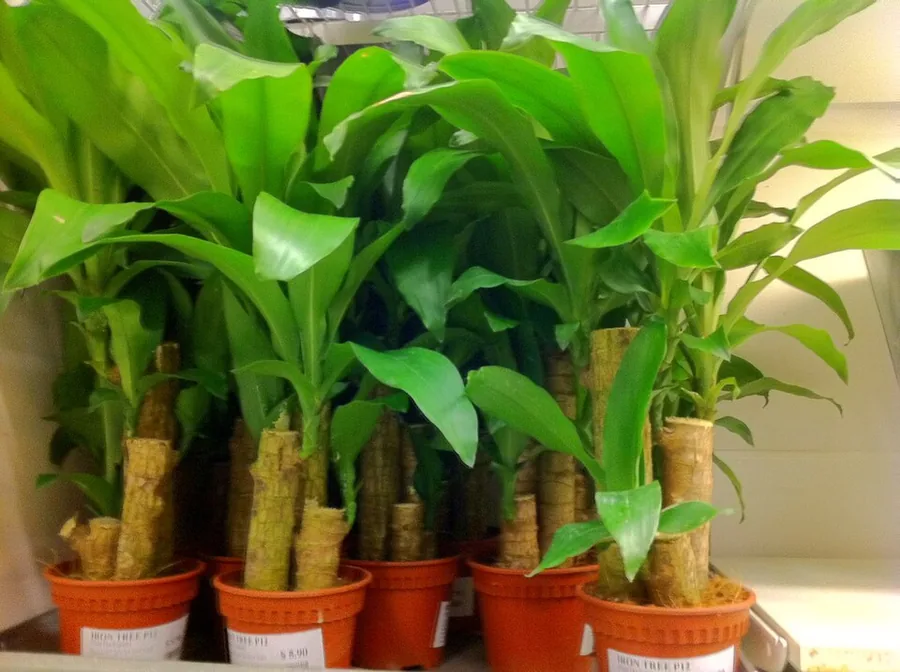
The corn plant wins people over by being almost impossible to kill. It shoots up a thick, woody cane crowned with long, arching leaves, and that broad central yellow stripe on the common 'Massangeana' is the look that hooks most growers. Carried over from tropical Africa, it dives straight into ordinary rooms and holds a sharp, upright shape for years.
Lean into its slow growth, because that is half the fun of owning one. A young cane starts around 3 feet tall, and with time and headroom it shoots well past your head, taking the scenic route the whole way. That easy pace means you skip the constant repotting and just enjoy watching it climb.
Nail the water and the rest falls into place. The corn plant runs very sensitive to fluoride and salts, and tap water bites back fast as scorched, brown leaf tips. Pour it filtered water or rainwater, keep it warm and clear of cold drafts, and it powers along with almost nothing else from you.
Care
The short version: chase bright indirect light, though it shrugs off low light, and water with fluoride-free water once the top of the soil dries. Keep it warm above 50°F (10°C), feed it monthly through spring and summer, and it mostly runs itself.
Light
Corn plants chase bright indirect light, set back from a hot window. They shrug off medium light and even low light, though a dim corner slows them down and narrows the leaves. Keep them clear of direct sun, which scorches the foliage.
Water
Water the moment the top of the soil dries, keeping it evenly moist through spring and summer and easing off from fall to late winter, but never letting it dry out completely. The water itself is the real game, because this plant reacts fast to fluoride and salts, so reach for distilled, filtered, or rainwater and flush the pot now and then. Skip cold water straight from the tap.
Soil
Pot it in a loamy, peaty, well-drained mix in a container with drainage holes. Aim for a slightly acidic pH between 6.0 and 6.5, and ditch perlite and superphosphate, which sneak in the fluoride this plant cannot handle.
Temperature
Keep it warm, between 50°F and 81°F (10°C to 27°C), and never let it slip below 50°F. Cold drafts and chilly glass hammer the leaves, so haul it inside well before fall nights turn cold.
Humidity
Average household humidity around 30% to 40% keeps it cruising. When your air runs drier, especially in winter, a quick boost of humidity stops the leaf tips from browning.
Feeding
Feed it monthly through spring and summer with a liquid foliage houseplant fertilizer, then ease off in the colder months as growth slows. Steer clear of any feed high in fluoride or superphosphate, which scorches the tips.
Pruning
Cut a leggy cane back to the height you want and fresh growth bursts from the cut, which is how you keep an older plant in bounds. Strip off the yellowed lower leaves as they age, and save the trimmed tips and cane sections to root into new plants.
Repotting
This slow grower wants repotting only every 1 to 2 years, or when it is clearly crowded. Watch for roots circling the pot or bursting from the drainage holes, water running straight through, or growth stalling despite good care.
Size & spacing
Indoors it climbs from about 3 to 14 feet (91 cm to 4.5 m) tall over many years, on a slim spread of just 1 to 3 feet (30 to 91 cm). That tall, narrow footprint makes it a dream pick for filling a bare corner.
Troubleshooting
Corn plant trouble lands at the leaf tips or down in the roots, and water drives nearly all of it, so it is easy to chase down. Scan the early signs below, match them to what your plant is up to, and knock out the cause before it spreads.
A collapsing mushy base with softening brown roots and stink
This is root or soft rot, and it follows too much water or a mix that will not drain. The roots go soft and brown, the lower leaves collapse, and the plant cannot drink even with wet soil. Stop watering, pop it out of the pot, and slice away every soft root before repotting in fresh fast-draining mix in a pot with drainage holes. A badly rotted plant will not bounce back, so grab a healthy tip cutting and launch a new one.
Fix:
- Stop watering and let the soil dry
- Unpot, cut away soft brown roots, and repot in fresh fast-draining mix
- Discard severely affected plants (soft rot has no effective treatment) and start fresh from a healthy tip cutting
- Always use pots with drainage holes
Drooping and discolored leaves once cold hits
This is cold injury, which kicks in once the plant drops below 50°F (10°C) or sits in a draft. It shows after an open window, a chilly night, or a container left out as temperatures fall. Move it somewhere warm and away from cold glass, haul containers indoors in early fall, and wait for new growth before cutting off the spoiled leaves.
Fix:
- Move the plant to a warm spot away from drafts and cold windows
- Bring containers indoors in early fall before temperatures dip below 50°F
- Remove damaged foliage once new growth resumes
Sticky residue, cottony clumps, or small bumps dotting the leaves
These are the usual indoor pests, mostly mealybugs and scale, plus spider mites and thrips. Hunt for cottony white masses, raised bumps, fine webbing with stippled leaves, or silvery flecking, often over a film of sticky honeydew. Wipe the pests off and dab mealybugs or scale with an alcohol-soaked swab, then hit them with insecticidal soap or horticultural oil and repeat as needed. Pull the plant away from the others until it is clean.
Fix:
- Wipe off pests and honeydew; dab mealybugs/scale with alcohol on a cotton swab
- Treat with insecticidal soap or horticultural oil, repeating as needed
- Isolate the plant to prevent spread
- Increase humidity to discourage spider mites
Crispy brown tips and scorched margins
This is almost always fluoride and salt damage, the corn plant's number-one gripe. Tap water, perlite, and superphosphate all sneak in fluoride the plant cannot shed, and it scorches the leaf tips and margins. Swap to distilled, filtered, or rainwater, flush the pot now and then to wash out built-up salts, and hold the soil pH between 6.0 and 6.5. On 'Massangeana' the dead giveaway is a tan dead patch ringed with a bright yellow border along the edge.
Fix:
- Switch to distilled, filtered, or rainwater (fluoride below 1 ppm)
- Flush the pot periodically to leach out accumulated salts
- Maintain soil pH between 6.0 and 6.5 and avoid superphosphate and perlite amendments
- Raise humidity if household humidity is below 30-40%
- Trim damaged tips for appearance
Yellowing lower leaves dropping from the cane
A lot of this is just normal aging, since caned dracaenas keep dropping their oldest, lowest leaves while the top powers upward. If a bunch yellow at once or the soil stays soggy, overwatering or a slow-draining mix is the likely culprit. Pull the spent leaves, let the surface dry between waterings, and push the plant brighter if new leaves come in narrow and thin.
Fix:
- Remove spent lower leaves
- Check drainage and let the soil surface dry before rewatering
- Move to brighter indirect light if leaves are narrowing
Toxicity
The corn plant is toxic to cats and dogs, so pick its spot with care. The leaves and sap pack saponins that upset an animal's stomach, so keep it out of reach of pets and grazing animals. People come off essentially safe, though the sap can leave sensitive skin a little irritated.
Toxic to
Cats · Dogs · Horses · Rabbits · Livestock · Birds
Safe for
People
Cats Moderate
Cats take the saponins hardest of all. Keep an eye out for drooling, a lost appetite, and vomiting that can carry flecks of blood, often with a flat, low mood. Dilated pupils show up in cats but not in dogs.
Dogs Moderate
A dog that chews the leaves usually drools, goes off its food, and vomits, sometimes with a little blood. Plenty also turn quiet and low for a while until it passes.
Horses Moderate
The ASPCA lists the plant as toxic to horses through the same saponins. Expect drooling, a poor appetite, and stomach upset if a horse gets at the foliage.
Rabbits Caution
Saponins wreck a rabbit's gut, so keep the leaves off the menu. There is no safe nibble here, and any chewing is worth a fast call to the vet.
Livestock Caution
Grazing animals like goats and sheep can take in the same saponins and end up with digestive upset. It is a houseplant they should never reach in the first place.
Birds Caution
Let a bird peck at these leaves and it may take in the saponins, so station the plant well out of its range. Any nibbling earns a quick call to an avian vet.
People Minimal
People come off essentially safe around it. The sap can leave some skin a little irritated, and a child who bites a leaf might catch a brief upset stomach, but it is not a serious poisoning risk.
Sap may cause skin irritation in people; the plant is toxic to humans if ingested per NC State Extension
Helpline numbers

United States
ASPCA Animal Poison Control: (888) 426-4435 (fee applies)

United Kingdom
Animal PoisonLine: 01202 509000 (fee applies)

Australia
Animal Poisons Helpline: 1300 869 738
Varieties
A handful of cultivars carry the corn plant name, and the fun is in spotting how their leaves are striped. Here are the ones you will keep running into.
'Massangeana' (corn plant / mass cane)
This is the form you will spot most, with broad evergreen leaves split by a wide central yellow stripe, and it is also where fluoride injury flares up as tan dead areas edged in bright yellow along the leaf margin.
'Lemon Lime'
It throws sword-shaped leaves up to about 2 feet long that mix cream, greenish-yellow, and lime stripes, a standout in the Deremensis Group of D. fragrans.
'Janet Craig'
This dark green Deremensis Group cultivar flags its fluoride trouble as yellow or dead leaf tips rather than margin burn.
'Warneckii'
A white-striped Deremensis Group form where fluoride damage streaks through the pale stripes as long tan to dark brown marks.
How to propagate
Corn plants multiply with ease, and the best part is that the leggy canes you trim are exactly what you root into a whole new plant.
Stem cuttingsEasy
Spring or late summer · Several weeks to root
The quickest way to crank out more corn plants is from cuttings taken in spring or late summer. Grab a tip cutting or a section of bare cane, and rooting the basal shoots works a treat too. Stand the cutting in fresh mix and give it several weeks to push out roots before it settles in.
Air layeringModerate
Spring or summer · Several weeks
Air layering takes a bit more patience but shines on a tall, leggy cane you would rather not cut blind. Wound the stem, wrap it, and roots form right on the cane over several weeks in spring or summer before you sever and pot the rooted top.
Myths
Corn plants pull VOCs from the air and detox a room.
Here is the catch: a 2020 review of chamber studies by Cummings and Waring found potted plants do not improve indoor air quality at any realistic density. One plant's clean air delivery rate runs so small that matching normal building ventilation would take somewhere between 10 and 1,000 plants per square meter. Grow it for the love of growing it, not to filter the room.
Brown-tipped dracaena leaves signal the calcium-oxalate burn aroids deliver.
Not so. Dracaena fragrans lands in the Asparagaceae family, and its toxic compound is saponins, not the calcium oxalate aroids carry. Brown tips here come down to fluoride and salt sensitivity or dry air, not oxalate, so cleaner water cracks it rather than anything aimed at oxalate.