Houseplant · Gesneriaceae
African Violet
Streptocarpus ionanthus
Dial in bright indirect light and a warm drink from below, and the African violet keeps cranking out blooms nearly all year.
Bright indirect
60–80°F · 16–27°C
USDA 11–12
6–9 in · 15–23 cm
Overview
Hardly any houseplant flowers as eagerly indoors as the African violet, and it rewards a grower fast. It climbed down from the misty highland forests of Tanzania, and here is the surprise: the name aside, it ties to no true violet whatsoever. It runs with the Gesneriad family instead, shoulder to shoulder with the streptocarpus already crowding plenty of sills. Botanists later swept it into the genus Streptocarpus, so a Saintpaulia tag and a Streptocarpus ionanthus tag both land you on the very same plant.
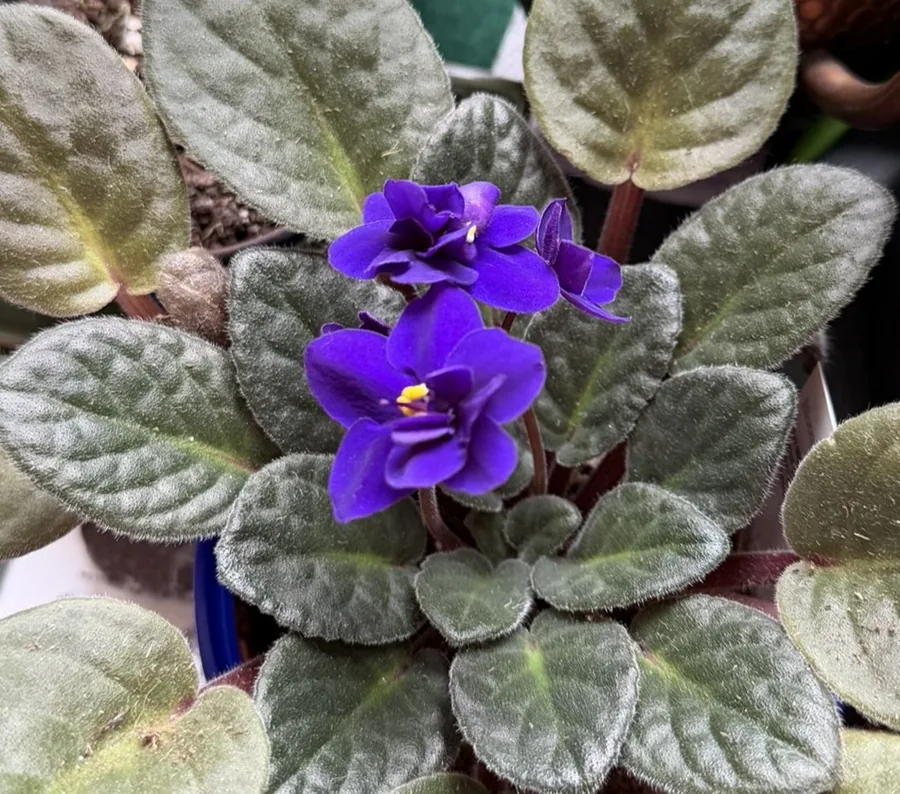
One look usually seals the deal. A snug rosette of fuzzy, rounded leaves hugs the soil, and right out of the middle burst clusters of small flowers in purple, pink, white, or blue. It stays delightfully compact too, just 6 to 9 inches (15 to 23 cm) across, so a full-grown one perches happily on a saucer. Park it in a winning corner and it pumps out buds in nearly every month going.
That moderate tag traces to a couple of quirks, not to any real grind. The fuzzy leaves blotch the moment cold water lands on them, and the crown caves to rot when the soil stays drenched. Nail bottom watering with tepid water, get a feel for the light, and this plant pays you back with wave after wave of bloom.
Care
The short version: bright indirect light from an east or north window, snug warmth between 60°F and 80°F (16°C to 27°C), and a porous soilless mix kept evenly moist. Send the water up from below with room-temperature water, feed light while it grows, and hold it a little pot-bound to drive out more flowers.
Light
Chase bright indirect light at an east or north window, where the leaves drink in plenty of glow but dodge the harsh midday blast. The plant rolls with medium light and a little shade, though bloom downshifts once the spot turns too dim. Run it under a fluorescent or LED light for 14 to 16 hours a day and it keeps flowering straight through winter.
Water
Hold the soil evenly moist but never drenched, and let that top inch dry out before the next pour. Send the water up from below: drop the pot into warm or room-temperature water for about 30 minutes, then drain it hard. Cold water and stray drops blotch the fuzzy leaves with pale rings, so keep the foliage dry, and never forget that overwatering drives more crown and root rot than anything else.
Soil
Pot it up in a loose, porous, well-drained soilless mix, not dense garden soil. Grab a bagged African violet blend, or whip up 3 parts sphagnum peat moss with 2 parts vermiculite and 1 part perlite plus a dash of lime. The roots fire on a slightly acidic pH of 6.2 to 6.5.
Temperature
Snug, steady rooms keep it humming, somewhere between 60°F and 80°F (16°C to 27°C). Cold drafts and frosty nights stall the plant and slam the brakes on its flowers. Tuck it well clear of cold windowpanes and blasting heating vents.
Humidity
Plain indoor air does the job, with 40% to 60% humidity nailing the sweet spot. Crank the humidity too high without solid airflow, though, and you roll out the welcome mat for powdery mildew and Botrytis. A little gap between plants beats a daily misting hands down.
Feeding
Feed once a month while it grows and blooms, from spring into fall, with a balanced or African violet fertilizer. Mix it weak, at a quarter to half the label strength, since piling it on just grows leaves instead of flowers. Flush the pot with plain water now and then to blast out the salts that pile up.
Pruning
Snip off spent flowers and any dead or yellowed leaves to keep the rosette sharp and slam the door on Botrytis. Chasing a single clean crown? Pop off the offset suckers the second they show. That quick tidy is the whole gig, since the plant never begs for any hard cutting back.
Repotting
Refresh it once a year with new mix to revive the soil and chase out salt buildup. Keep it a little pot-bound, in a pot about half the width of its leaf spread, which fires it toward more flowers. When an old plant throws a bare neck, drop it lower in the new pot and bury the stem up to the lowest leaves.
Size & spacing
This little powerhouse stays around 6 to 9 inches (15 to 23 cm) tall and just as wide. Hand each one some elbow room on the sill so air can zip between them. Smart spacing stops mildew and mites from ripping across a collection.
Troubleshooting
Nearly every African violet snag breaks out on the leaves, or in a plant that romps along yet flat refuses to flower. Spot the early tells and you can swoop in before a small glitch hardens into rot or a stalled plant. Match what you see below, then move on it while the move still pays off.
Mushy dark crown with leaves drooping and caving in
This is crown and root rot, and it almost always loops back to overwatering or soil jammed against the crown. Hoist the plant out and you hit rotted roots and a soft, discolored base. One this far gone barely ever rebounds, so ditch it, then kick off fresh in a clean pot of porous mix with the crown riding above the soil line.
Fix:
- Discard severely affected plants to prevent spread
- Use sterilized soilless mix and clean, sanitized containers (1:9 bleach soak)
- Plant with the crown above the soil surface and improve drainage
Twisted, hairy center growth with curled edges and dead buds
A cyclamen mite infestation is wrecking it, and the mites stay way too small to catch with the eye. They swarm the center and leave the new growth grayish, curled, and stunted while the buds bail out. Quarantine the plant on the spot, dump it if it is badly hit, and hit the rest with a labeled miticide every 3 days or so.
Fix:
- Isolate infested plants immediately
- Discard badly affected plants
- Treat with a labeled miticide (insecticidal soap, sulfur, or tau-fluvalinate) at about 3-day intervals
Leaves bursting everywhere, but zero flowers
Nine times in ten the cause is too little light, since the plant demands bright indirect light or a long lamp-lit day before it fires off buds. Heavy feeding shoves leaves over flowers too, so back the fertilizer right off. Shift it to an east or north window, or pour on 14 to 16 hours of light a day, and keep the room warm.
Fix:
- Move to bright indirect light or add fluorescent/LED light for ~14-16 hours/day
- Reduce fertilizer to a low/dilute rate and flush accumulated salts with plain water
- Maintain warm temperatures (about 60-80°F) and improve air/soil conditions
Cottony white clumps or silvery flecking on the leaves
Cottony white masses in the leaf axils flag mealybugs, while silvery rasped patches flag thrips. Both warp and stunt the growth they chew on. Swab the mealybugs off with an alcohol-soaked cotton tip, hit them with insecticidal soap or a labeled systemic, and keep the plant apart while it bounces back.
Fix:
- Remove mealybugs with an alcohol-soaked cotton swab
- Treat with insecticidal soap, or a soil-applied systemic (e.g., imidacloprid granules) per label
- Isolate the plant while treating
A dusty white film over the leaves and blooms
That dusty coating is powdery mildew, a fungus that grabs hold in still, humid air. It rips across foliage and flowers alike when plants jam together. Throw open the airflow around the plant, snip off the worst leaves and blooms, and knock the humidity down.
Fix:
- Improve air circulation around the plant
- Remove affected flowers and leaves
- Reduce excess humidity
Fuzzy gray-brown mold on leaves or spent flowers
This is Botrytis blight, a fungus that pounces on dead or fading tissue and races through damp, still air. It usually kicks off on a spent flower or a leaf underside before it spreads. Sweep out the dead material, keep the foliage dry, and crank up the plant's airflow.
Fix:
- Remove and discard dead plant material and affected leaves/flowers
- Improve air circulation
- Keep foliage dry
Pale spots or rings stamping the fuzzy leaves
This is cold water hitting the foliage, usually a drop that camped on a leaf and bleached the spot below. The marks ride along as pure cosmetics, but watch out, they never fade once they land. Flip to bottom watering or grab room-temperature water, keep the leaves dry, and yank off the worst-marked ones.
Fix:
- Switch to bottom (sub-irrigation) watering or use room-temperature water
- Keep foliage dry when watering
- Damaged leaves will not recover; remove the worst-affected ones
A bare stem or palm-tree neck under the leaves
This is just natural aging, where the oldest lower leaves die off and bare the stem over time. The fix is a breeze, and the plant shrugs it off. Repot and drop it low in the pot, burying that bare neck up to the lowest set of leaves.
Fix:
- Repot and set the plant low in the container, burying the stem up to the lowest set of leaves
Toxicity
Here is a win for homes packed with pets and small kids: the African violet is non-toxic start to finish. The ASPCA marks it safe for cats, dogs, and horses, and a curious nibble sparks nothing rougher than a mild, fleeting bout of tummy upset. The lone catch is any pesticide or systemic insecticide a grower might add, so leave those treatments off a plant pets or kids can reach.
Safe for
People · Cats · Dogs · Horses · Rabbits · Livestock · Birds
Cats Safe
Cats can claim a shelf right beside this one. The fuzzy leaves carry no toxins, so a curious chomp does zero harm.
Dogs Safe
Dogs are golden too. A nosy pup that gnaws a leaf hits nothing worse than maybe a little passing tummy upset.
Horses Safe
Horses have zero to fear from this plant, which the ASPCA flags as non-toxic to them.
Rabbits Safe
Rabbits can graze a stray leaf no problem, though any houseplant works best as a rare treat over a meal.
Livestock Safe
Cattle, goats, and sheep dodge any poisoning risk from it, even if an indoor plant rarely crosses their path.
Birds Safe
Pet birds and backyard hens stay safe right next to it, with no toxic parts in play.
People Safe
People are dead clear as well, so this is an easy grab for a home full of small kids and curious toddlers.
Although the plant itself is non-toxic, pesticides or systemic insecticides applied to the soil or foliage could be harmful, and chewing fibrous leaves may cause mild, non-toxic stomach upset
How to propagate
Cloning an African violet ranks among the easiest wins in growing, and one leaf gets you there. Split an older clump at repotting too, and you turn a single plant into a pair.
Leaf cuttingsEasy
Any time during active growth · Plantlets form in 1-3 months
Leaf cuttings are the go-to trick for cloning an African violet, and they fire any time the plant is growing. Snap off a healthy leaf with its stalk attached, plunge the stalk into moist mix, and keep it warm. Little plantlets shoot up at the base in 1 to 3 months, and each one charges on into a fresh plant you can pot up solo.
DivisionEasy
At repotting · Several weeks
An older plant that has thrown several crowns splits clean into separate plants at repotting time. Pry the clump apart, peel off any rooted offset suckers, and drop each piece into its own container. The divisions dig in within a few weeks and barrel right on without missing a beat.
Myths
The African violet is a true violet, kin to the wild Viola.
The name trips up loads of growers, but the two plants share zero kinship. African violets run with the Gesneriads, the same crew as streptocarpus, while true violets sit under Viola. The one thing they share is a flower that looks alike.
You must never let a single drop of water touch the leaves.
The genuine villain is cold water on the fuzzy foliage, which is what bleaches those pale spots and rings. Tepid, room-temperature water pulls none of that, and watering from below dodges the whole mess for good. Pour warm water and the leaves stay spotless while the soil stays moist.
Its botanical name is still Saintpaulia ionantha.
Botanists already swapped it out. Kew's Plants of the World Online now backs Streptocarpus ionanthus as the accepted name, after the old genus Saintpaulia got merged into Streptocarpus. The 1893 name Saintpaulia ionantha sticks around as the synonym, so both tags point straight at the same plant.
Sources
- NC State Extension Plant Toolbox
- Clemson Cooperative Extension HGIC
- Missouri Botanical Garden Plant Finder
- University of Wisconsin-Madison Division of Extension
- Iowa State University Extension and Outreach
- University of Minnesota Extension
- ASPCA Animal Poison Control
- Plants of the World Online, Royal Botanic Gardens Kew