Houseplant · Bromeliaceae
Air Plant
Tillandsia
Ditch the pot and the soil. Hand an air plant bright light and a weekly soak and it runs with the rest.
Bright indirect
Every 7–14 days
50–86°F · 10–30°C
USDA 9–11
Overview
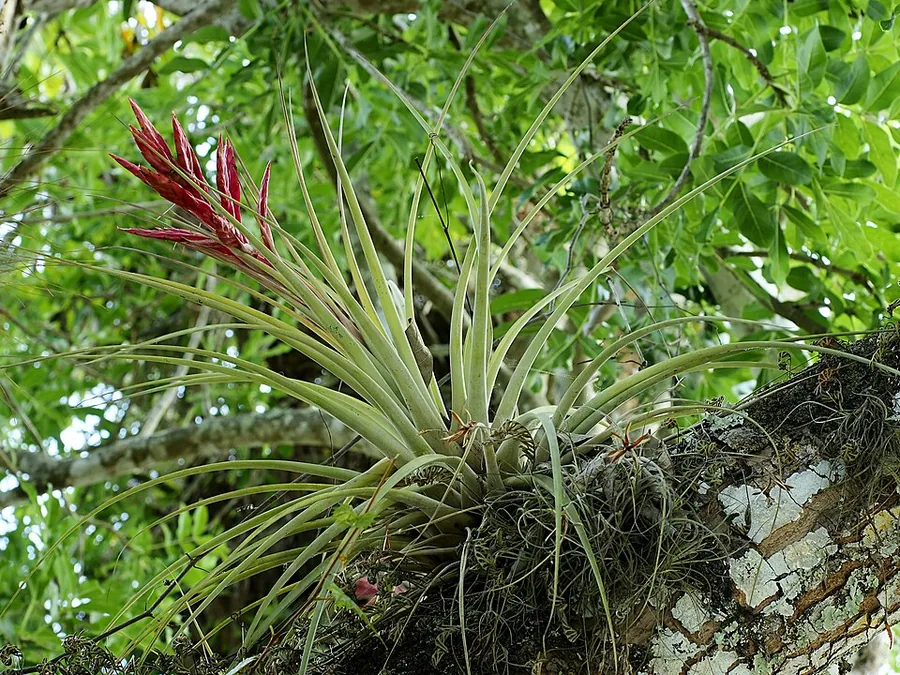
Air plants, the Tillandsias, are a huge crew of bromeliads that race ahead with no soil at all. Out in the wild they grip tree branches and bare rock, anchoring with their roots while they pull water and nutrients straight in through their leaves. That soilless, epiphytic habit is exactly what turns them into such fun, fuss-free houseplants, because you can fix one to driftwood, drop it in a glass bowl, or just stand it on a shelf and let it shine.
The real magic is that the leaves pull off the job roots handle for everything else. Tiny silver scales called trichomes blanket them, snatching moisture and feeding it to the plant, which is why a quick soak beats any potting routine hands down. They come in every size, from little clumps a couple inches wide up to the broad, curling rosettes of the big species, and slow growth keeps a single plant at a neat size for years.
Every air plant builds to one showstopping moment. Once it matures, it rockets up a colorful flower spike, blooms a single time, then winds down and drops a ring of offsets to keep the line going. Nail the light and water and that cycle keeps rolling for ages, each fresh pup growing up and flowering when its turn lands.
Care
The short version: bright, indirect light plus a weekly soak in room-temperature water, then a full dry-out in moving air so water never parks itself in the leaf base.
Light
Air plants thrive on bright, indirect light, so set one a few feet back from a sunny window and it hums along. They put up with a touch of direct sun or medium indirect light, but deep shade saps them and slows them right down. Crank the harsh midday sun too high, though, and it scorches the leaves, so dodge that extreme.
Water
Watering is where an air plant truly takes off or flops. Plunge the whole plant into room-temperature water for 20 to 30 minutes about once a week, or blitz it with a thorough mist several times a week instead. The make-or-break move lands afterward: fling off the extra and let it dry through within about 4 hours in lively airflow, because water stuck in the leaf base rots the plant.
Soil
Skip soil entirely, full stop. Air plants run as epiphytes, mounted on wood or bark or just shown off bare, and they never belong in potting mix. Anything that locks moisture against the base hands rot an opening, so keep them riding out in open air.
Temperature
They cruise across a wide band, roughly 50°F to 86°F (10°C to 30°C), which sweeps in most homes all year. Just hold them above freezing, since frost wipes them out fast.
Humidity
Everyday household humidity around 40% to 60% keeps them happy. Hot, dry air drains them quicker and pushes you to water more, while a cool, humid room lets you back right off.
Feeding
Feed light and feed only from spring through summer, when growth kicks in. Whisk a dilute bromeliad or low-nitrogen fertilizer at quarter strength into the soak or mist water about once a month, then cut it out through the cold months.
Pruning
There is next to nothing to wrangle here. Grab clean scissors, clip back whatever tips have dried or browned, and strip the dead outer leaves from around the bottom. After a plant flowers and slips into decline, cut the spent flower stalk away and turn the pups loose to keep powering up.
Repotting
Not applicable - not potted; remount or rehome only if a display becomes crowded or a mount degrades
Size & spacing
Most air plants stay pint-sized, running about 2 to 12 inches (5 to 30 cm) tall with a spread of 2 to 10 inches (5 to 25 cm). Since you display them rather than plant them, just hand each one enough open room for air to whip freely around the leaves.
Troubleshooting
Track down almost any air plant hiccup and it leads back to water, either too little or too much pooling where it shouldn't. The two signs below cover the bulk of it, so match what you spot and jump on it before the damage tunnels into the core.
Blackened, squishy core dropping leaves straight from the base
A blackened, soft center with inner leaves that slide right out spells crown rot, the trouble that strikes once water gets trapped in the leaf base after a soak. After the core turns to mush and those middle leaves give way, the plant is finished, so clear it out and start over. Pounce at the very first sign and you can sometimes dry it back to health, but the real win is pumping plenty of air around the plant so rot never takes hold.
Fix:
- Discard plants that have rotted through the center, as they cannot be saved
- If caught very early, dry the plant completely and improve airflow
Tips turning brown and crisping as leaves roll up
Dry, papery leaves that curl in on themselves usually shout underwatering or air that has run too dry, and blazing direct sun can crisp them just as fast. Treat the plant to a 20 to 30 minute soak and watch it bounce back plump within a day. Lock in a steadier watering rhythm, sweep it out of fierce midday sun, and snip those crunchy tips to sharpen its look.
Fix:
- Soak the plant in room-temperature water for 20-30 minutes, then dry fully
- Increase watering frequency and move out of harsh direct sun
- Trim off crispy tips for appearance
Toxicity
Animal lovers, here is the great news: air plants carry no known toxin and never land on the lists of plants poisonous to cats, dogs, or any other pet. The stiff leaves are no snack, but a stray nibble won't poison anyone. Show them off safely in any room you like.
Safe for
People · Cats · Dogs · Horses · Rabbits · Livestock · Birds
Cats Safe
Let a curious cat investigate, because the ASPCA keeps air plants off its list of plants toxic to cats, so a nibble brings no poisoning. Those stiff leaves are no snack, though, and a cat that gulps a piece down might cough or gag it back.
Dogs Safe
Dogs share that clean bill of health, with nothing in the plant poisonous to them. A hefty mouthful of fibrous leaves could still rough up a touchy stomach, so park displays well clear of a dog that loves to chew.
Horses Safe
Horses run no poisoning risk near air plants, since the whole group carries no reported toxin.
Rabbits Safe
Rabbits hop around air plants without a worry. The tough, fibrous leaves make lousy food, though, so keep the plant off the menu.
Livestock Safe
Cattle, goats, and sheep dodge any poisoning from air plants, which pack no known toxin.
Birds Safe
Pet birds stay safe around air plants, with nothing toxic to fret over if one pecks at the leaves.
People Safe
People come to no harm from air plants and can handle them and show them off in any room. They earn their keep on looks, not flavor, so leave them off the plate.
Safe to keep around pets; the thin stiff leaves are not a poisoning hazard, though they are not intended for eating.
Varieties
Hundreds of Tillandsia species are out there, but a handful keep landing on shelves and in shops. Get to know these by name first.
Tillandsia ionantha
A small clustering species that fires its green leaves up to red and flushes its center violet just as it bursts into flower.
Tillandsia xerographica
The big, slow-burning showpiece of the group, throwing out broad silvery-gray leaves that curl back into a knockout sculptural rosette.
Tillandsia usneoides (Spanish moss)
A rootless wild card that spills in long chains of thread-fine gray foliage, dangling from branches instead of building a rosette.
How to propagate
You don't really shop for more air plants, you grow them. A thriving plant cranks out its own copies after flowering, and raising those pups is the best, most satisfying way to stack up a whole collection.
Offsets & pupsEasy
After the mother plant flowers, when pups reach about one-third to one-half the parent's size · Several weeks to a few months once separated, as growth is slow
Here is the payoff every grower waits for: a mature air plant flowers once, and as that bloom burns out it pushes up offsets, called pups, all around the base. Hold off until a pup hits one-third to one-half the parent's size, then twist it loose to launch on its own, or leave the whole gang together and let it swell into a clump. Growth crawls along either way, so a separated pup spends several weeks to a few months digging in before it takes off.
Myths
Air plants thrive on nothing but air and skip watering entirely.
The name oversells it. These plants grab water and nutrients through tiny leaf scales called trichomes, not out of thin air. Skip the regular soaking or misting and they dry out and die, so keep that water coming and they reward you.
Growing free of soil means air plants get along fine with no light.
Going rootless in the soil says zero about their light needs. They photosynthesize like any plant and run on bright, indirect light to thrive. Banish one to a dim corner and it slumps and fades.