Houseplant · Bromeliaceae
Bromeliad
Bromeliaceae (family)
A topped-up cup plus bright but indirect light buys you months of bold bromeliad color.
Bright indirect
Every 7–14 days
55–81°F · 13–27°C
USDA 10–11
Overview
Bromeliads hail from the tropics and earn their keep with bold, long-running color and a rosette of stiff leaves that cups rainwater like a little tank. Most of the home-grown kinds are epiphytes: out where they grow wild, branches hold them up rather than soil holding them down. One habit drives the whole routine, shaping the airy medium they root into and the way a drink reaches them through the heart of the plant instead of the dirt below.
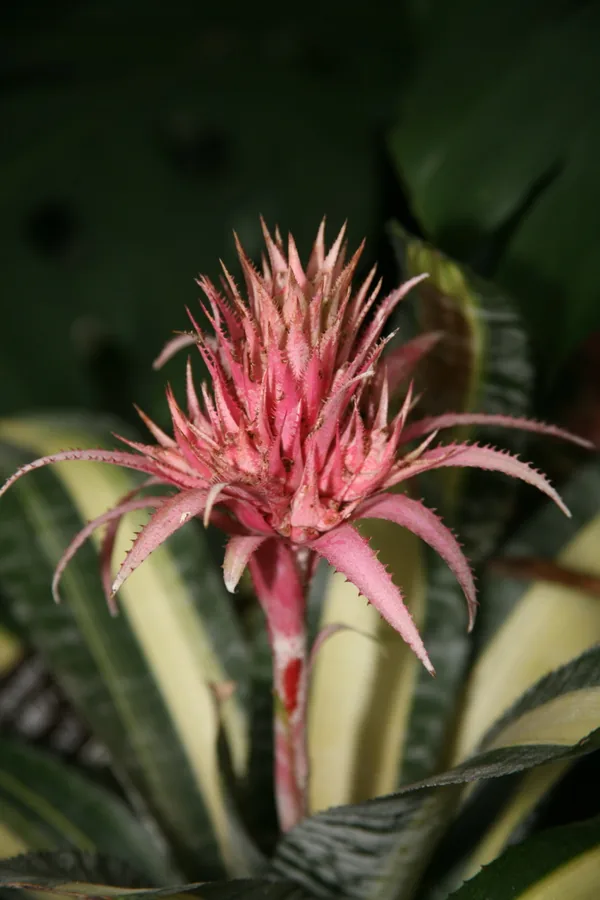
The showy part most people call a flower is really a spike of vividly colored bracts that can hold for months, outlasting any true bloom by a mile. A rosette flowers just once. Then it slowly fades, but only after raising a crop of pups around its base, which means one plant becomes many as the seasons roll on.
Beginners do well with these. Offer warmth, light that stays bright but indirect, and a cup kept freshly filled, and the plant wants for little beyond that. The fastest route to losing one is too much water pooling where it has no business sitting.
Care
The short version: give it bright indirect light, an airy fast-draining medium, and warm humid air, then keep fresh low-mineral water in the central cup, flushing that cup weekly. Splash the medium only once its surface has dried.
Light
Aim for bright but indirect light, the soft glow a few steps back from a window where nothing scorches. A shadier or medium spot is workable too, but the color goes flat. Harsh midday sun is the real enemy here, bleaching and burning foliage fast, so keep the plant out of that beam.
Water
The center cup is where most of the drinking happens. Hold roughly 2 to 3 cm of fresh, low-mineral water there, ideally rainwater or distilled, flushing it weekly to keep it from souring. Wait for the medium to dry on top before adding any, because roots left wet rot in a hurry.
Soil
Reach for an airy, fast-draining epiphytic mix, the bark-perlite-coarse-peat blend sold for orchids. They like a little acidity, somewhere around pH 5.0 to 6.0. Skip ordinary potting soil, which traps moisture and leaves the roots rotting.
Temperature
Ordinary room warmth suits these tropicals, who do best across 55°F and 81°F (13°C to 27°C). In winter, keep them clear of chilly windowsills and any cold draft sneaking through.
Humidity
Bromeliads crave 50% to 70% humidity, well above what most homes hold. Lift it by clustering plants close together, standing the container over a tray of wet pebbles, or running a humidifier nearby. When the air runs dry, the leaf tips turn brown and crisp.
Feeding
Across the growing months, feed monthly through spring and summer using a balanced water-soluble feed diluted to a quarter or half strength. Work it into the medium or mist it on thinly as a foliar spray. Keep concentrated feed out of the cup, where it scorches the crown.
Pruning
Pull away any dead or browning outer foliage right at the base, then clip the spent flower spike the moment it finishes. A bloomed mother rosette fades over a long stretch of months, and once you have taken its pups you can lift the whole thing out.
Repotting
These plants rarely ask for a new pot, usually just every 2 to 3 years or at the point you are settling an established pup. Reach for a fresh container once the rosette tips over with little provocation, the medium has collapsed into a soggy mush, or roots begin escaping past the rim.
Size & spacing
Most climb to 12 to 35 inches (30 to 90 cm) tall and fan out 12 to 24 inches (30 to 60 cm) wide, depending on the genus. Leave each plant enough breathing room for air to flow freely around the rosette.
Troubleshooting
Watch the cup, the leaf tips, and the color, because water and light drive nearly every bromeliad hiccup and those three spots flag it earliest. Spot the clues while they are small and the cure is quick. Match your symptom below, then move before rot or scorch gets a foothold.
A center gone **soft and smelly** while the rosette caves in
What you have here is crown or base rot. It takes hold when old water sits in the central cup too long or the medium just will not dry. Drain and rinse that cup, give the medium room to breathe, and if drainage is the problem, move the plant into something coarse and quick-draining. Should the mother crown be past saving, rescue the healthy pups and begin again from those.
Fix:
- Empty and flush the central cup, then refill with fresh water
- Allow the potting mix to dry and improve drainage or repot into a coarse, fast-draining mix
- Salvage healthy pups if the mother crown is rotted beyond recovery
**Washed-out color** with bleached or scorched patches
Harsh sun drains the color from the leaves and burns the surfaces most in its path, which hits hardest right after a jump to a far brighter spot. These plants thrive on bright but indirect light. Pull yours clear of the midday glare, then walk it toward any brighter perch across a week or two so it settles in without a shock.
Fix:
- Move to bright but indirect light
- Acclimate gradually to brighter positions
**Crispy brown tips** on leaves that look fine otherwise
Crispy ends point straight at dry air or a creeping load of minerals and salts left behind by hard or fluoridated water. Push humidity up to 50% to 70% with a pebble tray, a humidifier, or a cluster of plants kept close, then pour rainwater or distilled water into the cup and onto the mix. Browned tips stay brown, so snip them off if the look bugs you.
Fix:
- Raise humidity (grouping, pebble tray, or room humidifier)
- Switch to rainwater or distilled water for the cup and mix
- Trim crispy tips for appearance only
A thriving plant that **simply will not throw a spike**
Flowering waits until a bromeliad reaches full size, and when a grown rosette stays green and spikeless the cause is usually too little light. Shift it somewhere bright and indirect, then give the calendar time to work. Want to hurry a mature one? Seal it inside a clear bag alongside a ripe apple over a few days, and the ethylene the fruit releases can trigger the bract.
Fix:
- Increase light to bright indirect levels
- Be patient until the rosette reaches mature size
- Optionally encourage bloom by enclosing the plant with a ripe apple for a few days to expose it to ethylene
Toxicity
Welcome news for a lively household: bromeliads of the usual houseplant sort stay non-toxic to people and to cats and dogs alike, so park one wherever the light suits it. Mind only the foliage edges, since genera such as Aechmea wear stiff, toothed margins that nick a curious paw or bare skin.
Safe for
People · Cats · Dogs · Horses · Rabbits · Livestock · Birds
Cats None
A cat that samples one of the common houseplant bromeliads stays unharmed, since these genera carry no poison. Keep an eye only on the toothed leaf margin found on types like Aechmea, which can nick a paw or a nose.
Dogs None
Dogs share a room with these bromeliads with zero poisoning risk. A stubborn chewer could pick up a scratch from the stiffer, spiny-edged sorts, yet the plant itself does no harm.
Horses Safe
Nothing in these plants would upset a horse, and since they live indoors a horse seldom meets one in the first place.
Rabbits Safe
Gnaw a leaf and a rabbit takes no poison from the common bromeliads. That tough, fibrous foliage works better as a chew-toy than a snack.
Livestock Safe
The bromeliads grown in homes hold no toxin that troubles cattle, goats, or sheep.
Birds Safe
Pet birds perch near these plants with no worry, as neither leaf nor bract holds anything toxic.
People Safe
Set one in any room you like with no safety concern. Just watch the sharp, toothed leaf edges on certain genera while you handle the plant.
Some bromeliads have stiff or finely toothed leaf edges; handle with care to avoid skin scratches.
Varieties
Bromeliad spans an enormous family, yet a small cast of genera fills the bulk of homes and garden centers. Get to know these by name and you will recognize most of what you meet.
Guzmania
Smooth, strap-shaped green leaves fan out around a tall upright spike of red, orange, or yellow bracts that holds its color for ages.
Aechmea (urn plant)
Wide, rigid leaves carry silver banding and toothed edges, crowned by a pink flower head that keeps going for months on end.
Neoregelia (blushing bromeliad)
Skip the tall spike here: its flat, open rosette flushes hot red or pink right at the heart as flowering approaches.
Vriesea (flaming sword)
Banded or mottled leaves sit beneath a flattened, sword- or feather-shaped bract, the very feature behind its name.
Billbergia (queen's tears)
A tall tubular rosette throws out arching, hanging flower spikes that dazzle for a brief spell before fading quickly.
How to propagate
You will hardly ever shop for a second bromeliad, since each plant gifts you fresh ones for free as it wraps up flowering.
Offsets & pupsEasy
After flowering, once pups reach about one-third to one-half the size of the mother plant · Several weeks to a few months to root and establish
New plants arrive as pups, the small offsets a bromeliad pushes out around its base once flowering wraps up. When a pup stands about a third to half as big as its parent and carries a root or two, free it with a clean cut or a gentle snap. Tuck it into a loose, fast-draining bromeliad or orchid blend, hold the medium lightly damp with the cup kept full, and give it a stretch of several weeks to a few months to root and take hold.
Myths
Once it blooms, a bromeliad is finished and good for nothing.
True, the mother rosette flowers a single time and then eases into decline, yet that is hardly the finish. On its way out it pushes up offsets, the pups, around its base, and every pup matures into a fresh plant that flowers in its own turn. One bloom kicks off the next generation, so the plant keeps renewing itself.
Pour into the cup and that is it: the soil should never get watered at all.
Fresh water in the central cup matters, sure, but the roots take a drink as well, so wet the potting medium whenever its surface has dried out. Rinse that cup on a regular schedule too, because water left to sit sours and eats away at the crown. Look after the medium as much as the cup, and keep that cup water fresh and moving.