Houseplant · Gesneriaceae
Cape Primrose
Streptocarpus rexii
Hand it bright indirect light and careful watering, and Cape primrose keeps flowering for much of the year.
Bright indirect
Every 5–10 days
55–75°F · 13–24°C
USDA 10–11
Overview
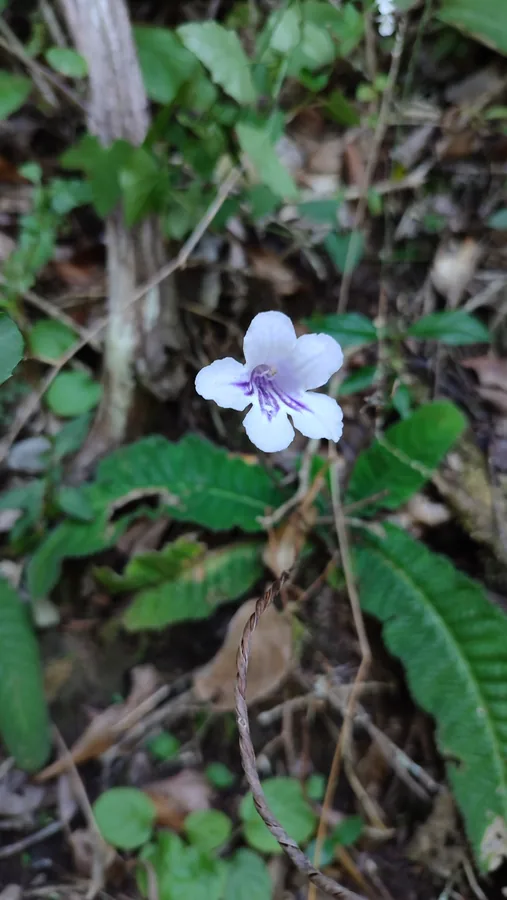
Cape primrose hails from the Gesneriad family, growing wild across the forests and rocky slopes of South Africa, from Cape Province up into KwaZulu-Natal. A rosette of long, strappy leaves anchors it, and slender stems shoot up from that low mound bearing trumpet-shaped flowers. As a houseplant it keeps small and neat, so finding it a windowsill or shelf takes no effort.
Its real draw is staying power. Given good light and steady warmth it can bloom for much of the year, not merely one spring flush. The flowers arrive in violets, blues, pinks, and whites, frequently marked with darker veining or a contrasting throat.
It lives up to its name as an easy plant. Mostly it asks you to ease up on the watering can, since wet feet are the single slip that does real damage. Hand it bright light clear of direct sun, let the surface dry between drinks, and it pays you back with months of flowers.
Care
The short version: bright indirect light clear of harsh sun, water only after the surface has dried and never leave it standing in water, plant it in a free-draining mix at room temperature, and feed it a high-potash food right through the growing season.
Light
Hand Cape primrose bright but indirect light, the sort of spot near a window where the sun never lands on the leaves head-on. It manages medium light and even part shade, yet harsh midday sun scorches the foliage. An east or north-facing sill suits it nicely.
Water
Here's where most plants slip away, so tread gently. Let the top of the compost dry before the next drink, roughly every 5 to 10 days through the growing season, and water sparingly in winter once the mix is dry. Keep water off the leaves and never park the pot in a saucer.
Soil
Reach for a fertile, free-draining mix, say a peat-free houseplant or multi-purpose compost. Humus-rich and moisture-holding earns its keep, but it has to drain freely. Skip moisture-control composts, which stay far too wet for these roots.
Temperature
Plain room warmth keeps it happy, ideally between 55°F and 75°F (13°C to 24°C). It hates cold draughts and sudden chills, so steer it clear of a frosty window come winter.
Humidity
Average household humidity does the job, so there's no figure to chase. It enjoys a slightly damper corner than a dry, heated room, yet good airflow matters more than misting, which can usher mould onto the flowers.
Feeding
Feed it every two weeks from spring to early autumn with a high-potash food at half strength, or a specialist streptocarpus feed, which drives more flowers. A balanced houseplant fertilizer offered less often pulls its weight too. Cut the feed through the winter rest.
Pruning
Pinch out faded flowers as they fade to keep new blooms arriving and stop the plant setting seed. Once the main flush passes, cut a mature plant back and let it rest dormant for up to about three months, easing off the water and dropping the feed.
Repotting
Repot in spring only when it calls for it, and step up just one pot size at a time, since this plant flowers harder when its roots run a touch snug. Roots packing the pot, slowing growth, or compost that dries out almost on contact all flag that the moment has come.
Size & spacing
Cape primrose holds compact, climbing to about 8 to 18 inches (20 to 46 cm) tall and fanning out roughly 12 to 18 inches (30 to 46 cm) wide. That neat footprint makes it a breeze to slot onto a windowsill or a shelf with room for the leaves to spread.
Troubleshooting
Nearly every Cape primrose hiccup tracks back to water or air, and it shows up on the leaves first. Spot the early signs and the fix comes quick. Match what you're seeing below, then move before it spreads.
Mushy leaves or a crown that buckles inward
Blame crown and root rot, and blame too much water rather than too little. Soggy compost or a pot parked in a brimming saucer turns the leaf bases to mush and the plant folds in from its center. Snip away the spoiled foliage, hold off until the mix dries before the next drink, and pour out the saucer so the roots can pull in some air.
Fix:
- Remove affected foliage with a clean cut
- Allow the compost to dry before watering again
- Empty any standing water from the saucer and improve drainage
Faded, speckled leaves with critters you can spot
Sap-sucking pests have moved in, and the regular cast runs to aphids, mealybugs, thrips, or spider mites. Flip a leaf and they crowd the undersides, sometimes trailing fine webbing or leaving little white cottony tufts behind. Rinse or wipe a small flare-up straight off, switch to an insecticidal control if they keep returning, and shift the plant away from its neighbors to halt any spread.
Fix:
- Wipe off or rinse away light infestations
- Treat persistent pests with an appropriate insecticidal control
- Isolate the plant to prevent spread
Grey fuzzy mould creeping over leaves or blooms
That fuzzy grey film is botrytis, a mould that grabs hold where the air sits cool, damp, and motionless. It lands first on spent flowers and worn-out foliage. Strip off whatever it has touched, get the air moving around the plant, and keep water off the leaves so the spores find no damp landing pad.
Fix:
- Remove and dispose of affected plant parts
- Improve air circulation around the plant
- Avoid overhead watering and reduce humidity around foliage
Toxicity
Great news for a home full of animals: Cape primrose is safe. The ASPCA marks it non-toxic to cats, dogs, and horses, and nothing in it is known to poison other household pets. A stray nibble does no harm, though it's not a plant grown for the table.
Safe for
People · Cats · Dogs · Horses · Rabbits · Livestock · Birds
Cats None
The ASPCA marks Cape primrose as non-toxic to cats, so a curious nibble brings no harm.
Dogs None
Dogs can share a room with this one without worry, since the ASPCA puts it on its non-toxic list.
Horses None
Horses get the all-clear too, one of the three animals the ASPCA tested head-on.
Rabbits Safe
This plant carries no known toxic compounds, so a stray mouthful poses no real risk to a rabbit.
Livestock Safe
Kept indoors as a houseplant, it seldom crosses paths with farm animals, and nothing in it is known to poison them.
Birds Safe
Pet birds can perch nearby with no fuss, since the plant holds no recognized toxins.
People Safe
It's safe to handle freely, though it isn't grown for eating and belongs off the plate.
Varieties
Most Cape primrose you'll come across are hybrids, yet two species stand behind them all and earn knowing by name.
Streptocarpus rexii
The original species ranging from Cape Province to KwaZulu-Natal, sporting long strappy leaves and trumpet-shaped flowers, and standing as the parent behind most modern hybrids.
Streptocarpus saxorum
A trailing, tighter-growing species with small fleshy leaves and pale violet-blue flowers that slips happily into life as an easy houseplant.
How to propagate
Cape primrose ranks among the most rewarding plants to multiply, whether you slice up a single leaf or split a crowded clump.
Leaf cuttingsEasy
Spring to early summer · New plantlets develop in about four to six weeks
Streptocarpus roots eagerly from leaf cuttings, and one leaf can become several plants. Slice across a healthy leaf at roughly 5 cm (2 in) intervals and stand the sections upright in a free-draining mix of compost and grit. Take them in spring to early summer and fresh plantlets push up in about four to six weeks.
DivisionEasy
After flowering · A few weeks to establish
When a clump turns crowded, you can split it into several plants. Tackle it once flowering has wrapped up, tease the roots apart into rooted sections, and each piece roots back in over a few weeks.
Myths
Cape primrose and African violet are two names for the same plant.
Both belong to the Gesneriad family and want much the same care, which kicks off the confusion. Yet Cape primrose is the strappy-leaved Streptocarpus topped with trumpet flowers, while the African violet is a separate plant, Streptocarpus ionanthus, wearing rounded velvety leaves.