Houseplant · Araceae
Alocasia 'Polly'
Alocasia × amazonica 'Polly'
Hand it warmth, humidity, and bright indirect light, and the African mask plant fires back with bold arrowhead leaves.
Bright indirect
USDA 10–12
1–4 ft · 0.3–1.2 m
Overview
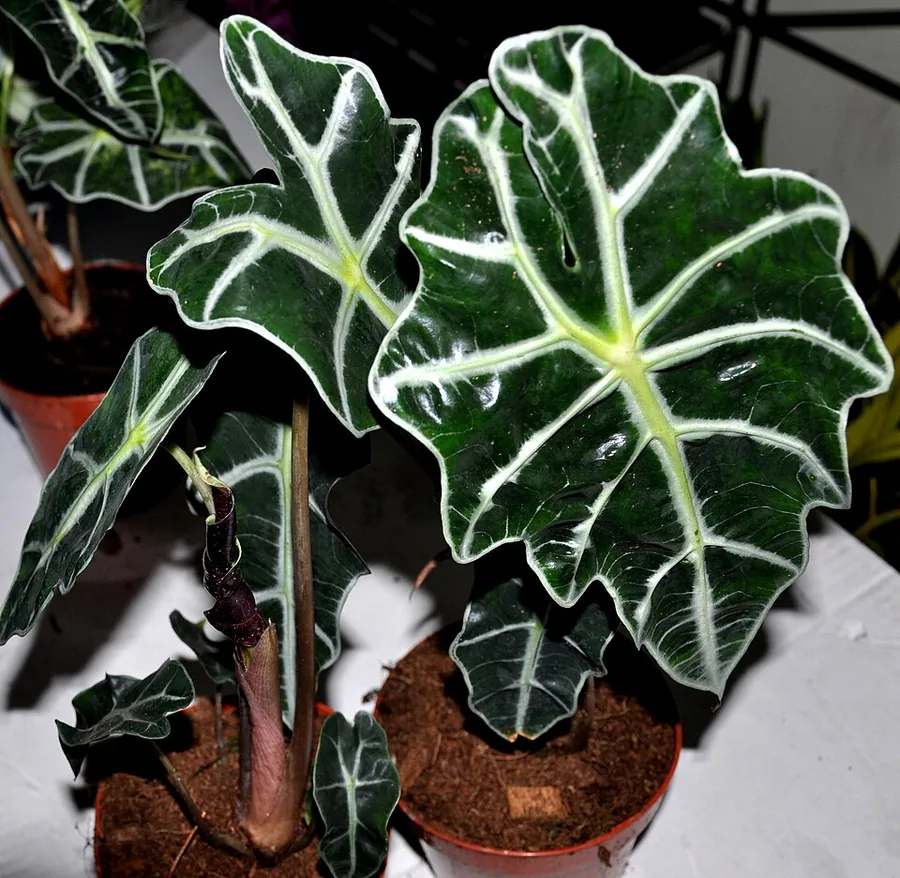
Sold far and wide as the African mask plant, Alocasia 'Polly' earns its keep on foliage alone, not flowers. Every leaf unfurls into a glossy arrowhead in deep bronze-green, rimmed with a soft wave and streaked by thick white veins that practically jump off the leaf. It stays compact at about 2 feet tall, so it makes a punchy pick for a bright corner or a busy plant shelf.
This indoor-bred member of the Araceae family thrives in the warm, humid, bright setup its tropical parents loved. That does ask a bit more attention than your average houseplant, and it pays you straight back when you deliver. It craves steady moisture without ever sitting wet, air damper than most rooms, and warmth all year, so scout the right spot before it comes home and growing it gets a whole lot easier.
The quirk that trips up newcomers is its winter rest. As the light drops off, the plant downshifts into semi-dormancy and can shed nearly every leaf, looking done for. It is anything but. Ease off the water, keep it warm, and it rockets out new foliage the moment spring rolls in.
Care
The short version: hand it bright indirect light, soil kept evenly moist but never soggy, steady warmth above 60°F (15.6°C) all year, and air a notch more humid than most rooms. Through winter, dial the water right back while it rests.
Light
Park it in bright, indirect light, like the glow near an east window or a step back from a sunnier one. It shrugs off a little partial shade or gentle sun, but harsh direct rays scorch the leaves and deep shade leaves it pale and leggy.
Water
Keep the soil evenly moist but never soggy all through the growing season, letting the surface dry a touch before the next drink. Slam the brakes on watering in winter while it rests, because the fastest way to kill it is to leave it sitting wet, which rots the roots and stem.
Soil
Pot it into rich, loamy soil that holds moisture yet drains freely, packed with organic matter. It plays easy with acidity, happy anywhere from pH 5.5 to 7.5, but it will never forgive a mix that stays waterlogged.
Temperature
Warmth counts all year long. Keep it above 60°F (15.6°C) and clear of cold drafts and icy windows. Drop below about 50°F (10°C) and it dives into early dormancy and can take damage.
Humidity
This high-humidity tropical answers dry indoor air with brown, crispy leaf edges, so pile on the moisture. Boost the humidity around it with a humidifier, a pebble tray, or a cluster of plants, and steer it clear of heating vents.
Feeding
Feed it a balanced houseplant fertilizer across spring and summer while it is charging out new growth. Cut it off entirely in winter, when the plant rests and has no use for it.
Pruning
Snip off any yellowed, damaged, or spent leaves right at the base the moment they show. As winter closes in indoors, you can cut it back to the top one or two leaves as it powers down into dormancy.
Repotting
Bump it up a pot every 1 to 2 years, or sooner once roots circle the pot, offsets crowd the surface, or the soil dries out unusually fast. Keep it potted year-round rather than lifting and storing it as a bare corm.
Overwintering
Bring it indoors ahead of the first fall frost and expect it to drop into semi-dormancy, often shedding leaves. Keep it on the drier side, cut back to a leaf or two, and fire watering and feeding back up when growth returns in spring.
Size & spacing
Indoors it stays compact, standing 1 to 4 feet (30 to 120 cm) tall with a spread of 12 to 24 inches (30 to 60 cm). Give it elbow room so it can fling its leaves out without bumping a shelf or its neighbors.
Troubleshooting
Nearly every snag with this plant traces to water, dry air, or a pest dropping by, and all of them turn around fast. Scan the leaves and the stem base often, because they flag trouble early, whether you are overwatering, the air has dried out, or a bug has moved in. Match what you spot below and jump on it before it spreads.
Droopy foliage over a squishy, softening stem base
A wilting plant with a soft, squishy stem base has slipped into root and stem rot, and quick action turns it around. The trouble nearly always traces to overwatering or soil that traps water, which rots firm white roots into brown slime and softens the stem. Down tools on the watering can, pop the plant out of its pot, snip away every rotted root, and replant it into fresh, free-draining mix in a pot that drains.
Fix:
- Stop watering and allow the soil to dry appropriately
- Remove the plant, cut away rotted roots/tissue, and repot into fresh, well-drained mix
- Ensure the pot has drainage and discard standing water
Stippled, web-covered foliage with sticky film or white fluff
Sap-feeding pests have crashed the party, but they clear out fast once you catch them. Fine webbing over pale flecks flags spider mites, the ones that thrive in dry air; fluffy white tufts wedged into the leaf joints are mealybugs, and soft bugs clumped together under a sticky coating are aphids. Blast the foliage with a rinse, wipe the pests away, follow up with insecticidal soap or horticultural oil, and keep the plant solo until every last one is gone.
Fix:
- Rinse foliage and wipe off pests
- Treat with insecticidal soap or horticultural oil, repeating as needed
- Isolate affected plants to limit spread
Leaves dropping as the days get shorter
Hold off on the panic, because this is winter semi-dormancy and the plant is simply taking a breather. Shorter days and a cooler room send it into a rest, leaves fall away, and yet the rhizome stays firm and ready below the soil. Cut the watering right back, leave a leaf or two standing, park it somewhere warm and bright, and watch it surge back with fresh growth the moment spring watering kicks in.
Fix:
- Reduce watering and keep the plant on the drier side while semi-dormant
- Cut back all but the top one or two leaves
- Keep in a warm, bright location and avoid cold drafts
- Resume regular watering and fertilizing when growth resumes in spring
Crispy brown rims on leaves that keep a green middle
Crispy brown edges hugging a still-green center shout dry air, and this high-humidity tropical hates a parched room. The damage flares near heat vents and through winter, once indoor air dries right out. Chase it off fast: crank the humidity with a humidifier, a pebble tray, or a tight huddle of plants, keep the soil evenly moist, and slide it clear of drafts and radiators.
Fix:
- Raise ambient humidity (group plants, use a humidifier or pebble tray)
- Keep soil evenly moist during active growth
- Move away from heating vents and cold drafts
Toxicity
Striking as it is, this plant packs a genuine toxic punch. Every part is loaded with insoluble calcium oxalate crystals, tiny sharp needles that sting the mouth and throat the instant they are chewed, and the sap can leave bare skin irritated. Keep it well clear of pets, livestock, and children, and wash your hands after handling it.
Toxic to
Cats · Dogs · Horses · Rabbits · Livestock · Birds · People
Cats Moderate
One bite and a cat hits an instant burning mouth from the calcium oxalate crystals. Heavy drooling, pawing at the face, vomiting, and a struggle to swallow follow quickly.
Dogs Moderate
A dog that chews any part runs straight into sharp oral pain, drooling, and vomiting almost at once. The mouth, tongue, and lips can puff up and make swallowing tough.
Horses Moderate
Those same crystals fire up a horse's mouth and throat, leaving it drooling with sore, swollen lips and tongue. Horses cannot vomit, so the discomfort just lingers until it passes.
Rabbits Toxic
For a rabbit the crystals turn these leaves into a painful mouthful, kicking off mouth irritation, drooling, and a flat refusal to eat. Keep the plant well out of reach.
Livestock Toxic
Cattle, goats, and sheep that browse the foliage land a burning mouth, heavy salivation, and a swollen, painful tongue. The irritation drives them off their feed.
Birds Toxic
A nosy bird that pecks at the leaves runs into the same stinging crystals, with mouth irritation and drooling the likely outcome. There is nothing to gain from letting a bird near it.
People Caution
Nothing on this plant belongs on a menu. One chew fires a fierce sting through mouth and throat, and even the sap can redden and itch bare skin, so scrub your hands after touching it and park the pot well out of reach of small children.
All parts contain insoluble calcium oxalate crystals; sap can cause contact dermatitis. Wash hands after handling and keep away from pets and children
Helpline numbers

United States
ASPCA Animal Poison Control: (888) 426-4435 (fee applies)
Poison Control: (800) 222-1222



Canada
Poison Centres: 1-844-764-7669
Varieties
What reaches the shop as 'Polly' is a single cultivar of one hybrid, and every so often a close cousin sharing the same parentage shows up. Here are the names worth tucking away.
Alocasia × amazonica 'Polly'
This is the compact crowd-favorite, shooting up to about 2 feet tall with leathery wavy-edged arrowhead leaves in dark bronze-green and bold white to silver veins that pop.
Alocasia × amazonica 'Boa'
Another named form of the same hybrid, logged in the Missouri Botanical Garden Plant Finder right beside 'Polly'.
How to propagate
Skip the seed packets for this one. The fun, fast route to more plants is to split it up, cashing in on the pups it gathers around its base, and the easiest moment to do it is at repotting time in the warmer months.
DivisionModerate
Spring to summer, at repotting · Several weeks
The most satisfying way to multiply this plant is to divide it as you repot in spring or summer. It grows from a rhizome and throws out little pups around the base, so tease the clump apart and pot up each chunk with roots of its own. Give the divisions several weeks of warmth and steady moisture to dig in before new growth charges ahead.
Offsets & pupsModerate
Spring to summer · Several weeks
You can also pluck a rooted offset off the parent clump in spring or summer and grow it on in its own pot. Each pup roots and finds its feet over several weeks, so keep it warm and lightly moist while it powers up.
Myths
Once an Alocasia 'Polly' sheds every leaf in winter, the plant is finished for good.
Don't write it off just because it has dropped most or all of its leaves over winter, since that is exactly how this plant takes its seasonal rest. Tip the rootball out and squeeze the rhizome before you bin it. A firm rhizome means fresh leaves will burst out again once warmth and watering return in spring.