Houseplant · Araceae
Alocasia Zebrina
Alocasia zebrina
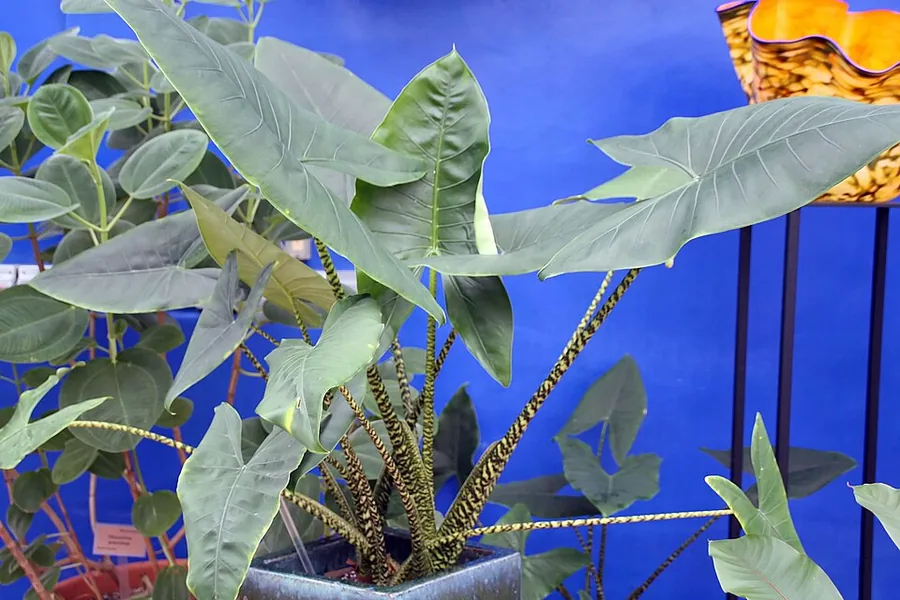
Those striped, zebra-print stems launch arrow-shaped leaves skyward and turn this houseplant into a living sculpture.
Bright indirect
68–77°F · 20–25°C
USDA 10–12
3 ft · 0.9 m
Overview
Alocasia zebrina earns its name from the striped stems that fire each glossy, arrow-shaped leaf straight up into the air. It hails from the rainforests of the Philippines and its warm, humid forest floor, and that backstory unlocks almost everything it craves indoors. Growers chase this one for its bold, sculptural shape, not for any flowers.
It wears a reputation as a demanding plant, and yes, that reputation sticks. Zebrina fusses over water, drinks in humid air, and sulks the second its roots sit wet. Hand it bright indirect light and a steady touch with the watering can, though, and it takes off fast, firing out fresh leaves all spring and summer before it powers down for a quiet winter rest.
One thing to lock in before it moves in: every part of the plant is toxic to pets and people, thanks to the calcium oxalate crystals packed through its tissue. It is a knockout of a plant that earns a smart, lifted spot, well clear of cats, dogs, and small children.
Care
The short version: bright indirect light, humid air, and warmth between 68°F and 77°F (20°C to 25°C). Let the top half of the soil dry before the next watering, ease off in winter, and never leave the roots sitting wet.
Light
Hand zebrina bright indirect light, the bright glow near a window that never throws direct midday sun onto the leaves. It will scrape by in partial shade or medium light, but the stems stretch and go weak when it does. Direct sun torches the foliage, so drop a sheer curtain over a hot window to take the bite off.
Water
Hold off until the top half of the soil dries out, then water it thoroughly and let it drain right through. This plant despises wet feet, and overwatering is the fastest track to rotted roots and spotted leaves. Once winter rolls in and it rests, throttle the watering way back, since it barely drinks.
Soil
Reach for an organically rich, well-draining mix that grips a little moisture but never bogs down. The genus shrugs at texture and happily takes clay, loam, or sand, and it cruises across a wide pH from 5.5 to 8.0.
Temperature
Keep it toasty, between 68°F and 77°F (20°C to 25°C). Zebrina is a tropical plant with zero patience for cold, so steer it clear of drafty windows and chilly rooms, and haul any plant summered outside back in well before the nights bite.
Humidity
This one craves high humidity, way past what an average room offers up. A pebble tray, a humidifier, or a bright, naturally damp bathroom all get the job done. Dry air drains the plant and basically invites spider mites to the party.
Feeding
Pour the feeding into the growing season, spring into summer, while the plant is busy firing out new leaves. A regular fertilizer on a seasonal schedule covers it nicely. Quit feeding in winter while it rests, since a sleeping plant cannot touch the nutrients anyway.
Pruning
There is barely any pruning to chase here. Just clip off any dead, yellowing, or damaged leaves as they crop up, snipping them right at the base. Clearing the tired old foliage keeps the plant sharp and strips away the little nooks pests love to hide in.
Repotting
No set schedule exists for zebrina, so let the plant call it and repot once it outgrows its pot or the mix wears out. Bumping it into a slightly bigger pot in spring, right as growth fires up, hands the roots the smoothest start.
Overwintering
Treat zebrina as a year-round indoor plant, basically a standard houseplant. If yours summered outside, get it back in ahead of the first fall frost, then keep it cool, around 60°F to 65°F (16°C to 18°C), keep the air humid, and water it lightly while it rests through winter.
Size & spacing
Indoors it climbs to about 3 feet (91 cm) tall and roughly that wide, so hand it floor or table space where the arching leaves and tall stems can stretch out without bumping into things.
Troubleshooting
Nearly every zebrina hiccup tracks back to water or light, which is great news since both are quick to dial in. Read the leaves and stems early, and since one symptom can swing two ways, a fast poke at the soil usually settles it.
A mushy base and a droop in soil that stays soaked
A plant that flops in soil that never dries is fighting root rot from too much water, so jump on it fast. Tip it out and feel the roots: firm and white means good, soft and brown has to go. Snip the bad roots away, settle it into fresh airy mix, dial back the watering, and pick a pot that drains in a hurry.
Fix:
- Reduce watering frequency
- Repot into fresh, well-draining mix and remove rotted roots
- Ensure the container drains freely
Stems shooting up long and leaning at the window
Long, floppy stems that lean hard toward the glass mean the plant is chasing more light. Shift it to a brighter spot with bright indirect light and watch it firm back up. Spin the pot a quarter turn each week so it grows up straight and even instead of lopsided.
Fix:
- Move to a brighter spot with bright indirect light
- Rotate the plant periodically for even growth
Tiny webs and a speckled, dull cast on the leaves
Dry air rolls out the welcome mat for spider mites, which speckle the leaves and string thin webs underneath. Hit back fast: rinse the foliage, crank up the humidity around the plant, and treat with insecticidal soap or horticultural oil straight off the label. Pull the plant away from the rest of the gang for a bit so the mites cannot wander.
Fix:
- Rinse foliage and increase humidity
- Treat with appropriate insecticidal soap or horticultural oil per label
- Isolate the plant to limit spread
Sticky goo and bugs bunched on the stems
Fuzzy white cotton means mealybugs, while bunched-up little soft-bodied bugs mean aphids, and both leave a tacky honeydew that gives the game away. Wipe them off and treat with insecticidal soap or horticultural oil per the label. Park the plant on its own and keep treating until every last one is gone.
Fix:
- Wipe off insects and treat with insecticidal soap or horticultural oil per label
- Isolate the plant and repeat treatment as needed
Dropping leaves and a winter slowdown
Shedding a few leaves and easing off the gas in the cold months is just winter rest kicking in, not a crisis, especially when the rhizome still feels firm. Back off the watering, skip the heavy feeding, and keep it warm and bright. Come spring it roars back and starts cranking out new leaves all on its own.
Fix:
- Reduce watering and stop heavy feeding during dormancy
- Keep the plant warm (cool but not cold) and in good light
- Resume normal care as growth restarts in spring
A leaf going yellow
A yellow leaf usually points straight at watering, though a dim spot can trigger it too. Here is the catch: too much water and too little look identical on a leaf, so feel the soil before you change a thing. Keep it evenly moist but never soggy, and slide the plant into the bright indirect light it loves.
Fix:
- Adjust watering to keep soil evenly moist but not saturated
- Correct light levels to bright indirect light
Toxicity
Make no mistake, this plant is genuinely toxic. Every part is loaded with needle-like calcium oxalate crystals that scorch the mouth and throat the instant anything chews them. Keep it well clear of pets and kids, and get in the habit of washing your hands the moment you finish handling it.
Toxic to
Cats · Dogs · Horses · Rabbits · Livestock · Birds · People
Cats Moderate
A cat that chomps a leaf bites right into a load of needle-sharp oxalate crystals, so drooling, pawing at the mouth, and a sore, puffed-up tongue and lips come quick. Vomiting and trouble swallowing usually pile on next.
Dogs Moderate
Dogs land in the same boat as cats. The mouth, tongue, and lips swell and sting within minutes of a chew, then heavy drooling, vomiting, and a hard time swallowing follow right behind.
Horses Moderate
Those same crystals leave a horse with a sore, swollen mouth and lips, loads of drool, and a real struggle to swallow. Horses cannot throw up, so all that misery just hangs around in the mouth and throat.
Rabbits Toxic
The oxalate crystals scorch a rabbit's mouth and gut the same way they hit any grazer, so a nibble is a flat no. Keep this one parked well out of reach of a loose rabbit.
Livestock Toxic
Cattle, goats, and sheep that munch the leaves end up with that same burning, swelling mouth, plus drooling and a hard pass on eating. Fence it off anywhere stock could get a bite.
Birds Toxic
A nosy bird that pecks a leaf catches the same fierce oxalate sting on its beak and in its mouth. There is no safe bite to hand over, so keep it well clear of companion birds.
People Caution
Nobody should be eating any part of this, and one bite sets off a fast burning, swelling feeling in the mouth and throat. The sap can bother skin and eyes too, so wash up after handling and keep it away from little kids.
Sap and chewed tissue release needle-like calcium oxalate raphides; keep away from pets and children and wash hands after handling
Helpline numbers

United States
ASPCA Animal Poison Control: (888) 426-4435 (fee applies)
Poison Control: (800) 222-1222



Canada
Poison Centres: 1-844-764-7669
How to propagate
Zebrina will not root from a cutting like so many houseplants do. To build your collection, divide the rhizome and break off the eager young pups it keeps sending up.
DivisionModerate
Spring to summer · Several weeks
Want a whole crew of these? Skip the cuttings and divide instead. Through spring or summer, ease the plant out and split off the little pups marching along the rhizome or corm, then pot each one up solo. Give the divisions several weeks to dig in and root before they start pushing fresh leaves.
Myths
All elephant ears are the same plant, so grabbing any one for the yard works out fine.
That one name actually spans several genera, and they do not all act the same. UF/IFAS points gardeners toward ornamental Alocasia over the invasive elephant ears Colocasia esculenta and Xanthosoma sagittifolium, and says to keep any of them clear of natural waterways. Nail down exactly which plant you have before it ever hits the soil.