Houseplant · Gesneriaceae
Goldfish Plant
Nematanthus gregarius
Give it bright filtered light and steady warmth, and the goldfish plant throws out arching stems strung with little orange blooms.
Bright indirect
50–81°F · 10–27°C
USDA 10–11
4–20 in · 10–50 cm
Overview
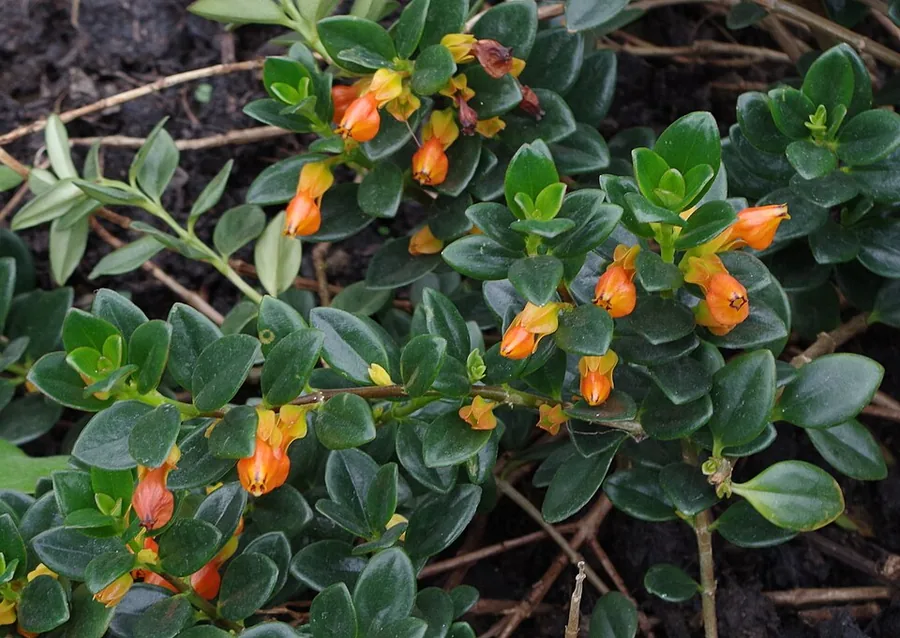
The goldfish plant wins its name from those pouched orange flowers, each one curved and puffed like a tiny fish darting through the foliage. It hails from the rainforests of southeast Brazil, where it grows as an evergreen that spills over branches instead of standing tall. Bring it home and it turns into a fun, easygoing trailing plant that shines in a hanging basket or up on a high shelf.
Glossy dark green leaves race along the arching, trailing stems, and the flowers pop through summer against all that green. It keeps things compact, climbing to maybe 4 to 20 inches (10 to 50 cm) tall while fanning out wider as the stems stretch. That trailing habit is the real draw, so hand it a spot where the stems can tumble over an edge.
Best of all, it barely asks for anything. Bright indirect light, warmth, and humid air keep it thriving, and a quick pinch after flowering keeps it full instead of leggy. Pet owners get to join the fun too, since every part of this plant is safe around cats, dogs, and other animals.
Care
The short version: hand it bright filtered light out of harsh sun, warmth, and humid air. Keep the peat-free mix moist while letting the surface dry a touch between waterings, feed monthly through the growing season, and pinch the stems back once the flowers fade.
Light
Park it near a window in bright, filtered light, but keep it clear of harsh direct sun, which scorches the leaves. An east- or west-facing spot really suits it, and a south window works behind a sheer curtain. Skimp on light and it keeps trailing but drops the flowers.
Water
Keep the mix moist but well drained, and let the top inch or so dry before you water again. Reach for soft water, since it turns up its nose at the salts in hard tap water. Dial it back in winter when growth slows.
Soil
Set it up in a loam or sand-based, peat-free mix that grips moisture yet drains freely. It shrugs off pH fussing across a wide band of 5.5 to 7.5, so slightly acidic through neutral all keep it cruising.
Temperature
Warmth fuels the growth, ideally between 50°F and 81°F (10°C to 27°C). It will not take a chill, so hold it well above 50°F (10°C) and steer it away from cold drafts and frosty windowpanes.
Humidity
This rainforest plant runs on high humidity. Let the air dry out and the leaves sag while the buds stall, so bunch it with other plants, sit it on a pebble tray, or fire up a humidifier nearby.
Feeding
Feed it monthly through spring and summer while it powers through active growth, using a balanced dilute liquid houseplant fertilizer. Ease off over the cooler months when growth takes a breather.
Pruning
Pinch the stems back after flowering to keep it bushy and stop it going bare and leggy at the base. It stays low maintenance otherwise, and the trimmings root fast into brand new plants.
Repotting
Bump it up a pot size every 2 to 3 years, or the moment it outgrows its container. This slow to moderate grower takes about 2 to 5 years to hit full size, so it seldom needs stirring. Roots circling the drainage holes or soil that drains dry in a flash are your cue.
Size & spacing
Look for a compact plant, 4 to 20 inches (10 to 50 cm) tall, with stems trailing out to a spread of 1.5 to 3 feet (50 to 100 cm). Hang it or perch it high so the stems get room to cascade.
Troubleshooting
A goldfish plant keeps the drama low. On the rare day something slips, it flags it on the leaves or by skimping on flowers. Match what you see below, make the fix, and get it climbing back to full form.
Sticky leaves and tiny bugs piling onto the fresh growth
Spot sticky leaves and little clustered bugs and you have caught aphids early, which is exactly when they are easiest to beat. That tacky coating is honeydew they leave as they feed. Blast the colony off with a stream of water, hit the plant with insecticidal soap, and keep after them until they clear out. Pull it away from your other plants while you work, and you will have it back on track fast.
Fix:
- Rinse plant with a stream of water to dislodge aphids
- Apply insecticidal soap to affected areas, repeating as needed
- Isolate the plant from other houseplants until controlled
Great foliage that just will not flower yet
A leafy goldfish plant that holds back its flowers is almost always begging for more light, and that is a quick win. Shift it to a brighter spot with bright, filtered light near a south, east, or west window, keeping it clear of the harsh midday sun. Then pinch after each flush to drive bushier, more flower-packed growth, and watch it reward the effort.
Fix:
- Move to a brighter spot with bright, filtered light (e.g., near a south-, east-, or west-facing window out of harsh direct sun)
- Pinch after flowering to encourage bushier, flowering growth
Toxicity
Here is the part animal lovers will cheer: the goldfish plant is safe. Both the ASPCA and NC State Extension list it as non-toxic, so a curious nibble will not poison a pet. The worst on the table is a bit of mild stomach upset from eating any houseplant, and even that clears on its own.
Safe for
People · Cats · Dogs · Horses · Rabbits · Livestock · Birds
Cats None
Great news for cat lovers: the ASPCA marks this plant non-toxic to cats. Even if a curious one goes to town on the leaves, the worst it earns is a quick, passing bout of stomach upset.
Dogs None
Dogs get the all-clear too, with the ASPCA rating the goldfish plant non-toxic to dogs. A big enthusiastic mouthful might bring some mild, short-lived tummy trouble, and that is the whole story.
Horses None
Horses land on the safe list as well, since NC State Extension calls the plant non-toxic to horses, so a grazed leaf is a total non-event.
Rabbits None
A rabbit runs no risk from this plant, since it packs no toxins. Just roll any new green in slowly, in small amounts, so the gut keeps pace.
Livestock None
This tender indoor grower barely ever meets livestock, and it carries no compounds that could harm a grazing animal anyway.
Birds None
Pet birds are safe around it, with zero toxic parts to worry about if one takes a nibble.
People None
People are covered as well, with no poisoning risk at all. Nobody grows it to eat, but a child who tastes a leaf comes to no harm.
Varieties
The plain species leads the pack, but a couple of variegated forms surface for anyone eager to grow something with patterned foliage.
'Golden West' (variegated)
This RHS-recognized variegated selection flashes dark leaves brushed with creamy markings, delivering a fun two-toned look.
'Variegatus'
Another RHS-listed variegated form to chase down, grown for its patterned leaves instead of the plain green of the species.
How to propagate
The goldfish plant multiplies with ease, and stem cuttings hand you a run of new trailing plants for the price of a little patience.
Stem cuttingsEasy
Spring · Several weeks to root; reaches full size in about 2-5 years
Grab your snips and take softwood stem-tip cuttings in spring, the method both the RHS and NC State Extension back. They root over several weeks, and then the young plant powers up at its own pace, reaching full size in about 2 to 5 years, so a whole collection is within reach.
Myths
The goldfish plant is poisonous to cats and dogs and has to be kept away from pets.
Toss that worry out. The ASPCA lists it as non-toxic to cats and dogs, and NC State Extension piles horses onto the safe list too. Keep it around your pets and grow it freely, since the worst a nibble does is the same mild stomach upset any houseplant can cause.