Shrub · Malvaceae
Rose of Sharon
Hibiscus syriacus
Plant it in full sun with room to stretch, and watch this tough shrub pump out color from midsummer clear into fall.
Full sun
Every 7–14 days
USDA 5–9
8–12 ft · 2.4–3.7 m
Overview
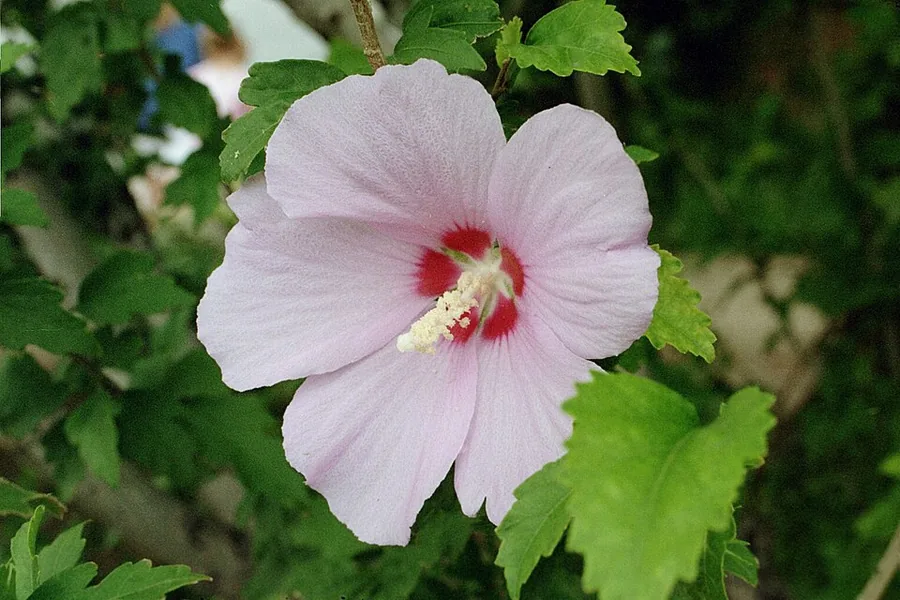
Rose of Sharon keeps flowering long after the rest of the garden has thrown in the towel, and that alone earns it a spot. This upright deciduous shrub from the mallow family opens fresh, hibiscus-shaped blooms in wave after wave from June into October. Take your pick of white, pink, lavender, or a knockout violet-blue, and most of them flash a contrasting eye at the throat for good measure.
Better still, it just refuses to sulk. Once the roots dig in, it powers through heat, humidity, drought, and poor soil, and it shrugs off winters down to -20°F (-29°C). It grows fast and shoots up to 8 to 12 feet (2.4 to 3.7 m), so it fills in a screen or anchors the back of a border in a hurry.
One thing to stay on top of: this shrub scatters seed with real gusto, enough to land it on the invasive list in a few states, and volunteers pop up fast. Want the long bloom without chasing seedlings? Reach for a sterile cultivar like Diana and keep all the color, none of the sprawl.
Care
The short version: drop it in full sun and well-drained soil, keep the water coming through its first season or two, then cut it back hard in late winter and let it rip through the late-summer show.
Light
Hand it full sun and it flowers its heart out, though it still performs in partial sun or light afternoon shade. The math is simple: pile on the sun and you rack up the blooms, so pick the brightest, most open spot going.
Water
Keep young plants watered regularly and soak them deep so the roots chase the moisture down. Give it a season or two and it turns genuinely drought tolerant, cruising on medium moisture and rainfall unless a real dry spell rolls in.
Soil
It grows just about anywhere, digging into average, well-drained ground at almost any pH and even powering through poor sites. The only deal-breaker is drainage, since wet roots are one of the few things that can trip it up.
Temperature
This one is built to last, taking on a huge range from around -20°F to 100°F (-29°C to 38°C). It laughs off summer heat and humidity and barrels through hard winters without any help from you.
Humidity
Skip the humidity worries, because regular outdoor air does the job. What really counts is air movement, so keep things open and breezy to head off the leaf spots and rusts it can otherwise pick up.
Feeding
It barely asks to be fed in decent soil, so keep it light. One shot of balanced general-purpose fertilizer in spring covers it, and loading up on nitrogen only pushes soft growth that aphids swarm.
Pruning
Since it flowers on new wood, grab the pruners in late winter or early spring before growth kicks off. Cut the stems back hard to 2 or 3 buds and you swap a few blooms for noticeably bigger ones, shaping the whole shrub as you go.
Repotting
In a pot, it rarely needs a bigger home. Bump it up only when you catch roots circling or bursting out the drainage holes, water blasting straight through, or growth grinding to a halt.
Size & spacing
Clear some space, because this fast grower rockets to 8 to 12 feet (2.4 to 3.7 m) tall and spreads 6 to 10 feet (1.8 to 3 m) wide. Give it that room and air rips through the canopy, keeping the leaves dry and trouble at bay.
When to plant
Rose of Sharon plays a long game and saves its best for the back half of the season, leafing out late in spring and firing off flowers from June into October. Get new plants in the ground in spring after the last frost, or in early fall, and time the pruning for late winter before the buds wake up.
Northern hemisphere
Southern hemisphere
Typical months for a temperate climate: start earlier in warm zones, later where spring frosts linger.
- Sow: late winter to early spring (8-10 weeks before last frost)
- Plant: spring after last frost, or early fall
- Harvest: June to October (mid to late summer)
Hardiness
USDA hardiness zones: 5–9
Temperature: down to -29°C
Troubleshooting
Here's the fun part: this shrub barely gets sick, and whatever does turn up is almost always cosmetic. It shows on the leaves and buds first, so a quick scan every so often through summer catches it early and keeps you ahead of it.
Leaves chewed to lace all summer long
Lacy, chewed-up leaves mean Japanese beetles have moved in, ganging up on warm days and stripping the tissue between the veins. Beat them to it: hand-pick them in the cool of early morning and drop them in soapy water. Leave the pheromone traps on the shelf, though, since they haul in more beetles than they ever catch.
Fix:
- Hand-pick beetles in early morning and drop into soapy water
- Avoid pheromone traps that attract more beetles
- Treat heavy infestations with an appropriately labeled insecticide following directions
Curled, sticky tips taking over the new growth
Sticky, curled new shoots usually mean aphids, sometimes with whiteflies crashing the party, piling onto the tender growth and coating it in honeydew that can blacken with sooty mold. Blast them off with a hard jet of water, then hit the holdouts with insecticidal soap. Let the lady beetles and other predators loose and they'll polish off the rest.
Fix:
- Dislodge aphids with a strong spray of water
- Apply insecticidal soap or horticultural oil to affected growth
- Encourage natural predators such as lady beetles
Buds turning yellow and bailing before they open
Buds that yellow and drop before opening are just bud drop, and it tracks back to a dry spell or uneven watering, not disease. The plant's still humming along; it only ditches buds when the roots keep flipping between wet and dry. Keep the soil evenly moist through bud set and the hot stretch, mulch to lock that moisture in, and the buds hang on.
Fix:
- Maintain even soil moisture, especially during bud set and hot weather
- Mulch to conserve moisture and buffer soil temperature
- Avoid letting the root zone dry out completely while flowering
Spotty, blotchy leaves and a cankered stem here and there
A handful of fungal leaf spots, blights, and rusts can freckle the foliage, and canker fungi sometimes carve a lesion into a stem. Wet weather and crowded, dead-still air crank all of it up. Snip off the marked leaves, cut out the cankered wood, and open the plant up so air rushes through and the foliage dries fast.
Fix:
- Remove and dispose of affected leaves and prune out cankered stems
- Improve air circulation and avoid overhead watering
- Apply a labeled fungicide only if problems are severe
Toxicity
Growing it around pets or kids? Go for it, no hesitation. Rose of Sharon is non-toxic across the board, with the ASPCA clearing it for cats, dogs, and horses, and the flowers are even edible for people. Plant it wherever the mood strikes.
Safe for
People · Cats · Dogs · Horses · Rabbits · Livestock · Birds
Cats None
Cats are in the clear. If one nibbles a leaf or flower, the most it'll get is a quick stomach upset from the roughage, and that's it.
Dogs None
The ASPCA calls it non-toxic to dogs, so a curious chew is nothing to sweat.
Horses None
Horses are good to go too, and grazing on a few leaves carries no special risk.
Rabbits Safe
Rabbits can munch the foliage without harm, though it's smart to ease any new food in slowly at first.
Livestock Safe
Nothing here troubles cattle, goats, or sheep that wander past a planting.
Birds Safe
Backyard and wild birds thrive around it, and plenty swing by the flowers for nectar.
People Safe
People are safe too, and the flowers are actually edible, great raw in a salad or steeped into tea.
No special handling precautions for toxicity; as with any plant, ingestion of large amounts of plant material may cause mild, transient stomach upset.
Varieties
This is where it gets fun, because one shrub delivers a whole spread of colors and flower forms, from crisp singles to full, ruffled doubles. Dig into the named selections below to find your favorite.
Diana
Diana fires off pure white single flowers that stay open into the evening, and as a sterile triploid it sets almost no seed.
Blue Bird (Oiseau Bleu)
Blue Bird, also tagged Oiseau Bleu, grabs attention with big single flowers in true violet-blue, each one lit by a red eye.
Minerva
Minerva rolls out soft lavender-pink blooms with a reddish-purple eye at the throat.
Aphrodite
Aphrodite packs a punch with dark pink single flowers built around a deep red center.
Red Heart
Red Heart keeps it sharp with crisp white petals circling a bold red center.
Lavender Chiffon
Lavender Chiffon piles on lavender semi-double, anemone-form flowers with an extra ruffle of inner petals.
How to propagate
Ready to make more? You've got options, and each one decides whether the new plant matches its parent. Cuttings and layering lock in the flower color, while seed keeps things exciting with a surprise or two.
Stem cuttingsEasy
Softwood cuttings in late spring to summer; hardwood cuttings in late fall to winter · Several weeks to root; transplantable the following season
Cuttings are your ticket to an exact copy, since they hang onto the parent's flower color. Snip softwood cuttings in late spring or summer, or hardwood cuttings from late fall into winter, and they root up over several weeks. Grow them on and they're ready to move the next season.
SeedEasy
Sow late winter to early spring; the species also self-seeds outdoors · Germinates in a few weeks; flowers in 2-3 years
Seed is a breeze to start but slow to pay off, and the seedlings rarely match the parent's color. Sow from late winter to early spring and they sprout in a few weeks, but you'll wait 2 to 3 years for the first flowers. Fair warning: the species self-seeds all over the place outdoors, sometimes way more than you'd bargain for.
LayeringEasy
Spring to summer · One growing season to root before separating
Layering is the lazy-genius move. Bend a low branch to the soil in spring or summer, pin it down, and it grows its own roots over a single season before you cut it free as a whole new plant.
Myths
Rose of Sharon is a poisoning risk to dogs and cats.
Not a chance. The ASPCA lists Hibiscus syriacus as non-toxic to dogs, cats, and horses, so a pet that grabs a leaf or flower is totally fine, and the flowers are even edible for people. The worst-case scenario is a quick stomach upset from wolfing down a lot of any plant.
Prune Rose of Sharon in summer or fall to crank up the flowers.
Flip that around. It blooms on new wood, the growth it throws out this season, so a summer or fall cut lops off the exact stems that were about to flower. Prune in late winter or early spring before growth begins, and cut back to 2 or 3 buds to trade a few blooms for much bigger ones.