Ornamental · Malvaceae
Hollyhock
Alcea rosea
Tall, old-fashioned spires of bloom that plant themselves once you let them go to seed.
Full sun
Every 5–7 days
USDA 3–9
5–8 ft · 1.5–2.4 m
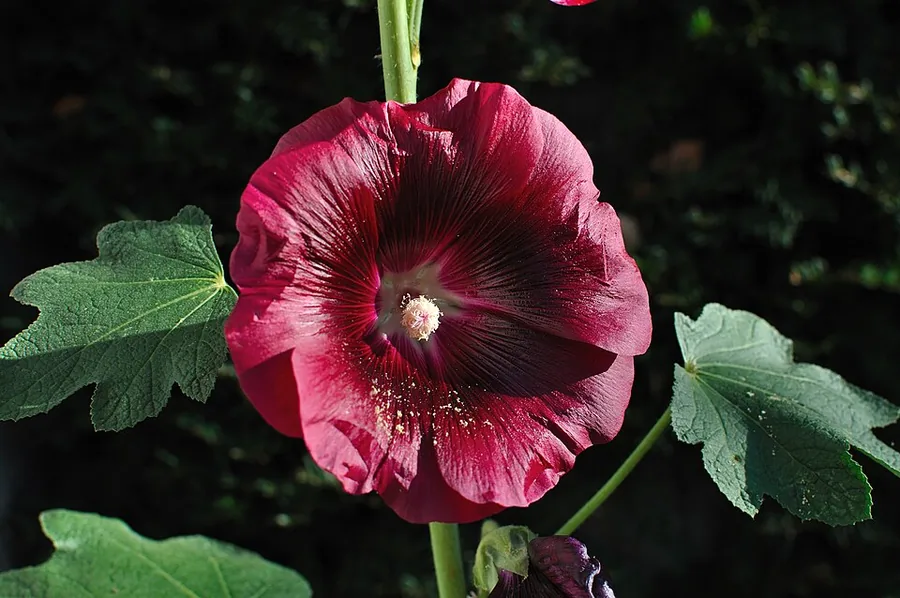
Overview
Hollyhocks are the cottage-garden classic that shoots flower spikes past 8 feet (244 cm) to line a fence or a back wall with pure summer color. They hail from the mallow family and have earned their place in dooryard gardens for generations, sending saucer-shaped blooms climbing up a single tall stalk from June through August. Grow one stand and the whole border springs to life.
That towering height might look demanding, but hollyhocks stay easy to grow. Most run as biennials, spending the first year building a low rosette of leaves and holding the flowers for year two. They pay back that slow start by self-seeding hard, so once a stand takes off it keeps itself going with barely a nudge from you.
The one challenge worth mastering is rust, a leaf fungus that chases hollyhocks nearly everywhere. Hand them full sun, room for air to move, and water aimed at the roots instead of over the top, and you will hold the worst of it back while the flowers put on their show.
Care
The short version: give hollyhocks full sun and rich, well-drained soil, keep them evenly moist by watering at the base, and space them out so air can move and rust stays down.
Light
Hand hollyhocks full sun and they flower their hardest and shoot up straight without flopping. They will take a touch of partial shade, but where light runs short the stalks stretch, lean, and bloom thinly.
Water
Keep them at average, even moisture rather than swinging the soil from soaked to bone dry. Aim water at the base with a soaker hose or drip line to keep the leaves dry, which is one of the best moves you can make to slow rust. They will not put up with wet, soggy soil over winter.
Soil
Plant them in average, rich, well-drained loam worked with some compost. They shrug off pH worries and thrive anywhere from 6.0 to 8.0, so sharp drainage counts for far more than the exact reading.
Humidity
Ordinary outdoor humidity keeps them happy, so skip chasing a number. What really counts is airflow, since still, damp air around crowded leaves is exactly what rust needs to grab hold.
Feeding
One feed in spring gets the job done. Work in compost or a balanced general-purpose fertilizer as growth kicks off, and the plants power themselves through the rest of the season.
Pruning
Cut the spent flower spikes to sharpen up the plant or to rein in self-seeding when it spreads more than you want. Just as vital, strip off and destroy any rust-spotted lower leaves and sweep up all the old debris in fall so the fungus cannot overwinter.
Size & spacing
These plants soar, hitting 5 to 8 feet (152 to 244 cm) high while holding narrow at 12 to 24 inches (30 to 61 cm) across. Give each one that full spread of room so air rushes freely between them and rust struggles to spread.
When to plant
Hollyhocks race along a two-year clock, so line up the timing and let them run. Sow the seed in late summer or start it indoors in late winter, set young plants out after the last spring frost, and the flowers burst in from June through August of the following year.
Northern hemisphere
Southern hemisphere
Typical months for a temperate climate: start earlier in warm zones, later where spring frosts linger.
- Sow: Late winter to early spring, about 8 to 10 weeks before the last frost.
- Plant: After the last spring frost once soil has warmed.
- Harvest: June through August.
Hardiness
USDA hardiness zones: 3–9
Temperature: down to -40°C
Troubleshooting
Nearly every hollyhock problem lands on the leaves, and rust is the one you will tackle first. Match what you see below, then pounce early, since most of these are far easier to head off than to cure once they spread.
Orange spots on top, rusty pustules below
Meet hollyhock rust, the one disease that tracks this plant just about everywhere it grows. Watch for yellow-orange spots on the upper leaf with raised rusty bumps sitting right beneath them, and know that the worst leaves go holey and shrivel. Jump on it: strip the marked leaves the moment they appear, aim your water at the base to keep the foliage dry, and rake up every last scrap in fall so the spores get no free ride into next season.
Fix:
- Remove and destroy symptomatic leaves early
- Clear all hollyhock debris in fall
- Water at the base to keep foliage dry
- Remove weedy mallows nearby
- Apply a labeled fungicide before symptoms appear if rust is recurrent
Leaves chewed to lace
Two summer pests turn the leaves to lace, and both are easy to outmaneuver. Japanese beetles pile in during the day and gnaw everything but the veins, while slugs raid at night and leave slime trails as proof. Sweep the beetles into soapy water at first light, and drop baits or traps wherever the slugs keep showing up.
Fix:
- Hand-pick beetles into soapy water in early morning
- Reduce nearby turf grub habitat
- Use slug baits or traps where slugs are present
Fewer blooms and pinholes in the buds
A thinning bloom points straight to the hollyhock weevil, a tiny black insect with tan legs and a long snout that parks itself on the buds and open flowers. It drills into buds and seeds and quietly robs you of flowers. Fight back by shaking the weevils onto a sheet and finishing them off, then clearing out the old seed heads where the next batch grows up.
Fix:
- Hand-pick or shake weevils onto a sheet and destroy them
- Remove and destroy old seed heads where larvae develop
Ragged lower leaves with dark blotches
Leaf spot and anthracnose fungi move into the lower leaves when plants stand crowded, stressed, or wet from overhead watering, while the flowers sail through untouched. It looks rough, sure, but it rarely threatens the plant. Snap off the worst leaves, open up the spacing so air rushes through, and water at the base instead of over the top.
Fix:
- Remove affected leaves
- Improve air circulation
- Water at the base rather than overhead
Toxicity
Cheering news for homes with pets: the ASPCA lists hollyhock as non-toxic to cats, dogs, and horses, and the flowers are safe enough that people eat them. The only thing to watch is the bristly leaves and fibers, which can raise a mild skin rash on sensitive people, so grab a pair of gloves before you handle or cut the plants.
Safe for
People · Cats · Dogs · Horses · Rabbits · Livestock · Birds
Cats None
Great news for cat owners: the ASPCA marks hollyhock as non-toxic to cats, so a curious nibble will not poison one. A cat that goes overboard on any plant might cough a bit back up, but nothing here spells trouble.
Dogs None
Dogs get the all-clear too. Hollyhock is non-toxic to dogs, and the worst a leaf-chomping pup is likely to feel is a quick, mild stomach upset from the roughage.
Horses None
Horses can graze right up to a stand of hollyhocks and stay just fine, since the plant packs no toxic principles for them.
Rabbits Safe
Rabbits can munch the leaves and flowers with zero risk, since these mallow-family plants carry nothing harmful to them.
Livestock Safe
Cattle, goats, and sheep run into no toxic risk from hollyhock when they browse a plant in the pasture or along a garden edge.
Birds Safe
Backyard birds and poultry can dig into the foliage and seeds without a scrap of harm.
People Safe
People are safe around it as well, and here is the fun part: the flowers are edible, brilliant as a garnish or steeped into tea. The one thing to watch is the bristly leaves and fibers, which can raise a mild skin rash on sensitive folks, so grab a pair of gloves when you handle or cut the plants.
Contact with the bristly foliage and plant fibers can cause skin irritation (contact dermatitis) in sensitive people; wear gloves when handling.
Varieties
Most garden hollyhocks are the common Alcea rosea, but a few standouts pull ahead for their color or their grip on rust. These are the ones worth chasing down by name.
Nigra
It fires up the border with deep maroon flowers so dark they read as nearly black against the green spike.
Russian hollyhock (Alcea rugosa)
This close relative brings soft yellow flowers and powers through hollyhock rust far better than the common kind.
Figleaf hollyhock (Alcea ficifolia)
Named for its fig-shaped leaves, this species also brushes off rust better than Alcea rosea.
How to propagate
Hollyhocks take off from seed with almost no effort, and once a stand gets rolling it sows itself.
SeedEasy
Sow in late summer (August to September) for bloom the following year, or start indoors in late winter for transplanting after frost. · Germinates in about 1 to 2 weeks; plants form a rosette the first year and bloom the second year.
Seed is the fast, fuss-free way to build a hollyhock patch. Sow in late summer, around August to September, for flowers the next year, or fire up a batch indoors in late winter and set them out after frost. Seedlings punch through in 1 to 2 weeks, coast their first year as a low rosette, and bloom in the second. Leave the seed heads standing and they reseed on their own, spreading into thriving colonies.
Myths
Hollyhocks are poisonous and must be kept away from dogs and cats.
Toss that worry out. The ASPCA lists hollyhock as non-toxic to dogs, cats, and horses, so a nibble in the garden is nothing to sweat. The flowers are safe enough that people eat them. The only real catch is the bristly leaves, which can raise a mild rash on sensitive skin, so pull on gloves when you cut the plants.
Hollyhocks are reliable, long-lived perennials.
Here is the twist: most hollyhocks are biennials. They build a leafy rosette the first year, blast out flowers the second, then bow out. They look permanent only because they self-seed so freely that fresh plants keep repopulating the same spot year after year.