Houseplant · Crassulaceae
Panda Plant
Kalanchoe tomentosa
A fuzzy, silver-green succulent that thrives on bright light, dry soil, and barely any fuss.
Bright indirect
Every 10–21 days
50–75°F · 10–24°C
USDA 9–11
Overview
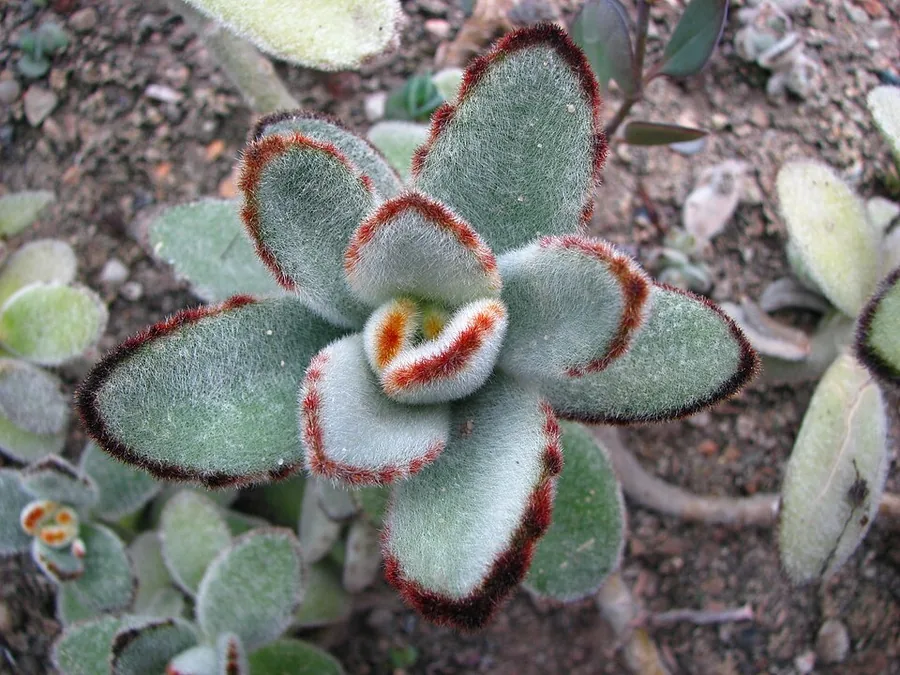
The panda plant wins its name the moment you look close: soft silvery fuzz wrapping every leaf, tipped with rust-brown felted edges shaped like a paw print. This slow-growing succulent hails from Madagascar, where it learned to pack water into those plush leaves and power through long dry spells. Grow it indoors and it stays small and neat, climbing to just 12 to 18 inches (30 to 45 cm) over the years, which makes each bit of new growth feel like a real win.
The best part is how little it demands to reward you. It thrives on being left alone far more than on constant tending, and nearly every plant that fails got drowned by good intentions and too much water. Park it on a sunny windowsill in a gritty pot that drains fast, and it practically runs itself.
One thing to lock in before it moves in: every part of this plant is toxic to animals. The fuzzy leaves carry bufadienolides, heart-acting compounds that rule it out for homes with curious pets. Set it somewhere cats, dogs, and other animals simply cannot reach.
Care
The short version: bright light, a gritty fast-draining mix, and water only once the soil has dried out completely. Keep it warm, feed it lightly through the growing season, and skip the fussing.
Light
Hand it bright indirect light, ideally a spot that grabs some direct sun through a window. It takes full sun once it acclimates, but starve it of light and the stems stretch while the fuzz thins out.
Water
Let the soil dry out completely between waterings, which usually lands around every 10 to 21 days and drops even lower in winter. Water at the soil line and keep it off the fuzzy leaves, where trapped moisture spots them. Overwatering takes down more of these than any other slip.
Soil
Pot it in a gritty cactus or succulent mix that drains fast and never sits soggy. A slightly acidic pH of 6.0 to 6.5 hits the mark, and a pot with drainage holes is a must, not a maybe.
Temperature
Hold it in the 50°F to 75°F (10°C to 24°C) range, plain comfortable room temperature most of the year. It carries no frost tolerance, so haul it away from cold windows once winter shows up.
Humidity
Low humidity is exactly its speed, so everyday dry indoor air suits it perfectly. Skip the misting and keep it out of a steamy bathroom, since damp air on those fuzzy leaves opens the door to rot.
Feeding
Feed lightly from spring through summer while it charges through active growth, about once a month. Reach for a diluted balanced or low-nitrogen succulent fertilizer, and cut feeding entirely through the dormant winter months.
Pruning
Pruning barely enters the plan. Pinch or cut back any leggy, stretched stems to spark fresh branching and a fuller shape, and clip off damaged leaves with a clean blade. Let the cut ends callus before they touch soil.
Repotting
Repot only every 2 to 3 years, or sooner once roots shoot through the drainage holes and the plant tips top-heavy. Do it in spring and bump it up just one pot size into fresh gritty mix.
Size & spacing
Count on a compact plant of 12 to 18 inches (30 to 45 cm) tall and 8 to 12 inches (20 to 30 cm) wide. It grows slowly, so a single plant holds its shape and size for years on a windowsill.
Troubleshooting
Nearly every panda plant hiccup traces straight back to water or light, and that makes the fixes fast. Read the leaves and stems early and you head off trouble before it spreads. Match what you spot below, then jump on it before rot or stretching digs in.
Soft, blackening base that calls for quick action
A soft, blackening base spells rot, and it almost always starts with soil that clings to water too long or moisture caught in the fuzzy crown. Mushy tissue is done for, so grab a clean blade and cut every trace of it away. Then rescue firm leaves as cuttings, replant the healthy growth into fresh gritty mix, and dry that soil out hard between waterings to keep the comeback on track.
Fix:
- Stop watering immediately and allow the soil to dry
- Cut away all soft, rotted tissue with a clean blade
- Take healthy leaf or stem cuttings to propagate if the base is lost
- Repot remaining healthy growth into fresh gritty, fast-draining mix
Stretching stems with the leaves pulling apart
Stems that shoot up with the leaves pulling apart are chasing light, and that reach is etiolation at work. The plant leans hard toward the nearest window, hungry for more sun. Shift it somewhere brighter, build the light up over a week or two so it never scorches, then snip the leggy stems and root every piece into fresh new plants.
Fix:
- Move to a brighter spot with bright indirect or some direct sun
- Acclimate gradually to stronger light to avoid scorch
- Prune leggy stems and propagate the cuttings
Brown scorch marks on the leaves catching the sun
Dry brown marks on the leaves catching direct sun are sunscald, and they crop up when the light jumps too fast for the plant to keep pace. Move a plant straight from a dim corner into blazing sun and it burns before it can adjust. Pull it back into bright indirect light to recover, then dial the sun back up bit by bit over one to two weeks.
Fix:
- Move the plant to bright indirect light
- Introduce stronger sun gradually over one to two weeks
Toxicity
Keep this one up high and out of reach. The leaves, stems, and flowers all carry bufadienolide cardiac glycosides, which trigger drooling and vomiting and, in a big mouthful, can throw off the heartbeat. It endangers cats, dogs, horses, and other animals, and no part of it is safe for people to eat.
Toxic to
Cats · Dogs · Horses · Rabbits · Livestock · Birds · People
Cats Toxic
A nibbled leaf brings on drooling, vomiting, and diarrhea inside a few hours. Cats love to chew on it most, and a bigger hit of the cardiac glycosides can throw the heartbeat off, so call a vet fast if a cat turns wobbly or sluggish.
Dogs Toxic
Dogs that chew the fuzzy leaves drool, vomit, and pass loose stool. The real threat kicks in when a big mouthful drives bufadienolides to the heart and scrambles the rhythm, so rush a weak or collapsing dog to the vet.
Horses Toxic
Every Kalanchoe spells trouble for horses. The cardiac glycosides hit the gut and the heart at once, so colic, depression, and an irregular pulse can follow. Keep the plant well clear of any grazing horse.
Rabbits Toxic
Keep a rabbit far from it. The same heart-hitting compounds that strike cats and dogs are just as dangerous for a small grazer, where a tiny bite packs a big punch.
Livestock Toxic
Cattle, goats, and sheep can all fall to Kalanchoe poisoning, with the toxin driving digestive upset and serious heart trouble. Grazing animals that push into a patch of it run a real risk.
Birds Toxic
Birds take the hit too. The bufadienolides go straight for their hearts the same way, so keep pet birds well away from the leaves.
People Caution
No part of the panda plant is food, so treat it as strictly hands-off and keep it clear of small children. The fine leaf hairs can itch sensitive skin as well, so wash your hands right after handling it.
The fine leaf hairs (trichomes) may irritate sensitive skin in some people; wash hands after handling.
Helpline numbers

United States
ASPCA Animal Poison Control: (888) 426-4435 (fee applies)
Poison Control: (800) 222-1222



Canada
Poison Centres: 1-844-764-7669
Varieties
A handful of named cultivars stand beside the common species, each showing off a different leaf color and edge marking.
Kalanchoe tomentosa 'Chocolate Soldier'
It flaunts brown to rust-colored felted teeth along the leaf edges that hand the whole plant a chocolate-trimmed finish.
Kalanchoe tomentosa 'Golden Girl'
It pushes out larger leaves with a golden to silvery cast and softer, lighter markings running along the edges.
Kalanchoe tomentosa 'Nigra'
It grabs attention with dark, almost black-brown leaf tips that pop hard against the silvery fuzz.
How to propagate
The panda plant multiplies fast, and a single leaf or stem tip launches a whole new plant.
Leaf cuttingsEasy
Spring to summer during active growth · 4 to 8 weeks to root and form plantlets
Leaf cuttings turn one plant into many, and they take off best in spring or summer while growth is charging along. Twist off a whole healthy leaf, let the cut end callus for a day or two, then lay it on or barely into gritty mix and water only sparingly. Roots and tiny plantlets push through in 4 to 8 weeks, so let them build at their own pace.
Stem cuttingsEasy
Spring to summer · 3 to 6 weeks to root
Stem cuttings turn a leggy plant into a fresh start, best taken in spring or summer while growth is firing. Cut a stem tip, let it callus, drive it into dry gritty mix, and water lightly only once it starts to root, which lands around 3 to 6 weeks. The parent usually rewards you by branching out below the cut.
Myths
Fuzzy succulents like the panda plant love regular misting and high humidity.
Tempting theory, but the panda plant is a dry-air succulent that packs its own water into those plush leaves. Mist just clings to the fuzzy surface, sits there, and opens the door to spotting and rot. Ditch the mister and let the soil dry out instead.