Shrub · Oleaceae
Privet
Ligustrum vulgare
A fast, shear-happy hedge that fills in quick and takes any shape, though it bolts out of the garden and poisons grazing animals.
Full sun
Every 7–14 days
USDA 4–8
10–15 ft · 3–4.6 m
Overview
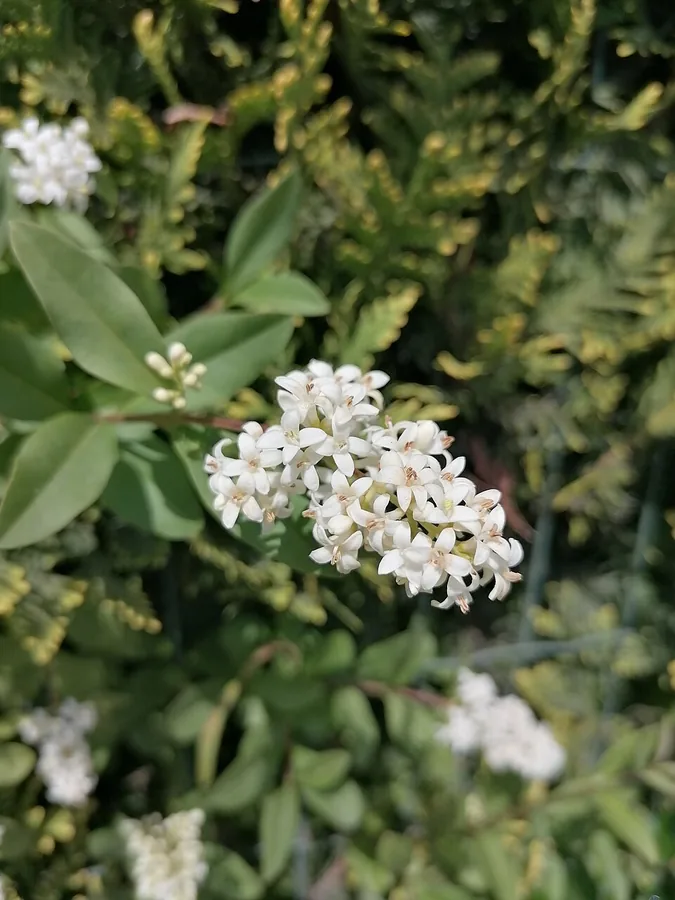
Privet is the shrub that gets a hedge going fast. This olive-family grower races upward, packs in dense growth, and bounces back from hard shearing better than nearly anything you can plant. It greens up early, holds its small oval leaves late, and pushes out spikes of white flowers in late spring ahead of clusters of dark berries. Cheap, quick, and forgiving, it delivers a finished hedge while other shrubs are still thinking about it.
All that drive has a flip side worth respecting. Birds gulp the berries and drop the seed across woods and field edges, where privet piles up into dense thickets and elbows out native plants. Several species land on invasive lists, and common privet ranks as a significant threat in some regions, so pointing that vigor in the right direction matters.
It also packs a poison. The leaves and above all the berries carry compounds toxic to pets, livestock, and people, so pick the spot with care, shear it before it fruits, and sweep up the prunings. Handle it that way and privet keeps right on being one of the most rewarding, low-effort shrubs going.
Care
The short version: plant privet in full sun to part shade in any well-drained soil, keep new shrubs watered until they root and then back off, and shear it to shape in late spring after the flowers finish.
Light
Privet fills in thickest under full sun, and it still puts on good growth in partial sun or partial shade. Pour on the light and the hedge knits up tight and full, but drop it into heavy shade and the growth thins out, leaving gaps you will have to chase closed.
Water
Keep new plantings well watered until the roots grab hold, then ease right off, because an established privet cruises along on moist to occasionally dry soil. Let the top half of the soil dry between drinks, about every 7 to 14 days while it digs in.
Soil
Privet grows in just about anything that drains, clay, loam, or sand alike. Hit a pH anywhere from 6.0 to 7.5 and it is happy, which is most ordinary garden ground, so there is little standing between you and a thriving hedge.
Temperature
Privet shrugs off wild swings, powering through winters down near -29°F (-34°C) and summer heat up to 100°F (38°C). That huge range is a big reason it thrives across so many climates and keeps going where fussier shrubs quit.
Humidity
Ordinary outdoor air is plenty, so forget chasing a humidity number. What really pays off is good air movement, since a crowded, stuffy hedge opens the door to leaf spot and mildew.
Feeding
In decent soil privet barely wants feeding, so this one is easy. If growth ever slows, a balanced granular fertilizer in spring gives it a lift, but go light, since overfeeding just pushes soft growth that pests pounce on.
Pruning
This is where privet really shows what it can do, soaking up hard shearing and bouncing back for more. Shape it as a hedge in late spring once the flowers fade, or keep clipping through the season, and cutting before the fruit sets helps stop its seed from spreading.
Repotting
Privet almost always grows in the ground, so repotting rarely enters the picture. If you do run one in a pot, size it up the moment roots circle the container or shoot out the drainage holes and water starts running straight through.
Size & spacing
Turn it loose and privet rockets to 10 to 15 feet (3 to 4.5 m) tall with a spread of 8 to 15 feet (2.4 to 4.5 m). For a solid hedge, set the plants closer than that full spread and shear them into one unbroken green run.
When to plant
Privet keeps the timing wonderfully easy. Get new plants in the ground in spring or fall while the soil is workable, watch for the white flowers around June, and shear the moment blooming winds down, ideally before the berries form and take off.
Northern hemisphere
Southern hemisphere
Typical months for a temperate climate: start earlier in warm zones, later where spring frosts linger.
- Plant: Spring or fall
- Harvest: White flowers in late spring to early summer (around June)
Hardiness
USDA hardiness zones: 4–8
Temperature: down to -34°C
Troubleshooting
Here is the good part: privet is almost impossible to kill, so nearly everything that crops up is cosmetic. Expect a few marked or chewed leaves and some sap-feeding bugs, while root rot in soggy ground is the lone problem that can drop a whole plant. Spot your symptom below, jump on it early, and the shrub powers right back.
The whole shrub wilting and yellowing in soggy ground
When a normally unstoppable privet wilts and yellows, root rot in soil that never drains is the culprit. Dig down and the roots turn up dark, soft, and decayed, drowning in waterlogged ground. Fix the drainage and quit overwatering, but a badly hit plant is usually done for and best swapped out for a fresh one in a drier spot.
Fix:
- Improve drainage and stop overwatering
- Remove severely affected plants
- Replant in well-drained soil
Spotty leaves, dying twigs, and sunken cankers
Dark spots, blighted twigs, and sunken stem lesions usually flag anthracnose or twig blight, and a white dusting on the leaves is powdery mildew. Cut out and destroy the infected wood, then thin the canopy to get air moving. Water at the base and rake up fallen leaves to shut the spores down.
Fix:
- Prune out and destroy infected twigs and branches
- Improve air circulation by thinning the canopy
- Avoid overhead watering and clean up fallen leaves
White waxy bugs and a sticky film on the leaves
Cottony white specks and a sticky sheen mean whiteflies or white peach scale are tapping the sap. Blast the whiteflies off with a hard jet of water, then hit the leaf undersides with horticultural oil or insecticidal soap. Keep after them until the sticky honeydew and black sooty mold clear out.
Fix:
- Spray foliage with a strong jet of water to dislodge whiteflies
- Apply horticultural oil or insecticidal soap, coating undersides of leaves
- Repeat applications per label until populations decline
Notched leaf edges and growth that stalls
Those scalloped notches on the leaf margins are a weevil at work, ligustrum or Japanese, feeding after dark while its larvae gnaw the roots. Shake the adults onto a cloth at dawn and grab a labeled insecticide only if the damage really piles up. A vigorous, well-watered privet powers through the cosmetic chewing.
Fix:
- Handpick or shake adults onto a cloth in early morning
- Apply a labeled insecticide if damage is heavy
- Maintain plant vigor with proper watering
Toxicity
Big enthusiasm still needs a clear head here, so treat every part of privet as poisonous. The leaves and dark berries hold cardiac glycosides, saponins, and protoanemonin, and the berries are the real danger. Eating them brings vomiting and diarrhea, plus incoordination and heart effects after a bigger dose, and it can kill horses and other livestock. Keep the berries and prunings well away from animals and small children.
Toxic to
Cats · Dogs · Horses · Rabbits · Livestock · Birds · People
Cats Mild
A cat that grabs a mouthful of leaves or berries usually drools, turns up its nose at food, and lands an upset, loose stomach. Most cases stay mild, but the dark berries carry the biggest toxin punch, so keep a curious cat clear of them.
Dogs Mild
Dogs answer with drooling, a sore belly, and loose stools, and often go dull and low afterward. The usual trip-up is scarfing a pile of dropped berries or fresh clippings.
Horses Severe
Privet slams horses hard. Watch for colic, a painful gut, drooling, and a depressed, unsteady animal, and know a large feed of leaves or berries can kill. Treat any suspected case as a flat-out emergency.
Rabbits Toxic
The same glycosides that poison other animals make privet a hard no for rabbits, kicking off gut upset and lethargy. Never hand them the leaves or berries, not even a scrap.
Livestock Severe
Cattle, goats, and sheep can take serious gut distress and colic from the foliage and fruit, and a bigger feed turns deadly. Fence privet out of pasture and bin the prunings instead of dumping them where animals graze.
Birds Toxic
Wild birds down the berries whole and pass the seed unharmed, which is exactly how privet gets around, but the leaves and fruit are no good for pet birds. Keep cage birds well clear of any trimmings.
People Caution
No part of privet is food, full stop. The berries are the main hazard, and eating them can trigger vomiting and diarrhea, with incoordination and heart effects after a larger dose. Keep the berries out of reach of small children.
Keep berries and prunings away from pets and grazing animals; clip flower panicles before berries form to limit fruit on the plant.
Helpline numbers

United States
ASPCA Animal Poison Control: (888) 426-4435 (fee applies)
Poison Control: (800) 222-1222



Canada
Poison Centres: 1-844-764-7669
Varieties
Privet is a whole crew of close relatives, from shrubs to small trees, and the ones gardeners grab most are the fast hedgers and the bright-leaved standouts, even where a strong invasive streak comes with the deal.
Ligustrum sinense (Chinese privet)
A semi-evergreen hedging privet that has torn across the eastern and southern US as a top invader, throwing up dense thickets from bird-sown seed.
Ligustrum japonicum (Japanese / wax-leaf privet)
A warm-climate standout with big, glossy, thick evergreen leaves that has also bolted into the wild across parts of the southern US.
Ligustrum lucidum (glossy privet)
A tree-sized glossy privet flagged as a noxious weed in California and running wild through much of the South.
Ligustrum × vicaryi (golden privet)
Grown for its bright golden-yellow foliage, which fires up to its best color in full sun.
How to propagate
Privet loves to multiply, and it hardly needs your help to do it, springing up from cuttings, from seed, and from branches that root themselves, which is the very reason it takes off the moment it gets loose.
Stem cuttingsEasy
Softwood cuttings in late spring/early summer or hardwood cuttings in late fall to winter · 4 to 8 weeks to root
Privet strikes from cuttings almost before you finish taking them. Snip softwood in late spring or early summer, or hardwood from late fall into winter, and they throw roots in 4 to 8 weeks. That flat-out eagerness is a huge reason the plant muscles in so aggressively wherever it lands.
SeedEasy
From ripe black berries in fall · Germinates readily; seed is abundantly bird-dispersed
The ripe black berries of fall are loaded with seed that sprouts with zero fuss. Privet self-sows like wildfire, and birds hurl that seed far and wide, the main engine of its invasiveness. Clip the flowers before fruit sets to keep the volunteers from piling up.
LayeringEasy
Spring through summer · Several weeks to months
Low branches root right where they touch down, taking anywhere from several weeks to a few months to grab hold. The plant fires up suckers too, so a single shrub keeps creeping outward all on its own.
Myths
Privet is a harmless ornamental hedge you can plant anywhere.
Privet rarely stays put. Birds fling the seed deep into woods and field edges, where it throws up dense thickets that smother native plants, and several species carry noxious-weed listings or regulation. Check local rules before you plant, and give a native hedge a real shot instead.
Privet berries must be safe because birds gobble them up.
A bird's appetite proves nothing about safety. Birds digest the fruit and scatter the seed everywhere, but the berries and leaves are toxic to pets and livestock, loaded with cardiac glycosides, saponins, and protoanemonin that birds simply shake off.