Herb · Lamiaceae
Summer Savory
Satureja hortensis
Give it sun and quick-draining soil and this fast, peppery bean herb keeps the harvest coming.
Full sun
Every 5–10 days
59–86°F · 15–30°C
50–70 days
Overview
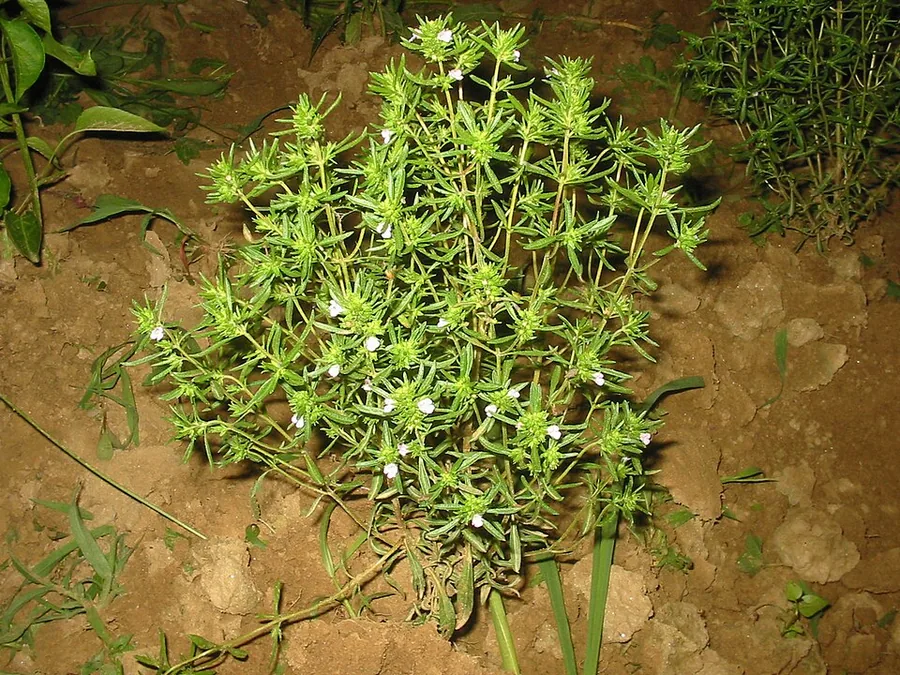
Summer savory is a real workhorse in the herb patch, a fast annual in the mint family that packs a warm, peppery punch into beans and stews. It races out of the ground, springs from its Mediterranean roots, and asks for the simple things: sun, ordinary soil, and roots that stay dry. Cooks have prized it so long that one of its oldest names says it all, the bean herb.
It grows into a compact, energetic little plant, usually 10 to 18 inches (25 to 45 cm) tall, with slim stems and narrow gray-green leaves. Small white-to-pink flowers burst open in summer, and that bloom is the starting gun, because the leaves hit their peak in the days just before the buds break. Keep pinching and picking, and it bounces right back with bushy, tender new growth.
The best part is how fast it rewards the effort. It sprouts quickly, barely needs feeding, and powers through dry spells once it takes hold. Steer it clear of just two things, soggy soil and deep shade, and nearly every problem stays off the table.
Care
The short version: load it up with full sun, plant it in well-drained soil, and water with a light hand. Feed it sparingly, pinch the tips often to keep it charging, and grab the leafy tops just before it flowers.
Light
Savory craves full sun, ideally 6 or more hours a day. Skimp on light and it shoots up, flops over, and turns leggy on thin, woody stems. Pour on the sun and it stays compact and loaded with flavor.
Water
Let the top of the soil dry out before the next drink. Keep it moist while the young plant digs in, then back right off, because this Mediterranean herb powers through dry spells and hates sitting wet. Overwatering trips it up faster than anything.
Soil
Plant it in well-drained loam with a little organic matter mixed in, though it takes off in poorer ground too. It runs happily across a wide pH band, 6.0 to 8.0, so even slightly alkaline soil gives it no trouble.
Temperature
Savory thrives in the warmth, roughly 59°F to 86°F (15°C to 30°C). It is a frost-tender annual, so hold off until the cold clears before setting it out, and count on the first hard freeze to close the season.
Humidity
This dry-climate herb hums along in low humidity, around 30% to 50%. Damp, stagnant air drags it down, so give it space and let the air keep moving through the leaves.
Feeding
Go easy on the feeding and it thanks you. Savory is a light feeder that runs fine on a small dose of balanced or low-nitrogen fertilizer at planting and little else. Overdo the nitrogen and it throws soft, floppy growth and loses its edge.
Pruning
Pinch and harvest the leafy tips often, before it flowers, to keep it bushy and the leaves tender. Nip off any flower buds you catch, because blooming sharpens the flavor and toughens the leaves.
Size & spacing
A grown plant tops out around 10 to 18 inches (25 to 45 cm) tall and spreads 8 to 12 inches (20 to 30 cm) wide. Give each one a little room so air keeps moving and the roots stay dry.
When to plant
Savory runs on warmth and will not touch frost, so time it right and it takes off. Kick things off indoors a few weeks before the last frost, or sow straight into warm spring soil, then keep the leafy tops coming all summer until the plant flowers and the season winds down.
Northern hemisphere
Southern hemisphere
Typical months for a temperate climate: start earlier in warm zones, later where spring frosts linger.
- Sow: About 4-6 weeks before the last frost; sow shallowly because light aids germination
- Plant: After all danger of frost has passed and soil has warmed in late spring
- Harvest: Harvest leafy tops just before or as the plant comes into flower; small tubular white-to-pink flowers appear in summer
Hardiness
USDA hardiness zones: 2–11
Temperature: down to -46°C
Troubleshooting
Almost every savory hiccup comes down to one of two things, too much water or too little sun, and both are quick fixes. Scan the roots, stems, and leaves for early clues, and a small change gets the plant charging again. Spot your symptom below and jump on it before it spreads.
Wilting, yellowing, and mushy dark roots
That collapse is root rot, and it comes straight from soggy soil, not thirst. Savory is a Mediterranean herb that flat out refuses to sit in water, so sharpen the drainage and stretch the gaps between waterings. Catch it early in a pot, lift the plant, and reset it in fresh, fast-draining mix to get it climbing again.
Fix:
- Improve drainage and reduce watering frequency
- Move container plants to a sunnier, better-drained spot
- Replant in well-drained soil if rot is limited
Sticky tips crawling with tiny insects
Those little soft bugs swarming the new growth are aphids, and the sticky shine is the honeydew they drop. Blast them off with a strong jet of water, and since this herb heads for the kitchen, just harvest the worst tips and put them to use. Break out insecticidal soap only when an infestation digs in and will not quit.
Fix:
- Rinse off insects with a strong spray of water
- Harvest and use affected tips
- Use insecticidal soap only if needed on an herb intended for eating
Tall, floppy stems going bare and woody
A plant that turns leggy is stretching hard for light it is not getting, or it just is not being pinched enough. Move it into full sun of 6 or more hours a day and start nipping the tips often. Every harvest pushes it to branch out and fill back in instead of reaching.
Fix:
- Move to full sun (6+ hours)
- Pinch and harvest tips frequently to promote branching
Flavor drops the moment it blooms
This is flowering, the plant shifting gears from leaves to seed. The best flavor loads into the leafy tops right before the buds crack open, then fades once bloom kicks off. Harvest at first bud, pinch those buds off to keep it going, and fire off a fresh sowing every 3 to 4 weeks for a nonstop supply.
Fix:
- Harvest leafy tops before or at first bud
- Pinch off flower buds to extend the leaf harvest
Toxicity
Here is a win for pet owners: summer savory is a kitchen herb that stays safe right across the board. Its leaves flavor the cooking and shrug off a curious bite from a cat, dog, rabbit, or grazing animal. Grow it out in the open with nothing to fence off.
Safe for
People · Cats · Dogs · Horses · Rabbits · Livestock · Birds
Cats None
Safe for cats. Let one nibble this kitchen herb and it shrugs the bite right off.
Dogs None
Safe for dogs. A dog grazing the leaves runs into nothing that could hurt.
Horses Safe
Horses can browse it freely, since the foliage packs no toxic compounds.
Rabbits Safe
Rabbits can dig into the leaves without worry, though a mixed diet still keeps them in top form.
Livestock Safe
Cattle, goats, and sheep can graze it with zero ill effect.
Birds Safe
Pet birds and backyard hens stay fine around it, since it holds nothing toxic to them.
People Safe
A kitchen favorite that is a pleasure to eat, its leaves fire up beans, stews, and roasts.
Aromatic edible herb that is safe to handle and grow around people and pets.
Varieties
Two savories are worth telling apart, the fast tender annual most gardens grow and its tougher perennial relative.
Winter savory (Satureja montana)
Its tougher perennial relative powers through the year evergreen across roughly USDA zones 5 to 10 and hits a stronger, slightly bitter note, ready to stand in for the milder annual any season.
How to propagate
Savory is one of the easiest herbs to fire up from seed, and a few staggered sowings keep tender leaves rolling in all season.
SeedEasy
Sow indoors about 4-6 weeks before the last frost, or direct-sow outdoors after frost danger passes; sow shallowly because light improves germination. · Germinates in roughly 1-2 weeks and is typically harvestable within about two months of sowing.
Savory takes off from seed with almost no fuss. Get it going indoors about 4 to 6 weeks before the last frost, or drop it straight into warm spring soil once frost clears, and press the seed in shallow since a bit of light kick-starts it. Seedlings punch through in a week or two, and the picking starts within about two months. Fire off a fresh row every 3 to 4 weeks and the tender harvest never lets up.
Myths
Planting summer savory next to beans will drive bean beetles off for good.
Savory backs up its bean herb name at the stove, where it lifts bean dishes, not out in the row playing bodyguard. The beetle-repelling angle is a whole different claim. Extension experts warn that companion-planting charts like this one often run ahead of the research.