Ornamental · Asparagaceae
Solomon's Seal
Polygonatum biflorum
Plant it in rich, moist shade and watch Solomon's seal arch higher and spread wider every single spring.
Full shade
Every 3–7 days
USDA 3–9
3–6 ft · 0.9–1.8 m
Overview
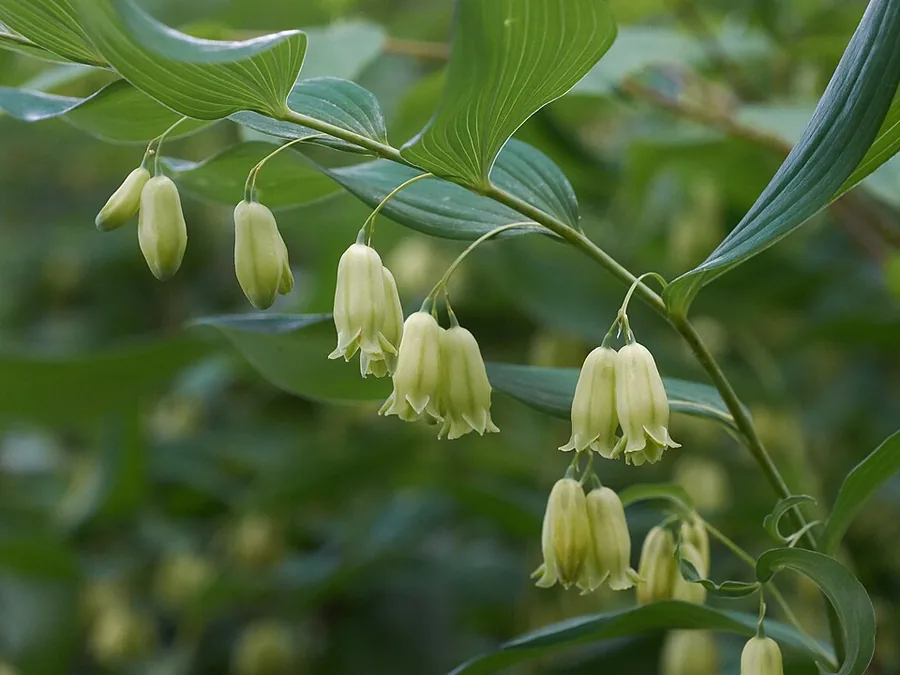
Solomon's seal earns its place fast, all for those arching stems that swing out over the shade like nothing else in the border. Skip the big flower show and look closer: in spring, tip a stem and small bell-shaped flowers swing beneath it in neat pairs, tucked out of sight for anyone who bothers to look. Best of all, it keeps traveling on a creeping rhizome, knitting a fuller colony year after year.
Hand it the shady, forgotten corner and it takes off. It powers through hard winters across a huge span of zones and wants only shade and ground kept moist and rich. Get it started, wait a season, and it bounces back on its own each spring, taller and fuller and asking almost nothing in return.
When the flowers finish, blue-black berries take over by late summer, and they are a treat to spot even though they never reach the plate. Some cooks do simmer the young shoots and eat them like asparagus, but the berries and the raw plant stay firmly in the look-only column. Let them ripen and enjoy the display they put on.
Care
The short version: drop it into part to full shade with rich, humusy soil, keep that soil evenly moist, and then stand back and let it spread on its own.
Light
Solomon's seal lives for the shade. Give it part to full shade and it thrives, and it will take a little morning or filtered sun on top of that, but park it in a hot, open spot and it turns thin and scorched fast.
Water
Keep that soil evenly moist, just like the damp floor of a woodland, and it powers along. Water every 3 to 7 days through dry stretches, and step it up in real heat. An established clump can ride out a short dry spell, but pour on steady moisture and it looks unstoppable.
Soil
Dig it into rich, humusy, well-drained ground loaded with organic matter and it takes right off. It shrugs at pH, running happily from 5.5 to 7.0, so pour your energy into keeping the soil loose and packed with compost.
Temperature
Cold holds no fear for this tough, cold-hardy perennial. It powers through winters down to -40°F (-40°C) and summers up to about 86°F (30°C), with roots that sleep off the hard freezes and burst back in spring.
Humidity
Forget chasing a humidity number here. Everyday outdoor air does the job, and what really fires it up is the cool, moist air of a shaded bed instead of a dry, sun-baked corner.
Feeding
It runs lean and asks for little. A balanced fertilizer in spring, or a top-dressing of compost as the new shoots push up, keeps it charging, and in truly rich woodland soil it may need no feeding at all.
Pruning
Barely any work here, which frees you up for the fun stuff. Cut the yellowed stems to the ground in late fall or once frost hits, then turn it loose to keep spreading at its own pace.
Repotting
Solomon's seal digs in as a long-term resident and rarely needs lifting. Divide a clump only when it crowds up and loses steam, or when the rhizomes start muscling up to the soil surface.
Size & spacing
Give it time and a clump surges to 3 to 6 feet (91 to 183 cm) tall and 2 to 4 feet (61 to 122 cm) across. Hand each plant real room to arch out and build its colony without elbowing its neighbors.
When to plant
Get planting, and skip the slow seed route if you want quick wins. Set out divisions or potted plants in spring or fall while the soil stays cool and moist, then watch for those dangling flowers to arrive in April and May as fresh stems shoot up.
Northern hemisphere
Southern hemisphere
Typical months for a temperate climate: start earlier in warm zones, later where spring frosts linger.
- Plant: spring or fall
- Harvest: April to May
Hardiness
USDA hardiness zones: 3–9
Temperature: down to -40°C
Troubleshooting
Solomon's seal keeps the drama to a minimum, which is half of why it is such a rewarding grow. The two hiccups that turn up both point straight back to its site, so a quick read of the early signs tells you whether a pest moved in or the spot needs a rethink. Spot it, act, and move on.
Leggy, thinning stems and gaps in growth
When it stretches thin and gappy, read it as too much sun or dry, spent soil dragging it down. A hot, open spot scorches and yellows the leaves early on top of that. Shift it into part to full shade, mulch and water to lock in even moisture, and dig compost into the tired ground to power it back up.
Fix:
- Move or plant in part to full shade
- Mulch and water to keep soil evenly moist
- Amend soil with compost or organic matter
Ragged holes punched through the leaves
Those chewed holes shout slugs and snails, night feeders that pile into the cool, damp shade this plant loves. Hunt for their silvery slime trails to nail the culprits. Head out after dark and pick them off, scatter iron phosphate bait, and rip out the leaf litter and standing moisture that let them hide, and the plant bounces right back.
Fix:
- Hand-pick slugs in the evening
- Use iron phosphate slug bait
- Reduce excess moisture and remove debris near plants
Toxicity
This one sits at low risk, but it still earns a little respect. Cooks do simmer and eat the young shoots, yet the blue-black berries and the raw plant pack saponins and anthraquinones that turn a stomach fast. The berries carry the real punch, so keep them clear of children, cats, dogs, and grazing animals and grow on with confidence.
Toxic to
Cats · Dogs · Horses · Rabbits · Livestock · Birds · People
Cats Mild
A cat that chomps the foliage or gulps a berry might drool, throw up, or run loose stools. It stays off the ASPCA toxic list and the risk holds low, so keep those berries out of paw's reach and carry on.
Dogs Mild
Most dogs that chew a leaf or snatch a fallen berry shake it off with mild stomach upset and a quick round of diarrhea. It rarely turns serious, but the saponins inside are all the reason you need to break the habit early.
Horses Mild
Horses mostly march right past the bitter foliage, and a small taste tends to pass with only a flicker of gut upset. Just keep them off the berries, where the trouble really gathers.
Rabbits Mild
A rabbit that nibbles the leaves or berries can wind up with soft stools and a sour stomach. Keep every part of this plant off the forage list.
Livestock Mild
Grazing animals usually breeze right past it, and the bitter taste caps how much they take. Even so, the saponins and anthraquinones can spark mild digestive upset if a hungry animal plows through a patch.
Birds Mild
Wild birds tuck into the ripe berries and fling the seed far and wide, but a pet bird runs much smaller and can react badly to the same fruit. Steer cage birds well clear of the berries and foliage.
People Caution
Only the young shoots get eaten, and only after cooking, the way some cuisines fire them up like asparagus. The blue-black berries and the raw plant carry saponins and anthraquinones that trigger nausea and diarrhea, so leave the fruit be and keep it away from children.
Keep the ornamental berries away from pets and children; wash hands after handling.
Helpline numbers

United States
ASPCA Animal Poison Control: (888) 426-4435 (fee applies)
Poison Control: (800) 222-1222



Canada
Poison Centres: 1-844-764-7669
Varieties
The plain green species carries most gardens beautifully, but a handful of named forms are worth chasing down when you want more size or a jolt of color.
Polygonatum biflorum var. commutatum
Giant or Great Solomon's seal brings the muscle, launching stout arching stems 3 to 7 feet tall that swing up to 8 or more flowers at every leaf joint.
Polygonatum odoratum var. pluriflorum Variegatum
Grow this variegated form for the foliage, all light green leaves crisply edged in white plus fragrant flowers that lock in its spot in the shade garden.
Polygonatum humile
Dwarf Solomon's seal is a compact Asian species that tops out near 8 to 12 inches, perfect for firing up a small shade bed or the front of a border.
Companions
Solomon's seal belongs in the shade garden, beside the moisture-loving woodland plants that share its cool, dappled corner.
Plant near
Ferns: Share the same moist, shady woodland conditions and contrast in texture.
Hostas: Thrive in the same rich, shaded soil and complement the arching habit.
Astilbe: Enjoys similar moist shade and adds flower color beneath the foliage.
Wild ginger: A low woodland groundcover that pairs well in cool, dappled shade.
How to propagate
Multiplying Solomon's seal is a genuine pleasure. Split a clump for fast, sure results, or sow seed and enjoy the long game if you like watching things develop from scratch.
DivisionEasy
Spring or fall · 1 to 2 growing seasons
Division is the fast, sure-fire route to more plants. In spring or fall, dig up a clump and snap or cut the rhizome into pieces, keeping a growth bud on each one. The fresh divisions dig in and fill out over 1 to 2 growing seasons.
SeedModerate
Fall (sown fresh) for cold stratification · 2 to 3 years or more
Seed is the long game, so bring patience. Strip the seed from ripe berries and sow it outdoors in fall so winter cold cracks its dormancy. Even then, count on 2 to 3 years or more before the plants really hit their stride.
Myths
True and False Solomon's seal are one and the same plant.
Not a chance. They mimic each other at first glance but land in different genera. True Solomon's seal (Polygonatum) swings its paired, bell-shaped flowers under the arching stem, while False Solomon's seal (Maianthemum racemosum) bunches its flowers and berries into one plume right at the tip. Clock that single clue and you will never trip over the difference again.
The blue-black berries of Solomon's seal are fine to snack on.
Not so fast. The berries are inedible and mildly toxic, loaded with anthraquinone that kicks off vomiting and diarrhea if anyone swallows them. Their bold color tempts curious kids, so flag them clearly and move on.