Bulb · Asparagaceae
Siberian Squill
Scilla siberica
Plant the bulbs once and a rolling wave of early blue comes racing back every single spring.
Full sun
Every 7–14 days
USDA 2–8
3–6 in · 8–15 cm
Overview
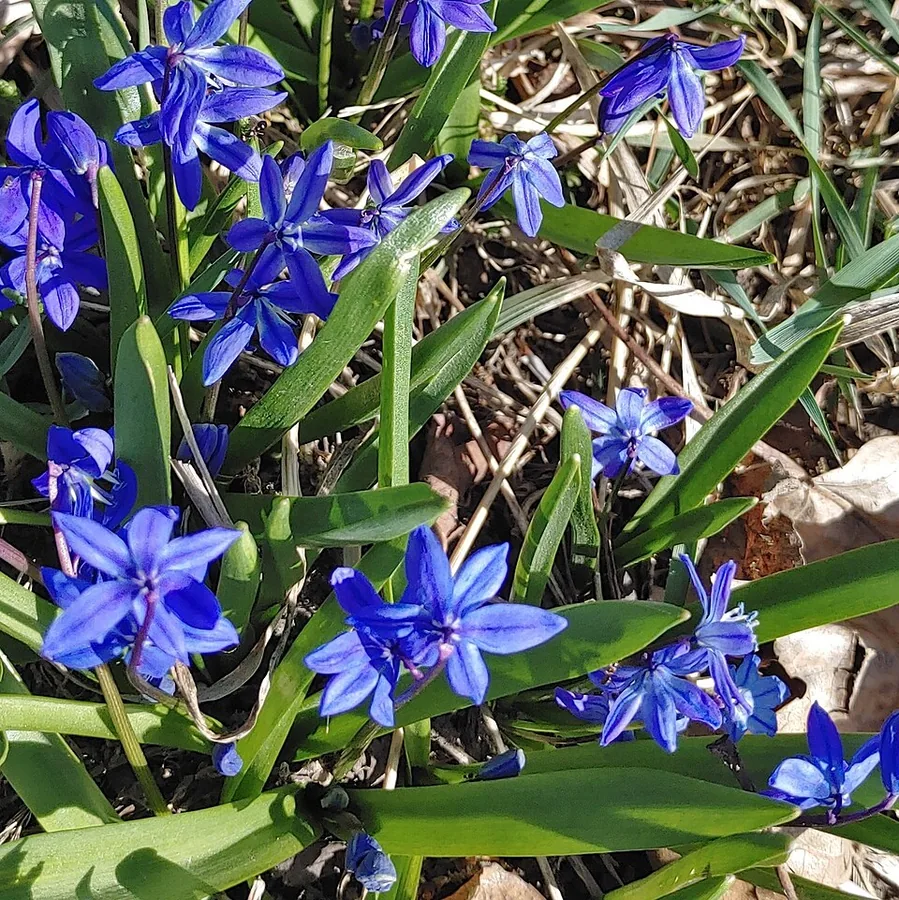
Siberian squill kicks off the garden year like few other bulbs, throwing open its deep blue bells in early spring hot on the heels of the snowdrops. It hugs the ground at just 3 to 6 inches (8 to 15 cm) tall, which is exactly why it shines when you plant it in broad drifts under trees, run it along a path, or scatter it through a lawn you can leave unmown for a bit.
The best part is how much it delivers for how little it wants. These bulbs are tough as nails and cold hardy, powering through winters all the way to -40°F (-40°C), and they practically grow themselves once they are in. Squill also spreads with real gusto, both from seed and from offset bulbs, so it leaps from the bed into lawns and woodland, and in parts of the US that vigor earns it an invasive label worth respecting.
One thing keeps the excitement in check. Every part of this plant is poisonous, the bulb above all, so it has no place in a garden where pets graze or small children dig. Choose the site with that firmly in mind, and squill rewards you with years of dependable, effortless color.
Care
The short version: drop the bulbs 2 to 3 inches deep in fall, give them sun to part shade and free-draining soil, water hard through spring growth then let them bake dry in dormancy, and deadhead to keep the spread on a leash.
Light
Squill puts on its biggest show in full sun, yet it powers through partial sun or partial shade just fine. It flowers so early, before the trees leaf out, that even a spot under deciduous branches soaks up full light exactly when it counts.
Water
Pour on medium moisture while it is charging through spring growth and bloom, then dial it back as the foliage dies down. The bulbs crash into summer dormancy and want almost no water, and letting them sit soggy is the fast track to rot.
Soil
Give it average, well-drained soil and it takes off, no fuss about pH at all. Sharp drainage beats rich ground every time, and never more than across those dry summer months.
Temperature
This bulb is a cold-weather champion, thriving through zones 2 to 8 and laughing off lows of -40°F (-40°C). It powers up in the chill of early spring and drops into rest once the mercury climbs past about 75°F (24°C).
Humidity
Skip the humidity worries entirely, because plain outdoor air is all this bulb wants. The real key is letting the soil dry out for its summer rest.
Feeding
Squill barely wants feeding in average soil. A single yearly topdressing of compost or a balanced bulb fertilizer in fall or early spring does the trick, and piling on more is a waste.
Pruning
Forget the pruning routine here. Let the leaves die back on their own after bloom so the bulb can reload, and clip the spent flower heads only when you want to rein in its heavy self-seeding.
Repotting
Settled bulbs cruise along for years without lifting. Make your move when bloom fades in a jam-packed clump or bulbs start shouldering up to the surface, then dig in and divide.
Size & spacing
These plants stay pint-sized, just 3 to 6 inches (8 to 15 cm) tall and about as wide, which is the whole reason drifts work so well. Set the bulbs 2 to 3 inches deep in fall and space them to explode into a sheet of blue.
When to plant
Squill sprints through a simple early-spring cycle. Plant the bulbs in fall while the soil still gives, let winter roll through, and watch the blue flowers burst open around April, right on the heels of the snowdrops.
Northern hemisphere
Southern hemisphere
Typical months for a temperate climate: start earlier in warm zones, later where spring frosts linger.
- Plant: Plant bulbs in fall, 2-3 inches deep
- Harvest: Blooms in early spring (around April), shortly after snowdrops
Hardiness
USDA hardiness zones: 2–8
Temperature: down to -46°C
Troubleshooting
Squill throws almost nothing at you, and the handful of problems it does have trace straight back to wet soil, one bulb pest, and its own eagerness to spread. Spot your symptom below and jump on it fast, before a small patch charges into a full colony.
Soft, rotting bulbs and a sinking crown
This is straight-up crown and bulb rot, driven by soggy ground and not some disease you can spray off. Squill flat out refuses to sit in water, above all through its summer rest. Yank a few bulbs up, hunt for soft, brown, stinky tissue, toss anything spongy, and shift the planting to ground that drains like a champ.
Fix:
- Remove and discard affected bulbs
- Improve drainage or move planting to a better-drained site
- Reduce watering, especially during dormancy
Hollow bulbs and shoots that refuse to launch
A bulb that limps up twisted or never breaks the surface usually spells narcissus bulb fly. Its larva tunnels straight in, guts the center, and stuffs the hollow shell with frass. Slice a suspect bulb open, track down one fat cream-colored maggot, then dig out and destroy every infested bulb and churn the soil to kick the pupae into the open.
Fix:
- Dig and destroy infested bulbs
- Cultivate soil to expose pupae
Squill blasting far past its planting spot
Siberian squill is an all-out self-seeder that piles on offset bulbs too, so colonies march into lawns, beds, and the woods next door. Parts of the US flag it as invasive. Mow or deadhead the flowers before seed sets, dig and thin the crowded clumps, and keep it well clear of natural areas.
Fix:
- Mow or deadhead while in bloom to remove seed heads before seed sets
- Dig and thin clumps before seeds mature
- Compost removed material at temperatures above 130 degrees F
Toxicity
Here the enthusiasm has to hit the brakes. Every part packs cardiac glycosides, with the bulb the strongest, and swallowing any of it can trigger drooling, vomiting, and cramping, and in quantity a dangerously slow or uneven heartbeat. Keep it clear of pets, livestock, and children, and get straight to a vet or poison control if any is eaten.
Toxic to
Cats · Dogs · Horses · Rabbits · Livestock · Birds · People
Cats Severe
Let a cat chew any part and drooling and vomiting can set in fast. The bulb packs the most cardiac glycoside, so a real mouthful can knock the heart rhythm off track, which makes it an emergency.
Dogs Severe
Dogs love to dig up and gnaw the bulb, and that is the single most dangerous part. Drooling, vomiting, and diarrhea come first, then a slow or uneven heartbeat once a big helping goes down.
Horses Severe
The same cardiac glycosides slam horses too, sparking colic and leaving the animal dull and wobbly. A heavy dose can scramble the heartbeat, and that spells real trouble in a grazer that big.
Rabbits Toxic
Squill is off the menu for rabbits, full stop. The bulb and foliage churn up the gut and, in any quantity, hit the heart, so keep the plant nowhere near them.
Livestock Toxic
Cattle, sheep, and goats can go down hard from grazing the leaves or rooting out bulbs. Look for drooling, gut upset, and a ragged heartbeat, and fence the patch clean off from pasture.
Birds Toxic
The cardiac glycosides turn every part into a hazard for birds, backyard poultry that scratch up bulbs included. Keep hens and pet birds well away from the plantings.
People Caution
Nobody should eat any part of this plant. Swallow it and mouth pain, nausea, vomiting, and cramping kick in, and the bulb in quantity can slow or scramble the heart, so keep curious kids clear and call poison control if any is eaten.
Keep bulbs and plants away from pets and children; wear gloves when handling, as sap can cause minor skin irritation in susceptible individuals.
Helpline numbers

United States
ASPCA Animal Poison Control: (888) 426-4435 (fee applies)
Poison Control: (800) 222-1222



Canada
Poison Centres: 1-844-764-7669
Varieties
No sprawling catalog to wade through here. Past the wild species, one named pick shows up again and again, and spotting the difference between them is a breeze.
Spring Beauty
It tracks the wild species closely but comes in a touch bigger, flowers for longer, and turns up a deeper, richer blue.
Scilla siberica (species)
The straight species launches 3 to 4 slim scapes, each dangling 1 to 3 nodding, bell-shaped, deep blue flowers lit up by blue anthers.
Companions
Squill pairs best with the other earliest bulbs that bloom alongside it and naturalize the same way, building a layered carpet of late-winter and early-spring color.
Plant near
Galanthus (snowdrops): Both are very early spring bulbs that bloom in sequence and naturalize well together in drifts.
Crocus: Similar early-spring bulb that can be naturalized in lawns and beds alongside squill for layered bloom.
How to propagate
Bulking up squill is a genuine thrill because the plant races to do it for you. Push it faster by splitting clumps or dropping in fresh bulbs, or just turn it loose to seed itself far and wide.
Offsets & pupsEasy
Lift and separate dormant bulbs after foliage dies back · One growing season
The quickest win is to let squill pump out offsets and then split the haul. Once the foliage dies back and the bulbs go dormant, lift a crowded clump and snap the offset bulbs apart by hand. Plant them back and they lock in within one growing season.
Bulbs & cormsEasy
Plant bulbs 2-3 inches deep in fall · Blooms the following spring
Kicking off from bought bulbs is about as easy as planting ever gets. Drive them 2 to 3 inches deep in fall, walk away, and they flower the very next spring. The bulbs are rugged and extremely cold hardy, so a brutal winter rolls right off them.
SeedEasy
Self-sows in spring as seed matures · Several years to flowering size
Squill flings its own seed around with zero help, dropping it in spring as the pods ripen. That free-for-all spread is exactly what powers its aggressive naturalizing. Seedlings need several years to hit flowering size, so this is the patient play if you truly want it.
Myths
Siberian squill is a harmless little spring bulb that pets can be around safely.
Not a chance, because every part carries cardiac glycosides and rates as a high-severity poison. Eat it and vomiting, diarrhea, and a lowered heart rate follow, and a real dose can turn fatal. Keep the bulbs and plants away from pets and children.
A small ornamental bulb like this is sure to stay right where you plant it.
Hardly, since it naturalizes at speed through self-seeding and offset bulbs, breaking out of beds and into lawns and woodlands. Parts of the US brand it invasive, so deadhead it and keep it far from wild ground.