Bulb · Asparagaceae
Lily of the Valley
Convallaria majalis
Sweet white bells that race across the shade, and yes, every part of them is poisonous.
Partial shade
Every 5–10 days
USDA 3–8
6–12 in · 15–30 cm
Overview
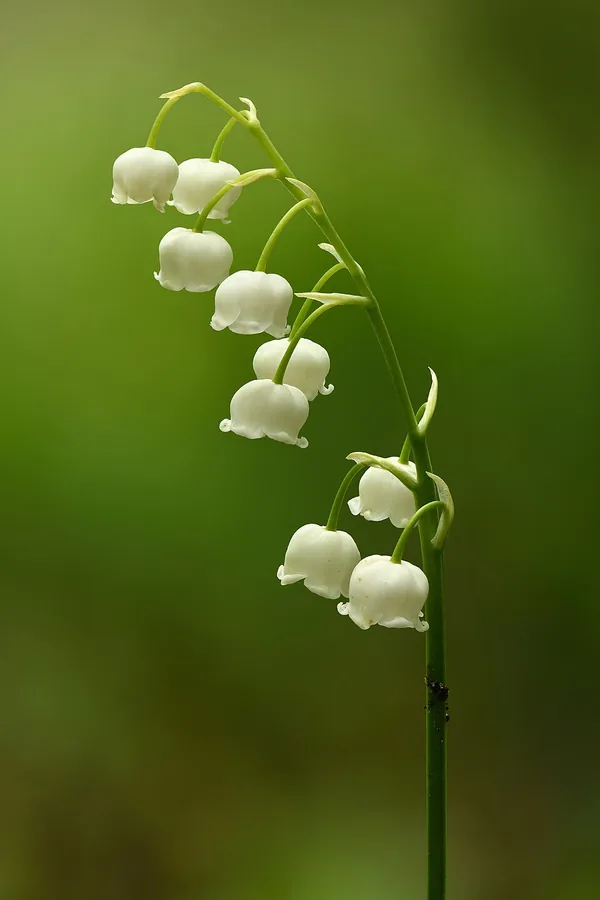
Lily of the valley rewards a shady corner like few plants can, throwing up arching stems of small, white, nodding bells that carry one of the sweetest scents spring has going. It marches underground on creeping rhizomes called pips, knitting fast into a dense green carpet beneath trees or along the shady north wall. Long after the flowers finish, the broad paired leaves keep the ground looking full and green.
Growing it is a genuine pleasure, because it asks for so little and gives back so much. Hardy from zone 3 to 8, it powers through cold winters and takes off in the dappled to full shade where fussier flowers sulk. Feed it moist, rich soil and it runs, which is half the fun, though that same drive means it can crowd out neighbors and has been flagged as invasive in some regions.
One thing keeps this plant firmly in the eyes-open category. Every part, from the fragrant flowers to the bright red berries, carries cardiac glycosides that can throw the heart into a dangerous rhythm. Grow it, enjoy it, and plant it well out of reach of pets and children.
Care
The short version: drop the pips into dappled to full shade, keep the rich soil evenly moist, and split crowded clumps every few years to keep them charging. Glove up any time you handle it.
Light
Plant it in dappled to full shade, the dim ground under trees or on the cool side of a wall where hardly anything else will flower. It shrugs off a little morning sun, but hot afternoon light scorches the leaves and drives the colony into early decline, so keep it in the shadows and it storms ahead.
Water
Keep the rich soil evenly moist, watering roughly every 5 to 10 days and stepping it up in a dry spell. An established colony toughs out a summer drought, though the foliage turns ragged when it runs dry, so a good soak through long dry stretches keeps it charging.
Soil
It craves moist, fertile, organically rich ground that still drains freely. Heavy clay and drier patches barely slow it down, but the lushest, fastest-spreading colonies explode where the soil holds moisture and plenty of compost.
Temperature
Cold does not stand a chance here. This iron-hard perennial blasts through winters down to -40°F (-40°C) and grows happily up to around 84°F (29°C), past which heat and sun start dragging the foliage down.
Humidity
Plain outdoor air does the job, so skip chasing any humidity number. Air movement is the real prize, since a crowded, stagnant, damp corner is exactly what hands leaf spot an opening on the foliage.
Feeding
One spring feed, as the new growth surges up, and it is set. A top-dressing of compost or a balanced general-purpose fertilizer is all it takes, and a yearly mulch of leaf mold keeps an established patch roaring.
Pruning
Barely any work at all. Snip off the spent flower stems and cut back the tired foliage in late summer or fall once it yellows. Always glove up, because every part of the plant is poisonous to handle and to eat.
Repotting
In the ground it is all about dividing, not repotting. Every 3 to 5 years, dig up the congested colonies and split them to keep the clumps firing, since crowded plantings flower less and thin out in the middle.
Size & spacing
These stay low, topping out at 6 to 12 inches (15 to 30 cm) tall, and each one spreads 9 to 12 inches (23 to 30 cm) wide before locking into solid groundcover. Space the pips with that runaway habit in mind, and they will storm the gaps in no time.
When to plant
Lily of the valley rides the seasons on cue. Get the pips into the ground in fall or early spring, and the sweet white bells burst open from April into early summer before the colony rolls into its summer green.
Northern hemisphere
Southern hemisphere
Typical months for a temperate climate: start earlier in warm zones, later where spring frosts linger.
- Plant: Plant rhizomes (pips) in fall or early spring.
- Harvest: Blooms early to mid-spring (April to early summer).
Hardiness
USDA hardiness zones: 3–8
Temperature: down to -40°C
Troubleshooting
This is a tough, go-getting plant, so nearly every hiccup is minor and traces back to the weather or a soggy spot. Read the early signs on the leaves and stems and you can jump in before anything spreads. Match what you spot below, then act while it still counts.
Stems turning soft and rotten, caving at the base
Mushy, off-color stems flag stem rot, which grabs hold wherever the soil sits wet and the drainage quits. Yank the rotted material out and bin it before it travels to healthy plants. Open up the drainage, dial back the water, and the planting powers through and recovers.
Fix:
- Improve soil drainage
- Reduce excess moisture
- Remove and dispose of rotted material
Brown and tan blotches spreading over the leaves
Those brown and tan marks usually spell fungal leaf spot, leaf blotch, or anthracnose, fungi that jump at the damp shade this plant thrives in. They kick off small, then swell and run together the moment wet weather sets in. Strip the marked leaves off, sweep up the fallen litter, and send your water straight to the soil line to keep the foliage dry, and you head the trouble off fast.
Fix:
- Remove and dispose of affected leaves
- Improve air circulation and avoid wetting foliage
- Water at the soil line
Foliage turning yellow and brown through the summer
A summer fade almost always tracks back to heat and drought stress, not disease, so relax and read it as the colony pausing rather than failing. Pile on too much sun or skimp on water and the fade races ahead. Mulch to lock in moisture, water through the dry weeks, and watch the colony bounce right back next spring.
Fix:
- Provide shade and consistent moisture
- Mulch to conserve soil moisture
- Site in dappled to full shade
New growth buckling under tiny insects or webbing
Two pests drive this one. Aphids swarm the soft new growth and buckle it, while spider mites string up fine webbing once the air dries out. Flip the leaves and scout the undersides, blast the culprits off with a strong jet of water, and bring in insecticidal soap only if they dig in and refuse to budge.
Fix:
- Spray with a strong jet of water
- Apply insecticidal soap if needed
- Remove heavily infested foliage
Toxicity
Make no mistake, this ranks among the most poisonous plants you can grow, so give it your full respect. Every part carries cardiac glycosides, from the sweet flowers and leaves to the red berries and even the water a cut stem has stood in. Swallow any of it and vomiting and dangerous changes to the heartbeat can follow, and a large enough dose can be fatal to pets, livestock, and people alike.
Toxic to
Cats · Dogs · Horses · Rabbits · Livestock · Birds · People
Cats Severe
For a cat, even a nibble spells danger. Drooling and vomiting usually strike first, then weakness rolls in as the heartbeat slows and slides out of rhythm, and a big enough dose can stop the heart, so get to a vet fast.
Dogs Severe
In a dog, look for vomiting, a pulse that drags or races, low blood pressure, and collapse. The same cardiac glycosides that poison cats can kill a dog, so treat any chewing as an all-out emergency.
Horses Severe
A horse that grazes the foliage can wind up with colic, a dangerously irregular heartbeat, and staggering. The poisoning runs severe and can turn fatal, so call the vet the instant you suspect it.
Rabbits Severe
The cardiac glycosides slam rabbits hard, triggering gut upset, a faltering heart rhythm, and sudden weakness. Keep them well clear of every part of the plant.
Livestock Severe
Cattle, goats, and sheep all fall to the leaves, flowers, and berries alike, with heart-rhythm failure that can kill. Watch the hay too, because dried plants stay every bit as toxic.
Birds Severe
Birds react intensely to these heart toxins, and even a small amount can pitch the heartbeat into a fatal rhythm. Keep the plant and its berries completely out of their reach.
People Caution
No part of this plant is food. Eat the flowers, leaves, or red berries, or even sip the vase water, and vomiting and dangerous shifts in heart rhythm can follow. Keep it well away from children and call poison control if anyone swallows any.
Wear gloves when handling, and keep all parts including the sweet-smelling flowers and red berries away from pets and children. Wash hands after contact.
Helpline numbers

United States
ASPCA Animal Poison Control: (888) 426-4435 (fee applies)
Poison Control: (800) 222-1222



Canada
Poison Centres: 1-844-764-7669
Varieties
The plain white species carries most gardens on its own, but a couple of named forms are out there and well worth chasing down for something different.
var. rosea
The pink knockout of the bunch, swapping the classic white bells for soft, light pink ones.
Golden Slippers
This one earns its spot on foliage alone, flashing leaves in chartreuse to golden yellow.
Companions
Lily of the valley pairs best with shade-loving plants that share its taste for moist, rich soil, the kind of company it keeps on a woodland floor.
Plant near
Hosta: Shares the same shade and moist, rich soil preferences as a woodland groundcover companion.
Ferns: Thrive in the same dappled to full shade and moist conditions.
How to propagate
Bulking it up is a breeze, because this plant is wired to multiply on its own underground. You can split what it has already thrown up or start from seed, but one route sprints ahead of the other.
DivisionEasy
Fall or early spring · One to two growing seasons
Division is the winner here, the go-to move most gardeners lean on to multiply a patch. Come fall or early spring, dig up an established clump and pull the rhizomes, the pips, apart into pieces. Replant them and they root in over one to two growing seasons. Glove up first, since every part of the plant is poisonous.
SeedModerate
Fall · Several years
Seed is the long haul. Sow in fall, brace for patchy germination, and expect several years before the plants really take off. Division delivers so much faster that most gardeners breeze right past seed.
Myths
Those sweet blooms and glossy red berries are fine to taste.
Not a chance: every part of this plant is poisonous, the fragrant flowers and the glossy berries that grab a child's eye included. They pack cardiac glycosides that can throw the heart into a dangerous rhythm. A taste is never safe, and a larger amount can be fatal.