Bulb · Asparagaceae
Star of Bethlehem
Ornithogalum umbellatum
A spirited spring bulb that flings open white star flowers at noon, quick to grow and quick to multiply, with a toxic side to respect.
Full sun
Every 5–10 days
USDA 4–9
6–12 in · 15–30 cm
Overview
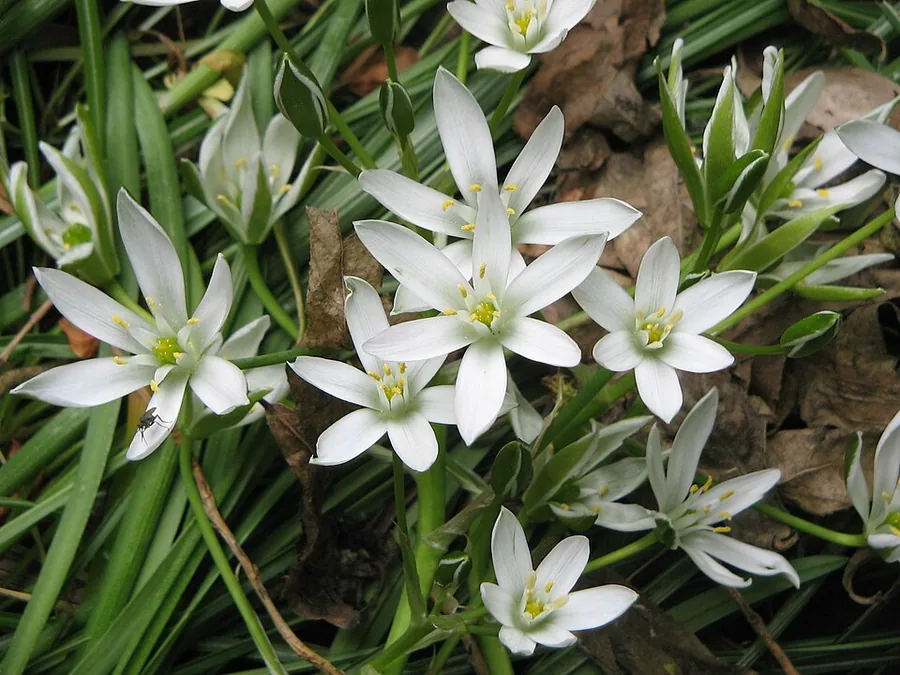
Star of Bethlehem puts on a bright little show every spring, throwing open white, star-shaped flowers streaked green down the back. The blooms keep their own clock, springing open around midday and folding shut by late afternoon or the moment clouds move in, the quirk that won it the name nap-at-noon. Grassy leaves race up first, and the flowers ride low above them as late spring lands.
It joins the asparagus family and grows from a bulb that multiplies like it means it, spinning off offset bulblets by the handful. That drive makes it a joy to establish, since it takes hold and never looks back, but the same energy sends a neat clump marching into the lawn. Across much of the northern United States it has already leapt the garden fence into pastures and turf, where it earns the label weed.
One thing keeps the enthusiasm in check: the whole plant is poisonous. Every part carries cardiac glycosides, the bulb packing the biggest punch, and they can hit pets, livestock, and people. Grow it for those flowers by all means, but plant it where children and animals cannot reach, and snap on gloves before you dig in.
Care
The short version: drop the bulbs into moist, well-drained soil in fall under full sun to part shade, keep the water coming through spring growth and bloom, then back off and let them dry down and die back over summer.
Light
Hand it full sun and the flowering really takes off, though it holds its own in partial sun or light shade and takes roughly 25 percent shade in stride. Slot it under deciduous trees and it thrives, racing through its growth early in the year before the canopy leafs out overhead.
Water
Keep the soil evenly moist through spring growth and bloom, splashing water on about every 5 to 10 days when the rain quits. Once it is established it powers through summer drought without a blink, and it wants nothing to do with wet ground after the foliage goes dormant in late summer.
Soil
Set it into moist, fertile, well-drained loam loaded with organic matter and it digs right in. It shrugs off pH worries and runs happily from 6.0 to 7.5, so drainage is the real game, not richness, since standing water rots the bulb fast.
Temperature
This bulb is built tough, powering through winter cold near 5°F (-15°C) and summer heat up to around 86°F (30°C). It waits out the freeze underground and bursts back into growth the moment spring warms the soil.
Humidity
Skip the humidity worries entirely, since ordinary outdoor air is all it asks. Put your energy into drainage at the roots, which counts for far more than moisture in the air.
Feeding
It runs lean on food and likes it that way. Work a shot of balanced bulb fertilizer or compost into the bed at planting, hand it a light feed in early spring as growth fires up, and then hold off, since a rich bed only revs up its spreading.
Pruning
Let the foliage die back on its own after bloom, because that is how the bulb recharges for next year's run. Clip off the spent flower stalks to rein in self-seeding, and pull on gloves first, since the sap can irritate skin.
Repotting
Dig and divide the clumps every 3 to 4 years once they pack in tight. The plant flags the moment loud and clear, with flowering dropping off, bulbs shoving up to the surface, and a swarm of small bulblets crowding the parent.
Size & spacing
These stay low, topping out at just 6 to 12 inches (15 to 30 cm), but do not let that fool you. Each clump barrels out to 12 to 24 inches (30 to 60 cm) wide and keeps pushing, so hand it some room, or a contained bed, and it will spread without steamrolling its neighbors.
When to plant
This bulb rewards a little fall planning. Tuck the dormant bulbs in during September or October, let them ride out winter, and they charge up with leaves and then white flowers from May into June. Once the blooms fade the foliage yellows and the plant powers down for a summer rest.
Northern hemisphere
Southern hemisphere
Typical months for a temperate climate: start earlier in warm zones, later where spring frosts linger.
- Sow: not typically started indoors; plant dormant bulbs directly
- Plant: fall (September to October)
- Harvest: late spring to early summer (May to June)
Hardiness
USDA hardiness zones: 4–9
Temperature: down to -34°C
Troubleshooting
For such a willing grower, its two real snags pull in opposite directions, which keeps things interesting. It rots in soggy ground, yet it spreads with real gusto everywhere else. Track down what you are seeing below and pounce early, before a wet bulb turns or a runaway bulblet launches a whole colony.
Soft, mushy bulbs that never break ground
Bulbs that go soft and never break ground have hit bulb rot, which strikes when the soil stays too wet. Waterlogged ground, or a heavy soaking while the bulb rests through summer, almost always sets it off. Jump on it fast: lift any bulb you doubt, feel for soft, foul-smelling tissue, chuck the ones that have turned, and replant the firm white bulbs in ground that drains far better.
Fix:
- Lift and discard affected bulbs
- Improve drainage by amending with grit or organic matter or move to a raised, better-drained site
- Replant healthy firm bulbs in well-drained soil
Green patches charging into the lawn and beds
Blame those eager offset bulblets, which the plant cranks out around each parent bulb before bolting past the bed into lawns and pastures. Dig the whole clump and hunt down every small bulblet before it breaks loose, then bag the haul instead of composting it. Gear up to repeat the dig for a few seasons, because any you miss come charging right back.
Fix:
- Dig out clumps removing all bulblets before they detach
- Bag and dispose of dug bulbs rather than composting
- Repeat removal over several seasons as missed bulblets resprout
Toxicity
Here is the one thing to respect: treat this plant as a poison, not a snack. Every part holds cardiac glycosides, loaded heaviest in the bulb, and they can lay low cats, dogs, horses, and livestock and harm people besides. Nothing on it is edible, and even the water from a vase of cut stems has been tied to poisoning, so keep it clear of anyone who might sneak a taste.
Toxic to
Cats · Dogs · Horses · Rabbits · Livestock · Birds · People
Cats Severe
A cat that chews any part usually kicks off with drooling and vomiting, quits eating, and comes down with diarrhea. The bulb is the real threat, where the glycosides run highest, and a bigger bite can throw off the heart rhythm and leave the cat weak or collapsed, so keep prowling cats well clear.
Dogs Severe
Dogs that dig up and gnaw the bulbs run the biggest risk. Keep a sharp eye out for drooling, a lost appetite, vomiting, and diarrhea, and treat any stagger, weakness, or irregular heartbeat as a flat-out emergency.
Horses Severe
A grazing horse may drool hard and show colic-like belly pain, diarrhea, and muscle tremors. As the toxin piles up the heartbeat turns fast and erratic, and that is where the danger really bites, so keep horses off any patch.
Rabbits Severe
This is no safe forage for a rabbit, thanks to the same cardiac glycosides. Look for a churning gut and a refusal to eat, and know that enough of the bulb can throw off the heart, so keep the plant well beyond reach.
Livestock Severe
Cattle, sheep, and goats often flag signs within hours, kicking off with salivation, diarrhea, and abdominal pain. Once the heart rate and rhythm start to slip the case turns serious fast, and grazing enough bulbs can prove deadly, so fence stock away from it.
Birds Severe
Birds catch the cardiac toxins too. A poultry flock or pet bird that pecks the foliage or bulbs can wind up with gut distress and the same dangerous strain on the heart, so wall them off from any patch.
People Caution
No part of this plant is food, and children top the watch list. Swallowing leaves, flowers, or especially a bulb can trigger vomiting and, in quantity, the same heart-rhythm trouble that hits pets, so handle it as a poison and scrub up after touching the sap.
Keep bulbs and plants away from pets and children; wear gloves when handling as the sap can irritate skin. Even vase water from cut stems has been implicated in poisoning.
Helpline numbers

United States
ASPCA Animal Poison Control: (888) 426-4435 (fee applies)
Poison Control: (800) 222-1222



Canada
Poison Centres: 1-844-764-7669
Varieties
There is no long roster of named cultivars to chase here, which suits its wild spirit. What lands in gardens is the species itself, plain and true.
Ornithogalum umbellatum (species)
The wild species you will actually grow throws up white, star-shaped flowers striped green on the back that spring open near midday and shut by late afternoon or under cloud, the lively quirk that earned it the name nap-at-noon.
How to propagate
Multiplying this one is a thrill precisely because it does the heavy lifting for you, peeling off fresh offsets every year for you to lift and spread around.
Offsets & pupsEasy
After foliage dies back in summer or in early fall when dormant · Blooms the following spring once replanted
The fastest, most satisfying route is through offsets. Once the foliage dies back in summer or early fall, lift a clump, twist the small bulblets off the parent, and plant them about 2 to 3 inches deep, and each one rockets into flower the very next spring.
DivisionEasy
Summer dormancy after foliage yellows · One growing season
Division tidies and multiplies in one move. Wait for the leaves to yellow in summer dormancy, then dig and split any clump that has packed in tight; the divisions dig in within a single growing season, and the plant keeps charging outward on its own besides.
SeedModerate
Sow ripe seed in fall · Several years to flowering
Seed is the slow lane and rarely worth the wait. Sow ripe seed in fall if you fancy the challenge, but the seedlings crawl and take several years to flower, which is why nearly all the spread rides on bulblets rather than seed.
Myths
Star of Bethlehem is only mildly toxic and never does worse than upset a stomach.
Every part of the plant carries cardiac glycosides, and the bulb packs by far the most. A tiny nibble might stop at gut upset, but a real dose can throw the heart into the same dangerous rhythm trouble that foxglove sparks. Treat it as genuinely poisonous, not a passing stomachache.
It is a harmless naturalizing wildflower, safe to plant anywhere you like.
It fires off offset bulblets fast, breaks out of the garden, and turns into a weed of lawns, pastures, and turf. Alabama even lists it as a Class C noxious weed. Plant it only where you can pen it in, if at all.