Houseplant · Piperaceae
String of Turtles
Peperomia prostrata
A trailing peperomia strung with tiny leaves that mimic little turtle shells, ready to spill down a shelf for years.
Bright indirect
Every 7–14 days
68–75°F · 20–24°C
USDA 10–12
Overview
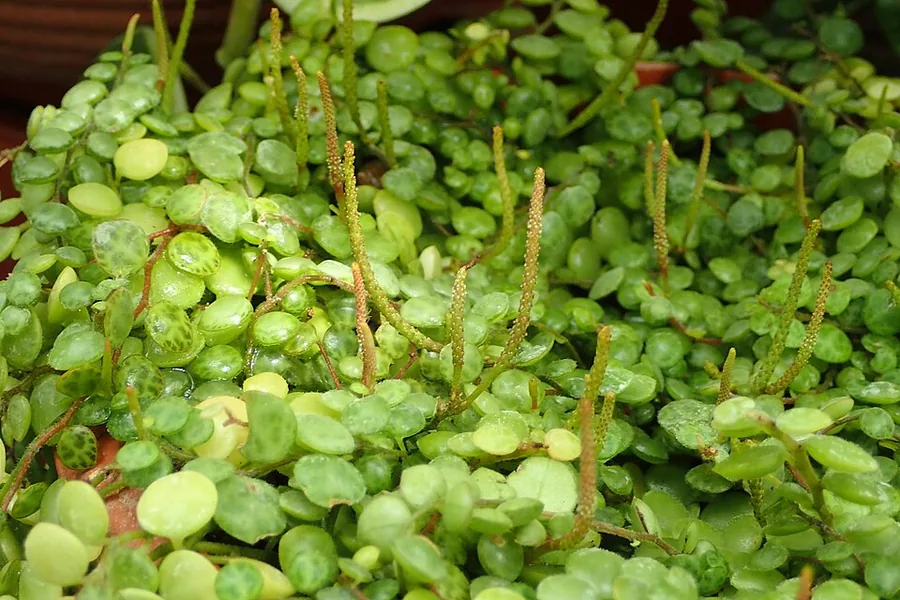
String of turtles rewards a grower from the very first leaf. It hails from the rainforest floor of Ecuador, scrambling over mossy logs, and every bit of its appeal sits in that foliage. Each leaf rounds out to the size of a fingernail and carries a pale web of veins that genuinely looks like a tiny turtle shell. It grows slowly and stays compact, trailing just 9 to 12 inches (23 to 30 cm), so it slots right onto a shelf edge or into a small hanging pot.
Better still, it earns its easy name by asking for so little. Bright, indirect light and a pot that drains fast handle most of what it wants, and it bounces back from a skipped watering far more readily than from a soggy one. Those semi-succulent leaves bank a small water reserve, letting the plant cruise between drinks. Get the basics right and it practically runs itself.
The one move to avoid is drowning it. Keep the soil soaked like a thirsty fern and the roots rot in a hurry, so let it dry partway and give it bright light instead. Do that, and a single starter plant races into a long, patterned cascade that keeps going for years.
Care
The short version: hand it bright, indirect light, a fast-draining pot, and water only once the top half of the soil dries out. Keep it warm, feed it lightly through the growing season, and skip the overwatering that trips most growers up.
Light
Give it bright, indirect light, the kind that lands a few feet back from an east or south-facing window. It gets by in medium or even low light, but the turtle-shell markings fade when the light drops too low. Steer it clear of harsh, direct sun, which scorches those little leaves.
Water
Hold off until the top half of the soil dries out, which usually lands every 7 to 14 days. The semi-succulent leaves carry their own reserve, so the plant shrugs off a dry stretch far better than a wet one. Overwatering is the quickest way to lose it, so err dry.
Soil
Pot it in a fast-draining houseplant or cactus mix that whisks water through instead of holding it. A loamy or sandy blend hits the mark, and a pH from 5.5 to 7.5 keeps it happy. Drainage carries more weight here than anything else.
Temperature
Regular room warmth is the sweet spot, so anywhere from 68°F to 75°F (20°C to 24°C) works. It has zero patience for frost or cold drafts, so move it away from chilly windows and doorways once winter sets in.
Humidity
Skip the fussing over numbers, because everyday room humidity does the job. A bit more moisture in the air is a nice bonus, yet the plant powers along in plain room air with no misting or humidifier.
Feeding
Feed it lightly across spring and summer, right through its active growth. A weak liquid fertilizer about once a month keeps it fueled, or drop in a slow-release granular feed once a year. It is a slow grower, so a light touch beats a heavy one.
Pruning
Pinch those trailing stems back now and then to drive fuller, bushier growth. Clip off anything leggy or damaged, and the plant snaps back into a tidier shape.
Repotting
This one thrives snug in its pot and holds for several years without a move. Bump it up only when roots poke through the drainage holes, water blasts straight through, or growth stalls, and then only by a single size.
Size & spacing
It stays small, trailing 9 to 12 inches (23 to 30 cm) with a slim spread of just 3 to 4 inches (8 to 10 cm). That compact footprint is exactly why it drops so easily onto a desk, a shelf edge, or a little hanging basket.
Troubleshooting
Almost every hiccup with this plant comes down to water or light, and it flags trouble early. Spot the first signals on the leaves and roots and you can turn things around fast. Find your symptom below and jump on it.
Dropping or yellow leaves with soft, mushy stems
Leaves letting go and yellowing while the stems go soft points straight to root rot from overwatering, the one thing that fells this plant fastest. The soil sits wet, the roots brown and soften, and the foliage drops. Cut the watering right back, shift it into fresh, well-draining mix, and snip out any rotted roots before the damage spreads.
Fix:
- Reduce watering frequency
- Let soil dry partway before watering again
- Repot into fresh well-draining mix and trim rotted roots if rot is present
Sticky film, fine webbing, or tiny bugs on the plant
Sticky residue, fine webbing, or small crawlers means sap-sucking pests have moved in, usually mealybugs, spider mites, scale, or whiteflies clustered under the leaves and at the stem joints. Wipe them off, hit them with insecticidal soap, and pull the plant away from its neighbors so nothing spreads. It usually fends pests off, so an outbreak tends to ride in on a fresh plant.
Fix:
- Wipe off pests
- Treat with insecticidal soap
- Isolate the plant to prevent spread
Washed-out leaves with dull markings
When the turtle-shell pattern flattens and dulls, the plant is crying out for light. It has been parked too far from a window in dim conditions. Move it into bright, indirect light near an east or south-facing window and the markings crisp right back up.
Fix:
- Move to a spot with bright, indirect light from an east or south-facing window
Toxicity
Here is a win for homes with pets or small kids. The ASPCA rates this trailing peperomia non-toxic, so a nibbled leaf poses no danger to cats, dogs, or a curious child. Park it on a low shelf and enjoy it.
Safe for
People · Cats · Dogs · Horses · Rabbits · Livestock · Birds
Cats None
Cats are in the clear. The ASPCA marks this peperomia non-toxic to them, so a curious nibble does no harm at all.
Dogs None
Dogs get the all-clear too. Listed non-toxic by the ASPCA, this plant will not poison a pup that grabs a trailing stem.
Horses Safe
Nothing in this peperomia is known to trouble horses, though a small trailing houseplant like this rarely lands within their reach.
Rabbits Safe
A rabbit that snatches a mouthful of leaves comes to no harm, since the plant packs no toxins that affect them.
Livestock Safe
Cattle, goats, and sheep can graze right past it with no toxic risk from this peperomia.
Birds Safe
A pet bird can perch and peck away freely, because the plant holds nothing that would harm it.
People Safe
It stays safe around kids as well, so a stray leaf in a small hand is no reason to panic.
How to propagate
Multiplying string of turtles is a breeze, and one plant hands you all the starts you could want. Root a single leaf or a whole length of stem, both through the warm growing months.
Leaf cuttingsEasy
Spring or summer during active growth · Several weeks to a few months to root and establish
Snap off a healthy leaf with its short stalk attached and press it into moist, well-draining mix. Set it going in spring or summer while the plant is growing, then wait it out, because roots and a fresh little plant take anywhere from a few weeks to a couple of months to take hold.
Stem cuttingsEasy
Spring or summer during active growth · Several weeks to root
Clip a stem a few inches long during the spring or summer growth and lay it flat on moist mix. A dab of rooting hormone pushes it along, and the cutting usually roots within a few weeks.
Myths
String of turtles is a true succulent that should be watered like a cactus and kept bone dry.
Not so. It runs only semi-succulent, so the leaves stock a little water while the plant still wants to dry just partway between drinks, not all the way. Let it go bone dry and it sulks, yet overwatering is the far bigger threat and the usual reason one rots away.