Shrub · Clethraceae
Summersweet
Clethra alnifolia
Give it steady moisture and a little shade, and summersweet fires off fragrant spikes long after the rest of the garden has clocked out.
Partial shade
Every 3–7 days
USDA 3–9
3–8 ft · 0.9–2.4 m
Overview
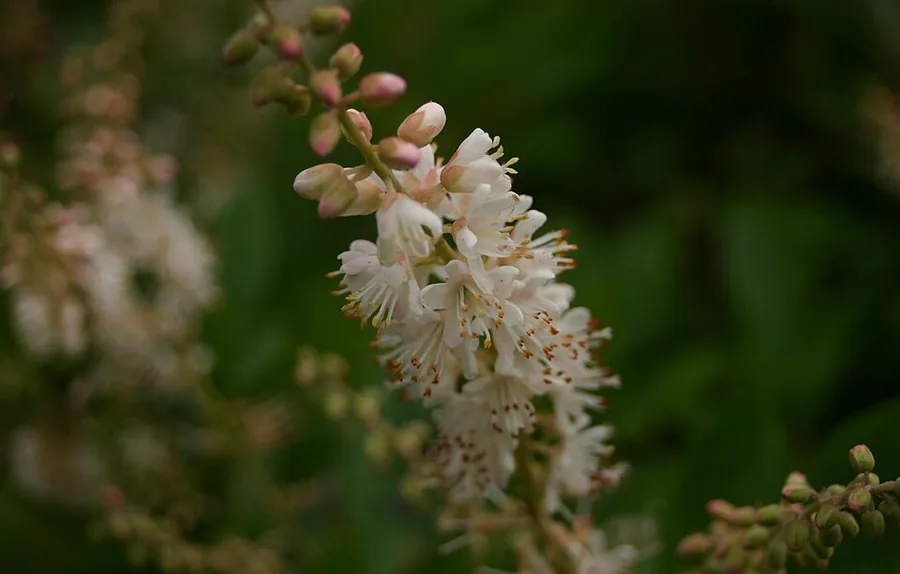
Summersweet throws its big show in July and August, sending up bottlebrush spikes of fragrant white or pink flowers right when the rest of the garden starts to coast. It belongs to the Clethraceae family and grows wild along the eastern seaboard in damp woods and along stream edges. That swampy backstory unlocks the whole plant, because here is a shrub that flat-out wants wet feet.
It is a rewarding, low-drama plant to grow. Hardy across a huge sweep of cold, from zone 3 clear to zone 9, it powers through brutal winters and takes clay, salt, and standing water that would drown most shrubs. Its flowers keep bees and butterflies working the garden all summer, and the foliage lights up a clean golden yellow before it drops in fall.
Hand it the moist, acidic ground it loves and it barely asks for another thing. The one deal-breaker is a hot, dry site, where the leaves bronze and spider mites pile in. Set it somewhere damp with a splash of afternoon shade and it spreads into a fragrant, unstoppable colony.
Care
The short version: partial shade to full sun, in moist to wet, acidic soil that never dries out, watered through the heat, pruned in late winter, and fed once in spring.
Light
Summersweet hits its stride in partial shade but takes on everything from full sun to deeper shade. Some direct light cranks up the flower count, yet it keeps blooming where plenty of shrubs would quit, which makes it a rare star for a shadier corner.
Water
Keep the soil evenly moist to wet and never let it bake dry. Water every 3 to 7 days, and go more often while a new plant digs in or during a dry spell. This is a streamside shrub down to its roots, so wet feet beat thirst every time.
Soil
Plant it in moist to wet, acidic ground loaded with organic matter. A pH anywhere from 4.5 to 7.0 suits it, and unlike pickier shrubs it powers through heavy clay and soggy, low-lying spots without a fuss.
Temperature
Cold barely registers here. The shrub stays hardy from roughly -29°F to 100°F (-34°C to 38°C), carrying it clean through zone 3 winters and blazing southern summers alike.
Humidity
Plain outdoor air is all it wants, so there is no number to chase. Moisture at the roots is the real target, since dry air stacked on dry soil is what rolls out the welcome for spider mites.
Feeding
One spring feeding does the whole job. Reach for a balanced or acidifying fertilizer made for acid-loving plants to keep the soil on the sour side it craves.
Pruning
Since it blooms on new wood, prune in late winter or early spring to shape it and check its size while keeping every flower. Strip off the root suckers too, unless you are keen to let it spread into a colony.
Repotting
Out in the ground, summersweet almost never needs its roots touched. In a container, repot only when roots circle the pot, shove out the drainage holes, or water runs straight through without soaking in.
Size & spacing
A mature shrub climbs to 3 to 8 feet (91 to 244 cm) tall and fans out 4 to 6 feet (122 to 183 cm) wide. Give it room for that full width, and count on it to sucker outward past where you first planted it.
When to plant
Summersweet drops into the ground in spring or fall, while the weather stays mild and the roots dig in before the next blast of heat or cold. The fragrant flowers roll out on their own in July and August, riding on growth the plant fires up that same year.
Northern hemisphere
Southern hemisphere
Typical months for a temperate climate: start earlier in warm zones, later where spring frosts linger.
- Plant: Spring or fall
- Harvest: July to August
Hardiness
USDA hardiness zones: 3–9
Temperature: down to -40°C
Troubleshooting
Almost every hiccup with summersweet circles back to one thing: a site that runs too hot and too dry. Read the leaves early and most problems melt away once the moisture is dialed in. Match what you spot below, then jump on it before the stress digs in.
Stippled, bronzing leaves laced with fine webbing
Those speckles point straight to spider mites, which pounce the moment a plant sits too hot and too dry. Turn the hose on the foliage and blast the mites loose, then keep the soil moist so the shrub stops rolling out the welcome mat. Insecticidal soap or horticultural oil finishes off a heavier run when a plain spray leaves stragglers behind.
Fix:
- Spray foliage with a strong stream of water to dislodge mites
- Improve soil moisture and avoid hot, dry sites
- Apply insecticidal soap or horticultural oil to affected foliage if needed
Wilting and yellowing in a hot, dry spot
That droop and fade spell drought stress, and the fix lives in the planting site more than in anything you did. Summersweet runs on steady moisture and flags fast once dry heat sets in. Step up the watering to keep the root zone evenly damp, pile on mulch to lock that moisture down, and shift a shrub that keeps struggling to a cooler, damper, partly shaded home where it can rebound.
Fix:
- Increase watering frequency to keep soil evenly moist
- Mulch to conserve moisture and keep roots cool
- Relocate to a moister, partly shaded site if chronically stressed
Toxicity
Great news for anyone growing with pets or small children underfoot. Summersweet stays off the ASPCA toxic-plant lists and counts as non-toxic and pet-safe. The worst a stray nibble is likely to serve up is a brief, mild stomach upset, the same as with almost any garden plant.
Safe for
People · Cats · Dogs · Horses · Rabbits · Livestock · Birds
Cats None
Great news for cat owners: summersweet stays clear of the ASPCA toxic list. A cat that grabs a mouthful of leaf might feel a quick tummy upset, no worse than any other plant would cause, and then bounce right back.
Dogs None
Dogs get to roam the garden without a second thought. The shrub packs no known toxin, though a dog that gulps a big wad of leaves may drool for a moment or leave a soft stool behind.
Horses Safe
Horses do just fine sharing space with summersweet, since it hides no harmful compounds. A few leaves grabbed on the move will not faze them at all.
Rabbits Safe
Rabbits get to nibble around the plant freely. It holds nothing poisonous, so a stray bite of leaf does zero damage.
Livestock Safe
Cattle, goats, and sheep can graze right up beside summersweet with no trouble. The foliage skips the toxins that plague grazing animals, so they stay in the clear.
Birds Safe
Birds flit safely through the shrub, and better yet it turns into a pollinator hot spot, pulling bees and butterflies to its fragrant spikes. Nothing on the plant puts a feather at risk.
People Safe
People have nothing to fear from summersweet either. It is not grown for the plate, but a curious kid who tastes a leaf lands nothing worse than a possible mild stomach ache.
As with any plant, ingestion of large amounts of plant material may cause mild, transient stomach upset.
Varieties
Several named summersweet selections turn up at nurseries, split mostly by size and flower color. These are the standouts worth chasing down.
Hummingbird
This compact dwarf holds tight at around 2 to 4 feet tall and loads itself with dense white flower spikes.
Ruby Spice
It flaunts deep pink flowers that grip their color right through bloom instead of fading pale.
Pink Spire
Its pink buds burst open into soft pink, fragrant spikes.
Sixteen Candles
It fires up crisp white spikes that shoot well above the foliage on a tidy, compact frame.
Companions
Summersweet pairs best with other natives that share its love of wet, acidic ground, the kind of partners that thrive in a rain garden or a damp, shaded border.
Plant near
Itea virginica (Virginia sweetspire): Shares the same moist, acidic soil and sun-to-part-shade conditions for wet-site and rain-garden plantings.
Ilex verticillata (winterberry): Native shrub that thrives in the same wet to moist soils and pairs well in naturalized and pollinator plantings.
How to propagate
Summersweet multiplies with almost no effort, and that suckering habit some gardeners battle is exactly what hands you free plants for the taking.
DivisionEasy
Late winter to early spring · 1 to 2 growing seasons
The fastest win is to break off the rooted suckers that crowd the edge of a colony. Dig them up in late winter or early spring, drop them into new ground, and watch each grow into a full shrub over 1 to 2 growing seasons.
Stem cuttingsModerate
Early summer (softwood) · Several weeks to root, then 1 season to establish
Snip softwood cuttings in early summer and root them under mist or a humidity cover for a fun bit of propagation. They push roots in a few weeks, then take about a season more to establish.
SeedModerate
Sow collected seed in fall or after cold stratification · 1 to 2 seasons
Scatter the fine seed across the surface in fall, or after cold stratification, since it fires up only with light and a good chill. Give it 1 to 2 seasons to reach a real plant, and remember that named cultivars refuse to come true from seed.
Myths
Summersweet only blooms well in full sun.
Not so, because it ranks among the few flowering shrubs that bloom reliably in part shade. You still pull fragrant, late-summer spikes out of the very corners where most shrubs throw in the towel.
Prune summersweet right after it flowers to get more blooms.
Skip that habit, since it blooms on new, current-season wood and the winning time to prune is late winter or early spring. Cut it then and the coming season's flowers stay fully intact, so shape away.