Shrub · Iteaceae
Virginia Sweetspire
Itea virginica
A native shrub that keeps earning its place, with scented spring spires and blazing fall color year after year.
Full sun
Every 3–7 days
USDA 5–9
3–8 ft · 0.9–2.4 m
Overview
For a shrub that gives so much and asks so little, Virginia sweetspire is hard to beat. It grew up along the wet woods and stream banks of the eastern United States, and that wild toughness follows it right into the garden. Hand it some room and steady moisture and it takes off, practically running itself.
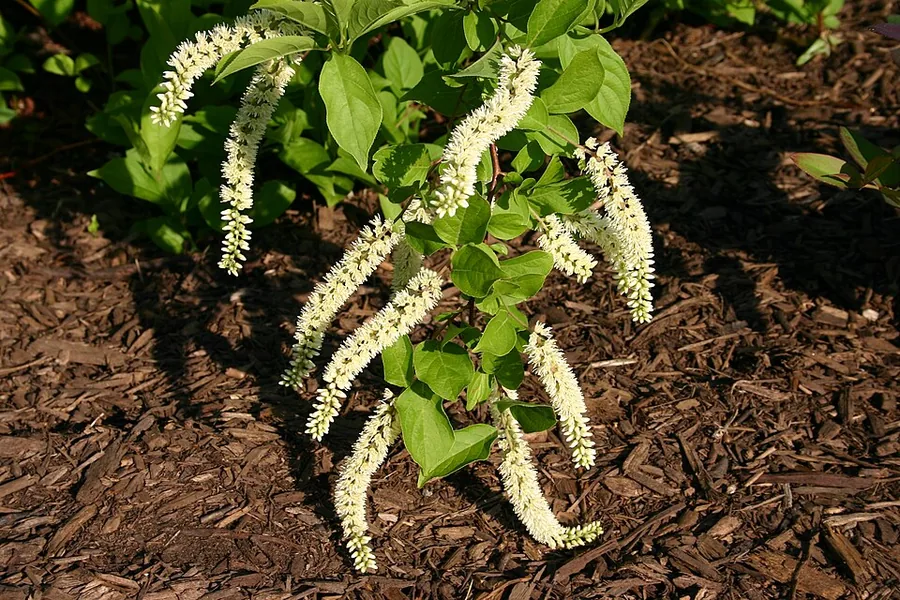
The real payoff lands in two seasons. Late spring sends up fragrant white flower spires along the arching stems, and once fall hits, the leaves catch fire in deep red and burgundy that cling on long after other shrubs have called it quits. It holds its own in a mixed border, but it truly takes off massed along a wet edge or packed into a rain garden.
One thing to get ahead of before planting: sweetspire spreads by suckers, and it means business. Turn it loose in a soggy problem corner and that drive becomes a gift, blanketing the ground with strong growth. Drop it into a neat bed and it hands you a yearly round of clipping back the strays. So aim it at the right spot and let those eager roots do their thing.
Care
The short version: plant it into moist to wet, slightly acidic soil in full sun to part shade, keep it well watered as it takes hold, and time your pruning for right after it blooms.
Light
Sweetspire takes on just about any light, thriving anywhere from full sun to full shade, which is a real trick for a flowering shrub. Aim for at least some direct sun, though, because a deep-shade spot cuts into the flowers and dulls that show-stopping fall color.
Water
This shrub loves to drink, so keep the soil moist to downright soggy. It powers through flooding, clay, and lousy drainage, which is exactly what makes it a rain-garden and streamside standout. An established plant will tough out a dry spell, but it really hits its stride with steady moisture.
Soil
Set it up with moist, fertile, organic-rich soil leaning acidic, a pH of 5.0 to 7.0, and it will reward you. It charges right through clay and wet ground, but alkaline soil is its one weak spot, turning the leaves yellow with chlorosis.
Temperature
Cold barely fazes this one. It shrugs off winter lows near -20°F (-29°C) and summer heat up to 100°F (38°C), which is why it thrives right across zones 5 to 9.
Humidity
Out in the garden, humidity is a total non-factor for sweetspire. It came straight out of damp woodland, so it just rolls with whatever the sky delivers.
Feeding
Feeding is refreshingly hands-off. One shot of balanced fertilizer in spring, or even just a scoop of compost on top, keeps it growing strong all season.
Pruning
Nail the timing and this shrub keeps blooming, because sweetspire flowers on old wood. Get in right after the blooms finish, before the next buds set in late summer, and clear out stray suckers and tired old stems while you are at it to keep it looking sharp.
Repotting
As a landscape plant, sweetspire almost never needs repotting. If one is growing in a pot, bump it up only when roots start circling, water blasts straight through, or growth stalls even with regular watering.
Size & spacing
Count on a shrub that hits 3 to 8 feet (91 to 244 cm) tall and 3 to 6 feet (91 to 183 cm) wide, then keeps pushing outward on its suckers. Give each one room to stretch, or plant compact types closer together for a low, solid sweep.
When to plant
Cold-hardy and eager, sweetspire thrives across zones 5 to 9 and powers through winter lows near -20°F (-29°C). Get new plants in the ground in spring or fall, then look forward to the flower spires from late spring into early summer and that big burst of fall color once the nights cool down.
Northern hemisphere
Southern hemisphere
Typical months for a temperate climate: start earlier in warm zones, later where spring frosts linger.
- Plant: Spring or fall
- Harvest: Late spring to early summer (May to June)
Hardiness
USDA hardiness zones: 5–9
Temperature: down to -29°C
Troubleshooting
Here is the best part: sweetspire mostly cruises along with no serious pests or diseases to slow it down. When something does go sideways, it usually traces straight back to placement or pruning timing. Spot your symptom below and jump on the fix.
New shoots charging out past the original plant
This one is pure sweetspire: it suckers from the roots and, given the chance, builds a dense colony fast. Jump on the stray shoots and cut or dig them out at ground level as they pop up, or drop in a root barrier and keep the edge sharp to rein it in. The easiest play of all is to plant it where a spreading thicket earns its keep, or to grab a compact cultivar from the start.
Fix:
- Dig out or cut unwanted suckers at ground level as they appear
- Install a root barrier or site the plant where colony spread is acceptable
- Mow or edge the perimeter regularly to limit lateral expansion
Leaves fading to yellow while the veins stay green
That yellowing is chlorosis, the classic sign of soil that runs too alkaline for the roots to pull up iron. Run a soil test to confirm, then go after the root cause by dropping the pH with elemental sulfur or acidic organic matter. A hit of chelated iron and a pine-bark mulch green things up fast while the pH keeps sliding down.
Fix:
- Test soil pH and amend with elemental sulfur or acidifying organic matter to lower pH
- Apply chelated iron as a temporary corrective measure
- Mulch with acidic organic matter such as pine bark
Sparse blooms and a lackluster fall
When the flowers thin out and the fall color falls flat, two things usually knock it back: too much shade and pruning at the wrong time. Shift a shade-bound plant into a spot that grabs some direct sun each day and watch the bloom bounce back. And since the buds ride on old wood, only prune right after flowering, never in late winter or spring.
Fix:
- Site or transplant to a location receiving at least some direct sun each day
- Prune only immediately after flowering, not in late winter or early spring
Toxicity
Even better for anyone with pets or kids running around: sweetspire is completely safe to grow. It never turns up on the ASPCA toxic-plant list, and it poses no real threat to cats, dogs, horses, livestock, birds, or people. The worst a big mouthful of leaves can do is stir up a brief stomach upset, no different from eating too much of any plant.
Safe for
People · Cats · Dogs · Horses · Rabbits · Livestock · Birds
Cats None
Sweetspire is nowhere on the ASPCA toxic list, so a curious cat that grabs a leaf is totally fine. The most a big mouthful might do is stir up a little mild stomach upset.
Dogs None
Dogs get the all-clear too. A pup can chew away at the foliage without any real risk, though downing a big load could bring a quick round of loose stool, like any plant might.
Horses Safe
Horses have zero known toxicity to deal with here, so a grazing horse can browse the shrub freely.
Rabbits Safe
Rabbits can chow down on the leaves all they like, since the plant packs no toxin that touches them.
Livestock Safe
Cattle, goats, and sheep are all safe around this native shrub, which holds nothing that would bother grazing stock.
Birds Safe
Birds are completely in the clear, and songbirds flock right to it. Between the seeds and the insects it pulls in, it earns a front-row spot in any wildlife garden.
People Safe
People are safe here too. Nobody grows it to eat, but a kid who tastes a leaf comes to no harm at all.
No special handling precautions are required for toxicity; as with any plant, ingestion of large amounts of foliage could cause mild, transient gastrointestinal upset.
Varieties
Most growers skip the wild species and grab a named selection, which stays neater and colors up with real punch. These three top the list.
Henry's Garnet
A Missouri Botanical Garden Plant of Merit that powers up to 3 to 5 feet tall and 4 to 6 feet wide, pushing out longer flower spires and richer red-burgundy fall color than the wild species.
Little Henry (Sprich)
A punchy little dwarf that holds around 2 to 3 feet in every direction, loaded with creamy-white spires and lighting up yellow, orange, and red come autumn.
Scentlandia (SMNIVDFC)
A compact standout bred for stronger flower fragrance and tougher buds that push through cold better than most.
Companions
Sweetspire pairs naturally with other natives that share its taste for moist, acidic ground, which makes it a mainstay of rain gardens and wet borders.
Plant near
Inkberry holly (Ilex glabra): Another native shrub tolerant of moist, acidic soils, pairing well in rain gardens and naturalized wet borders.
Summersweet (Clethra alnifolia): Shares preference for moist to wet acidic soils and part shade, complementing sweetspire in pollinator and rain-garden plantings.
How to propagate
Multiplying sweetspire is a genuine treat, and thanks to its suckering, low-branching habit, it practically throws several easy methods your way.
Stem cuttingsEasy
Spring to early summer using softwood cuttings · Several weeks to root; transplantable the following season
Grab softwood cuttings anywhere from spring to early summer and they root fast and willingly. Give them several weeks to build roots, then move the young plants out to their permanent home the following season.
DivisionEasy
Dormant season or early spring · One season
With all the suckers sweetspire kicks out, division is a breeze: dig up a clump in the dormant season or early spring and pull the rooted shoots off the parent. Each division locks in over a single season.
LayeringEasy
Spring to summer · One growing season to root
Those low, arching branches root themselves the moment they hit moist soil. Pin one down in spring or summer, let it root over a single growing season, and then snip it free from the parent.
SeedModerate
Sow collected seed; slower than vegetative methods · Multiple seasons to reach landscape size
Seed works too, though it takes the scenic route. Collected seed sprouts into less uniform seedlings than cuttings or divisions and needs several seasons to bulk up to real landscape size.
Myths
Virginia sweetspire is toxic and risky for pets.
Not a chance. Itea virginica has never landed on the ASPCA toxic-plant list, and it counts as safe around cats and dogs. A pet that grabs a leaf faces nothing worse than the mild stomach upset any plant can trigger if enough goes down.
Sweetspire can be pruned whenever the mood strikes.
Prune in late winter or spring and you will wipe out the buds before they get to open. This shrub loads its flowers onto the previous season's wood, so the only window that works is right after the blooms fade. Hit that mark and you keep it tidy and keep next year's show rolling.