Herb · Lamiaceae
Thyme
Thymus vulgaris
Plant thyme in full sun and lean, dry soil and watch it hand you fragrant sprigs year after year.
Full sun
Every 7–14 days
USDA 5–9
6–12 in · 15–30 cm
Overview
Thyme earns its spot in any herb patch. This low, woody Mediterranean plant belongs to the mint family and grows as a hardy perennial, charging back to life each spring once it settles in. It thrives on neglect, asking for little beyond sun and quick-draining soil, which makes it a rewarding first success.
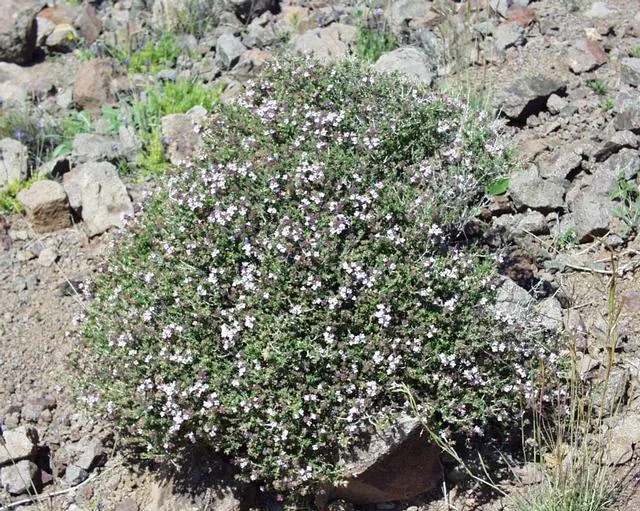
It packs a lot into a small footprint, topping out at just 6 to 12 inches (15 to 30 cm) and spreading into a dense, aromatic mound. Come early summer it sends up tiny pink to lilac flowers that bees chase all day. Snip sprigs whenever the kitchen calls, and clip them just before those flowers open to catch the flavor at its peak.
The real thrill of thyme is how it flips the usual rules. It craves lean, gritty soil and a good dry spell between waterings instead of rich beds and constant moisture. Grow it hungry and it rewards you with fragrant, intensely flavored foliage, while coddling it only breeds soft, bland growth and rot.
Care
The short version: plant thyme in full sun and lean, fast-draining soil, then water only once the top half dries out. It powers through drought, feeds lightly, and a single yearly trim keeps it bushy and productive.
Light
Load thyme up with full sun, at least six hours of direct light a day, since that sunshine drives the oils that pack in its flavor. It will get by in a bit of partial sun, but shade drains its punch and leaves it leggy, so aim for the brightest spot you have.
Water
Let the top half of the soil dry out before you water again, roughly every 7 to 14 days. Once it establishes, thyme powers through drought with ease, and the one thing that trips it up is soggy soil, which drives it straight toward root rot.
Soil
Set thyme into lean, well-draining sandy or gravelly loam and resist the urge to enrich it. It rolls with a wide pH range of 6.0 to 8.0, so put your energy into sharp drainage rather than fertility.
Temperature
This herb is genuinely tough, thriving anywhere from 0°F to 95°F (-18°C to 35°C). It shrugs off winter cold within that range and summer heat alike, though long hot, dry spells can draw in spider mites, so stay alert during heat waves.
Humidity
Thyme wants the low humidity of around 30% to 50% it grew up with on dry Mediterranean slopes. Damp, stagnant air invites disease, so keep the air moving and give the plant room to breathe.
Feeding
Keep feeding light, because thyme is a light feeder and overdoing it flattens the flavor. One spring hit of balanced fertilizer or a scoop of compost fuels it for the whole season.
Pruning
Shear thyme lightly after flowering and again in early spring to drive bushy growth and hold off woodiness. Just keep your cuts out of the old bare wood, since the plant is slow to bounce back from there.
Repotting
Refresh container thyme with new soil every 2 to 3 years, or jump on it sooner if roots circle the pot, burst through the drainage holes, or growth stalls. A snug pot suits it fine, but a rootbound one starves the plant and stalls its momentum.
Size & spacing
Thyme stays compact, 6 to 12 inches (15 to 30 cm) tall and 8 to 16 inches (20 to 40 cm) wide, so it packs a lot of flavor into a little space. Give each plant a bit of room so air rushes freely between the mounds and keeps the foliage dry.
When to plant
Thyme laughs off cold down to 0°F (-18°C), so in zones 5 to 9 it stays outside all year and comes roaring back each spring. Kick things off by sowing seeds indoors 6 to 10 weeks before your last frost, move the young plants out in spring once frost clears, and wait for the flowers to open in early summer.
Northern hemisphere
Southern hemisphere
Typical months for a temperate climate: start earlier in warm zones, later where spring frosts linger.
- Sow: 6-10 weeks before last frost
- Plant: spring after danger of frost has passed
- Harvest: Tiny pink to lilac flowers in early summer, attractive to bees; harvest sprigs anytime, best just before flowering for peak flavor.
Hardiness
USDA hardiness zones: 5–9
Temperature: down to -29°C
Troubleshooting
Thyme almost never gives trouble, and when it does the culprit is nearly always overwatering or a skipped trim. Catch the early signs below and you can turn things around fast, long before the plant slips.
Wilting fast with black, mushy stems
A thyme that wilts with black, mushy stems is fighting root rot, and wet feet cause it far more often than any airborne disease. Soggy soil chokes the roots until they turn soft and brown. Move fast: cut back the water, shift the plant into gritty, fast-draining soil, and strip off everything that has already turned to mush.
Fix:
- Reduce watering
- Improve drainage or repot into gritty, well-draining soil
- Remove affected growth
Speckled, fading leaves under fine webbing
Hot, dry air rolls out the welcome mat for spider mites, which drain the tiny leaves until they turn dusty and pale. The tell is the faint webbing slung under the foliage. Blast the leaves with water to knock the mites loose, then hit any survivors with insecticidal soap.
Fix:
- Rinse foliage with water
- Apply insecticidal soap if needed
Woody, bare stems topped with green
Every thyme eventually goes woody and leggy, and skipping the yearly trim only speeds the slide. The base hardens and browns while fresh growth clings to the tips. Shear it lightly each spring and after flowering to keep it dense, and once the wood turns bare, simply propagate a fresh plant and keep the momentum going.
Fix:
- Trim lightly each spring and after flowering
- Replace or propagate new plants every 3-4 years
Toxicity
Great news for a busy household with pets or kids: thyme is completely non-toxic. The ASPCA lists common thyme as safe for cats and dogs, and the culinary leaves do no harm to people or animals. The only thing to stash out of reach is concentrated thyme essential oil, a much stronger product that can mildly upset a pet's stomach.
Safe for
People · Cats · Dogs · Horses · Rabbits · Livestock · Birds
Cats Safe
The ASPCA lists thyme as non-toxic, so a cat that nibbles a sprig is perfectly fine. The only thing to keep up high is concentrated thyme essential oil, which can mildly upset a cat's stomach.
Dogs Safe
Dogs can chew and graze the leaves with zero harm. A big dose of the essential oil is another story and may leave a dog briefly queasy, so tuck that bottle away.
Horses Safe
Thyme is safe for horses to browse, and the leafy herb causes no trouble at the amounts a horse would actually eat.
Rabbits Safe
Rabbits take to fresh thyme readily, and a few sprigs make a great addition to their greens.
Livestock Safe
Grazers like goats and sheep can eat thyme with no ill effect, since it is an aromatic herb, not a poisonous one.
Birds Safe
The plant poses no risk to pet or backyard birds that peck at the foliage.
People Safe
Thyme is a kitchen staple, safe to cook with and eat in any normal amount. Only the concentrated essential oil calls for care, and it should never be swallowed undiluted.
Concentrated thyme essential oil is a different product and can be irritating; the plant and its leaves are non-toxic.
Varieties
A handful of culinary thymes turn up in gardens again and again, and each one brings something to the table. These are the standouts to know.
'English' thyme
This is the broad-leaved workhorse most cooks grab first, loaded with the classic, full thyme flavor.
'French' thyme
Its leaves come narrower and grayer, and the flavor turns sweeter and more refined than English thyme.
Lemon thyme (Thymus × citriodorus)
A related hybrid that runs with the culinary thymes, it packs a bright lemon scent into its foliage.
How to propagate
Thyme multiplies fast, and it is genuinely fun to turn one plant into many, with most growers skipping seed for quicker routes.
Stem cuttingsEasy
Late spring to early summer · 4-6 weeks to root
Cuttings are the fastest, surest way to clone a plant you love. In late spring or early summer, snip soft, non-flowering shoots, plunge them into a gritty, well-draining mix, and let them root over the next 4 to 6 weeks.
DivisionEasy
Spring or early fall · A few weeks
Turn one established clump into several by dividing it. Lift it in spring or early fall, pull it apart into sections with roots on each piece, and replant them to settle over a few weeks.
SeedModerate
Spring · Several weeks to germinate, slow to establish
Sowing seed in spring works, but it tests your patience. Germination drags on for several weeks and the seedlings crawl along, so most growers grab cuttings or division to get moving faster.
Myths
Thyme needs constant watering and rich soil to take off.
It is the exact opposite. This Mediterranean herb is built for lean, dry ground and powers through drought once it establishes. Drench it or plant it rich and you invite root rot along with soft, watery growth that tastes of nothing. Thyme delivers its boldest flavor when you keep it lean and dry.