Bulb · Ranunculaceae
Winter Aconite
Eranthis hyemalis
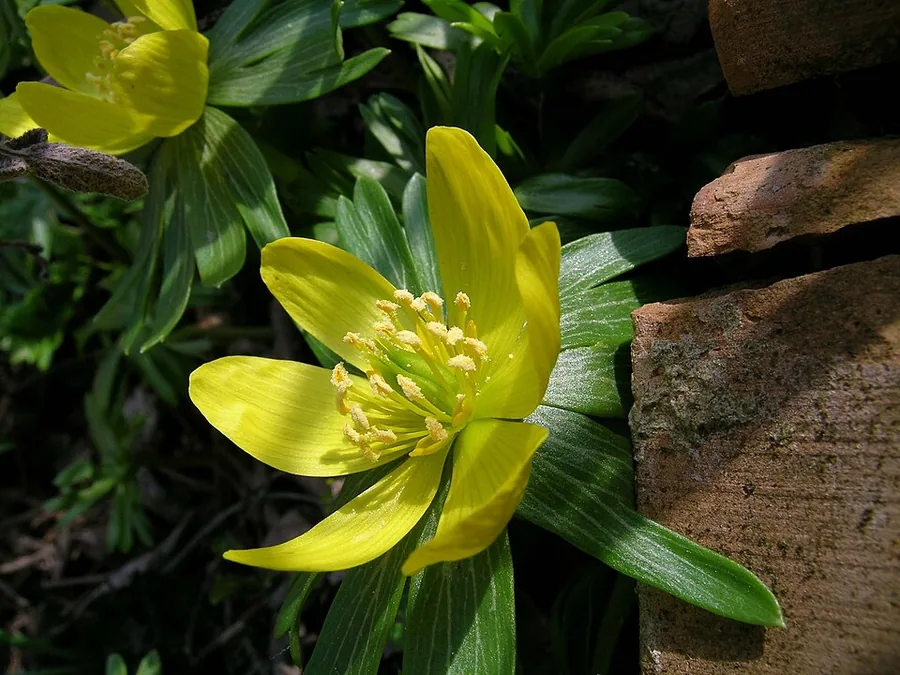
Winter aconite races out ahead of everything, opening bright gold cups while the snow is barely gone.
Full sun
Every 5–10 days
USDA 3–7
3–6 in · 8–15 cm
Overview
Winter aconite is the little plant that gets the whole gardening year rolling. A tiny tuberous perennial in the buttercup family, it throws up bright yellow, cup-shaped blooms through cold, bare soil in late winter, each one framed by a green ruff of leafy bracts, all on a plant just 3 to 6 inches tall. It beats crocus and snowdrops to the punch, so a patch of it hands you the very first flowers of the year.
Everything springs from a small, knobby tuber that sleeps out the summer and charges back to life in the cold. Plant it once in humus-rich, well-drained soil under deciduous trees, where it grabs full late-winter sun before the leaves crowd in overhead, and it powers on with almost no help. Leave it be and it self-sows into wide golden carpets, sometimes spreading faster than you planned, which is half the fun.
One thing keeps the excitement in check. Every part of winter aconite is poisonous, and the tuber tops the list, so enjoy this one with your eyes and keep it out of reach. Give it a spot away from any child or pet that might taste it, and you can just sit back and watch it go.
Care
The short version: plant the tubers in fall in rich, well-drained soil under deciduous trees, keep the ground moist through the late-winter-to-spring growing season, then step back and let the plants go dormant and spread on their own.
Light
Winter aconite chases full sun while it is growing, and it pulls it off by flowering in late winter before the deciduous trees leaf out. That makes the dappled shade under those trees a perfect home, since it soaks up all the light it needs early, then kicks back through the shaded summer.
Water
Keep the soil steadily moist from late winter into spring while the plant is charging ahead, watering about every 5 to 10 days when rain comes up short. Once the foliage dies back for summer dormancy, the tubers want it drier and ask for next to nothing.
Soil
Plant it in rich, humus-rich, well-drained soil packed with leaf mold or compost. It leans alkaline and thrives at a pH of 7.0 to 8.0, but sharp drainage beats the exact number every time, since soggy ground rots the tubers fast.
Temperature
This little powerhouse loves the cold, shrugging off temperatures down to about -29°F (-34°C) and cruising through zones 3 through 7. It actually needs the chill to fire up and fades where summers run hot, so it performs best where the heat tops out around 75°F (24°C).
Humidity
Plain outdoor air is all it takes, so forget chasing a humidity number. The thing that really drives it is even soil moisture through its short, busy growing season, not what is happening in the air.
Feeding
Winter aconite runs on almost nothing. A seasonal top-dressing of leaf mold or compost from fall to early spring keeps it fueled, feeding the tubers slowly and keeping the soil rich with no need for stronger fertilizer.
Pruning
Skip the shears, because there is nothing to prune. Let the foliage yellow and die back on its own after the flowers finish, since those leaves are busy recharging the tuber for next year, and cutting them early only slows the plant down.
Repotting
These tubers thrive left in the ground and rarely need lifting. Watch for crowded clumps that flower less and tubers pushing up near the surface, and when that day comes you simply divide them instead of repotting.
Size & spacing
Winter aconite stays pint-sized at just 3 to 6 inches (8 to 15 cm) tall and wide, so plant it in big, bold drifts. Set the tubers about 3 inches apart and they knit together into a solid sheet of early gold.
When to plant
Winter aconite flips the calendar on its head, and that is exactly what makes it fun. Drop the dormant tubers in the ground in fall, from late summer through November, and they burst into flower in the depths of late winter, often February through April, while everything else is still fast asleep.
Northern hemisphere
Southern hemisphere
Typical months for a temperate climate: start earlier in warm zones, later where spring frosts linger.
- Plant: Plant tubers in late summer to early fall (September to November), 2-3 inches deep and 3 inches apart.
- Harvest: Late winter to early spring (February to April), often before crocus and snowdrops.
Hardiness
USDA hardiness zones: 3–7
Temperature: down to -40°C
Troubleshooting
Winter aconite is a breeze to grow, and the handful of hiccups it throws come down to planting and timing, never pests or disease. Scan the early signs below and you will spot most of them coming, and a few turn out to be nothing at all.
Tubers that refuse to sprout after fall planting
The number-one culprit is a dried-out tuber that went in already shriveled, since winter aconite tubers dry to a hard knot in storage and fight to bounce back. Soggy or shallow soil piles on the trouble. Beat it by soaking shriveled tubers overnight in damp sand or peat, then planting them 2 to 3 inches deep in rich, well-drained ground.
Fix:
- Soak shriveled tubers overnight (or in moist sand or peat moss) before planting
- Replant 2-3 inches deep in organically rich, well-drained soil
The plant vanishing the moment summer hits
Nearly always this is just summer dormancy kicking in right on cue. Winter aconite wraps up its whole year by late spring, the leaves yellow and melt away, and the tubers rest underground until the next thaw. If clumps truly stop coming back year after year, the usual cause is soil that baked dry during active growth, so keep the ground moist from late winter through spring and leave the dormant tubers alone.
Fix:
- Allow foliage to die back naturally and do not disturb dormant tubers
- Keep soil moist during the late-winter-to-spring growing season
Toxicity
Here is the one part to take seriously: winter aconite is truly poisonous, not just a minor irritant. Every piece of it holds cardiac glycosides plus the ranunculin that runs through the whole buttercup family, and the tuber carries the biggest load. Eat any of it and you get drooling, mouth irritation, and vomiting, and a real mouthful can throw off the heartbeat and breathing, so keep it clear of pets, livestock, and children, and pull on gloves before you handle the tubers.
Toxic to
Cats · Dogs · Horses · Rabbits · Livestock · Birds · People
Cats Severe
A cat that nibbles the leaves or digs at a tuber can quickly start drooling and vomiting, with belly pain and loose stool right behind. The real danger is the heart, where the cardiac glycosides can blur vision and throw the pulse into a slow, uneven beat.
Dogs Severe
Dogs that chew the tuber, the most poisonous part of all, tend to vomit hard and pick up diarrhea and colicky cramps. A slowed, irregular heartbeat can follow a big dose, so treat any real mouthful as an emergency.
Horses Severe
A grazing horse ends up with stomach pain, nausea, and diarrhea from the foliage. Push the dose higher and the same heart toxins can drag the pulse down and unsettle its rhythm.
Rabbits Toxic
This is no safe forage. The ranunculin in the leaves blisters the mouth and gut, and the cardiac glycosides hit a small animal hard, so keep rabbits well clear of any patch.
Livestock Toxic
Cattle, sheep, and goats can catch drooling, mouth irritation, and digestive upset from the foliage, with the heart effects piling on in quantity. The bitter, acrid taste usually turns animals off before they eat much.
Birds Toxic
The whole plant packs enough cardiac glycoside to harm a bird, and a small body means a small dose does damage. Keep poultry and pet birds away from the tubers and foliage entirely.
People Caution
No part of winter aconite is edible, so this is one to admire, never taste. Swallow it and you get mouth irritation, drooling, vomiting, and stomach pain, and a big amount can disturb the heartbeat and breathing, so wear gloves with the tubers and keep children away.
Wear gloves and protective clothing when handling; keep tubers and plants away from children and pets.
Helpline numbers

United States
ASPCA Animal Poison Control: (888) 426-4435 (fee applies)
Poison Control: (800) 222-1222



Canada
Poison Centres: 1-844-764-7669
Varieties
You will not find a huge lineup here, since most gardeners just grow the wild species, and that is plenty. These are the two forms to watch for.
Cilicica Group
The Cilicica Group shows off more finely cut, bronze-tinted bracts and slightly bigger blooms than the plain species.
Eranthis hyemalis (species)
The straight species fires up bright yellow, cup-shaped buttercup flowers over a green ruff of bracts and stands just 3 to 6 inches tall.
How to propagate
Winter aconite loves to multiply on its own, and you can push it along even faster by splitting clumps, sowing fresh seed, or planting more tubers.
DivisionEasy
Right after flowering while plants are still in leaf ('in the green'), in early to mid-spring · 1 to 2 seasons
The surest way to make more is to lift and split crowded clumps right after they bloom, while they are still green and rooting hard. Replant the pieces straight away at the same depth, and they establish over the next 1 to 2 seasons.
SeedModerate
Collect and sow fresh seed in fall · 2 to 4 years to flowering
Turn it loose and winter aconite self-sows freely, drifting into broad colonies on its own. To aim it where you want, gather ripe seed and sow it fresh in fall, since fresh seed sprouts best, then hold on for the 2 to 4 years it takes the seedlings to flower.
Bulbs & cormsModerate
Plant dormant tubers in late summer to early fall · 1 season
Plant dormant tubers in late summer to early fall, 2 to 3 inches deep and 3 inches apart. Soak any that turn up shriveled and dry overnight first, and a planting usually wakes up and flowers within a single season.
Myths
Winter aconite is just monkshood, and touching it alone can poison you.
Not a chance, and the reason is simple. Winter aconite sits in its own genus, Eranthis, and shares nothing with monkshood, or Aconitum, beyond the buttercup family. Old herbalists jumbled the two together by leaf shape, but they are separate plants entirely. Winter aconite poisons through eating, not through touch, and its harsh, bitter taste tends to stop pets before they swallow a dangerous amount.